 Largo Siding
 Kenneth City Is a Different Kind of Neighborhood to Side
Kenneth City is a small, established town tucked inside Pinellas County, bordered by Largo and close enough to the St. Petersburg city line that many residents shop, work, and commute across both. It's an older residential community by Florida standards, which means a lot of the housing stock predates today's wind-load codes and today's siding materials. That combination — mature homes, dense tree canopy in some pockets, and a climate that doesn't let up — makes exterior work here a little different from a new-construction subdivision out toward the county line.
We're a Largo-based crew, and Kenneth City sits well inside our regular service radius. We're not driving a crew in from another market for a one-off job and then disappearing if there's a callback. That matters more here than people expect, and we'll explain why below.
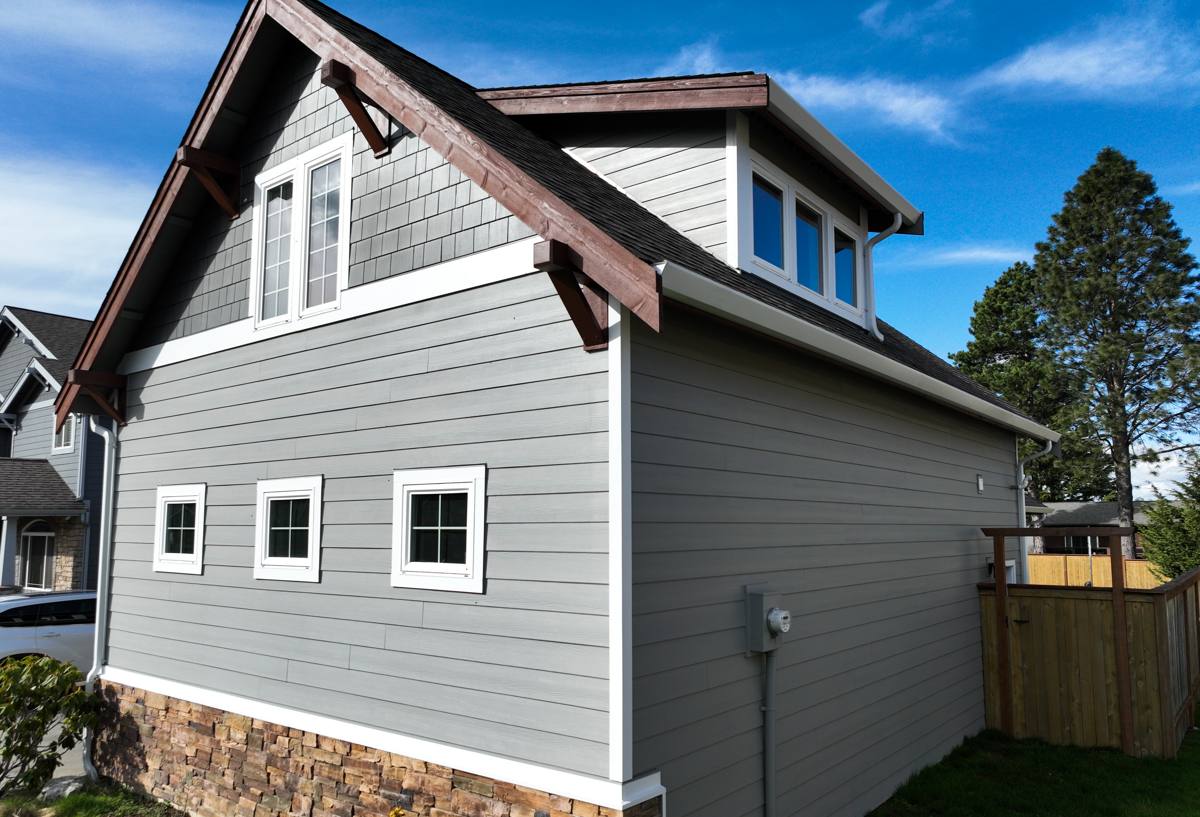
What Pinellas County Weather Actually Does to Siding
Every siding page on this site says some version of the same thing, because it's true everywhere in this county: hurricane-force wind events, intense year-round UV, wind-driven rain, and salt air all take their toll. But it's worth breaking down what that actually means for a house, not just as a slogan.
Wind and Wind-Driven Rain
Kenneth City isn't coastal, but it's close enough to the Gulf that tropical systems don't lose much punch by the time they reach it. Wind-driven rain during a tropical storm or hurricane doesn't fall straight down — it gets pushed sideways, sometimes horizontally, and it finds every gap, seam, and fastener point in a wall system. Siding that isn't installed with proper flashing, house wrap, and clearances becomes a pathway for water intrusion, not a barrier against it.
UV Exposure
Florida sun is relentless and it's a year-round condition, not a summer problem. UV breaks down pigments and resins in lower-grade paints and coatings, which is why so many older homes in this area show chalky, faded, or peeling siding on the south and west-facing walls first — those elevations take the worst of it.
Salt Air
Kenneth City isn't beachfront, but Pinellas County is a narrow peninsula, and salt-laden air moves inland on the wind more than most homeowners realize. Salt accelerates corrosion on fasteners and metal trim, and it degrades certain coatings faster than inland climates would.
Humidity and Moisture Cycling
Add in year-round humidity and the daily swings between hot afternoons and cooler, damp evenings, and you get constant expansion and contraction. Materials that aren't dimensionally stable — that swell, warp, or absorb moisture — struggle with this cycle in a way that shows up as buckling, gapping, or rot over a handful of years.
Why a Local Crew Is Worth Insisting On
Siding contractors from outside the immediate area aren't automatically bad, but there's a real difference between a company that treats Kenneth City as a stop on a regional route and one that treats it as home turf.
- Faster response on warranty and punch-list items — if something needs attention after installation, we're not scheduling a special trip from another county.
- Familiarity with Pinellas County permitting — wind-load requirements, inspection scheduling, and local building department expectations are things we deal with constantly, not something we look up per job.
- Accountability — our reputation in this market depends on the work holding up in the next storm season, not just looking good on installation day.
- Realistic scheduling — we know how weather patterns here affect project timelines, and we plan around it instead of overpromising.
Our Standard: James Hardie Fiber Cement, and Only Hardie
We install James Hardie fiber cement siding exclusively. We don't install vinyl, LP SmartSide, Cemplank, Allura, or primed wood siding like spruce or cedar. That's a deliberate professional standard, not a sales gimmick, and it's worth explaining honestly rather than just asserting it.
Vinyl is inexpensive and easy to install, and in a lot of the country it performs fine. In a climate with hurricane-force wind and intense sun, it's a different story — vinyl can crack under wind-borne debris impact, warp under sustained heat, and fade in a way that can't be repainted back to its original color without replacing panels. Wood siding, even engineered products, has to fight moisture and rot constantly in this humidity, and that fight requires maintenance most homeowners underestimate when they buy the house. Other fiber cement brands compete with Hardie on paper, but we've standardized on Hardie specifically for its factory-applied ColorPlus finish, its HZ5 product line engineered for humid climates, and the depth of its installation network and warranty backing in Florida.
| Material | Wind/Impact Resistance | Moisture Behavior | Maintenance Burden |
|---|---|---|---|
| James Hardie fiber cement | Strong; engineered and tested for high-wind regions | Non-combustible, dimensionally stable, resists moisture-driven warping | Low; factory finish holds color for years |
| Vinyl siding | Can crack or blow off under debris impact and sustained high wind | Doesn't rot, but can warp under heat and trap moisture behind panels | Low upfront, but fading and cracking limit lifespan |
| LP SmartSide / engineered wood | Moderate; depends on installation and edge sealing | Vulnerable to moisture intrusion at cut edges and seams if not maintained | Moderate to high; requires diligent caulking and repainting |
| Primed cedar/spruce | Moderate; natural material with variable density | Prone to rot, insect damage, and cupping in high humidity | High; regular repainting and sealing required |
None of this means the alternatives are junk products — it means we made a professional call about what holds up best, with the least ongoing homeowner burden, in this specific climate. That's the standard we apply to every Kenneth City home we work on.
What a Siding Project Looks Like on a Kenneth City Home
Assessment
We start by walking the exterior and identifying what's actually happening under the surface — soft spots, existing water intrusion, condition of the underlying sheathing, and how the current siding is performing on each elevation. South and west walls often tell a different story than north and east walls on the same house.
Prep and Moisture Barrier
Old siding comes off, damaged sheathing gets addressed, and a proper weather-resistant barrier goes on before a single piece of Hardie touches the wall. This step is where a lot of cut corners happen industry-wide, and it's the step that determines whether the siding actually performs during the next tropical storm.
Installation to Manufacturer Spec
Hardie's warranty coverage depends on installation following their published specifications — fastener type and spacing, clearances from grade and roofline, proper flashing at penetrations and joints. We install to that spec as a baseline, not an upsell.
Final Walkthrough
Before we consider a job finished, we walk it with the homeowner, cover care and maintenance basics, and make sure the paperwork for the manufacturer's warranty is in order.
Beyond Siding: Roofing, Windows, and Decks
Siding rarely fails in isolation. A compromised roof edge, a poorly flashed window, or a rotting deck ledger board can all feed moisture into a wall system regardless of how good the siding itself is. We handle roofing, windows, and decks in addition to siding, which means we can look at a Kenneth City home as one connected exterior system rather than quoting a wall replacement while ignoring a roofline that's feeding it water. When it makes sense, we'll say so plainly — sometimes the siding is fine and the real problem is somewhere else.
Signs a Kenneth City Home May Need New Siding
- Visible cracking, warping, or buckling panels, especially on south- or west-facing walls
- Soft or spongy spots when you press on the siding near the bottom edge or around windows
- Paint that's chalking, peeling, or fading unevenly despite regular upkeep
- Rising energy bills that suggest the wall system isn't insulating or sealing the way it should
- Visible gaps, missing caulk, or separated seams at corners and trim
- Signs of pest activity, particularly around wood-based siding or trim
- Interior wall staining, musty smells, or bubbling paint that could point to moisture getting in from outside
Cost Factors for a Kenneth City Siding Project
We don't publish blanket pricing because every home is different, but these are the factors that actually move the number:
| Factor | Why It Matters |
|---|---|
| Home size and wall square footage | Sets the baseline material and labor quantity |
| Condition of underlying sheathing | Rot or moisture damage found during tear-off adds repair scope |
| Hardie product line and profile | Lap siding, shingle-style panels, and trim options price differently |
| Number of stories and roof complexity | Affects access, staging, and labor time |
| Trim, fascia, and soffit scope | Often bundled with siding work for a consistent finished look |
| Existing paint/finish removal needs | Some tear-offs require more disposal and prep than others |
Permitting and Wind Codes in Pinellas County
Exterior work in Pinellas County, including Kenneth City, is subject to Florida Building Code wind-load requirements, and siding replacement typically requires a permit and inspection. This isn't paperwork for its own sake — it's the mechanism that confirms the installation can actually withstand the wind events this area is built to expect. We handle the permitting process as part of the job rather than leaving it to the homeowner to sort out.
If you're weighing new siding, a roof that's due for attention, aging windows, or a deck that needs work, we're glad to take a look and give you a straightforward assessment. Reach out for a free, no-pressure estimate, and we'll walk your Kenneth City property in person before recommending anything.