 Largo Siding
 Siding Built for St. Petersburg's Coastal Climate
St. Petersburg sits on a peninsula surrounded by water on three sides, which means homes here take on a version of Florida weather that's more intense than what you'd find a few miles inland. Salt-laden air moves in off Tampa Bay and the Gulf, humidity stays high most of the year, and the same summer storms that roll through Pinellas County often arrive with sideways rain driven by strong onshore wind. Add in decades of direct UV exposure, and it's easy to see why exterior siding in this area tends to fail years before it would in a milder climate.
We're based in Largo, just up the road, and we've replaced and repaired siding on homes throughout St. Petersburg's older bungalow neighborhoods, mid-century ranches, and newer construction alike. What we see consistently is that the products and installation details that work fine in a dry, low-humidity climate often don't hold up here. That's a big part of why we install exclusively James Hardie fiber cement siding — it's the one product line engineered specifically for the moisture and heat conditions found along the Gulf Coast.
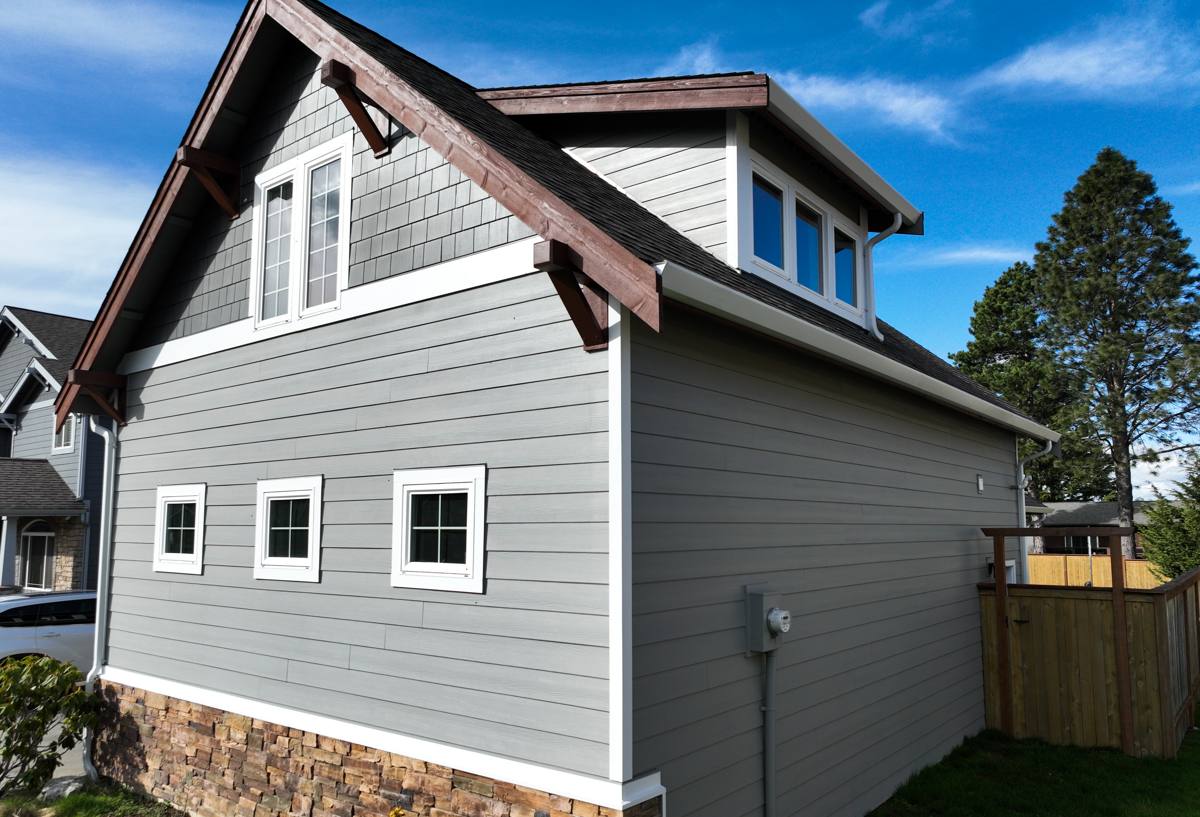
What Coastal Exposure Does to a St. Petersburg Home
Wind-Driven Rain and Moisture Intrusion
St. Petersburg homes face wind-driven rain more often than homes further inland, whether from a passing summer thunderstorm or a tropical system tracking through the Gulf. Rain that's pushed horizontally by wind gets forced into seams, laps, and fastener points that would stay dry in a straight-down rainfall. Over time, siding materials that aren't dimensionally stable — wood-based products in particular — absorb that moisture, swell, and begin to separate at the joints. Once moisture gets behind the siding, it can sit against the sheathing and framing, which is where the real damage starts.
Salt Air and Corrosion
Even homes several miles from the water deal with airborne salt in this part of Pinellas County. Salt accelerates the breakdown of fasteners, caulking, and paint film, and it speeds up wear on softer siding materials. It's one of the reasons factory-applied, baked-on finishes tend to outperform field-applied paint here — a factory finish bonds more consistently and resists the chalking and fading that salt air and UV exposure cause over time.
Intense, Year-Round UV
Florida's UV load doesn't really let up seasonally the way it does in other regions. Paint and coatings on siding take a beating from constant sun exposure, breaking down faster than the same products would in a northern climate. Homeowners in St. Petersburg often notice fading, chalking, or peeling on south- and west-facing walls well before the rest of the house shows wear.
Humidity and Pest Pressure
High ambient humidity, especially through the summer months, keeps organic siding materials at risk for moisture absorption, mold growth, and wood-boring insect activity. Termites and wood-destroying organisms are a real and ongoing concern in this part of Florida, and any siding product with exposed wood content is a potential entry point or food source.
Why We Only Install James Hardie in This Area
James Hardie fiber cement is engineered from cement, sand, and cellulose fiber — there's no wood content for moisture to swell, no organic material for pests to feed on, and it's non-combustible. For a coastal city like St. Petersburg, those material properties matter more than they would somewhere drier and cooler.
- Dimensional stability: Fiber cement doesn't expand and contract with humidity swings the way wood-based products do, so seams and laps stay tighter over time.
- ColorPlus factory finish: A baked-on finish applied under controlled conditions holds up to UV and salt exposure better than field-applied paint, and it's backed by its own finish warranty.
- HZ5 product engineering: Hardie's HZ5 formulation is built for high-humidity, moisture-prone climates like ours, which is the specific climate zone St. Petersburg falls into.
- Non-combustible core: Cement-based siding won't contribute fuel to a fire, which matters for insurance considerations as much as safety.
- Long-term warranty backing: Hardie's transferable warranty structure is built around decades of real-world performance data, not a marketing claim.
We won't install vinyl, LP SmartSide, Cemplank, Allura, or primed wood siding on homes in this area, and we're upfront about why. Vinyl can warp and become brittle under intense heat and UV cycling. Wood-based composite products depend heavily on sealed edges and perfect installation to keep moisture out — a single missed detail becomes a long-term liability in a climate this wet. Other fiber cement brands may perform reasonably well, but we've standardized on Hardie because of the specific product engineering for high-moisture climates, the strength of its factory finish system, and the consistency we get installing one product line to spec, every time.
How Our Siding Process Works for St. Petersburg Homes
Assessment and Product Selection
Every project starts with a walk-around inspection of the existing siding, trim, and any visible moisture damage. We look closely at areas most exposed to wind-driven rain — corners, gable ends, and any wall facing the prevailing weather. From there we help you choose the right Hardie product line and profile: lap siding, shingle-style panels, or a mix with trim and soffit components, depending on your home's architecture.
Tear-Off and Sheathing Check
We remove the old siding down to the sheathing and inspect for hidden moisture damage or rot before anything new goes up. This step matters more in St. Petersburg than in a drier climate — if water has been getting behind old siding, it needs to be addressed now, not covered over.
Weather Barrier and Flashing
Proper house wrap and flashing details around windows, doors, and penetrations are what actually stop wind-driven rain from reaching your sheathing. This is installation-sensitive work, and it's a big part of why we treat Hardie as a system rather than just a board.
Installation to Manufacturer Spec
Fastener spacing, joint treatment, and clearances from grade and roofing all follow Hardie's published installation guidelines. Cutting corners on these details is what turns a 30-plus-year product into one that needs attention in a fraction of that time.
Final Finish and Sealing
Trim, caulking, and touch-up work at cut edges finish the job. We use sealants and touch-up products rated for the same coastal exposure the siding itself is engineered for.
Comparing Siding Options for a Coastal Pinellas County Home
| Factor | Vinyl | Wood-Based Composite | James Hardie Fiber Cement |
|---|---|---|---|
| Moisture resistance | Good if sealed; can warp in heat | Depends on sealed edges; vulnerable if compromised | Engineered for high-humidity climates (HZ5) |
| UV/fade resistance | Fades and chalks over time | Paint film degrades faster in intense sun | Factory-baked finish resists fading |
| Pest resistance | Not a food source, but can crack | Wood content can attract pests | No organic material, not a food source |
| Fire rating | Combustible | Combustible | Non-combustible |
| Typical lifespan (installed to spec) | 20-30 years | 20-30 years with diligent maintenance | 30+ years |
Roofing, Windows, and Decks Alongside Your Siding
Siding is only one piece of a home's exterior envelope, and in St. Petersburg's climate, the others take similar abuse. We also handle roofing, window replacement, and deck work, which matters most when a project touches more than one system — a roof replacement that also involves fascia and soffit work, or window replacement that happens at the same time as a siding job. Coordinating these together means fewer transitions between contractors, fewer gaps in flashing and sealing between systems, and one crew accountable for how everything ties together at the seams.
Why a Local Crew Matters Here
St. Petersburg's building requirements and wind exposure considerations reflect its coastal location within Pinellas County, and a crew that works in this area regularly understands what that means in practice — from how homes are typically oriented relative to prevailing wind and rain, to which details tend to fail first on an older bungalow versus a newer build. Being based in Largo means we're familiar with the same climate conditions St. Petersburg homes face, and we're close enough to be responsive if something needs a follow-up visit after installation.
What to Look For Before Hiring a Siding Contractor
- Manufacturer training or certification specific to the siding product being installed
- A written scope that specifies product line, profile, and finish — not just "fiber cement" as a generic term
- Clear detail on how flashing and moisture barriers will be handled around windows, doors, and penetrations
- Proof of licensing and insurance appropriate for exterior contracting work in Florida
- A warranty that covers both the product and the labor, with terms you can read in writing
- Willingness to walk you through why they recommend one product over another, rather than just quoting a price
Get a Free Estimate
If your St. Petersburg home's siding is showing fading, warping, soft spots, or you're just planning ahead for a Gulf Coast-rated exterior, we're happy to take a look. The estimate is free, there's no pressure, and you'll get a straight answer about what your home actually needs — use the form below to get started.