 Largo Siding
 Homeowners in Largo shopping for fiber cement siding eventually run into a simple-looking question with a more complicated answer: Cemplank or James Hardie? Both are fiber cement products. Both get installed the same general way, with lap boards, trim, and a weather-resistant barrier underneath. On paper, they look like interchangeable options separated mostly by price. In practice, after years of installing and repairing siding on homes across Pinellas County, we made a deliberate decision to install only James Hardie. This page explains why, product by product, without exaggerating either one.
What Fiber Cement Siding Actually Is
Fiber cement is a blend of Portland cement, sand, cellulose fiber, and water, cured into rigid boards that are then primed or factory-finished. It's heavier and more rigid than vinyl, doesn't burn, resists wood-boring insects, and holds paint or factory finish far longer than wood. Every major fiber cement brand, including Cemplank and James Hardie, starts from roughly this same formula. The differences that matter to a homeowner show up in manufacturing consistency, the engineering behind regional product lines, the factory finish system, and the strength of the warranty standing behind the board once it's on your wall.
Why the Category Matters in This Climate
Largo sits on a peninsula that takes a beating most of the country never sees. Hurricane-force wind events test how well siding is fastened and how well the board itself resists cracking under flex. Year-round UV exposure fades paint faster than in northern climates. Wind-driven rain drives moisture sideways into seams and laps that would stay dry elsewhere. Salt air off Tampa Bay and the Gulf accelerates corrosion on fasteners and trim, and it breaks down lesser finishes faster than inland weather ever would. Fiber cement as a category holds up well against all of this compared to wood or vinyl. But not every fiber cement product is engineered the same way for it.
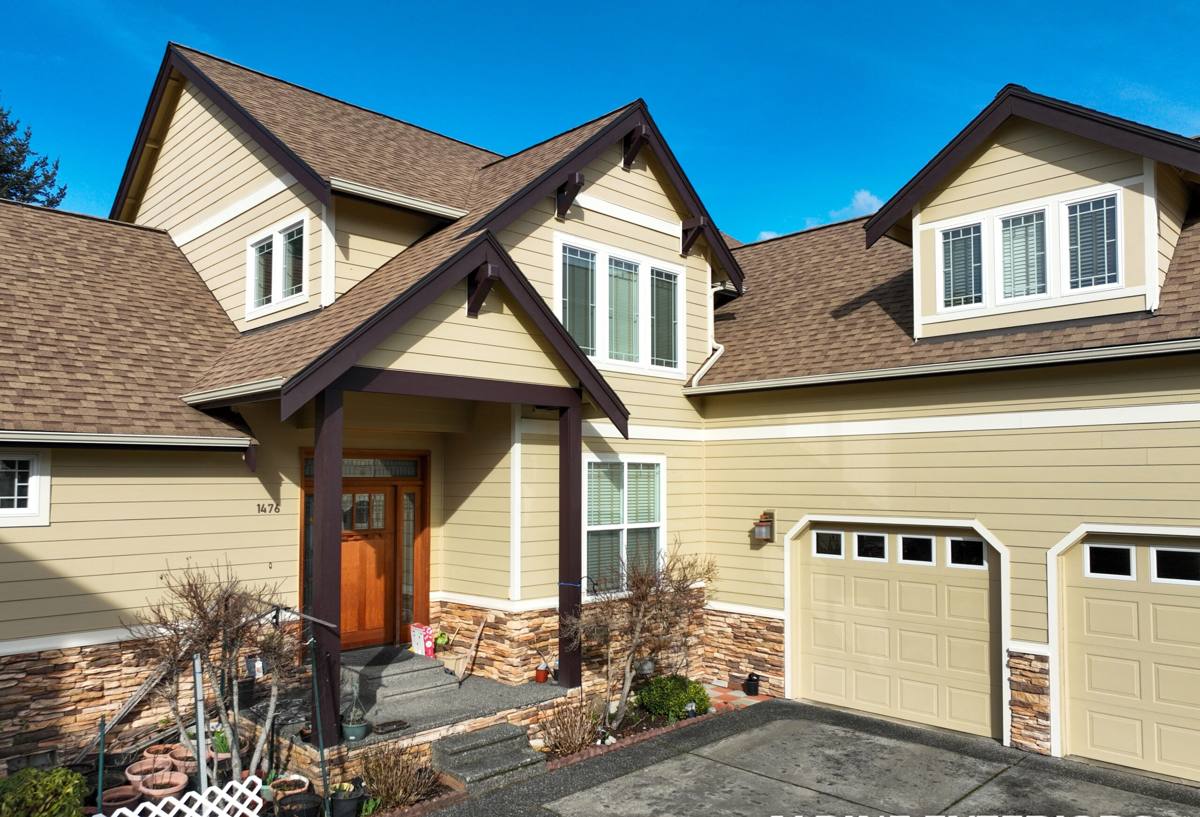
Where Cemplank Gets It Right
We're not going to pretend Cemplank is a bad product, because it isn't. It's manufactured by Plycem, a legitimate fiber cement producer, and it meets the same basic ASTM standards for fiber cement siding that James Hardie boards meet. It's non-combustible, resists rot and pests, and costs less installed than Hardie in most cases. For a homeowner on a tight budget who wants to move up from vinyl or aging wood siding, Cemplank is a real step up in durability. We respect that it has a place in this market. It's just not the place we choose to build our business around.
Why We Don't Install It
Regional Engineering
James Hardie makes different board formulations for different climate zones — its HZ5 product line is engineered specifically for humid, high-moisture climates like ours, with a formulation designed to resist moisture-related cracking and warping in exactly the kind of wind-driven rain and humidity Pinellas County deals with most of the year. Cemplank sells a more generalized product line without that same climate-zone-specific engineering. In a mild, dry climate that gap might never show up. On the Gulf Coast, where boards spend months getting soaked and baked in the same week, we'd rather install the product built for that cycle.
Factory Finish Consistency
Both brands offer factory-applied color finishes rather than requiring field painting, and that's the right way to install fiber cement either way — a factory finish cures under controlled conditions and adheres far better than paint applied on site. Where we've seen the real difference is in finish consistency and the depth of the color and texture library. James Hardie's ColorPlus finish system is backed by a dedicated finish warranty separate from the substrate warranty, covering fading and peeling over a long service life. Cemplank offers factory finishes too, but the warranty backing and the track record behind it are thinner, and thinner warranty backing matters most in a climate that stresses a finish this hard, this fast.
Warranty Structure
This is the piece that actually drives our decision more than any single technical spec. James Hardie's warranty on its siding is long, transferable to a subsequent homeowner, and backed by a manufacturer with decades of scale and a large network of claims history in exactly this climate. Cemplank's warranty coverage is real but shorter in practice and less proven under Florida coastal conditions at scale. When we put siding on a home, we're not just selling boards — we're standing behind a system for the next 20-30 years. We'd rather stand behind the manufacturer whose warranty has been tested the most, in conditions the most like Largo's.
Installation Sensitivity
Fiber cement siding in general is unforgiving of shortcuts — improper fastening, wrong nail placement, missing clearances, or poor flashing detail will cause problems no matter whose board is on the wall. Both brands require correct installation to perform. The difference is that James Hardie maintains an extensive contractor training and certification program, and installers who cut corners on Hardie product risk losing certification and warranty backing. That accountability structure gives us, and our clients, a second layer of protection beyond our own workmanship. Cemplank doesn't offer an equivalent certification ecosystem at the same scale.
Side-by-Side: Cemplank vs. James Hardie
| Factor | Cemplank | James Hardie |
|---|---|---|
| Base material | Fiber cement (Plycem) | Fiber cement (Hardie) |
| Climate-specific formulation | General-purpose line | HZ5 line engineered for humid/high-moisture climates |
| Factory finish warranty | Shorter, less established | Long-term, separately warrantied ColorPlus system |
| Installer certification program | Limited | Extensive, with accountability tied to warranty |
| Product warranty transferability | Yes, more limited terms | Yes, longer and more established |
| Typical installed cost | Lower | Moderate-to-higher |
| Non-combustible | Yes | Yes |
What Standardizing on One Product Buys Our Clients
There's a business reason we chose one fiber cement line rather than quoting whichever brand is cheapest on a given job, and it's worth being direct about it. When a crew installs the same product day after day, they know its cut lines, its fastening spec, its clearances, and its known failure points cold. That consistency reduces installation mistakes, which is where most siding problems actually originate — not in the board itself, but in how it's hung. Standardizing on James Hardie also means we can speak to its warranty terms accurately and back our own workmanship warranty with a product we trust to perform for the life of that coverage.
What This Doesn't Mean
- It doesn't mean Cemplank will fail on your house — it's a legitimate product installed correctly on homes across Florida.
- It doesn't mean every contractor who installs Cemplank is cutting corners.
- It does mean we've chosen to specialize rather than carry multiple product lines we can't back with the same depth of experience.
- It does mean our recommendation reflects what we'd put on our own homes on the Pinellas County coast.
Questions Worth Asking Any Siding Contractor
Whether you go with us or someone else, these are the questions that actually separate a durable install from a problem waiting to happen:
- Is the contractor certified to install the specific product they're quoting?
- Does the quoted product have a climate-specific formulation for humid, coastal conditions?
- What does the manufacturer's warranty cover, and is it transferable if you sell the home?
- Is the factory finish warrantied separately from the board itself?
- What fastening and clearance spec will the crew follow, and will they put it in writing?
- How does the contractor handle flashing and moisture management around windows, doors, and roof lines?
What Largo and Pinellas County Homes Are Up Against
None of this is theoretical for homes in this area. Largo sits close enough to the Gulf and Tampa Bay that salt-laden air reaches most properties, corroding weak fasteners and degrading cheap finishes years before they'd fail inland. Summer storm season brings wind-driven rain that tests every seam, lap, and flashing detail on a home's exterior, sometimes several times in a single season. And the sun here is simply more intense, for more months of the year, than most siding products anywhere else in the country are asked to withstand. A siding system that isn't engineered with all three of those factors in mind is starting from behind before the first board goes up.
Our Bottom Line
We don't install Cemplank not because it's a bad product, but because we decided our clients on the Gulf Coast deserve the fiber cement line with the deepest climate-specific engineering, the strongest factory finish warranty, and the most established installer accountability system behind it. That's James Hardie's HZ5 product line, and it's the only fiber cement siding we put on homes in Largo and across Pinellas County.
If you're weighing fiber cement options for your home, we're happy to walk you through what we'd actually recommend and why, with no pressure either way. Reach out for a free estimate and we'll take a look at your home's exposure and give you a straight answer.