 Largo Siding
 Why Cedar Gets a Second Look
Cedar siding has a real appeal. The grain pattern, the warm color, the way it ages when it's cared for — there's a reason it shows up in coastal architecture magazines and high-end renovation photos. Homeowners in Largo who are drawn to it usually aren't wrong about the look. What they're often missing is a clear picture of what it takes to keep that look, year after year, in a Gulf Coast climate that is genuinely hard on wood siding.
We get asked about cedar a few times a year, usually from homeowners who've seen it elsewhere or grew up with it somewhere with a milder, drier climate. This page is our honest answer: what cedar is, what it actually asks of an owner in Pinellas County, and why we made the call years ago to install only James Hardie fiber cement instead.
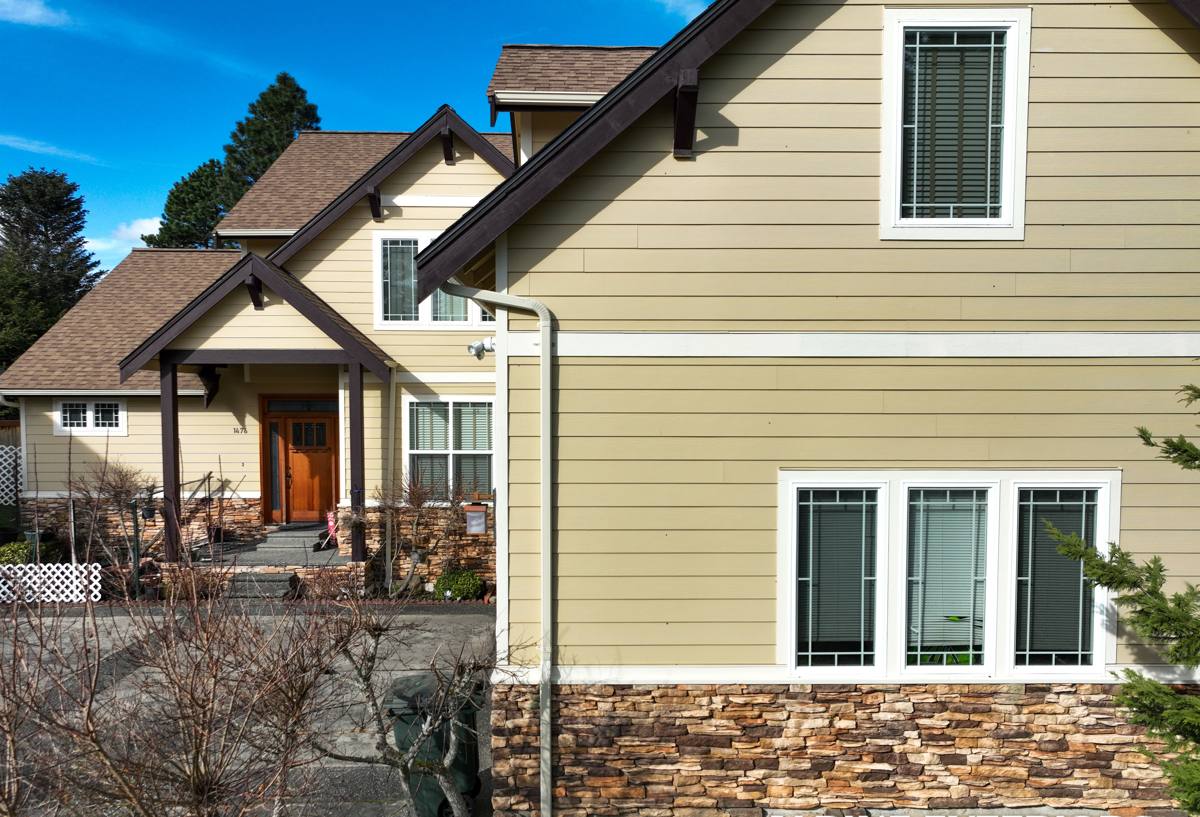
What Cedar Siding Actually Is
Cedar siding is solid wood — typically western red cedar or, less often, Atlantic white cedar — milled into lap boards, shingles, or shakes. It's prized for a few genuine properties: natural oils that give it some inherent resistance to decay and insects compared to other softwoods, a tight, straight grain that takes stain evenly, and a relatively light weight that makes it easy to work with on site.
None of that is marketing fluff. Cedar earns its reputation in the right climate. The issue for us isn't the wood itself — it's what happens to that wood once it's installed on a home a few miles from the Gulf, in a county that sees hurricane-force wind events, wind-driven rain, and some of the most intense year-round UV exposure in the continental United States.
Untreated vs. Factory-Finished Cedar
There's a real difference between raw cedar that gets field-stained after installation and cedar that arrives with a factory-applied finish. Field finishing is more common on the kind of project a homeowner in Largo would actually get quoted, and it's also the more maintenance-intensive path, since the finish quality depends heavily on site conditions, application technique, and how soon it gets recoated.
The Largo Climate Problem
Pinellas County sits on a peninsula, which means near-constant humidity, salt-laden air moving in off the Gulf and Tampa Bay, and a summer storm season that delivers rain sideways more often than straight down. Add in hurricane season wind loads and the UV index we carry most of the year, and you've got a combination that stresses any exterior material — but wood siding in particular.
- UV exposure: Florida sun breaks down finish coatings faster than in most of the country, even on south- and west-facing walls that get shade elsewhere.
- Wind-driven rain: Storms here don't just fall on siding, they drive moisture into every seam, lap joint, and fastener penetration — points where a wood product depends entirely on the finish and caulk holding up.
- Salt air: Corrosion and finish breakdown accelerate closer to the water, which covers a meaningful share of Largo.
- Humidity: Wood siding that can't dry out between rain events is wood siding that's set up for moisture problems, regardless of species.
Cedar's natural decay resistance helps at the margins, but it was never designed to out-perform this specific combination indefinitely without active maintenance. That's the piece that tends to get left out of the pitch.
What Cedar Maintenance Actually Requires
This is the part homeowners underestimate most. Cedar siding is not a paint-it-once-and-forget-it product. To keep it performing and looking the way it did on day one, it needs an ongoing maintenance cycle:
- Re-staining or re-sealing on a recurring cycle — in this climate, that cycle runs shorter than in drier, milder regions, because UV and humidity both accelerate finish breakdown.
- Regular inspection of caulked joints, trim intersections, and end grain, which are the first places moisture gets in.
- Prompt attention to any finish failure — once bare wood is exposed to Florida humidity and rain, decay and mold can start faster than most owners expect.
- Periodic washing to remove salt residue, mildew, and airborne debris before it breaks down the finish.
- Watching for insect activity, particularly where cedar meets grade, decks, or shaded, damp areas of the home.
None of this is exotic. It's the same kind of upkeep a wood deck needs — but applied to the entire exterior envelope of the house, including the parts that are hard to reach without a ladder.
What Happens When Maintenance Slips
Real life gets in the way of maintenance schedules. A homeowner travels, a recoat gets pushed a year, a contractor is hard to book during storm season. When that happens with cedar, the consequences show up as finish failure, graying and checking of the wood, cupping or warping of individual boards, and — if moisture gets behind the siding for long enough — rot that can require replacing individual boards or larger sections. None of that is a defect in the wood. It's the natural consequence of a maintenance-dependent product meeting a maintenance gap.
Moisture Behavior: Cedar vs. Fiber Cement
The clearest way to explain our position is to put the two materials side by side on the factors that matter most in this climate.
| Factor | Cedar Siding | James Hardie Fiber Cement |
|---|---|---|
| Core material | Solid wood — absorbs and releases moisture | Cement, sand, and cellulose fiber — dimensionally stable, does not absorb moisture the way wood does |
| Finish | Field-applied stain/sealer in most installations, requiring recoating on a recurring cycle | Factory-applied ColorPlus finish baked on under controlled conditions, backed by its own coating warranty |
| UV resistance | Finish degrades with sun exposure; wood grays and checks once finish is gone | Engineered to resist fading and UV breakdown far longer than field-applied wood finishes |
| Rot/insect risk | Natural oils help, but wood remains vulnerable once finish fails | Non-combustible, non-organic composition — not a food source for insects, doesn't rot |
| Wind-driven rain | Performance depends on caulking and finish integrity at every joint | Engineered HZ product lines are designed and tested for high-wind, wet climates including hurricane-prone regions |
| Ongoing owner labor | Recurring recoating, caulk maintenance, washing, inspection | Occasional washing; no recoating cycle required |
Cost Over the Life of the Siding
Upfront material and labor costs for cedar and for James Hardie fiber cement can land in a broadly similar range depending on style and detailing — cedar isn't necessarily the cheaper choice at install, and it isn't necessarily the more expensive one either. Where the real cost difference shows up is over the ownership period. Cedar's finish maintenance is a recurring, real expense — labor, materials, and the ladder work involved in doing it properly on a full elevation, not just a deck rail. Skip it, and the cost shows up later as board repair or replacement instead. Fiber cement's maintenance costs are lower and less frequent by design, which is a major part of why we standardized on it.
Wind, Insurance, and Pinellas County Realities
Pinellas County construction is governed by Florida's high-velocity hurricane zone provisions in the areas closest to the coast, and by strict wind-load requirements county-wide. Any siding installed here needs to perform under real storm conditions, not just look good on a calm day. Insurers and inspectors increasingly favor non-combustible, storm-tested materials, and James Hardie's HZ10 product line is specifically engineered and tested for high-wind, high-moisture climates like ours. Cedar can be installed to code, but it doesn't carry the same built-in storm engineering or non-combustible rating, and that's a factor worth weighing seriously if you're insuring a home in Largo for the long term.
If You Already Have Cedar Siding
Plenty of homes in this area still have cedar, and it can be kept in good shape with consistent attention. If that's your situation, here's a practical maintenance checklist worth following:
- Inspect the full exterior at least once a year, focusing on south- and west-facing walls and anywhere near grade.
- Re-stain or reseal on the schedule your finish product actually requires in this climate — don't assume a national-average interval applies here.
- Re-caulk any joints showing gaps, cracking, or separation before the next rainy season.
- Address any soft, discolored, or graying boards immediately rather than waiting for a full recoat cycle.
- Keep landscaping and sprinklers from keeping any section of the siding consistently damp.
- Have a qualified contractor check for hidden moisture behind the siding every few years, especially after major storms.
Why We Install James Hardie Instead
We're not against cedar as a material — it has a legitimate place in the right climate and with an owner committed to the upkeep. We simply don't think it's the right long-term bet for exteriors exposed to Largo's combination of salt air, UV intensity, hurricane-season wind, and wind-driven rain, especially when most homeowners want an exterior they can largely stop thinking about once it's installed.
That's why we standardized on James Hardie fiber cement for every siding job we take on. It's non-combustible, it's engineered specifically for climates like ours through the HZ product lines, it carries a factory-applied ColorPlus finish that's built to outlast field-applied stain, and it comes with a strong transferable warranty that reflects the manufacturer's confidence in how it performs over time — not just on day one.
If you're weighing cedar against fiber cement for a Largo home, we're glad to walk through both honestly, including what each one will actually ask of you five, ten, and twenty years down the road. Reach out for a free, no-pressure estimate, and we'll help you figure out what makes sense for your home and your climate.