 Largo Siding
 One Product, One Standard
Walk into most siding companies in Pinellas County and you'll get a menu: vinyl if you want cheap, LP SmartSide if you want something in between, fiber cement if you want the best. We don't offer that menu. We install James Hardie fiber cement siding, full stop. No vinyl, no engineered wood, no off-brand fiber cement. This page explains why we drew that line and what it actually means for a homeowner in Largo deciding what goes on their walls.
This isn't a marketing angle. It's a decision we made after years of servicing siding in a climate that punishes shortcuts. Largo sits on a narrow peninsula between Tampa Bay and the Gulf, which means every house here deals with some combination of hurricane-force wind gusts, wind-driven rain, near-constant UV exposure, and salt-laden air moving in off the water. Siding that performs fine in Ohio can fail here in a fraction of the time. We stopped installing anything that couldn't prove it holds up under those specific conditions.
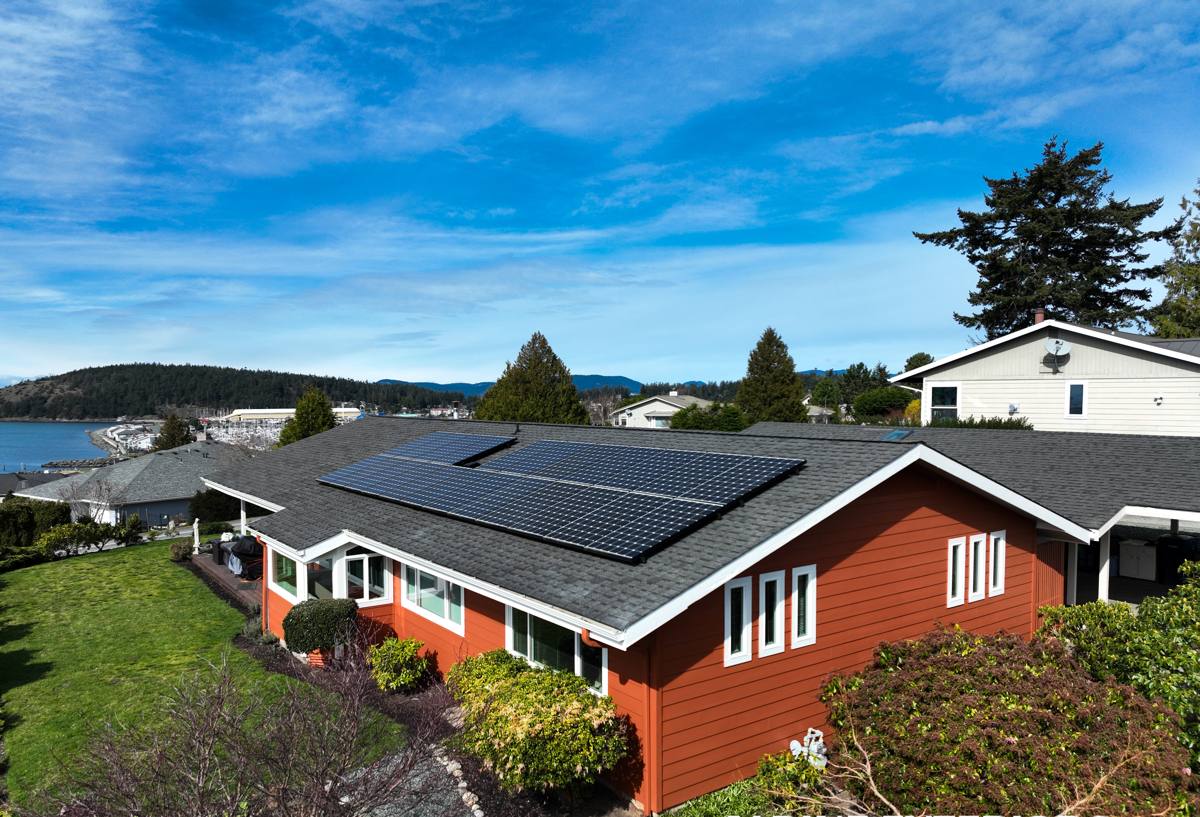
What Largo's Climate Actually Does to Siding
Wind and Wind-Driven Rain
Pinellas County sits inside a wind-borne debris region, and every storm season brings the possibility of sustained tropical-storm or hurricane winds. The damage isn't just the wind itself — it's what the wind pushes ahead of it. Wind-driven rain gets forced sideways into seams, laps, and fastener points that would never see standing water in a calmer climate. Siding needs to be dimensionally stable enough to stay tight against the wall assembly under that pressure, and it needs to resist moisture intrusion at every joint.
Year-Round UV
Florida doesn't get a winter break from sun exposure. South- and west-facing walls take direct, intense UV nearly 365 days a year. UV breaks down pigments and surface coatings over time, which is why paint fade and chalking show up faster here than almost anywhere else in the country. A factory finish engineered for sun exposure behaves completely differently over a 15-year span than a field-applied coat.
Salt Air
Largo isn't oceanfront, but it's close enough to Tampa Bay and the Intracoastal that salt aerosol reaches homes well inland, especially on breezy days. Salt is corrosive to fasteners and abrasive to some finishes, and it accelerates the breakdown of materials that aren't rated for coastal exposure.
Humidity and Moisture Cycling
Between the summer wet season and year-round humidity, siding here goes through constant swelling and drying cycles. Any product that absorbs moisture, even a little, is going to expand, contract, and eventually show it — at seams, at cut edges, at fastener holes.
Why We Don't Install Vinyl
Vinyl siding is inexpensive and easy to install, and for a lot of the country it's a perfectly reasonable choice. In Largo's wind zone, it has two problems we can't get comfortable with. First, vinyl is a thin, flexible material held on with a loose-hanging nail-slot system — it's rated for wind, but the margin narrows fast once you're dealing with gusts that regularly exceed what's typical inland. Second, vinyl softens and can warp under sustained direct sun and high surface temperatures, which are exactly the conditions a west-facing Largo wall sees for months at a time. We'd rather not install something whose long-term performance in this specific climate depends on best-case conditions.
Why We Don't Install LP SmartSide
LP SmartSide is engineered wood — strand-based substrate with a resin and wax treatment, then a coating. It's a real product with real engineering behind it, and it performs well in a lot of climates. The issue for us is that it's still wood at its core, and wood-based products depend entirely on an intact factory coating and correctly sealed cut edges to keep moisture out. In a climate with this much humidity, rain, and moisture cycling, any breach in that coating — a missed caulk joint, a cut edge left unsealed during installation, hail or impact damage — gives moisture a path into a substrate that can swell and deteriorate. We install a lot of siding in a lot of different site conditions, and we don't want a product where a single installation slip has that kind of consequence down the line.
Why We Don't Install Other Fiber Cement Brands
This one surprises people. Cemplank, Allura, and other fiber cement brands are chemically similar to James Hardie — Portland cement, sand, and cellulose fiber. The core material isn't the differentiator. What we standardized on is the whole system: Hardie's ColorPlus factory finish process, their HZ5 formulation engineered specifically for humid climates, and a manufacturer with the largest installed base and longest track record in Florida. When something goes wrong on a coastal home years after installation, we want a manufacturer with deep experience backing warranty claims in exactly this climate, not a smaller regional competitor. Consistency also matters for a crew that installs this product every week — one system, one set of installation specs, one warranty structure, applied correctly every time.
What James Hardie Actually Is
Fiber cement is a mix of Portland cement, sand, and cellulose fiber, autoclaved into a rigid board. It's non-combustible, doesn't absorb moisture the way wood does, doesn't soften or warp in heat, and holds paint and factory finishes far longer than wood-based alternatives. James Hardie makes several product lines relevant to a Largo home:
- HardiePlank lap siding — the standard horizontal lap siding, available in several textures and exposures
- HardiePanel vertical siding — for board-and-batten or modern vertical looks
- HardieShingle — for accent gables or shingle-style architecture
- HardieTrim — matching trim boards for a fully coordinated system
Critically, Hardie makes an HZ5 formulation engineered specifically for humid, high-moisture climates like ours — as opposed to the HZ10 formulation built for freeze-thaw regions. That's a real material difference, not a marketing label, and it's part of why product selection within the Hardie line still matters even after you've settled on the brand.
ColorPlus Finish vs. Field-Applied Paint
Most of the long-term appearance problems people associate with siding — fading, chalking, peeling — trace back to the finish, not the substrate. Hardie's ColorPlus technology is a factory-applied, baked-on finish process rather than paint rolled on after installation. It's formulated to resist UV fade far longer than field-applied paint, which matters enormously on a Largo roof line getting hit by direct sun most of the year. ColorPlus-finished siding also comes with its own finish warranty separate from the product warranty, covering fading and peeling specifically.
| Factor | Vinyl | LP SmartSide | James Hardie |
|---|---|---|---|
| Core material | PVC plastic | Engineered wood strand | Fiber cement |
| Combustibility | Combustible, melts under heat | Combustible | Non-combustible |
| Moisture behavior | Doesn't absorb, but seams can trap water | Absorbs if coating is breached | Resists moisture; HZ5 formulated for humidity |
| UV/sun performance | Fades, can warp in high heat | Coating fades over time | ColorPlus finish rated for long-term UV exposure |
| Typical lifespan (installed to spec) | 15-25 years | 20-30 years | 30-50+ years |
| Coastal/salt suitability | Fair | Fair, coating-dependent | Good, especially HZ5 |
Warranty and What It Actually Covers
James Hardie backs its siding with a non-prorated, transferable limited warranty, and ColorPlus finishes carry a separate finish warranty covering fade and peeling. The transferability matters more than people expect — if you sell your home, the remaining warranty term passes to the new owner, which is a real selling point on a resale listing. That said, every fiber cement warranty is conditioned on installation to the manufacturer's specifications: correct fastening, correct clearances, correct flashing and sealant at penetrations. A warranty is only as good as the installation behind it, which is why who installs your siding matters as much as which brand you choose.
What Correct Installation Involves
Hardie siding performs the way it's rated to perform only when it goes on correctly. In our climate specifically, that means:
- Proper fastener spacing and type — corrosion-resistant fasteners driven correctly, not overdriven or underdriven
- Minimum clearances from grade, roof lines, and decks so moisture has somewhere to go
- Correctly lapped and sealed house wrap or weather-resistive barrier underneath
- Flashing at every window, door, and penetration — this is where wind-driven rain finds its way in if it's skipped
- Caulking only at specified joints, with the right sealant — over-caulking traps moisture just as badly as under-caulking
- Correct panel gaps to allow for material movement without buckling
Every one of those steps is where a rushed or unfamiliar crew cuts corners, and it's exactly why brand alone doesn't guarantee performance — installation quality is the other half of the equation.
The Honest Trade-Off: Cost
Fiber cement costs more upfront than vinyl and typically more than engineered wood siding. There's no getting around that, and we're not going to pretend otherwise. What we'd ask you to weigh against that upfront number is the replacement or major-repair cycle: vinyl and engineered wood siding in this climate tend to need attention or replacement well before a correctly installed Hardie system does. Over the life of a home, especially one exposed to Largo's sun, salt, and storm conditions, the cost gap narrows considerably.
If you're weighing siding options for a home in Largo or elsewhere in Pinellas County, we're happy to walk your property, look at your sun exposure and wind exposure specifically, and give you a straightforward, no-pressure estimate for a James Hardie install done to spec.