 Largo Siding
 Homeowners in Largo ask us the same question almost every week: why does this company only install James Hardie fiber cement siding when vinyl is cheaper and widely available? It's a fair question, and it deserves a straight answer instead of a sales pitch. This page walks through how the two materials actually perform against each other — not in a lab, but on real Pinellas County homes that deal with hurricane-force wind gusts, months of intense summer UV, wind-driven rain, and salt-laden air off Tampa Bay and the Gulf.
Both products have a legitimate place in the siding market. Vinyl has been used on American homes for decades, it's inexpensive, and it's easy to install quickly. Fiber cement costs more upfront and requires more installation skill. The goal here is to lay out the real trade-offs so you can understand why we standardized on one of them for every job we take on.
What Each Material Actually Is
Vinyl siding is an extruded PVC (polyvinyl chloride) plastic product. It's manufactured in long panels, colored all the way through the plastic, and installed by hanging panels on a wall with room to expand and contract as temperatures change. It's lightweight, doesn't rust, and never needs paint.
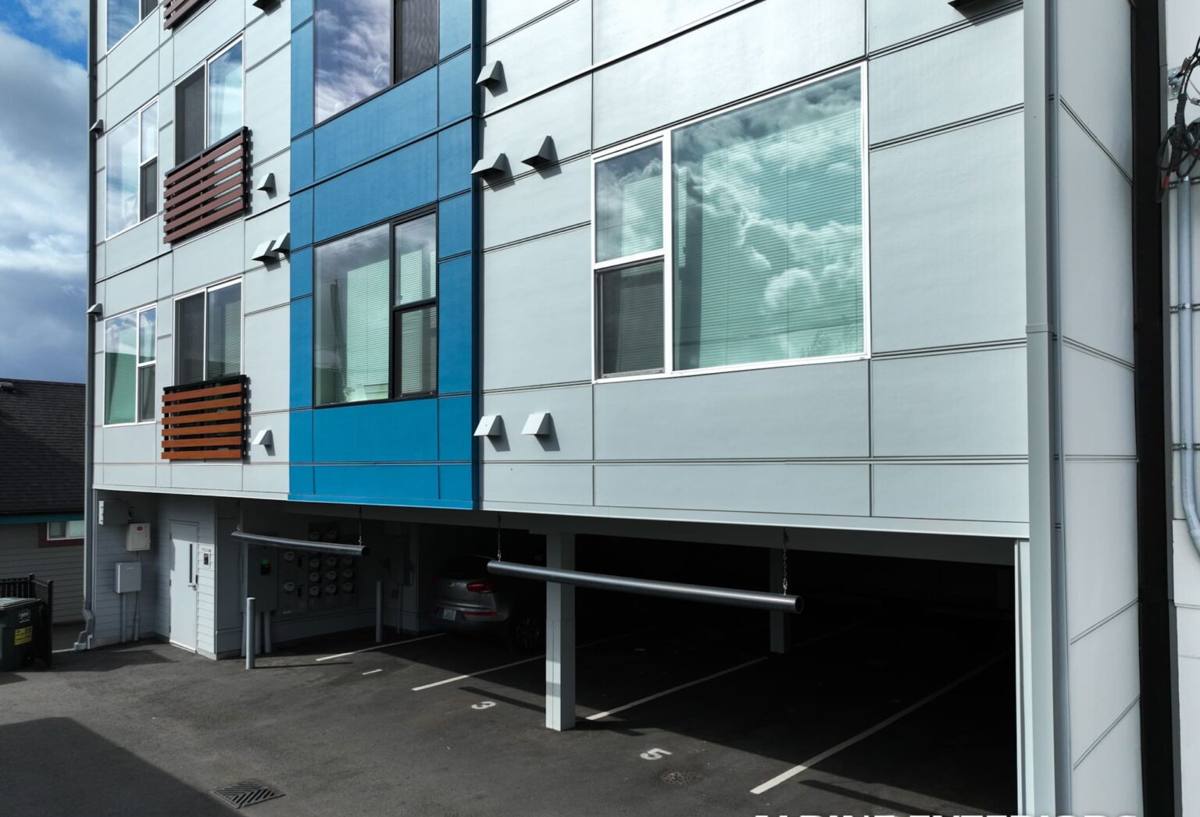
Fiber cement siding is a composite of Portland cement, sand, and cellulose fibers, cured under pressure into rigid, dense boards. James Hardie is the manufacturer we use exclusively. It's heavier than vinyl, dimensionally stable, non-combustible, and finished at the factory with a baked-on ColorPlus coating rather than field-applied paint.
How They Hold Up to Hurricane-Force Wind
This is the trade-off that matters most in Largo. Vinyl siding is rated for wind resistance, but that rating depends entirely on correct fastening, proper panel gauge, and installation exactly to the manufacturer's nailing pattern. In practice, a lot of vinyl siding fails at the fastening points — panels pop loose, buckle, or blow off outright — well before the wind reaches the manufacturer's stated rating, especially on homes where trim details or corner posts weren't installed to spec.
Fiber cement is heavier and more rigid by nature, which gives it a real structural advantage in sustained coastal wind events. James Hardie's HZ5 product line is engineered specifically for climates like ours — hot, humid, and hurricane-exposed — and is tested and rated for high-wind zones. Heavier board plus a system designed around Florida wind loads is a meaningfully different proposition than a light plastic panel snapped onto furring strips.
What This Means During an Actual Storm
- Vinyl panels can deform or pop off their locks in sustained gusts, exposing the house wrap and sheathing underneath
- Loose vinyl panels become wind-borne debris themselves, which can damage neighboring property or windows
- Fiber cement's mass and rigid fastening pattern keep panels seated through gusts that would compromise lighter cladding
- Correctly installed fiber cement holds its shape without buckling in Florida's summer heat, which softens and can warp vinyl
UV Exposure and Color Life
Pinellas County gets sun exposure most of the year, and UV breaks materials down over time in ways that aren't always obvious until years later. Vinyl siding is colored through its full thickness, but the pigments and the plastic itself degrade under constant UV. The most common result is fading, and in some cases the surface becomes chalky or brittle. Darker vinyl colors also absorb more heat, which accelerates warping — this is why manufacturers often restrict how dark a vinyl color you're allowed to choose in southern climates.
James Hardie's ColorPlus finish is a factory-applied, baked-on coating engineered specifically to resist UV fading, backed by its own finish warranty separate from the substrate warranty. Because it's cured at the factory under controlled conditions, it holds color more consistently than field-painted or through-colored products exposed to Florida's year-round sun.
Wind-Driven Rain and Moisture Behavior
Wind-driven rain is a fact of life during Gulf Coast storms, and how a siding system sheds and drains water matters as much as the material itself. Vinyl siding is installed loose by design, so it drains behind itself passively — that's fine as long as the water-resistive barrier and flashing details underneath are done right, but vinyl won't tell you if something behind it is failing. Moisture can sit against sheathing for a long time before any visible sign shows up on the surface.
Fiber cement is not waterproof itself — it's cement-based, so it will absorb moisture if not properly sealed at cut edges, joints, and penetrations. That's exactly why installation quality is the deciding factor with this product, not a minor detail. Every cut edge needs to be primed and sealed, every joint needs proper flashing, and manufacturer clearances from grade and roof lines need to be followed. Done right, fiber cement performs very well in humid, storm-prone climates. Done poorly, it can trap moisture — which is the single biggest reason we insist on installing to Hardie's written specifications rather than cutting corners to save labor time.
Salt Air and Coastal Corrosion
Living near Tampa Bay means airborne salt settles on every exterior surface, and it's corrosive to more than just metal. Vinyl doesn't corrode, but salt residue combined with UV exposure can accelerate surface degradation and chalking over time, and vinyl's plastic composition can become more brittle in this combination. Fiber cement is inert to salt in the way metal or untreated wood would react — it doesn't corrode. The bigger factor for either product near the coast is the fasteners and trim accessories; we use corrosion-resistant fasteners on every install regardless of siding material for this reason.
Impact Resistance and Storm Debris
During and after storms, wind-borne debris — branches, roof gravel, patio furniture — is a real risk to any exterior cladding. Vinyl is a flexible plastic, so it can absorb small impacts by flexing, but a sharp or hard impact will crack or punch through a panel outright, and cracked vinyl panels often need full-panel replacement since color-matching decades-old vinyl is difficult. Fiber cement is rigid and dense; it resists puncture and impact better than vinyl in most real-world scenarios, though a hard enough direct hit can still crack or chip it. Because Hardie boards are ColorPlus finished and available in matching batches, isolated repairs are more straightforward to blend in.
Fire Performance
This is a simple, factual difference worth stating plainly: vinyl siding is a combustible plastic product. Fiber cement is non-combustible — it's roughly 90% cement and sand by composition. That doesn't mean vinyl siding is unsafe or improperly used across the industry; it's code-approved and widely installed. But for homeowners weighing fire exposure risk (grass fires, neighboring structure fires, grilling accidents near the house), it's a legitimate factor in the decision, and it's one reason some insurance carriers offer better terms for non-combustible cladding.
Side-by-Side Comparison
| Factor | Vinyl Siding | James Hardie Fiber Cement |
|---|---|---|
| Material | Extruded PVC plastic | Cement, sand, cellulose fiber composite |
| Typical upfront cost | Lower | Higher |
| Hurricane wind performance | Rated, but failure-prone at fastening points | Heavier, rigid, climate-engineered HZ5 line |
| UV/color stability | Fades and chalks over time, especially dark colors | Factory ColorPlus finish resists fading |
| Combustibility | Combustible plastic | Non-combustible |
| Moisture sensitivity | Passive drainage, low install sensitivity | Requires precise sealing/flashing at cuts and joints |
| Salt air exposure | Doesn't corrode, can degrade with UV/salt combo | Inert to salt, fasteners/trim need corrosion resistance |
| Impact resistance | Flexes, cracks under sharp impact | Rigid, resists puncture better in most impacts |
| Warranty structure | Varies by manufacturer, often prorated | Long-term product warranty, transferable, factory finish warranty |
Why We Standardized on One Product
We used to get asked to quote vinyl jobs alongside Hardie jobs, and over years of doing this work in Pinellas County we made a decision: we only install James Hardie fiber cement. Not because vinyl is a scam or a bad product in general — it's a legitimate, widely-used material — but because we didn't want to keep standing behind installations that we knew would be more exposed to hurricane wind, UV fade, and impact damage on our specific coastline than a heavier, climate-engineered alternative. Standardizing on one manufacturer also means our crews install one system correctly and repeatedly, rather than switching between materials with very different installation rules.
James Hardie's HZ product lines are formulated by climate zone, the ColorPlus factory finish reduces the maintenance burden of repainting, and the manufacturer's warranty is transferable if you sell the home — a real factor for resale in a market like Largo's. When installed to spec — correct fastener spacing, sealed cut edges, proper clearances from grade and roofline — it's a system built for exactly the conditions this area sees every hurricane season.
What to Ask Any Contractor Before You Decide
- Ask what wind rating the specific product and installation method carries, not just the material in general
- Ask whether cut edges and joints will be factory-primed or field-sealed, and who is responsible if that's missed
- Ask what fastener material will be used, given salt air exposure near the coast
- Ask whether the warranty is transferable to a future buyer if you sell the home
- Ask for the manufacturer's written installation instructions and whether the crew installs to that spec on every job
- Get the wind rating and installation requirements in writing, not just verbally described
The Bottom Line for Largo Homeowners
Vinyl siding will cost less on day one, and for a lot of climates it's a perfectly reasonable choice. But Largo sits in a hurricane-exposed, high-UV, salt-air coastal environment, and that combination is where vinyl's weaknesses show up soonest — fading, buckling, and wind failure at the fastening points. Fiber cement costs more to install and demands a lot more precision from the installer, but it's built to hold color, hold shape, and hold on to the wall through exactly the conditions Pinellas County sees most summers.
If you're weighing a re-side and want a straight answer about what will actually hold up on your home, we're happy to walk your property, look at your current siding's condition, and give you a free, no-pressure estimate with no obligation to move forward.