 Largo Siding
 Two Ways to Get a Wood Look Without Real Wood
Homeowners in Largo and across Pinellas County usually land on two finalists when they want the look of painted wood siding without the upkeep of actual lumber: engineered wood siding (LP SmartSide is the best-known brand) and fiber cement siding (James Hardie is the market leader). Both are marketed as low-maintenance, both come pre-primed or factory-finished, and both can look convincing from the street. The similarities stop there. These are two fundamentally different materials with different failure modes, and in a climate that throws hurricane-force wind, wind-driven rain, constant UV, and salt air at a house every single year, that difference matters more here than it would in a drier, milder region.
This page lays out honestly what each product does well and where each one struggles, and explains why our company made the decision years ago to install only fiber cement. We're not going to pretend engineered wood is junk — it isn't. But we are going to explain why we won't put our name behind installing it on a Gulf Coast home.
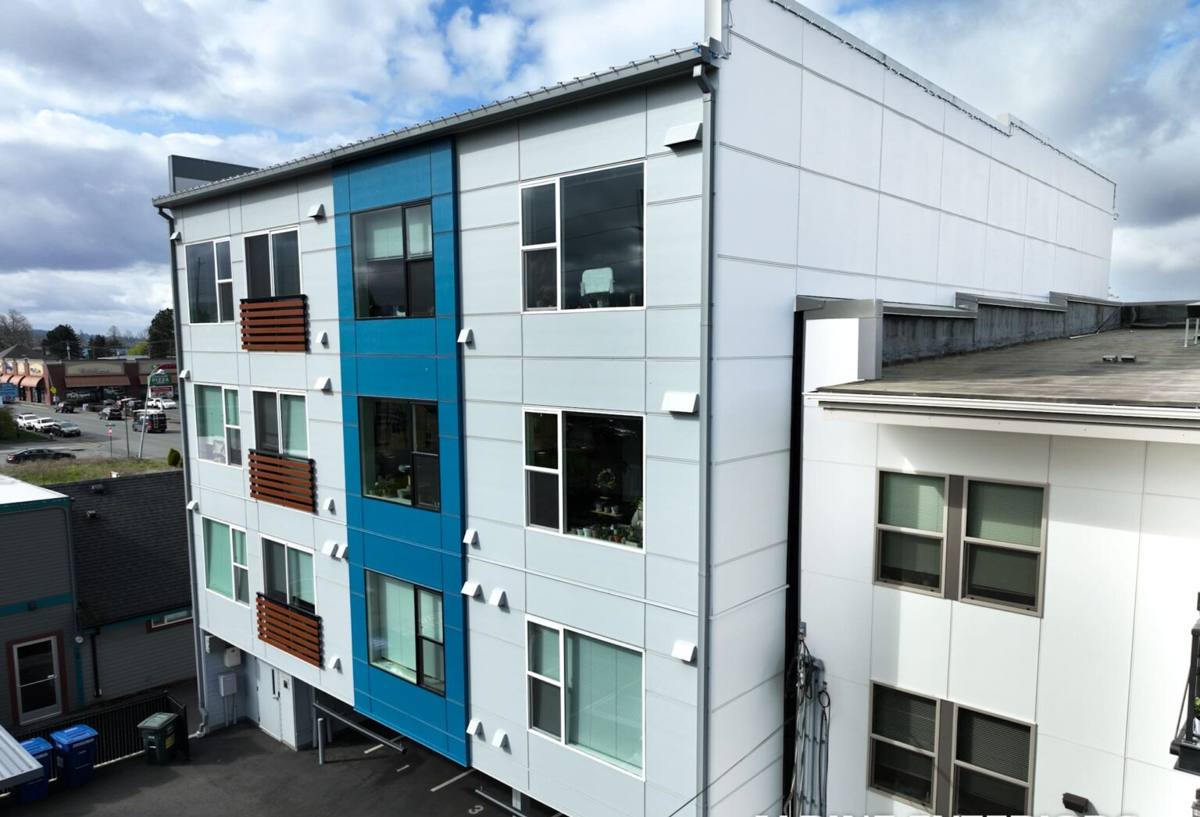
What Engineered Wood Siding Gets Right
LP SmartSide and similar engineered wood products are made from wood strands or wood fiber bonded with resins under heat and pressure, then coated with a wax or zinc-borate treatment for moisture and insect resistance. There are real advantages to this approach:
- It's lighter than fiber cement, which can make handling and installation faster on some crews.
- It holds a screw and nail similarly to real lumber, which some carpenters find more forgiving to work with.
- It's less brittle at the edges than fiber cement, so it's less prone to chipping during handling.
- Upfront material cost is often somewhat lower than fiber cement.
For a lot of markets, especially drier inland climates, engineered wood is a perfectly reasonable choice when it's installed correctly and maintained on schedule. The trouble is that "installed correctly and maintained on schedule" is a much narrower window in a coastal Florida climate than it is elsewhere.
Where the Trade-Offs Show Up in a Climate Like Ours
Moisture and Wind-Driven Rain
Engineered wood's core is still wood fiber. It resists moisture better than raw lumber, but it is not moisture-proof — it's moisture-resistant, and that resistance depends entirely on an intact factory coating and fully sealed field cuts, joints, and fastener penetrations. Largo sits close enough to the Gulf that wind-driven rain during tropical storms and summer squalls doesn't just fall straight down — it drives sideways into laps, corners, and butt joints. Any gap in the sealant at those points becomes a path for water into the substrate. Once moisture gets into engineered wood fiber, it doesn't dry out cleanly the way solid material does; the strands can swell, and swelling at a cut edge or a fastener hole tends to show up as a soft spot, a bulge, or telegraphing paint failure well before the rest of the wall shows wear.
UV Exposure and Finish Longevity
Pinellas County gets strong, direct sun essentially year-round. Engineered wood's factory finish is a resin-based coating, and coatings degrade under sustained UV — that's true of almost any painted surface, but it means the repaint clock on engineered wood siding tends to start sooner here than in a lower-sun-load climate. Once the finish starts chalking or thinning, the wood substrate underneath loses its main line of defense against the moisture problem above.
Installation Sensitivity
Every cut edge, top edge, and fastener on engineered wood siding is supposed to be field-sealed with the manufacturer's approved sealant or primer before it's ever exposed to weather. That's not a suggestion — it's a warranty condition. On a real job site, with normal schedule pressure and normal crew turnover, that level of discipline on every single cut is difficult to guarantee across an entire house, every time. Skip one cut edge on a wall that catches driving rain, and that's where the problem starts.
Fiber Cement: A Different Material Chemistry
Fiber cement siding is made from portland cement, sand, and cellulose fiber, cured into a rigid, dimensionally stable board. There's no wood fiber in the substrate to swell, rot, or feed insects. It doesn't expand and contract with humidity the way wood-based products do, which matters over a Florida summer where humidity swings are constant. It's also non-combustible, which isn't a coastal-specific advantage but is a real one — fiber cement won't ignite from embers or a nearby fire the way wood-based sidings can.
None of this makes fiber cement indestructible or maintenance-free. It still needs to be installed with correct clearances, correctly caulked joints, and a proper water-resistive barrier behind it. But the material itself isn't the weak point the way a wood-fiber core can be.
Side-by-Side Comparison
| Factor | Engineered Wood (LP SmartSide) | Fiber Cement (James Hardie) |
|---|---|---|
| Core material | Wood strand/fiber with resin binder | Cement, sand, cellulose fiber |
| Moisture behavior | Resistant if coating and seals stay intact | Does not swell or rot; substrate is not wood |
| UV/finish durability | Factory coating, repaint interval affected by high UV exposure | ColorPlus factory finish rated for long-term color retention |
| Combustibility | Combustible (wood-based core) | Non-combustible |
| Install sensitivity | High — every cut/fastener must be field-sealed | Moderate — correct clearances and caulking required |
| Weight/handling | Lighter, easier to cut and carry | Heavier, requires fiber cement blades and PPE |
| Typical warranty structure | Manufacturer limited warranty, often prorated | Long-term limited warranty on product; ColorPlus finish warranty separate |
Why We Standardized on James Hardie
James Hardie makes climate-specific product lines, including an HZ5 formulation engineered for higher-moisture, high-UV regions like ours, rather than a single generic board sold everywhere. Paired with the ColorPlus factory finish — a baked-on finish applied and cured under controlled conditions rather than field-painted — it holds up to sustained Florida sun with less color fade and chalking than a field-applied or lower-grade factory coat. That combination of a stable, non-wood substrate and a finish built for exactly this kind of UV load is why we made fiber cement our standard rather than treating it as one option among several.
It also comes down to what we can stand behind. When we install James Hardie to spec, we can tell a homeowner what to expect from that siding for decades, including a strong transferable warranty if the home changes hands. We can't make that same confident commitment on a product whose long-term performance in this climate depends on every field seal holding up perfectly, indefinitely, on every wall of the house.
Cost Over the Life of the Siding
Sticker price isn't the only number that matters. A few honest cost factors to weigh:
- Upfront material and labor: engineered wood is often modestly cheaper to install than fiber cement.
- Repainting cycle: a factory ColorPlus finish is designed to go longer between repaints than a field-applied or standard factory coating exposed to constant coastal sun.
- Repair risk: localized moisture damage in a wood-based substrate often means replacing full boards rather than spot-patching a coating issue.
- Insurance and resale conversations: non-combustible, storm-rated siding is increasingly something buyers and insurers ask about directly in this market.
- Warranty payout structure: check whether a warranty is prorated over time or holds full value — this affects what you'd actually recover years down the road.
What Correct Fiber Cement Installation Actually Requires
Fiber cement's advantages only hold if it goes on right. Before hiring anyone for a fiber cement job, confirm the crew will:
- Maintain manufacturer-specified clearances from grade, roofing, and decks
- Use a proper water-resistive barrier and correctly lapped flashing at every penetration
- Caulk and seal joints with a product rated for the application, not general-purpose caulk
- Use fiber-cement-rated blades and proper dust control when cutting on site
- Fasten according to Hardie's published fastening schedule for our wind zone
- Register the installation for warranty purposes where applicable
Making the Right Call for Your Largo Home
We're not asking anyone to take our word for it without understanding the reasoning. Engineered wood siding has legitimate advantages and a legitimate place in the market — just not, in our professional judgment, on homes that sit through Pinellas County's combination of hurricane-force wind events, near-daily UV load, and salt-laden air year after year. Fiber cement's non-wood substrate and climate-engineered product lines are built to hold up to exactly those conditions with less dependence on perfect field sealing over the life of the siding.
If you're weighing siding materials for a home in Largo or anywhere nearby, we're happy to walk through your specific house, your exposure, and what each option would realistically mean for your maintenance schedule and budget. Reach out for a free, no-pressure estimate — there's no obligation, just a straight answer.