 Largo Siding
 What Is Allura Fiber Cement?
Allura makes fiber cement lap siding, panels, and trim that compete directly with James Hardie in the same general category of material: a blend of cement, sand, and cellulose fiber pressed and cured into a rigid board. On paper, the two products look similar. Both are non-combustible, both resist rot and insects better than wood, and both hold paint or factory finish longer than vinyl. Allura also has a real manufacturing history — the plant that produces it has been making fiber cement for decades under different ownership and brand names.
We get asked about Allura fairly often, usually by homeowners in Largo who priced out a job and found a bid using it for less than a comparable Hardie install. That's a fair question to ask, and it deserves a fair answer rather than a sales pitch. This page is that answer.
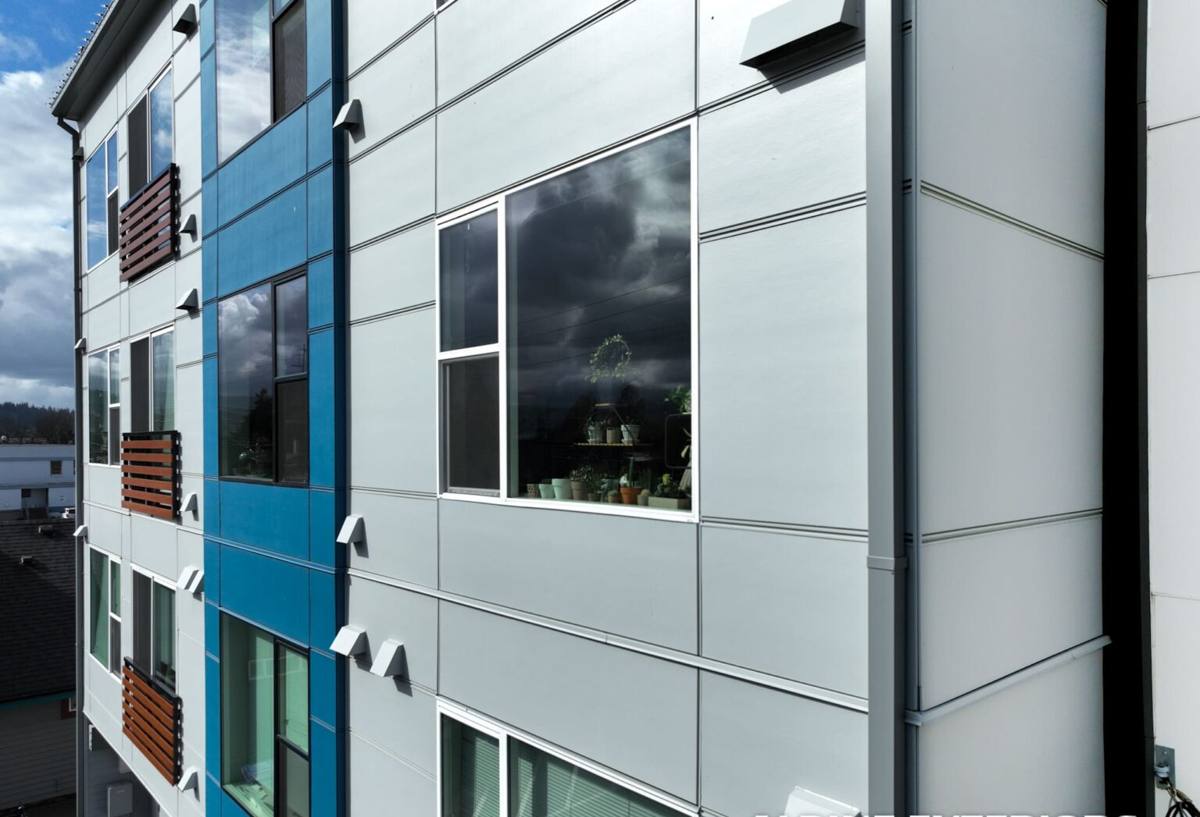
What Allura Gets Right
Before explaining why we don't install it, it's worth being straight about what the product does well, because pretending otherwise wouldn't be honest:
- It's genuine fiber cement, not a vinyl or composite substitute — so it shares fiber cement's basic advantages over wood and vinyl: no warping, no melting in reflected summer heat, and strong resistance to termites and woodpeckers.
- It comes in lap, panel, and shingle-style profiles that can achieve a similar look to Hardie's product lines.
- It is typically priced below James Hardie, which matters on a tight budget or a large square footage job.
- Some Allura product lines carry primed or factory-finished options, reducing (though not eliminating) on-site painting needs.
If Allura were a bad product in some absolute sense, we wouldn't need a page like this — we'd just say so and move on. The real story is more specific than that, and it comes down to how the product performs and is supported here, on the Gulf Coast, over a 20-30 year ownership period.
Why We Don't Install It
Our company made a decision years ago to install James Hardie exclusively and to turn down jobs where a homeowner wants a different fiber cement brand. That's not a marketing position — it's a standard we hold ourselves to because we're the ones who have to warranty the labor, source matching replacement pieces years later, and stand behind the job when a hurricane season tests it. A handful of practical differences drove that decision.
Climate-Specific Engineering
James Hardie manufactures regional product lines engineered for specific climate zones — the HZ5 line sold in our part of Florida is formulated and warranted specifically for high-moisture, high-UV, storm-exposed climates like Pinellas County. Allura does not offer that same tier of climate-zoned product differentiation. A siding product that was engineered generically rather than for the specific combination of salt air, humidity, and UV load we get in Largo is starting from a different baseline before a single nail goes in.
Factory Finish & Long-Term Color Warranty
James Hardie's ColorPlus factory finish comes with its own dedicated finish warranty, separate from the substrate warranty, covering fading and peeling for a defined term. Allura's finish and warranty structure is not equivalent in scope or track record. On a coastal property where UV exposure is intense essentially year-round, the finish is often the first thing to show wear — and it's the part homeowners notice first and complain about loudest.
Regional Supply and Batch Consistency
James Hardie has deep distribution in the Tampa Bay area, which means when a board gets damaged by a falling branch three years after install, we can order the same profile and color and get a close match. Allura's distribution network in this region is thinner. That doesn't just affect us during installation — it affects the homeowner for the life of the siding, every time a repair, addition, or storm-damage patch is needed.
Installation Specifications
Fiber cement is not a forgiving material to install wrong — fastener placement, gapping, caulking, and flashing details all have to follow the manufacturer's specific instructions to hold up over time, and each brand's installation manual differs in the details. We've built our entire crew training, fastening schedule, and quality-control process around one manufacturer's specifications. Splitting that standard across two different products' install requirements increases the chance of a mistake that won't show up until year five or six, usually at a butt joint or corner.
Comparing the Two on the Factors That Actually Matter
| Factor | Allura | James Hardie (what we install) |
|---|---|---|
| Climate-zoned product line for Gulf Coast exposure | Not offered at the same tier | HZ5 line engineered for this climate |
| Factory finish warranty | Limited, less established track record here | Dedicated ColorPlus finish warranty |
| Local distribution / replacement matching | Thinner regional supply | Established Tampa Bay distribution |
| Installer familiarity with fastening spec | Secondary to our primary system | Our crews' sole, practiced standard |
| Typical upfront material cost | Generally lower | Generally higher |
That last row is the honest trade-off. Allura's price advantage is real. Whether it's worth the difference depends on how long you plan to own the home, how much you value a matched local supply chain for future repairs, and how much weight you put on climate-specific engineering versus a generic fiber cement formulation.
How Pinellas County Weather Changes the Calculus
None of this is theoretical for a house in Largo. Siding here has to deal with several stresses at once, not just one:
Hurricane-Force Wind
Lap siding has to stay fastened through sustained wind and gusts, and the fastening schedule that keeps it attached is manufacturer-specific. A product with a thinner local track record and less climate-zone engineering is an added variable in exactly the scenario where you don't want variables.
Wind-Driven Rain
Storms here rarely just fall straight down — wind pushes rain sideways and up under laps and around penetrations. Correct gapping, flashing, and caulking at every joint matter more here than in a drier, calmer climate, which is why we don't mix installation standards across brands on the same crew.
Year-Round UV
Florida doesn't give painted or coated surfaces an off-season. Fading and chalking show up faster here than in northern climates, which is exactly why the strength of a finish warranty — and the manufacturer's track record backing it — matters more here than almost anywhere else in the country.
Salt Air
Being close to the Gulf and Tampa Bay means airborne salt is a constant, low-grade stress on fasteners, trim, and finishes. It doesn't ruin fiber cement the way it can ruin untreated metal, but it does mean every detail of the install — fastener type, caulk quality, finish integrity — has less margin for error.
Questions Worth Asking Before You Choose a Fiber Cement Brand
Whether you go with us or another contractor, these are the questions that actually separate a good long-term siding decision from a cheaper one:
- Is this product's finish warranty separate from the substrate warranty, and what does it actually cover?
- Does the manufacturer offer a product line engineered specifically for this climate zone, or is it one generic formulation nationwide?
- If a section gets damaged in five years, can the contractor realistically source a matching replacement locally?
- Is the installation crew trained and practiced specifically on this brand's fastening and gapping specifications, or is it "similar enough" to what they usually install?
- Is the warranty transferable if you sell the home, and does it require using labor to remain valid?
Why We Standardize on James Hardie Instead
We install James Hardie exclusively because it lets us do one thing very well rather than several things adequately. Our crews train on one fastening and installation standard. We stock and match one system's trim, starter strips, and accessories. We know one manufacturer's warranty terms cold, and we can tell a homeowner exactly what's covered and for how long without hedging. The HZ5 product line was engineered for the exact combination of humidity, UV, and storm exposure that Pinellas County sees every year, and the ColorPlus finish carries its own dedicated warranty against fading and peeling. None of that makes Hardie flawless or Allura defective — it makes Hardie the product we can stand behind completely, because we've built our entire process around it rather than around two competing specs.
What This Means for Your Project
If a lower material cost is the deciding factor and you're comfortable with a thinner local supply chain for future repairs, Allura is a legitimate fiber cement product and there are contractors who install it well. We're simply not one of them, by our own choice — not because we think it's a bad product, but because we've decided that installing one system exceptionally well serves our customers better than installing two systems adequately. If you want James Hardie done correctly, with a crew that has trained on nothing else, that's the job we're built for.
If you're weighing siding options for a home in Largo or anywhere in Pinellas County, we're happy to walk the exterior with you and give you a straight, no-pressure estimate — no obligation, and no pressure to choose a brand you didn't ask about.