 Largo Siding
 Why Color Is a Bigger Decision Than It Looks Like
Most homeowners treat siding color like a paint chip decision — pick something that looks good next to the roof and trim, order it, done. In Largo, that shortcut costs people money a few years down the road. Between the UV load we get almost 365 days a year, salt-laden air rolling in off Tampa Bay and the Gulf, and the wind-driven rain that comes with every summer storm and hurricane season pass, a siding finish here is under constant attack. The color you choose, and more importantly how that color is applied to the board, determines whether your house still looks sharp in year twelve or is already showing chalky, faded panels by year five.
This is where James Hardie's ColorPlus Technology actually matters, not as a marketing term but as a practical difference in how the finish is bonded to the fiber cement board. We'll walk through how it works, what the color lines look like, and what to actually think about when picking a color for a home in Pinellas County.
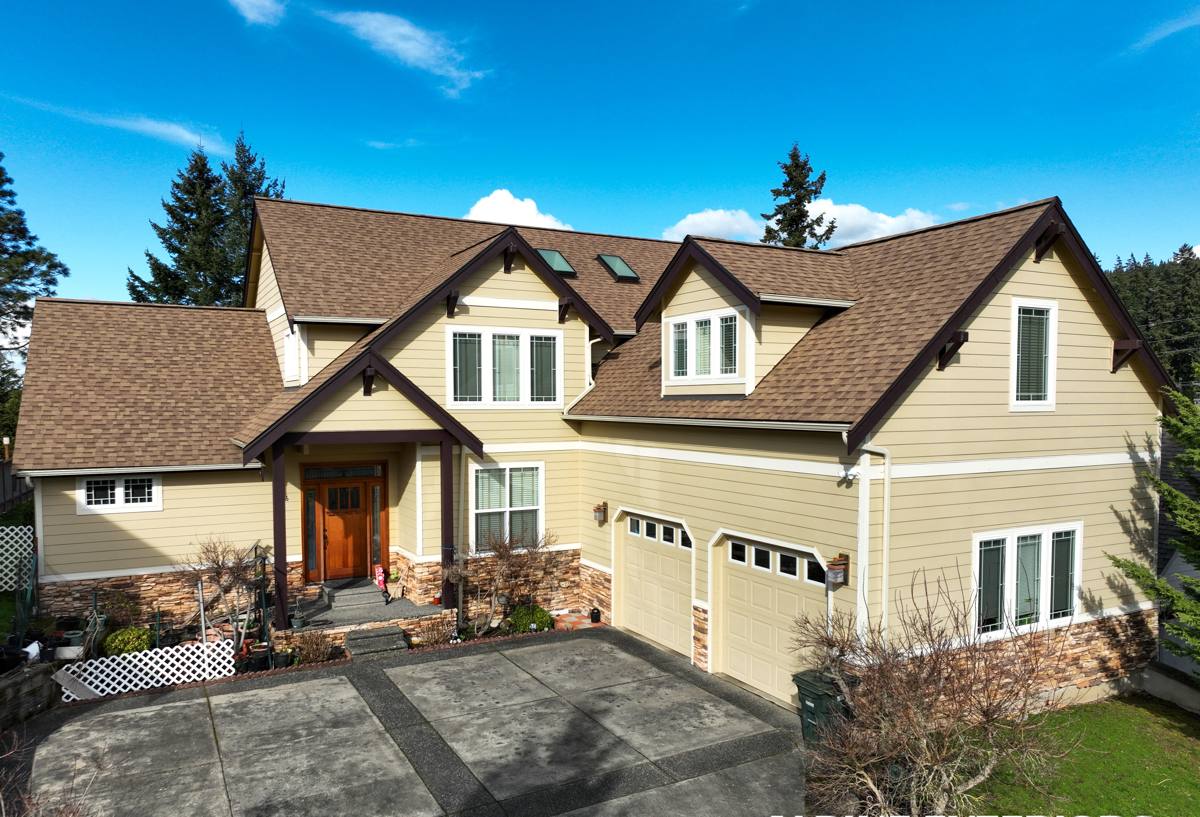
What ColorPlus Technology Actually Is
ColorPlus is a factory-applied, baked-on finish system. Instead of siding leaving the plant primed white or gray and getting painted on site (or years later by a homeowner), Hardie's ColorPlus boards go through multiple coats of color and clear coat applied in a controlled factory environment, then cured. The result is a finish that's more uniform, more consistently bonded to the substrate, and backed by its own dedicated warranty separate from the base product warranty.
Why Factory-Applied Beats Field-Applied
Paint applied on a job site is at the mercy of that day's humidity, temperature, and how evenly the crew rolls or sprays it. A factory finish doesn't have those variables — every board gets the same number of coats, cured under the same conditions, before it ever reaches Largo. That consistency is a big part of why ColorPlus resists the fading and chalking that field-painted fiber cement, wood, or LP SmartSide is prone to once Florida sun starts working on it.
| Factor | ColorPlus Factory Finish | Field-Applied Paint |
|---|---|---|
| Coat consistency | Uniform, multi-coat, factory-controlled | Varies by crew, weather, and technique |
| Cure process | Baked and cured before install | Air-dries on the wall, sensitive to humidity |
| Typical repaint interval in this climate | Often 15 years or longer before touch-up is needed | Commonly 5-8 years before fading or peeling shows |
| Warranty | Dedicated finish warranty from Hardie | Whatever the paint manufacturer or installer offers, if anything |
| Color matching after repairs | Touch-up kits matched to the exact ColorPlus formula | Dependent on saving the original paint batch |
Built for the Gulf Coast: HZ10 and Climate-Engineered Lines
James Hardie doesn't make one version of its siding for the whole country. The company engineers different HZ (HardieZone) formulations for different climate zones, and Largo falls into HZ10 territory — the zone built for the hottest, most humid, highest-moisture regions in the country, which includes most of coastal Florida and the Gulf. HZ10 products are formulated with that combination of heat, humidity, and moisture exposure in mind, which matters just as much as the color you pick sitting on top of it. A great color on a board that isn't matched to your climate zone is still a mismatch.
The Color Lines: What's Actually Available
Hardie organizes its ColorPlus palette into a few collections, and most Largo homes end up drawing from two of them.
Statement Collection
This is the core, most widely available lineup — a range of about 20 colors running from classic whites and grays through deeper blues, greens, and browns. These are the colors you'll see most often on siding in this area, and they're stocked and available across most Hardie product lines (lap siding, shingle-style panels, trim boards).
Dream Collection and Regional/Premium Options
Depending on the product line and your local distributor's stock, additional premium or regional colors may be available, including deeper or more distinctive tones for accent work — trim, shutters, gable ends, or a contrasting board-and-batten section. Availability varies by distributor, so this is a "confirm before you fall in love with it" conversation, not an assumption.
Primed for Paint
Hardie also sells primed boards meant to be field-painted, for homeowners who want a fully custom color outside the ColorPlus palette. That's a legitimate option, but it's worth being clear-eyed about the trade-off: you're giving up the factory-cured consistency and the ColorPlus finish warranty in exchange for color flexibility. In a coastal climate like ours, that's a real trade-off, not a minor one.
How Largo's Climate Actually Shapes a Good Color Choice
UV and Fade Resistance
Darker colors absorb more UV energy and heat, which historically made deep tones the first to show fading on lower-quality finishes. ColorPlus formulations are built to resist that, but it's still true that darker, more saturated colors will show any fading first if a board is ever damaged, poorly maintained, or exposed to something abnormal — a sprinkler head hitting the same spot daily, for instance.
Salt Air and Coastal Exposure
Homes closer to the water — which in Pinellas County can mean a lot of properties — deal with salt deposits on exterior surfaces. Salt itself doesn't damage the ColorPlus finish the way it corrodes metal fasteners or trim, but it does build up as a dulling film if the siding isn't rinsed periodically. Lighter colors tend to show this buildup less obviously between washes than very dark, high-gloss-looking finishes.
Wind-Driven Rain and Storm Exposure
During hurricane season, siding doesn't just get rained on — it gets rain driven sideways into seams, corners, and butt joints. This is less about color and more about installation (proper flashing, gapping, and caulking at joints), but it matters here because a compromised installation can let moisture behind a board regardless of how good the finish is. Color performance is only as good as the install underneath it.
Heat and Curb Appeal Timing
Florida buyers and appraisers are used to seeing sun-faded exteriors on older homes, so a fresh, even, non-chalky finish reads as well-maintained property immediately — which matters whether you're staying long-term or thinking about resale.
Matching Color to the Rest of the House
A few practical considerations that come up on almost every project:
- Roof color and material — a color that clashes with an existing tile or shingle roof is the single most common regret we see
- Trim and fascia — many homeowners run a lighter ColorPlus trim color against a deeper body color for contrast
- HOA and deed restrictions — a number of Pinellas County communities and HOAs have approved color lists or require submittal before exterior changes; check this before you fall in love with a color
- Neighboring homes — matching too closely can look accidental; going too far outside the block's palette can stand out for the wrong reasons
- Undertones in direct Florida sun — a color that reads neutral gray on a sample chip indoors can pick up a green or blue cast in full outdoor sun; always view a large sample outside, not just a swatch
The ColorPlus Warranty, Plainly
ColorPlus Technology carries its own finish warranty, separate from the standard Hardie product warranty on the fiber cement substrate itself. In practical terms, that means the color and finish are covered against issues like cracking, peeling, and fading, in addition to the coverage on the board's durability. Warranty terms and what's required to keep them valid (proper installation, use of Hardie-approved caulks and fasteners, touch-up procedures for cut edges) are things we go over with every homeowner before a single board goes up — a warranty is only worth what the paperwork behind it actually says, so read it rather than assume.
Protecting the Finish During and After Installation
A ColorPlus finish is factory-cured, but it's not invincible during installation, and a few sloppy habits can undercut the whole point of paying for a factory finish in the first place.
- Field-cut edges must be sealed with Hardie's matching touch-up product — a raw cut edge left unsealed is a moisture entry point regardless of how good the factory finish is
- Fasteners should be Hardie-approved and installed correctly — overdriven or corroding fasteners telegraph through the finish over time
- Caulking at joints and penetrations should use a product compatible with the ColorPlus finish, not whatever's cheapest at the supply house
- Panels should be handled and stacked properly on site to avoid chipping the factory finish before installation
- Post-install, an annual rinse with a garden hose removes salt film and pollen buildup without needing pressure washing, which can damage caulk lines and joints if done carelessly
What This Means for Your Project
Picking a James Hardie color isn't just a cosmetic decision — it's a decision about how the house looks in year one versus year fifteen, given everything Largo's climate throws at an exterior. ColorPlus Technology, matched to an HZ10 product line and installed correctly, is built specifically to hold up under that load. Skipping any part of that chain — a field-painted substitute, mismatched climate engineering, or careless installation around cut edges and joints — is where color problems actually start.
If you're weighing colors, roof pairings, or just want to see large ColorPlus samples against your actual house before deciding, we're happy to walk through it. Reach out for a free, no-pressure estimate and we'll bring samples out to your property.