 Largo Siding
 Why Siding in Kenneth City Wears Differently Than Siding Inland
Kenneth City sits in the middle of Pinellas County, close enough to Tampa Bay and the Gulf that salt-laden air, high humidity, and wind-driven rain are part of daily life even though the neighborhood isn't beachfront. That combination is harder on exterior siding than most homeowners realize. Salt air accelerates corrosion of fasteners and metal trim. Humidity keeps moisture in wall cavities longer after a storm. And Pinellas County's building code requires exterior materials to hold up to hurricane-force wind loads, which means repairs here aren't just cosmetic — they have to restore the wall's ability to shed water and resist wind pressure the way it was designed to.
When we get called out for siding repair in Kenneth City, the damage almost always traces back to one of three things: sun-baked and cracked material that finally let water in, wind that lifted or cracked panels during a storm, or moisture that crept in around a poorly sealed joint months or years before the damage became visible. Understanding which of these you're dealing with changes how the repair should be done.
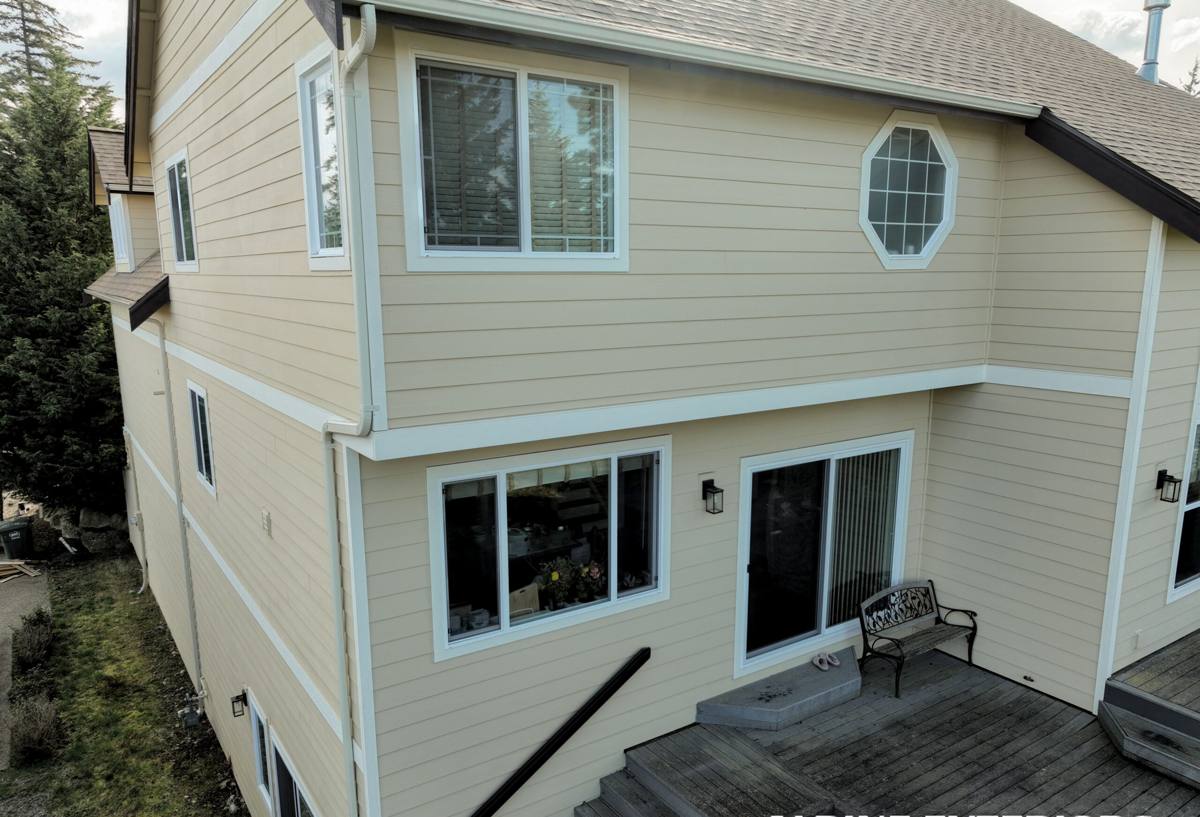
The Local Climate Factors That Drive Repair Calls
Year-Round UV Exposure
Florida sun is relentless twelve months a year, not just in summer. Siding materials that rely on paint film or a thin factory coating for protection — older vinyl, primed wood trim, some fiber cement without a baked-on finish — chalk, fade, and eventually crack under that UV load. Once the protective layer breaks down, the substrate underneath is exposed to moisture cycling, and that's where rot and swelling start.
Wind-Driven Rain
Pinellas County doesn't need a named storm to get wind-driven rain. Regular thunderstorms push water sideways into seams, laps, and fastener penetrations that were never meant to take water head-on. Siding that's correctly lapped, caulked, and fastened sheds that water. Siding with a gap, a missing piece of flashing, or a caulk joint that's failed doesn't — and the water finds the sheathing behind it.
Salt Air
Even a few miles inland from the bay, salt in the air settles on exterior surfaces and accelerates corrosion of nails, screws, and any exposed metal trim or flashing. Corroded fasteners lose their grip on siding panels over time, which is a common — and often overlooked — cause of loose or rattling siding that homeowners assume is a wind problem.
Humidity and Moisture Retention
High ambient humidity means damaged siding doesn't dry out quickly the way it might in a drier climate. A cracked panel or open seam that would cause minor, slow-developing damage elsewhere can lead to real moisture intrusion here in a matter of weeks, especially during the wet season.
Signs Your Kenneth City Home Needs Siding Repair
- Visible cracks, splits, or holes in siding panels, especially near corners and window/door trim
- Panels that look bowed, warped, or no longer sit flush against the wall
- Soft or spongy spots when you press on the siding near the bottom of walls or below windows
- Peeling, bubbling, or chalky paint film on wood or older composite siding
- Visible rust streaks around fasteners or trim
- Gaps opening up at seams, corners, or where siding meets trim, soffit, or windows
- A musty smell or discoloration on interior walls that back up to exterior siding
- Increased pest activity around the base of exterior walls, which often points to softened, moisture-damaged material
What a Correct Repair Actually Involves
A lot of siding "repairs" we see done elsewhere are cosmetic patches — a bead of caulk over a crack, a new panel nailed over rotted sheathing without checking what's underneath. That approach hides a problem instead of fixing it, and in Pinellas County's climate, hidden moisture problems don't stay hidden for long.
A repair done right starts with figuring out how water got in, not just where the damage is visible. That means pulling back damaged panels to inspect the underlying weather barrier and sheathing, not just replacing what's visible from the street. If the sheathing underneath is soft or delaminated, that has to be addressed before new siding goes back on — otherwise you're fastening new material to a substrate that can't hold it. Flashing around windows, doors, and roof-to-wall transitions gets checked at the same time, since a siding crack is often just the symptom of a flashing failure somewhere nearby.
Once the substrate is sound, the repair itself needs to match the existing siding's profile, reveal, and fastening pattern so it blends in and performs the same as the surrounding material — not just visually, but in how it sheds water. For fiber cement specifically, that means correct nail placement (not overdriven, not into the panel's caulk edge), proper gapping at butt joints, and re-caulking only where the manufacturer's install spec calls for it, since over-caulking fiber cement can trap moisture instead of keeping it out.
Repair vs. Replacement: How We Decide
| Situation | Repair Often Works | Replacement Usually Makes More Sense |
|---|---|---|
| Isolated crack or impact damage, sheathing dry underneath | Yes — patch or panel swap | |
| Damage confined to one wall or elevation | Yes, if the rest of the siding is sound | |
| Rot or soft sheathing found in multiple spots | Yes — points to a systemic moisture issue | |
| Siding is near or past its expected service life | Yes — repairs won't outlast a full system | |
| Repeated repair calls to the same area | Yes — underlying cause hasn't been fixed | |
| Discontinued or hard-to-match siding profile | Sometimes, with careful sourcing | Sometimes, if matching isn't practical |
We'll always tell you honestly which category your home falls into. There's no reason to sell a full re-side to a homeowner whose damage is isolated and whose sheathing is dry — and there's no reason to keep patching a wall that's telling you it needs more.
Why We Only Repair and Install James Hardie Fiber Cement
When a repair calls for replacing sections of siding — or when a homeowner decides enough damage has accumulated that a full re-side makes more sense — we only work with James Hardie fiber cement. That's a deliberate standard, not a default.
Fiber cement doesn't feed pests, doesn't warp or rot the way wood-based products can when they take on moisture, and it's non-combustible, which matters in a state with plenty of lightning-driven brush and structure fires. Hardie's ColorPlus factory finish is baked on rather than site-applied, which holds up to Florida's UV load far longer than a field-applied paint job — the fading and chalking we described earlier is much less of an issue over the product's life. Hardie also engineers specific product lines (their HZ5 line, for instance) for humid, high-moisture climates like ours, which is a meaningful difference from siding built to a generic national spec.
We don't install LP SmartSide, vinyl, Cemplank, Allura, or primed wood species like spruce or cedar. Each of those has legitimate uses in the right climate, but we've made a professional call, based on what we see in repair calls across Pinellas County, that Hardie fiber cement holds up better to the specific combination of UV, salt air, humidity, and wind this area gets year-round — and it carries a strong transferable warranty backed by a manufacturer that's been building for this climate for decades. When we repair a section of your home, we want the patch to perform as long as the rest of the wall — and we're only confident promising that with the material we trust most.
Our Repair Process
- On-site inspection — we look at the visible damage and check surrounding areas, trim, and flashing for related issues before quoting anything
- Moisture and substrate check — where damage suggests water intrusion, we open the area up to inspect sheathing before closing anything back up
- Honest repair-vs-replace recommendation — in writing, with the reasoning explained, not just a number
- Matched material and fastening — repairs use fiber cement matched to your existing reveal and profile, installed to manufacturer spec
- Final weatherproofing check — flashing, joints, and caulking are confirmed before we call the job done
Why Local Experience in Kenneth City Matters
Siding repair isn't one-size-fits-all across Florida. A crew that mostly works drier, inland climates won't necessarily catch the early signs of salt-air fastener corrosion or know which wall orientations in a Pinellas County neighborhood take the worst wind-driven rain during a typical summer storm pattern. A crew that works Kenneth City and the surrounding Largo area regularly has already seen how local homes — often a mix of ages and original siding materials — hold up over years of this specific climate, and knows what to look for beyond the obvious crack or hole.
That familiarity also means faster, more accurate diagnosis. We're not guessing at how Pinellas County humidity and storm patterns interact with your siding — we see it on repair calls throughout the county on a regular basis, which shapes how carefully we check for hidden moisture before we ever quote a repair.
Get an Honest Look at Your Siding
If you're seeing cracks, soft spots, gaps, or discoloration on your home's siding, it's worth getting a professional opinion before the damage spreads further into the wall. We offer free, no-pressure estimates for Kenneth City homeowners — we'll tell you plainly whether you're looking at a repair or something bigger, and why. Fill out the form below to get started.