 Largo Siding
 Kenneth City's Siding Takes a Beating — Here's Why
Kenneth City is a small, established residential community tucked into Pinellas County, surrounded by Largo and the rest of the Tampa Bay peninsula. Being this close to both the Gulf and the bay means every house here deals with the same combination of stresses: long summers of intense UV exposure, wind-driven rain that finds every gap in a siding system, salt-laden air that accelerates corrosion on fasteners and trim, and the real possibility of hurricane-force wind loads during storm season. None of that is unique to Kenneth City, but it's a lot to ask of any exterior product, and it's why siding that performs fine in a drier, milder climate can fail early here.
A lot of Kenneth City's housing stock is older, and much of it was sided decades ago with whatever was standard at the time — old masonite, aging vinyl, or wood that's been through more paint jobs than anyone can count. When that siding starts failing, it's rarely a cosmetic problem alone. It's usually a sign that moisture has been getting behind the cladding for a while, and that's a bigger repair than most homeowners expect until someone actually opens up the wall.
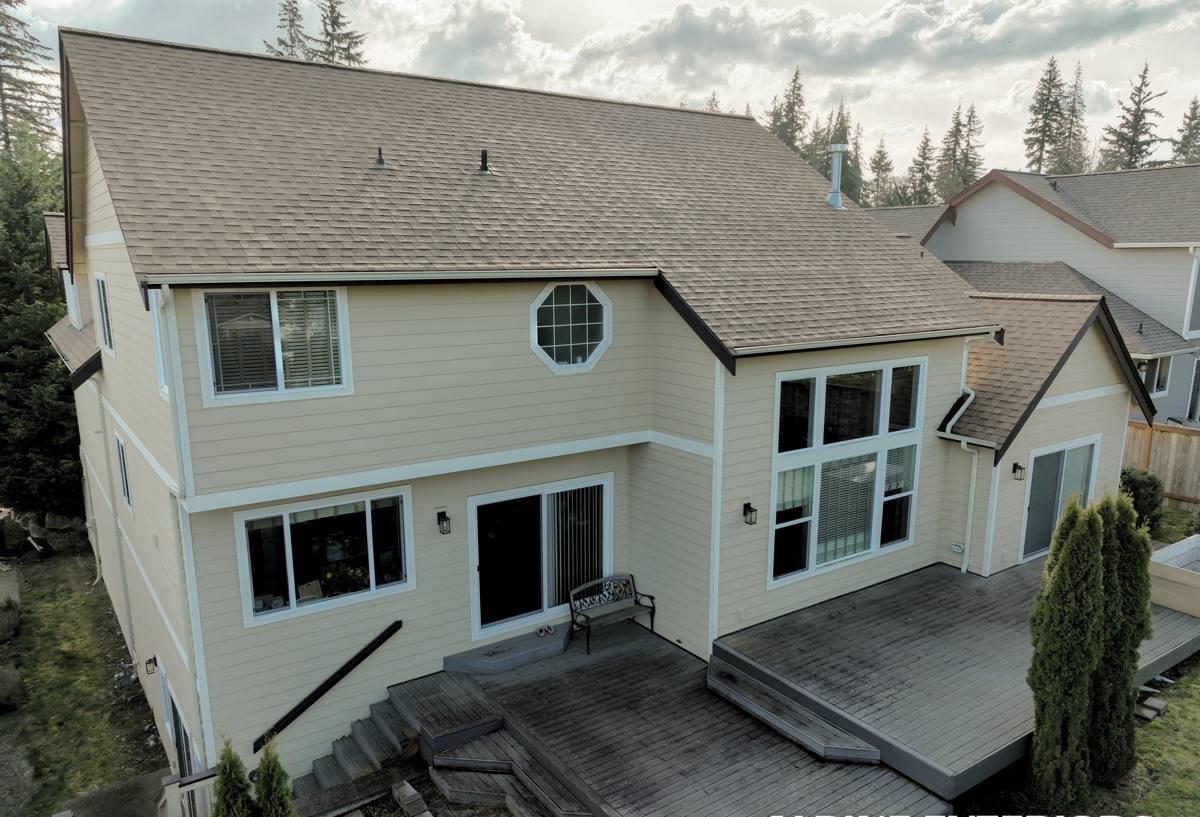
Signs Your Siding Has Crossed From "Repair" to "Replace"
Not every siding problem means a full tear-off. But in a coastal-influenced climate like Pinellas County's, small issues compound fast, and there's a point where patching individual boards costs more over time than replacing the whole system correctly. Here's what tells us a Kenneth City home is past the point of spot repairs:
- Soft, spongy, or crumbling spots when you press on the siding — usually a sign of trapped moisture and rot underneath
- Visible warping, buckling, or gaps between boards, especially on walls that face prevailing wind and rain
- Paint that won't hold anymore no matter how often it's redone, or chalking that leaves residue on your hand
- Rust streaks below nail heads or corner trim, a sign the fasteners or flashing are corroding
- Soft drywall, peeling interior paint, or musty smells on interior walls that back up to problem siding
- Siding that's original to a home built decades ago, even if it looks okay from the curb — the housewrap and flashing behind it are likely just as old
- Insect activity or soft trim boards around windows and doors, which often starts at failed siding joints
If you're seeing more than one of these, it's worth having someone look at the whole wall assembly, not just the siding surface.
What a Correct Siding Replacement Actually Involves
Siding replacement done right is not just stripping off old boards and nailing up new ones. The siding itself is the least of the system's problems if the layers underneath it are wrong. A proper job in a wind-and-rain climate like this one includes several steps that are easy to skip and impossible to see once the wall is closed back up:
Full Tear-Off and Substrate Inspection
We remove the old siding down to the sheathing and actually look at what's underneath — soft wood, rusted fasteners, and old flashing get found and dealt with here, not discovered later as a warranty claim.
Weather-Resistive Barrier
A new, correctly lapped moisture barrier goes on before a single new board is hung. This is the layer that actually keeps wind-driven rain out of the wall cavity if water ever gets past the siding surface — which, in this climate, it eventually will at some point in the home's life.
Flashing at Every Penetration
Windows, doors, hose bibs, light fixtures, vents — every place something punches through the wall needs proper flashing and integration with the weather barrier. This is where most siding failures actually originate, not in the field of the siding itself.
Correct Fastening for Wind Zones
Pinellas County sits in a high-wind coastal zone, and fastener spacing, type, and embedment have to match that. This isn't optional trim work — it's the difference between siding that stays attached in a tropical storm and siding that peels off in sheets.
Finish and Sealant Details
Joints, seams, and trim intersections get sealed with products rated for sustained UV and moisture exposure, not generic caulk that chalks and cracks within a couple of Florida summers.
Why We Install Only James Hardie Fiber Cement
We don't offer vinyl, LP SmartSide, primed wood, or cedar as options — not because those products can't be installed, but because we've made a professional decision about what holds up on Pinellas County homes over the long run, and we'd rather stand behind one system we trust completely than offer several we have reservations about.
Vinyl is inexpensive and easy to install, but it's a plastic product that softens and can distort in sustained high heat, and in a real hurricane-force wind event it has a lower tolerance for impact and blow-off than fiber cement. Wood and wood-based composite products look good on day one, but they depend heavily on paint film integrity and moisture management to avoid rot — a maintenance burden that's tougher to keep up with in a humid, rain-heavy climate than in a drier one. James Hardie fiber cement is non-combustible, dimensionally stable in heat and humidity, and manufactured with HZ5 product lines engineered specifically for high-humidity, storm-prone climates like ours. Its ColorPlus factory finish is baked on and warranted against fading and chipping, which matters enormously under Florida's UV load — it's the difference between a paint job that needs redoing in five years and a finish that's still holding at fifteen.
That combination — non-combustible material, climate-specific engineering, a factory finish built for UV, and a strong transferable warranty — is why Hardie is the only siding system we put our name behind.
Material Comparison for Coastal Pinellas County Homes
| Factor | James Hardie Fiber Cement | Vinyl | Wood / Composite |
|---|---|---|---|
| UV / fade resistance | Factory ColorPlus finish, warranted | Fades and chalks over time | Depends entirely on paint upkeep |
| Wind performance | Engineered, rated for high-wind installation | Lower impact and blow-off tolerance | Varies by fastening and substrate |
| Moisture / rot risk | Non-combustible, dimensionally stable | Low rot risk but can trap moisture behind panels | Highest — rot risk if moisture gets in |
| Maintenance | Repaint on a much longer cycle | Low, but limited repair options | Frequent repainting and sealing |
| Salt air exposure | Engineered for humid, coastal climates | Generally stable but can become brittle | More vulnerable without diligent upkeep |
What Drives the Cost of a Siding Replacement
Every Kenneth City home is different, so we won't quote a number without seeing the house, but these are the factors that actually move the price up or down on a project like this:
| Cost Factor | Why It Matters |
|---|---|
| Home size and number of stories | More surface area and access complexity means more labor and material |
| Condition of the existing wall assembly | Rotted sheathing or old flashing found during tear-off adds repair scope |
| Trim, soffit, and fascia scope | Whether trim is replaced alongside siding or left as-is affects total cost |
| Siding profile and accent details | Shake-style accents, board-and-batten sections, or multiple color changes add labor |
| Window and door count | Each opening needs flashing and trim work, which adds time |
| Access and site conditions | Tight lot lines, fencing, or landscaping close to the house can slow work |
How Our Process Works, Start to Finish
We're based in Largo and already work jobs throughout Kenneth City and the surrounding Pinellas County communities, so the process is one we run often, not one we're improvising:
- Walkthrough and assessment — we look at the current siding, trim, and any visible moisture or rot signs, and talk through what we expect to find once tear-off starts
- Written estimate — a clear scope of work and pricing before anything is scheduled, with contingency pricing explained upfront rather than surprising you mid-project
- Permitting — siding replacement in Pinellas County typically requires a permit, and we handle that process rather than leaving it to the homeowner
- Tear-off and substrate repair — old siding comes off, the sheathing gets inspected, and any soft or damaged wood is addressed before anything new goes on
- Weather barrier and flashing installation — the parts of the job nobody sees but that determine whether the siding lasts
- Hardie installation to spec — fastened and finished according to manufacturer requirements for our wind zone
- Final walkthrough — we review the finished work with you before calling the job complete
Why a Crew That Already Works Kenneth City Matters
Hiring locally isn't just a convenience — it changes the quality of the job in specific ways. A crew that regularly works Kenneth City and the greater Largo area already knows the Pinellas County permitting process, so approvals move faster instead of stalling out on paperwork a homeowner has never dealt with before. We understand the wind-load and installation requirements that apply here, because we're applying them on every project, not looking them up for the first time. And when storm season approaches, a local crew can be more responsive if wind or water damage needs fast assessment and documentation for insurance purposes — something an out-of-town contractor simply can't offer.
There's also accountability. A company that works your neighborhood regularly has a reputation to protect with your neighbors, not just with you. That's a different incentive than a crew passing through from out of the area for a one-off job.
What to Ask Before You Hire Anyone for This Job
- Are you licensed and insured to work in Pinellas County, and can you provide proof?
- Will you pull the required permit yourselves, or is that left to me?
- What weather-resistive barrier and flashing details will you use, specifically?
- What fastening schedule will you follow for our wind zone?
- Is the estimate itemized, and what happens if you find rot or damage once tear-off starts?
- What warranty applies to both the material and your labor?
If your Kenneth City home's siding is showing its age, or you just want an honest opinion on what shape it's really in, we're happy to take a look. Fill out the form below for a free, no-pressure estimate — we'll walk the exterior with you and tell you straight what we see.