 Largo Siding
 Why Siding Takes a Beating in Dunedin and Largo
Homes along this stretch of Pinellas County sit in one of the toughest climates in the country for exterior building materials. Dunedin and Largo see the same combination of stressors year after year: hurricane-force wind events that test every fastener and seam, intense year-round UV that breaks down finishes and caulk faster than almost anywhere else in the state, wind-driven rain that gets pushed sideways into laps and trim, and a steady dose of salt air off the Gulf and the intracoastal that accelerates corrosion on anything metal. No single one of these is unusual on its own. It's the combination, applied constantly, that wears siding down faster here than it would in a drier or more inland climate.
That's the lens we use on every repair call in this area. A crack, a soft spot, or a discolored patch on a Dunedin or Largo home is rarely just cosmetic — it's usually a sign of one of those four stressors doing its job. Repairing it correctly means figuring out which one is actually responsible, not just patching the visible symptom.
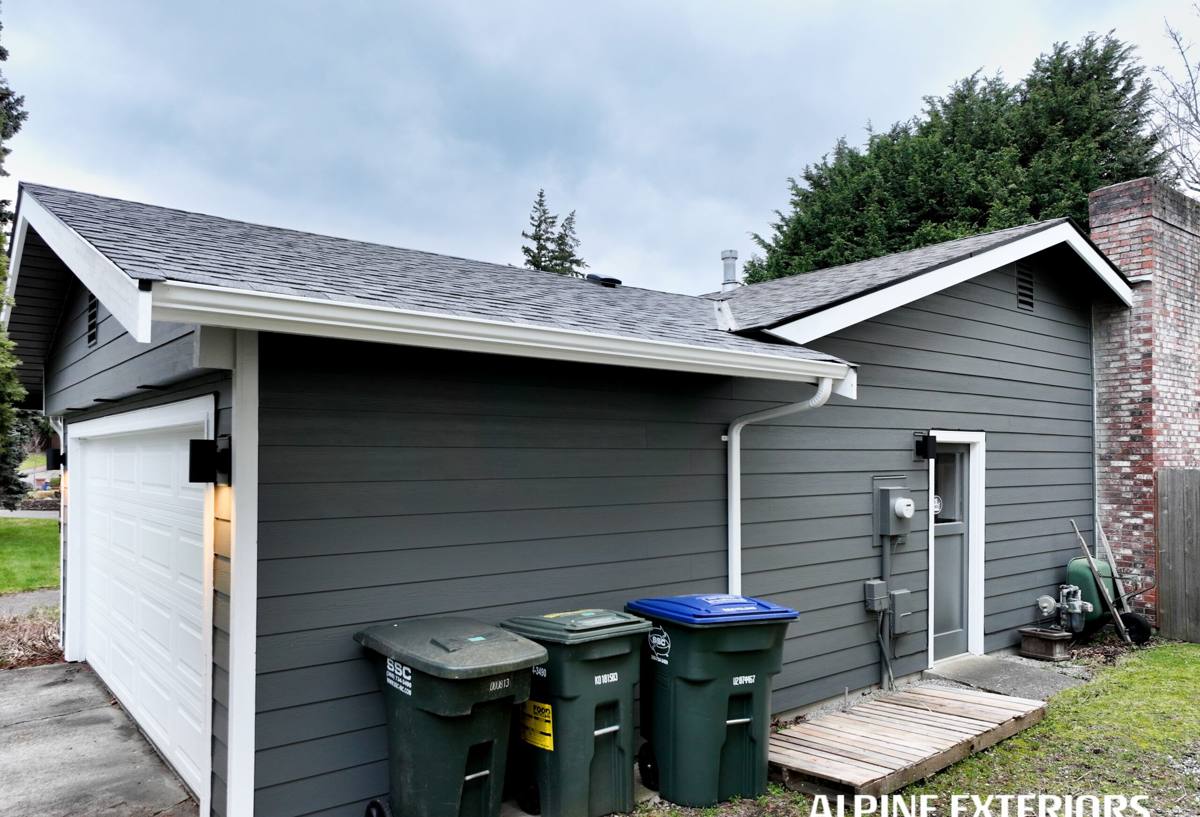
Signs Your Siding Needs Attention
Most siding problems in this area show themselves gradually. Homeowners often notice something is "off" long before they can say exactly what. Here's what we tell people in Dunedin and Largo to watch for between inspections:
- Soft, spongy, or bouncy spots when you press on a panel, especially near the bottom courses or below windows
- Visible cracking, splitting, or chipped edges, particularly after a windstorm
- Bubbling, peeling, or chalky paint film, which often points to trapped moisture underneath
- Streaking, dark staining, or persistent mildew that doesn't wash off with normal cleaning
- Gaps opening up at butt joints, corners, or trim where caulk has dried out and shrunk
- Rust streaks running down from nail heads or fastener locations
- Panels that look loose, are visibly out of line, or flutter slightly in strong wind
- A musty smell near exterior walls inside the home, which can indicate moisture has reached the sheathing
Any one of these on its own might be minor. Several together, or any sign of softness in the substrate, means it's worth getting a professional opinion before the damage spreads to framing or interior walls.
Common Causes of Damage We See Locally
Not every repair has the same root cause, and the fix should match the cause, not just the symptom. This is the breakdown we work from on most Dunedin and Largo repair calls:
| What You See | Likely Cause | Typical Fix |
|---|---|---|
| Cracked or split panels, dented trim | Wind-driven debris or impact during a storm | Cut out and replace the damaged section, matched to existing profile and finish |
| Soft or delaminating boards near grade or under windows | Long-term moisture intrusion from failed flashing or caulk | Remove affected material, correct the water path, replace with new board |
| Rust streaks at fastener points | Salt air corrosion of exposed or improperly rated fasteners | Remove and re-fasten with corrosion-resistant hardware rated for coastal exposure |
| Faded, chalky, or peeling painted surfaces | UV breakdown of an on-site or aging factory finish | Spot refinish or panel replacement depending on how far the breakdown has spread |
| Gaps at joints and corners | Caulk failure from repeated heat and UV cycling | Remove old sealant, re-caulk with a product rated for this climate |
The common thread is that Pinellas County's climate doesn't just cause one kind of failure — it causes several at once, often on the same wall. A proper repair estimate accounts for all of them, not just the one that's most visible.
What a Correct Repair Actually Involves
A siding repair that just covers a hole or slaps on new caulk usually fails again within a season or two in this climate. Doing it right takes a few extra steps that are easy to skip but make the difference between a repair that lasts and one you'll be calling about again next year.
First, we figure out why the damage happened, not just where. If a board is soft, we check for the moisture source before replacing anything — a failed piece of flashing, a gap at a penetration, or a compromised weather-resistive barrier behind the siding will just create the same failure again if it isn't addressed. Second, we check how far the damage actually extends. Moisture tends to travel along seams and behind panels before it ever shows on the surface, so what looks like a small spot repair sometimes needs to open up further to find solid material to tie into. Third, fasteners and flashing details get upgraded to hardware and materials suited for salt air exposure, not just whatever matches what was there originally. And finally, any new material gets sealed and finished to match the surrounding siding as closely as possible, so a repair doesn't stand out as a patch for the next fifteen years.
Repairing After Wind and Storm Events
Pinellas County homes get tested by tropical storms and hurricanes on a recurring basis, and siding is one of the first things to show the damage. Wind doesn't just throw debris — sustained gusts create uplift pressure at panel edges and corners that can loosen fasteners even when the siding looks intact from the ground. That's why post-storm inspections matter even when nothing looks obviously broken: a panel that's lost its grip at one corner is a much easier fix today than after a second storm finishes the job.
When we're called out after a wind event, we're looking for the obvious impact damage, but also for the less obvious stuff: fasteners that have backed out, seams that have opened, and trim that's shifted enough to let water behind it. Catching and correcting those issues after a storm, rather than waiting for the next one to expose them further, is one of the more cost-effective things a homeowner in this area can do for their siding's long-term life.
Repair vs. Replacement: Being Honest About What We Find
Not every siding problem in Dunedin or Largo is a quick fix, and we'd rather tell a homeowner that up front than sell a repair that won't hold. We install James Hardie fiber cement siding exclusively, and that shapes how we approach repair calls on homes with other materials.
If a home already has Hardie siding, most repairs are straightforward: cut out the damaged section, address the underlying cause, and replace with matched material and ColorPlus finish. If a home has vinyl, LP SmartSide, cedar, or another product and we find isolated, minor damage, we'll often do a targeted repair to buy time. But if we find widespread moisture damage, repeated failure points, or a substrate that's clearly reached the end of its service life under this climate's stress, we'll say so plainly rather than patch it and let the underlying problem keep spreading. In those cases, we'll walk through what full replacement with fiber cement would look like and why, but the decision is always the homeowner's — our job is to give an honest read on what we're actually looking at, not to upsell a job that isn't needed.
Why James Hardie Repairs Hold Up Better Here
When we do repair or replace sections on a Hardie-sided home, the material itself works in the homeowner's favor. Fiber cement doesn't absorb and swell with humidity the way wood-based products can, and it isn't vulnerable to UV breaking down its structure the way some other sidings are — the factory-applied ColorPlus finish is baked on and engineered to resist fading and cracking under the kind of sun exposure Pinellas County gets nearly every day of the year. It's also non-combustible, which matters in a state with its share of wildfire risk inland and lightning-driven fire risk near the coast.
Practically speaking, that means a repaired section of Hardie siding is more likely to age at the same rate as the rest of the wall, instead of becoming the spot that fails again first. Hardie's HZ5 product line in particular is engineered for high-humidity, storm-prone climates like this one, which is part of why it's the only product we put back on a home, whether we're doing a full install or a targeted repair.
Our Repair Process, Start to Finish
Every repair call in Dunedin and Largo follows the same basic sequence, whether it's a single damaged panel or storm damage across a whole elevation:
- On-site inspection to identify visible damage and check for moisture intrusion behind the surface, not just what's showing
- Diagnosis of the root cause — impact, moisture, fastener failure, or finish breakdown — so the fix addresses the source
- A clear, honest estimate that explains what needs to be repaired, what's optional, and what to watch going forward
- Removal of damaged material back to solid substrate, even if that means opening up more than the original problem area
- Correction of the underlying issue — flashing, sealant, or fastener upgrades — before any new material goes on
- Installation of matched replacement material, fastened and sealed to hold up against wind, rain, and salt exposure
- Final finish work so the repair blends into the surrounding siding rather than standing out
Because we work in this area regularly, we can usually get to a repair call faster than a crew coming from outside the county, which matters most right after a storm when exposed damage needs to be addressed before the next rain event makes it worse.
Why a Crew That Already Works Dunedin Matters
Siding repair in this part of Florida isn't the same job as siding repair in a drier, calmer climate, and it shows in the details. A crew that regularly works Dunedin and Largo already knows the wind exposure differences between a home a few blocks from the water and one further inland, understands the permitting expectations Pinellas County applies to exterior work, and has already dealt with the salt-air fastener corrosion issues that catch out-of-area crews off guard. That familiarity shows up in small but important ways — the right hardware chosen the first time, flashing details that account for wind-driven rain instead of just vertical rainfall, and finish matching that accounts for how quickly color can shift under this much sun exposure.
It also means faster response after the storms that cause the most damage in the first place. When a hurricane or strong tropical system moves through, demand for repair work spikes across the whole region — a crew already established locally, with local material stock and local knowledge, is in a better position to get to a damaged home quickly instead of adding it to a long-distance queue.
If you're seeing any of the warning signs above, or you just want an honest read on how your siding is holding up against Dunedin and Largo's climate, we're glad to take a look. Reach out for a free, no-pressure estimate using the form below.