 Largo Siding
 Why Kenneth City Roofs Take a Different Kind of Beating
Kenneth City sits in the middle of Pinellas County, on a narrow peninsula with water on nearly every side. That geography means homes here absorb weather that inland Florida towns simply don't see as often. Tropical systems moving through the Tampa Bay area bring sustained wind and gusts that stress every shingle, nail, and flashing seam on a roof. Between named storms, the same roofs sit under some of the most intense year-round UV exposure in the continental United States, which slowly bakes the oils out of asphalt shingles and makes them brittle. Add in salt-laden air drifting off the Gulf and Tampa Bay, which accelerates corrosion on nails, flashing, and vent boots, and you have a roofing system that ages faster here than it would almost anywhere else in the country.
Kenneth City also has a lot of homes built in the mid-20th century, many with roofs that have been recovered or re-shingled more than once. Older roof decks, older flashing details, and older attic ventilation don't always meet the standard a modern storm-resistant roof needs. When wind and wind-driven rain find a weak point, they find it fast — and the damage is often worse than what's visible from the ground.
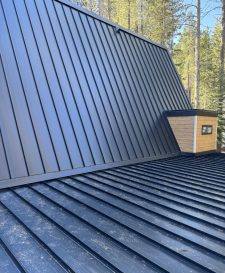
What Storm Damage Actually Looks Like
Wind Damage
Hurricane-force and even tropical-storm-force gusts don't need to rip a roof off to cause a real problem. Lifted or creased shingles, broken shingle seals, and missing tabs are the most common results. A shingle that's been lifted and re-seated by wind may look fine from the driveway but no longer has a working adhesive bond, which means the next storm — or even a strong afternoon thunderstorm — can peel it off entirely.
Wind-Driven Rain and Hidden Leaks
Florida storms rarely drop rain straight down. Wind pushes it sideways and up under shingle edges, around vent boots, and along flashing at chimneys, walls, and skylights. This kind of intrusion often shows up first as a stain on an interior ceiling days or weeks after the storm has passed, long after the homeowner assumed the roof was fine.
Impact and Debris Damage
Falling branches, blown roof vents, and airborne debris cause punctures, cracked tiles, and dented metal panels or flashing. Even small impact points break the waterproof seal of a roofing system and become entry points for water if they aren't addressed.
Repair or Replace? What Actually Determines the Right Call
Not every storm-damaged roof needs a full replacement, and not every roof can be safely patched. The right call depends on the roof's age, how much of it was affected, and what's happening underneath the surface layer.
| Factor | Favors Repair | Favors Replacement |
|---|---|---|
| Roof age | Roof is less than half through its expected lifespan | Roof is already near or past its expected service life |
| Extent of damage | Damage is limited to one section or a handful of shingles/tiles | Damage is spread across multiple slopes or a large percentage of the field |
| Decking condition | Deck is dry and sound once uncovered | Deck shows rot, soft spots, or repeated past water intrusion |
| Matching materials | Existing shingle/tile line is still available to match | Product is discontinued and patches would visibly mismatch |
| Insurance scope | Adjuster's scope supports a targeted repair | Adjuster's scope or engineer report supports full replacement |
A trustworthy inspection tells you honestly which column your roof falls into — not which option is more profitable for the contractor standing in your driveway.
Our Storm Repair Process for Kenneth City Homes
1. Stop Further Damage First
If a roof has active exposure — missing shingles, a torn tarp, or an open puncture — the first priority is stabilizing it, not estimating it. Temporary dry-in with proper tarping or synthetic underlayment buys time so rain doesn't keep getting into the attic and ceiling while permanent repair materials are sourced.
2. Full Roof and Attic Inspection
We walk the entire roof, not just the area the homeowner points out, because wind damage rarely stays confined to one spot. We also check the attic from the inside for water staining, wet insulation, or daylight coming through — signs of intrusion points that aren't obvious from the ground.
3. Targeted, Correctly Detailed Repair
Repairs are done to match proper roofing practice, not just "make it stop leaking." That means correct shingle or tile overlap, proper flashing integration at any penetrations in the repair area, and fasteners placed to current wind-resistance standards — not just enough nails to hold the piece down temporarily.
4. Documentation Along the Way
We photograph the damage before, during, and after repair. That record is often the difference between a smooth insurance claim and a drawn-out dispute over what was actually wrong with the roof.
Materials and Installation Standards That Actually Hold Up
Fastening and Nailing Patterns
A shingle roof's real wind resistance comes down to fastening — nail count, nail placement, and nail penetration into solid decking. A roof installed or repaired with the minimum nail pattern will fail sooner in high wind than one installed to the manufacturer's high-wind or enhanced nailing specification. In a market like ours, we treat the enhanced pattern as the standard, not an upgrade.
Underlayment and Flashing
Underlayment is the roof's backup plan for the moments when wind pushes water past the surface material — which, in Kenneth City, is a matter of when, not if. Synthetic or self-adhering underlayment at vulnerable areas (valleys, eaves, penetrations) gives a roof a real second line of defense instead of relying on the shingles alone. Flashing at chimneys, walls, and skylights gets rebuilt correctly during a repair rather than caulked over, since caulk is a temporary fix, not a repair.
Corrosion-Resistant Hardware
Because of the salt air moving off the Bay, we use fasteners and flashing metals suited to a coastal-influenced environment rather than standard inland-grade hardware that corrodes faster here.
Working With Your Insurance Claim
Most storm damage repair work in this area runs through a homeowner's insurance claim, and the roofing contractor's documentation carries real weight in that process. A clear, dated photo record and a specific, honest scope of damage help an adjuster understand what actually happened rather than relying on guesswork. We provide that documentation as part of the repair, and we'll walk through what we found in plain language — no inflated damage claims, and no downplaying real damage either. Our job is to describe the roof accurately, not to tell the insurance company or the homeowner what either one wants to hear.
What To Do in the First 24–48 Hours After a Storm
- Photograph visible roof damage from the ground and any interior water stains before cleanup begins.
- Avoid walking on the roof yourself — storm-damaged decking and wet surfaces are a real fall hazard.
- Cover active leaks inside with a bucket or tarp to limit interior damage while repairs are arranged.
- Contact your insurance carrier to open a claim if damage looks significant.
- Be cautious with out-of-town crews going door-to-door right after a storm; verify licensing before signing anything.
- Get a professional inspection even if damage looks minor — hidden intrusion points are common after wind-driven rain.
Why Hire a Crew That Already Works Kenneth City
Roofing crews from outside the area — the ones who show up in force after every named storm and disappear once the season quiets down — don't have a stake in how the repair holds up next season, or the one after that. A crew based here in the Largo and Pinellas County area has to stand behind its work to the same neighbors, year after year. We know how Kenneth City's older roof decking tends to behave, what flashing details commonly fail on homes of a certain age here, and how to detail a repair so it survives the next round of Gulf-driven wind and rain, not just looks fine until then.
Local availability matters during storm season too. When a system moves through Tampa Bay, response time is everything — a crew that's already working in the area can get to a tarp-and-stabilize call faster than one dispatched from across the state.
Get an Honest Look at Your Roof
If your Kenneth City home has storm damage — or you're just not sure whether that recent wind and rain left something behind — we're glad to take a look. The estimate is free, there's no pressure, and you'll get a straight answer about what your roof actually needs. Fill out the form below to get started.