 Largo Siding
 Siding Built for St. Petersburg's Climate, Not Just Any Climate
St. Petersburg sits deep in Pinellas County, close enough to Tampa Bay and the Gulf that its homes face a specific combination of stresses most siding products were never engineered to handle for the long haul. Hurricane-force winds test how well siding is fastened and flashed. Intense, near year-round UV breaks down pigments and surface coatings faster than in northern climates. Wind-driven rain finds every gap in a weather barrier that wasn't detailed correctly. And salt-laden air, even a good distance from open water, accelerates corrosion on fasteners and trim in ways that inland homeowners never have to think about.
None of that is unique to one house or one street. It's the baseline every siding installation in this part of Pinellas County has to be designed around. A siding job that would hold up fine in a mild inland climate can fail here in a fraction of the time if it isn't installed with these specific conditions in mind.
What Local Homes Actually Need From Their Siding
Homeowners in St. Petersburg aren't just choosing a color and a material — they're choosing a system that has to perform under real load. A correct installation in this area needs to account for several things at once:
- Wind resistance: fastening patterns and spacing rated for high-wind exposure, not generic minimums
- Water management: a continuous weather-resistant barrier behind the siding, with flashing at every window, door, and penetration
- UV stability: a finish that resists fading and chalking under sustained, intense sun exposure
- Corrosion resistance: fasteners and trim hardware rated for coastal-adjacent, salt-air conditions
- Moisture tolerance: a base material that won't swell, rot, or delaminate when it takes on humidity and wind-driven rain repeatedly over the years
A siding product can look good on day one and still fail on one or more of these points. The failures usually don't show up right away — they show up three, five, or ten years in, as fading, soft spots, warping, or fastener staining that traces back to decisions made during installation.
Why This Matters More Here Than in Many Parts of the Country
Pinellas County's exposure to tropical storm systems, its subtropical humidity, and its proximity to the Gulf combine in a way that few other regions deal with simultaneously. A siding system that's merely "good enough" for a drier or calmer climate can be genuinely undersized for what a St. Petersburg exterior wall goes through in a typical year.
Why We Install Only James Hardie Fiber Cement
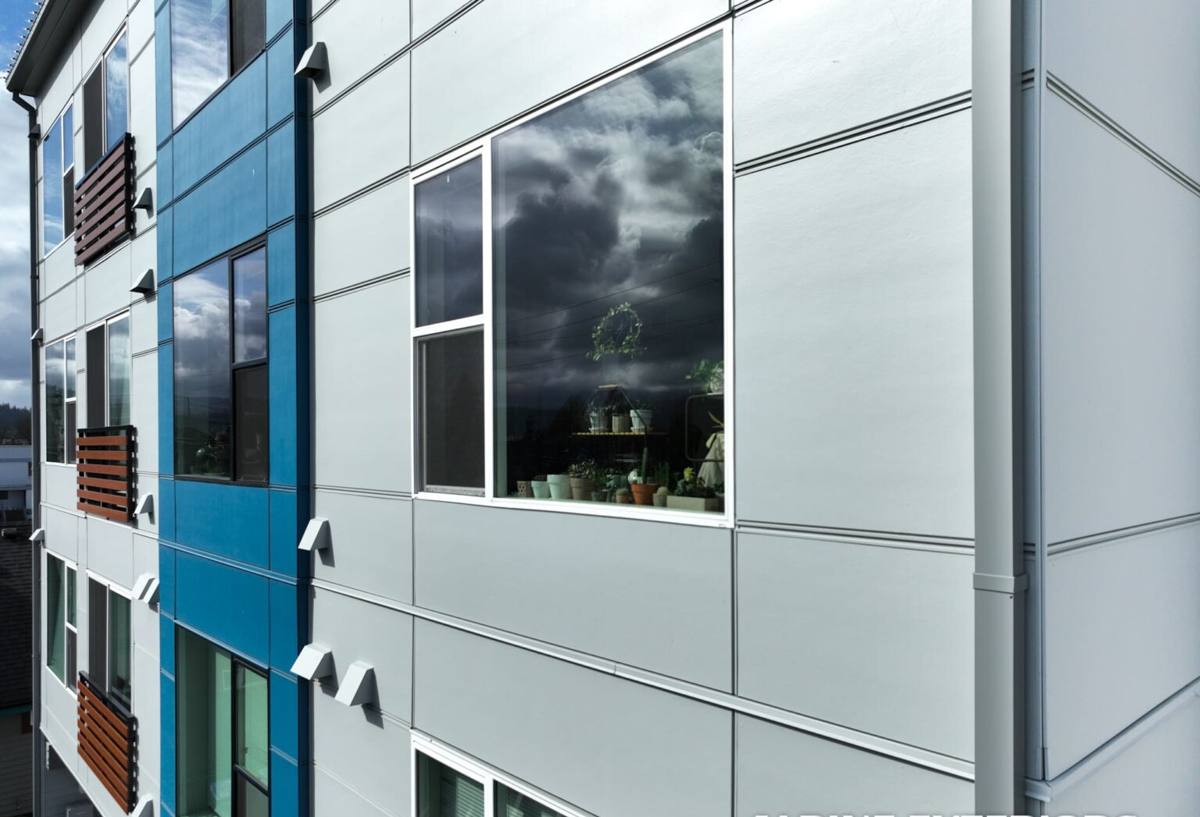
We standardized on James Hardie fiber cement siding because it's engineered specifically for the pressures this climate creates, not adapted after the fact. Hardie's HZ5 product line is formulated for climates prone to high humidity and moisture exposure — which describes the west coast of Florida well. A few specific reasons it's the product we put on homes in this area:
- Non-combustible core: fiber cement doesn't burn, which matters in a state where wildfire and lightning-strike exposure are real considerations
- Dimensional stability: it doesn't swell, warp, or rot the way wood-based or engineered-wood products can when exposed to repeated moisture cycling
- Factory-applied ColorPlus finish: baked-on color that resists fading and chalking far better than field-applied paint, which matters under this much sustained UV
- Salt and moisture tolerance: the fiber cement composition holds up to coastal-adjacent air without the corrosion and softening risks of some alternative materials
- Strong transferable warranty: backed by a manufacturer with a long track record in exactly this kind of climate, not a regional or boutique supplier
We're upfront that Hardie isn't the cheapest option on the market, and it isn't the only siding material that can be installed correctly. But for a home in St. Petersburg's climate, it's the product we're willing to put our name behind for the long term — which is why we don't install vinyl, LP SmartSide, primed wood, or other fiber cement alternatives. If a homeowner wants one of those products, that's a conversation worth having honestly, but it's not a job we take on.
How Our Installation Process Works
Siding failures in this climate are rarely about the material itself — they're almost always about installation details that got rushed or skipped. Here's how a correct James Hardie installation should go, step by step:
- Tear-off and substrate inspection: removing the old siding and checking the sheathing underneath for rot, moisture damage, or soft spots before anything new goes up
- Repair of damaged sheathing: replacing any compromised wood before it gets sealed behind a new weather barrier
- Weather-resistant barrier installation: a continuous, properly lapped barrier that sheds water downward and outward, with no gaps at seams
- Flashing at every penetration: windows, doors, hose bibs, vents, and any other wall penetration get individually flashed, not just caulked
- Correct fastening: Hardie panels and planks fastened per manufacturer spec for wind exposure, with corrosion-resistant fasteners set to the right depth
- Proper clearances: gaps maintained at grade, roofline, and other transitions so the siding isn't sitting in standing water or trapped moisture
- Trim, caulking, and finish work: sealing joints with products rated for exterior, high-UV, coastal-adjacent use
- Final inspection and cleanup: a walk-through to confirm fastening, flashing, and sealing are correct before the job is called done
Every one of these steps matters more in St. Petersburg than it would somewhere with milder weather. A missed flashing detail that might go unnoticed for a decade inland can show up as a moisture problem in a couple of storm seasons here.
Signs Your Current Siding Is Already Struggling
A lot of homeowners call us after noticing something that's been developing quietly for a while. If you're seeing any of the following, it's worth having the siding looked at before it turns into a bigger repair:
- Visible warping, buckling, or panels that look wavy from a distance
- Soft or spongy spots when you press on the siding
- Paint that's peeling, bubbling, or chalking heavily
- Rust streaks running down from fastener points
- Gaps opening up at seams, corners, or trim boards
- Visible mold, mildew, or staining that keeps coming back after cleaning
- Higher energy bills that coincide with siding that's no longer sealing the wall properly
Any one of these on its own isn't necessarily an emergency, but they tend to compound. Wind-driven rain finds the smallest gap, and once moisture gets behind siding in this climate, it doesn't dry out on its own the way it might in a drier region.
Comparing Siding Materials for This Climate
Homeowners often ask us to explain, plainly, why material choice matters as much as installation quality. Here's an honest comparison of how common siding materials tend to perform under St. Petersburg's specific conditions:
| Material | Wind & Impact Durability | Moisture/Salt-Air Tolerance | UV/Color Stability |
|---|---|---|---|
| James Hardie fiber cement | High, rated for high-wind fastening patterns | Strong; dimensionally stable in humidity | Factory-baked finish resists fading |
| Vinyl siding | Moderate; can crack or blow off in high wind | Doesn't rot but can warp under heat/UV | Prone to fading and chalking over time |
| Engineered wood (e.g., LP SmartSide) | Good if sealed correctly | More moisture-sensitive at cut edges and seams | Requires field-applied paint maintenance |
| Primed wood/cedar | Variable; depends heavily on maintenance | Most vulnerable to rot and swelling | Needs frequent repainting to hold color |
This isn't a claim that other materials can't be installed or maintained successfully — many can, with the right upkeep. It's why, given the choice, we standardized on the material that needs the least intervention over time to keep performing in this specific climate.
Cost Factors for a St. Petersburg Siding Installation
Every home is different, but the price of a siding job in this area is generally driven by a consistent set of factors:
| Factor | Why It Affects Cost |
|---|---|
| Home size and wall complexity | More square footage and more corners, gables, and cutouts mean more material and labor |
| Substrate condition | Rot or moisture damage found during tear-off requires repair before new siding goes on |
| Siding profile and trim details | Lap width, trim style, and accent details affect material and installation time |
| Existing siding removal | Full tear-off costs more than installing over prepped, sound existing material — though this depends on the home |
| Access and site conditions | Tight lot lines, landscaping, or multi-story sections can affect labor time |
We'd rather walk a homeowner through these factors on-site than quote a number blind — every one of them can swing a project cost meaningfully.
Why It Matters That We Already Work in St. Petersburg
Being based in Largo and working regularly throughout St. Petersburg and the surrounding Pinellas County area isn't just a convenience — it shapes how the job gets done. A crew that installs siding across this part of the county day in and day out has already seen how local wind exposure, humidity, and salt air affect installations over the years, not just in theory. That means fewer surprises during tear-off, fewer callbacks for details that get overlooked by crews unfamiliar with the area, and a better sense of what actually holds up here versus what just looks fine on installation day.
It also means accountability. A local crew that's going to keep working in this community has every incentive to get the flashing, fastening, and sealing right the first time, because a bad installation doesn't stay hidden long in this climate.
Maintenance After Installation
Correctly installed James Hardie siding is low-maintenance, not zero-maintenance. A simple annual routine keeps it performing as designed:
- Rinse the siding periodically to clear salt residue and airborne debris
- Inspect caulking at trim, windows, and doors once a year and touch up as needed
- Trim back landscaping that traps moisture against the wall
- Watch for any staining near fasteners or seams and have it checked early
- Keep gutters and downspouts clear so water isn't sheeting down the siding face
None of this is heavy lifting, but skipping it is how small issues in any climate — and especially this one — turn into bigger repairs.
Get a Straightforward Estimate
If your St. Petersburg-area home has siding that's showing its age, or you're planning ahead of storm season, we're happy to take a look and give you an honest read on what it needs. There's no pressure and no obligation — just a straight answer from a crew that already knows this climate. Use the form below to request a free estimate.