 Largo Siding
 Building Decks for St. Petersburg's Climate, Not Just Its Curb Appeal
St. Petersburg homeowners ask for decks for the same reasons anyone does — more usable outdoor space, a place to grill, somewhere to sit with a coffee before the heat sets in. But a deck built for St. Petersburg has to survive conditions that a lot of national deck-building advice simply doesn't account for. This close to Tampa Bay and the Gulf, a deck is dealing with intense UV exposure nearly every day of the year, salt-laden air working on every metal fastener, sudden downpours that drive rain sideways into joints and connections, and the real possibility of hurricane-force wind loading during storm season. A deck that isn't built with those specific stresses in mind doesn't fail dramatically — it fails slowly, through loosening rails, cupping boards, rusted hardware, and soft spots in framing that don't show up until someone's foot goes through a board.
This page is about deck building specifically for St. Petersburg homes: what the climate actually does to a deck over time, what a properly built deck involves here, how we approach the job, and why local experience matters more with decks than with almost any other exterior project.
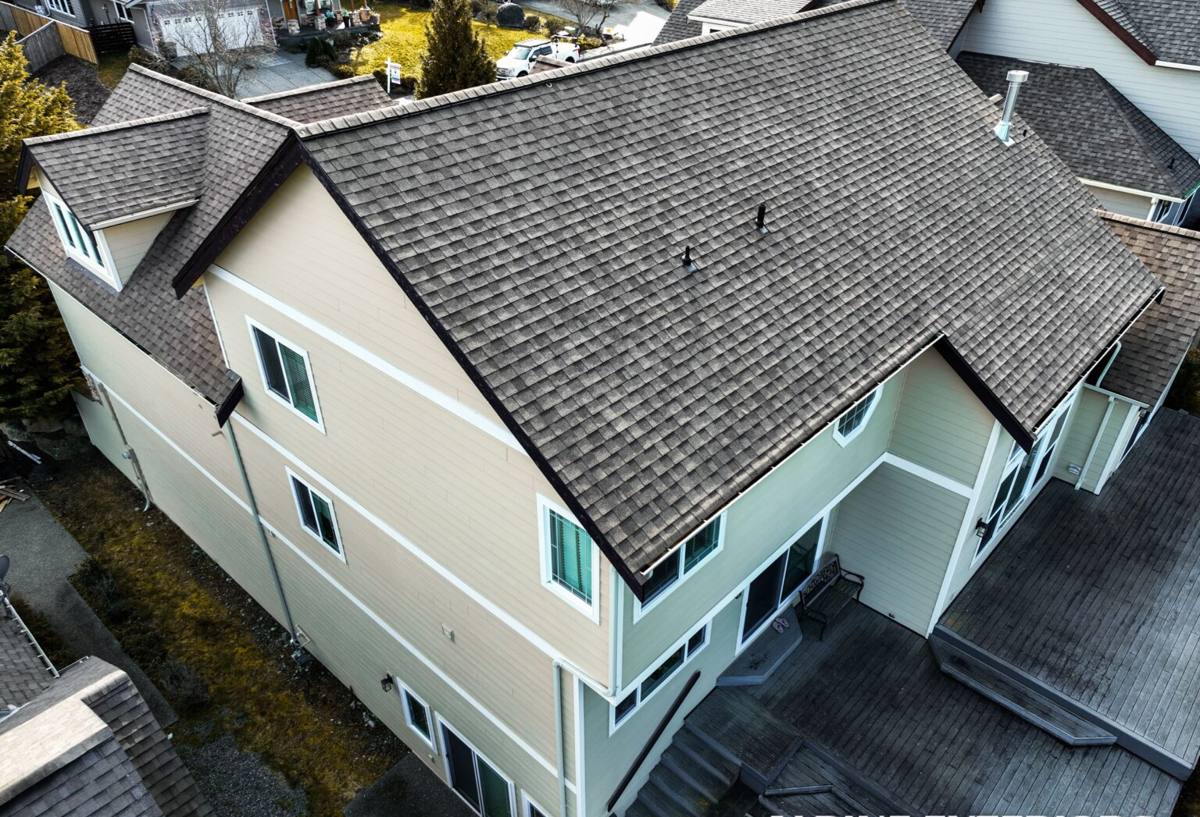
What Pinellas County's Climate Does to a Deck Over Time
Every part of a deck is exposed to the weather on all sides — top, bottom, and edges — which is part of why decks age faster here than in drier, cooler climates. A few specific mechanisms are worth understanding before you decide what to build with and how.
UV and Heat
Year-round sun exposure breaks down the surface fibers of wood decking and fades or chalks lower-quality composite and vinyl products. Dark-colored decking also absorbs heat, which matters both for comfort underfoot and for how much a board expands and contracts through daily heat cycles.
Wind-Driven Rain and Humidity
Florida rain rarely falls straight down. Wind-driven rain gets pushed into ledger connections, under railing posts, and into any gap where end-grain wood is exposed. Combined with high ambient humidity, this keeps deck framing damp longer after every storm than it would in a drier climate, which accelerates rot in untreated or poorly sealed wood.
Salt Air Corrosion
Being close to Tampa Bay and the Gulf means airborne salt is a constant, even well away from the immediate waterfront. Salt air accelerates corrosion in fasteners, post bases, joist hangers, and railing hardware. Standard interior-grade screws and connectors that would last decades elsewhere can start rusting and weakening within a few years here.
Hurricane and Tropical Storm Wind Loads
Decks attached to a house are a structural extension of it. During tropical storm or hurricane conditions, an improperly attached deck can rack, pull away from the ledger board, or send railings and boards airborne. Wind resistance isn't an upgrade — it's a baseline requirement for anything built in this part of Florida.
Choosing the Right Decking Material for a St. Petersburg Home
There's no single "best" decking material — the right choice depends on budget, how much maintenance you're willing to do, and how the deck will be used. Here's how the common options actually perform under St. Petersburg conditions.
| Material | Sun & Heat Performance | Moisture Behavior | Maintenance |
|---|---|---|---|
| Pressure-treated pine | Fades and can check/splinter without regular sealing | Needs sealing to resist wind-driven rain and humidity | Annual cleaning and re-sealing recommended |
| Composite decking | Modern formulations resist fading well; darker colors run hotter underfoot | Won't rot, but lower-quality boards can absorb moisture at cut ends if not capped | Occasional washing; no staining or sealing |
| PVC / capped polymer | Excellent UV stability; stays cooler than dark composite | Fully moisture-resistant, good choice near the water | Lowest maintenance of the common options |
| Tropical hardwoods (e.g., ipe) | Naturally dense and UV-tolerant, though color fades to gray without oiling | Naturally rot- and insect-resistant | Periodic oiling to maintain color; otherwise low |
For homeowners who want a natural wood look with the least long-term hassle, we're generally honest that composite or PVC decking makes more sense in this climate than standard pressure-treated lumber left unsealed — not because pressure-treated wood is a bad product, but because it demands a maintenance commitment that a lot of busy households don't keep up with, and the gap shows up as premature graying, splintering, and fastener pop.
Framing: The Part of the Deck You Won't See Again
The decking boards get all the attention, but the framing underneath is what determines whether a deck lasts 10 years or 30. In St. Petersburg's climate, framing decisions matter more than they would in a drier region because moisture has more opportunity to get in and less opportunity to dry out between rain events.
- Ledger boards attached to the house need proper flashing so wind-driven rain can't work its way behind them into the home's structure
- Joists and beams should be rated for ground contact or fully protected where they're exposed to splashback and standing moisture
- Post bases should hold posts up off the concrete or ground surface, not embed them directly, so water doesn't wick up into the end grain
- Spacing and blocking need to account for wind uplift, not just the static weight of people and furniture
- Any structural connections should use hardware rated for coastal, corrosion-prone environments
None of this is visible once the decking goes down, which is exactly why it's the part most likely to get cut corners on jobs done quickly or cheaply. It's also the part that determines whether your deck is still solid after the next tropical storm passes through.
Fasteners and Hardware: Where Salt Air Does the Most Damage
If there's one detail that separates a deck that ages well near Tampa Bay from one that doesn't, it's the hardware. Standard zinc-coated screws, nails, and joist hangers are not built for sustained salt air exposure and will corrode faster here than in most of the country. We use stainless steel or coated fasteners and connectors rated for coastal use throughout the structure — not just on visible surfaces — because a rusted-through hanger or corroded ledger bolt is a structural problem, not a cosmetic one.
Railing hardware deserves the same attention. Loose or corroded railing posts are one of the most common deck safety issues we see on older decks in this area, and it almost always traces back to fasteners that weren't rated for the environment they were installed in.
Permitting and Local Code Requirements
Decks attached to a home in St. Petersburg and elsewhere in Pinellas County require a building permit and inspection — this isn't optional, and it isn't just bureaucracy. Permitted work gets checked for structural attachment, railing height and spacing, stair geometry, and wind resistance, which protects you both for safety and for resale, since unpermitted deck work is a common issue that surfaces during home inspections and can complicate a sale down the road.
We handle the permitting process as part of the job — pulling the permit, scheduling inspections, and building to the standards the local jurisdiction requires. If a contractor offers to skip the permit "to save time," that's a shortcut that puts the homeowner at risk, not the contractor.
How We Approach a St. Petersburg Deck Project
Every property is different, but our process follows the same general steps on every deck we build in this area:
- On-site assessment of the attachment point, ground or foundation conditions, and how sun, wind, and drainage affect that specific spot on the property
- Honest conversation about material options and trade-offs based on your budget and how much upkeep you want to take on
- Structural design sized for Florida wind load requirements, not a generic minimum
- Permit application and scheduling required inspections with the local jurisdiction
- Framing with corrosion-resistant hardware and proper flashing at the ledger
- Decking installation with attention to drainage, expansion gaps, and fastening method appropriate to the chosen material
- Final walkthrough covering how to maintain the specific materials used
We don't treat a deck as a weekend carpentry project. It's a structure attached to your home that has to hold up people, furniture, and Florida weather for years without another look from us.
Keeping a Deck Solid After It's Built
Even a well-built deck benefits from basic upkeep in this climate. A short annual routine goes a long way toward getting the full lifespan out of the investment:
- Rinse off salt residue, pollen, and debris a few times a year, especially after storms
- Check railing posts and stair connections for looseness at least once a year
- Reseal or restain pressure-treated or hardwood decking on the schedule the manufacturer recommends
- Keep gutters and downspouts directing water away from the deck's footings and posts
- Trim back vegetation that keeps the deck surface shaded and damp longer than necessary after rain
Why Local Experience Matters for This Particular Job
Deck building looks similar everywhere in the country, but the details that make a deck last in St. Petersburg — flashing choices, hardware selection, framing moisture management, wind-load attachment — are shaped directly by this specific coastal, hurricane-exposed climate. A crew that mostly works inland or in a different climate zone may not default to coastal-rated hardware or may not think through wind uplift the way it needs to be considered here. We work in Pinellas County day in and day out, which means we're already familiar with the local permitting process, the way local weather stresses a structure over time, and what actually holds up versus what looks fine for the first year or two.
If you're weighing options for a new deck or need an honest look at whether an existing one is holding up the way it should, we're happy to come take a look. Reach out for a free, no-pressure estimate using the form below.