 Largo Siding
 Palm Harbor sits close enough to the Gulf that its homes take the same coastal punishment as anywhere else in Pinellas County: hurricane-force wind events, intense year-round UV, wind-driven rain, and salt air that never really lets up. Window installation here isn't just about setting a unit in an opening and running a bead of caulk around it. It's about anchoring, flashing, and sealing a window so it holds up against forces that a lot of the country never has to design around. Get any one of those details wrong and the failure doesn't show up on day one — it shows up two or three years later as a soft spot under a sill, a musty smell in a wall cavity, or a frame that's chalked and pitted before its time. This page covers what a correct window installation actually involves in Palm Harbor, and why the installer matters as much as the window itself.
What Palm Harbor's Climate Actually Does to a Window Installation
Every window installed in Palm Harbor has to survive four things working against it at once, and they don't take turns — they overlap.
Hurricane-Force Wind
Pinellas County falls within Florida's wind-borne debris region under the Florida Building Code, so most window openings here have to meet impact-resistance or wind-pressure standards, not just aesthetic ones. Wind doesn't only push on the glass — it pressurizes the wall assembly around the window, which is why anchoring into sound framing and following the manufacturer's fastener schedule matters more here than in a calmer climate. A window that's technically rated for wind but installed with too few fasteners, or fasteners driven into weak or rotted framing, doesn't actually deliver the protection the rating promises.
Intense, Year-Round UV
Florida sun breaks down lower-grade vinyl, weatherstripping, and sealants faster than almost anywhere else in the country. That shows up as chalking, brittleness, and shrinking gaskets years before they should fail — and once a gasket shrinks, it stops doing its job even if the window itself still looks fine.
Wind-Driven Rain
Ordinary rain falls straight down. Wind-driven rain during storms — and even routine Florida downpours — comes in sideways and gets pushed into any gap in the flashing or sealant around a window. Flashing that's sequenced correctly sheds that water back out. Flashing that's just "there" for looks lets it track into the wall cavity, where it can sit unnoticed for a long time.
Salt Air
Palm Harbor's proximity to the water means a steady drift of salt air working on every metal component of a window installation — screws, anchors, hinges, and any hardware not rated for a coastal environment. Salt accelerates corrosion in ways that aren't always visible until a fastener fails or a frame component pits through.
None of these four factors is unique to Palm Harbor. What's true here is that all four are present, all year, on every single window — which means there's very little margin for a shortcut installation to hide in.
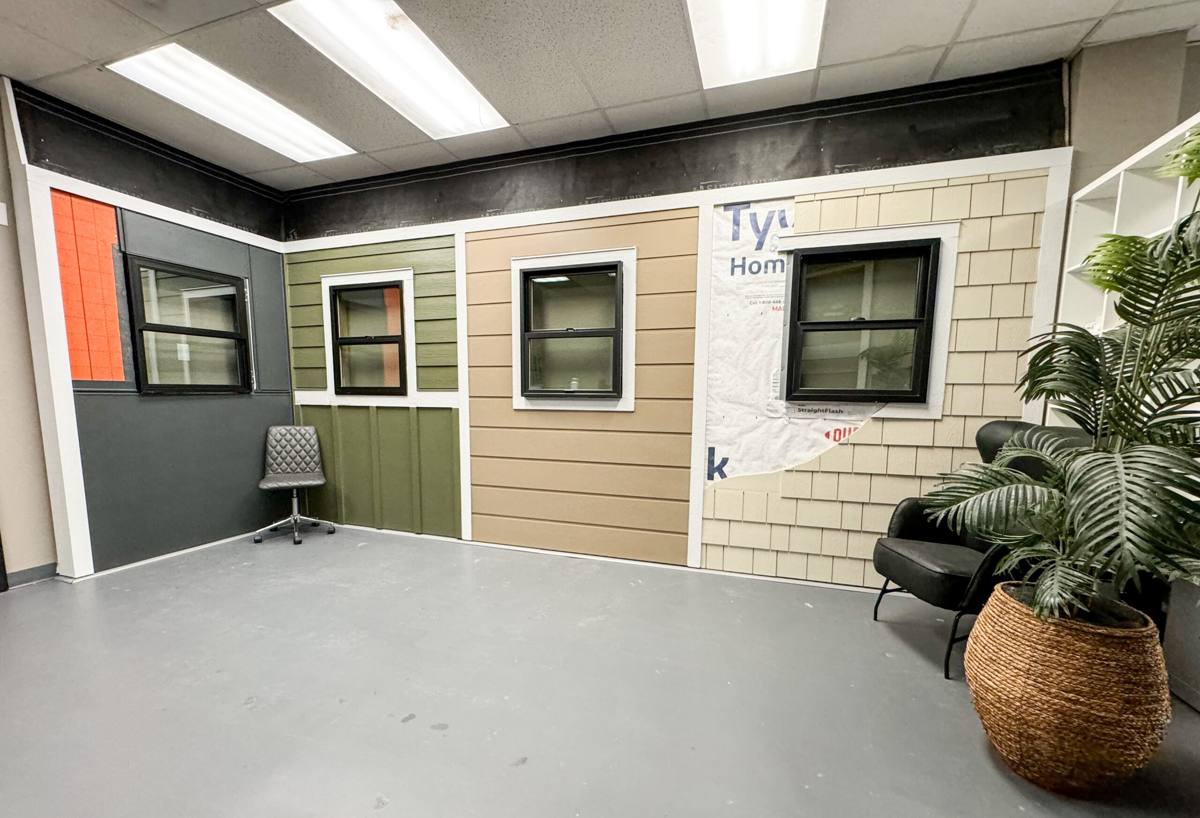
Where Window Installations Actually Fail
In our experience, it's almost never the window unit itself that fails first. Manufacturers build to a rating and generally meet it. What fails is the installation around the window — the parts a rushed crew is most likely to shortcut because they take real time and don't show once the trim goes back on.
- Flashing sequence — house wrap, sill pan, and window flange have to lap in the correct order so water sheds outward, not just get taped together after the fact
- Sill pan drainage — a sill pan without a clear path for water to exit just becomes a bathtub inside the wall
- Fastener count and placement — skipping shims or fastener locations to save time undercuts the wind-pressure rating the window is supposed to carry
- Sealant used as a substitute for flashing — caulk is a backup layer, not a weatherproofing system on its own, and it's the first thing UV breaks down
- Rough opening condition — setting a new window into an opening with hidden rot or old water damage without addressing it first just seals the problem back inside the wall
What a Correct Installation Involves
Opening Assessment
Before a new window goes in, the opening gets inspected — not assumed. That means checking for rot, prior water intrusion, out-of-square framing, and whether the existing flashing (if any) is still doing its job. Any of those issues gets addressed before the new window is set, because sealing a new window over an existing problem doesn't fix it, it just hides it.
Product Selection for the Rating Your Home Needs
Not every window sold nationally is rated for Pinellas County's wind zone. We confirm the specific unit's wind-pressure and, where applicable, impact rating actually matches what your property requires under current code, rather than assuming "hurricane country" windows are interchangeable.
Flashing and Weatherproofing Sequence
This is the step that decides whether the installation holds up in this climate. Sill pan flashing goes in first so any water that does get past the window has somewhere to drain. House wrap and window flange tape are lapped in the correct shingle-style order — upper courses over lower ones — so gravity and wind both push water outward instead of into a seam. Sealant is used to back up the flashing, not to replace it.
Anchoring to the Wind-Load Requirement
The window is shimmed level and plumb, then anchored with the fastener type, count, and spacing the manufacturer's tested installation instructions call for the wind zone. This is the detail that's easiest to shortcut and the one that matters most if a storm actually tests the window.
Interior and Exterior Finish
Once the window is set and flashed, interior insulation and trim go back in without gaps that would undercut the window's performance, and exterior trim is finished to match the surrounding siding and architecture cleanly.
A Practical Checklist for Any Window Installation Quote
- Confirm the specific window model carries the wind-pressure rating your property requires under current Florida Building Code
- Ask what the flashing sequence looks like — house wrap, sill pan, and flange order — not just "we'll seal it up"
- Ask whether the rough opening will be inspected for rot or prior water damage before the new window goes in
- Confirm the fastener schedule matches the manufacturer's tested instructions for your wind zone, not a generic count
- Ask what's covered under warranty, and whether the window unit and the installation labor are covered separately
- Get a written scope of work, not just a price, so you know exactly what's included
Our Process, Start to Finish
- On-site assessment — we look at the existing opening, condition of framing and flashing, and any signs of past water intrusion
- Honest product recommendation — matched to your home's wind zone, sun exposure, and budget, explained plainly
- Written scope and timeline — what's included, what isn't, and a realistic schedule, especially for special-order units
- Removal and opening prep — old windows come out carefully, and any hidden rot or damage is repaired before the new unit goes in
- Installation, flashing, and anchoring — set to manufacturer specifications for the required wind rating, with a flashing sequence built to shed water outward
- Finish and walkthrough — trim finished to match the house, with a final check before we consider the job done
Window Types and What They Mean for a Palm Harbor Home
| Window Type | Typical Use | Coastal Climate Consideration |
|---|---|---|
| Single-hung / double-hung | Standard replacement in most rooms | Widely available in wind-rated versions; check balance hardware quality for long-term smooth operation |
| Casement | Rooms wanting maximum ventilation and a tight seal | Crank-out design compresses against the frame under wind, which can improve sealing when installed correctly |
| Fixed / picture | Maximizing light or a view with no operable sash | More glass area means more wind load to anchor for; no moving parts to maintain |
| Sliding | Wider openings, lower profile look | Track and roller hardware should be corrosion-resistant given salt air exposure |
| Impact-rated (any style) | Homes in higher wind-exposure locations or where storm protection is a priority | Laminated glass adds protection against wind-borne debris without separate shutters, at a higher upfront cost |
What Drives Cost
We won't give you a number without seeing the actual openings, but the factors that move price are consistent from job to job.
| Factor | Why It Matters |
|---|---|
| Number of openings | A whole-house project typically has better per-window economics than one or two replacements |
| Wind and impact rating required | Higher-rated glass and reinforced frames cost more than standard-rated equivalents |
| Opening condition | Rot, old flashing failures, or out-of-square framing add repair work before the new unit is set |
| Frame material | Vinyl, fiberglass, and aluminum carry different price points and different long-term maintenance needs in this climate |
| Size and glass area | Larger units and picture windows cost more to manufacture, ship, and install, and carry more wind load |
| Standard vs. special order | Non-standard sizes or shapes take longer to arrive and generally cost more than stock dimensions |
Frame Materials in a Coastal Climate
Frame material choice matters more here than in a drier, calmer inland climate, because UV and salt air work on every exposed surface year-round. Vinyl and fiberglass frames engineered for high-UV, coastal exposure generally hold up with less ongoing maintenance than an all-wood exterior finish, which is why we lead with them on weather-facing installs. Aluminum frames can work well for larger or impact-rated units but need hardware and fasteners specifically rated for salt air to avoid premature corrosion. We'll walk through the honest trade-offs for your specific home rather than defaulting to whichever option installs fastest.
Why Hiring a Crew That Already Works Palm Harbor Matters
Manufacturer installation instructions are written for average conditions in an average climate. Palm Harbor doesn't have average conditions — hurricane-force wind events, sustained UV, wind-driven rain, and salt air stack up against a shortcut installation more than they would somewhere calmer and drier. A crew that installs windows across Pinellas County regularly knows which steps in that instruction sheet are non-negotiable here, and which local conditions call for extra attention even when a generic install guide doesn't call it out specifically.
That local experience shows up in decisions that don't come up in a sales pitch: how a sill pan is detailed so it actually drains instead of holding water, how much lap a flashing course needs to handle wind-driven rain instead of just vertical rainfall, and which fastener types hold up to salt air instead of corroding out in a few seasons. Those are the details that decide whether a window installation is still performing cleanly after a decade of Gulf Coast storms and sun, or showing leaks, drafts, and hardware failure well before it should.
Ready When You Are
If you're dealing with drafty, foggy, or hard-to-operate windows, or you're planning ahead of hurricane season and want to know where your home actually stands, it's worth having someone look at the openings in person before you start comparing quotes. We offer free, no-pressure estimates for window installation projects in Palm Harbor and throughout the surrounding Largo area — use the form below to get a time on the schedule.