 Largo Siding
 Composite Decking That Actually Holds Up in St. Petersburg
St. Petersburg sits right on the water, which means every deck built here is fighting a different battle than a deck in Atlanta or Charlotte. Between hurricane-season winds, near-constant UV exposure, wind-driven rain that finds its way into every gap, and salt air drifting in off Tampa Bay and the Gulf, a deck's enemies are working year-round, not just in a rough winter. Composite decking has become the go-to choice for homeowners here because it's engineered to resist most of that punishment — but only when it's installed correctly. A beautiful composite deck with the wrong substructure, fasteners, or drainage detailing will still fail early in this climate, and it'll fail in ways that are expensive to fix after the fact.
This page covers what a St. Petersburg composite deck actually needs to hold up, what a correct installation involves, and how we approach the job from first site visit to final walkthrough.
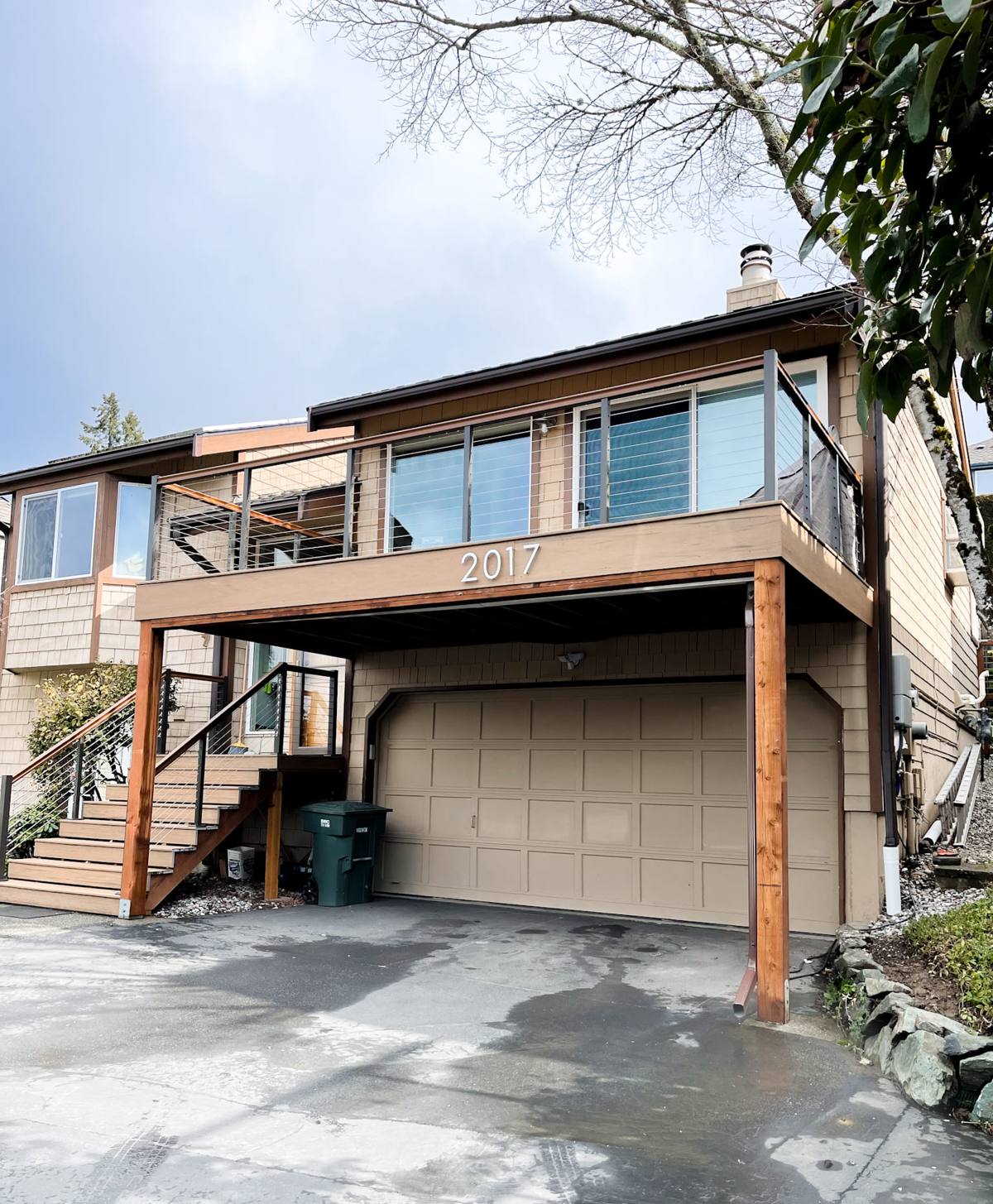
What Pinellas County's Climate Does to a Deck
UV and Heat
Florida sun is relentless, and a south- or west-facing deck can see extreme surface temperatures for months at a time. Cheaper composite products, or ones installed without attention to expansion gaps, will show fading, warping, or board movement faster in this kind of sustained heat than they would in a milder climate.
Wind-Driven Rain and Humidity
Rain in this part of Florida rarely falls straight down. Storms push it sideways, driving moisture into ledger connections, fastener holes, and any gap between boards and framing. Combined with Pinellas County's humidity, that moisture has to have somewhere to go — if it doesn't, you get trapped water, mildew, and eventually rot or corrosion in the structure underneath the decking itself.
Salt Air
Proximity to the bay and Gulf means airborne salt settles on every exterior surface, including deck hardware. Standard fasteners and connectors corrode faster here than inland. This is one of the most common places we see older decks fail first — not the decking boards, but the screws, brackets, and joist hangers holding everything together.
Wind Load
Hurricane-force wind events aren't rare occurrences here, they're a planning assumption. A deck's structural connections — ledger to house, posts to footings, railing to framing — need to be sized and fastened for real wind uplift and lateral load, not just built to look sturdy.
What a Correct Composite Deck Installation Actually Involves
The decking boards themselves get all the attention because they're what you see and walk on, but most of what determines whether a deck survives ten Florida summers happens underneath. A correct installation covers:
- Ledger attachment and flashing: where the deck meets the house is the single most common failure point for water intrusion if it's flashed incorrectly.
- Footings sized for local soil and wind uplift, not just poured to a generic depth.
- Joist spacing matched to the specific composite product — composite boards have manufacturer-specified span ratings, and spacing them like wood framing leads to sagging or premature deflection.
- Corrosion-resistant fasteners and hardware rated for coastal exposure, not standard exterior-grade hardware.
- Proper ventilation underneath the deck so trapped humidity has somewhere to escape instead of sitting against the framing.
- Correct expansion gaps between boards, sized for how much composite material actually moves in Florida heat swings.
- Picture-frame or edge detailing that protects exposed board ends, which is where composite decking is most vulnerable to moisture wicking.
Skip any one of these and the deck can still look great for the first year or two. The problems tend to show up later, after the framing underneath has had time to absorb moisture it was never able to release.
Composite vs. Other Decking Materials for This Climate
| Material | UV/Fade Resistance | Moisture Behavior | Maintenance | Typical Lifespan Here |
|---|---|---|---|---|
| Capped Composite | Strong — cap layer resists fading and staining | Resists moisture absorption; core stays protected if edges are capped or sealed | Occasional washing, no sealing or staining | 20–30+ years with correct install |
| Uncapped Composite | Moderate — can fade and chalk over time | More prone to moisture absorption at cut edges | Periodic cleaning, occasional edge sealing | 15–25 years |
| Pressure-Treated Wood | Weak — grays and checks quickly in strong sun | Absorbs water readily; prone to rot near coast without diligent upkeep | Annual sealing/staining, regular inspection | 10–15 years with consistent upkeep |
| PVC Decking | Strong | Doesn't absorb moisture; fully synthetic | Low — washing only | 25–30+ years |
We install composite decking as our standard recommendation for most St. Petersburg homes because it strikes the best balance of coastal durability, appearance, and long-term cost. Wood requires more upkeep than most homeowners are honestly willing to keep up with in this climate, and once maintenance lapses near the coast, deterioration accelerates fast. That's a maintenance-burden and moisture-behavior tradeoff, not a knock on wood as a material — it just asks more of the homeowner here than composite does.
Our Installation Process
1. Site Visit and Assessment
We look at sun exposure, drainage patterns around the house, existing structure (if it's a rebuild), and any HOA or code considerations specific to the property before we recommend a board profile or layout.
2. Design and Product Selection
We walk through composite board options, color and grain choices, railing systems, and fastening methods (face-screwed vs. hidden clip systems) based on the home's style and how the space will actually be used.
3. Permitting
Deck construction in Pinellas County typically requires a permit and inspection, especially for anything attached to the structure or elevated above a certain height. We handle the permitting process as part of the job so it's not left to the homeowner to navigate.
4. Demolition or Site Prep
For replacement decks, we remove the old decking and inspect the substructure underneath. This is often where we find the real story of how a previous deck failed — usually at the ledger, footings, or hardware, not the boards.
5. Framing and Structural Work
Footings, ledger flashing, joists, and hardware are installed to current code and rated for local wind and moisture conditions. This stage isn't visible in the finished product, but it's the stage that determines whether the deck is still solid in fifteen years.
6. Decking Installation
Boards are laid with manufacturer-specified spacing and expansion gaps, fastened per the product's engineering requirements, and detailed at edges and around posts or fixtures.
7. Railing, Trim, and Finish Work
Railing systems, stairs, fascia, and any picture-framing details are completed and checked for level, plumb, and secure attachment.
8. Final Walkthrough and Inspection
We review the finished deck with the homeowner, confirm any required final inspection is scheduled or completed, and go over basic care.
Cost Factors for a St. Petersburg Composite Deck
Every deck is priced around its own footprint, structure, and material choices, so we don't quote broad numbers without seeing the site. What generally moves the price:
| Factor | Why It Matters |
|---|---|
| Deck size and shape | Square footage and complexity (angles, multiple levels) drive both material and labor |
| Height off grade | Elevated decks need more substantial framing, footings, and stair/railing work |
| Board tier (capped vs. uncapped composite) | Capped products cost more upfront but need less long-term maintenance |
| Railing style | Composite, aluminum, and cable railing systems all price differently |
| Structural condition (for rebuilds) | Rotted or corroded substructure found during demo adds necessary repair work |
| Site access | Tight lots or waterfront access can affect equipment and labor time |
Maintenance in a Coastal Environment
Composite decking is low-maintenance, not no-maintenance, especially this close to the water. A short seasonal checklist keeps a deck performing the way it's supposed to:
- Rinse the deck periodically to remove salt residue, pollen, and debris buildup between boards.
- Keep gaps between boards clear of debris so water and airflow can move underneath.
- Inspect railing posts and stair connections for looseness after major storms.
- Check underneath the deck occasionally for signs of moisture pooling or standing water near footings.
- Watch for corrosion at any exposed hardware and have it addressed before it spreads to surrounding material.
- Trim back landscaping that traps moisture against the deck's edge or substructure.
Why Local Experience Matters for This Job
A composite deck built to a generic national spec sheet isn't automatically built right for St. Petersburg. Wind load requirements, flashing details for wind-driven rain, and hardware corrosion resistance all need to be handled with this specific coastal environment in mind, not just built to the minimum code requirement in a warmer-but-drier region. A crew that regularly works in and around Pinellas County has already seen how decks age here — which fastener types hold up, which framing details keep water out during a sideways summer storm, and which shortcuts show up as callbacks two or three years later. That local pattern recognition is hard to replace with a spec sheet alone.
Get a Straightforward Estimate
If you're planning a new composite deck or replacing one that's showing its age, we're happy to take a look and walk you through what your property specifically needs — no pressure, no upsell on materials you don't need. Fill out the form below to schedule a free estimate for your St. Petersburg home.