 Largo Siding
 Why St. Petersburg Siding Wears Faster Than the Brochures Say
St. Petersburg sits close enough to open water that its homes deal with a harder version of Florida's weather than inland neighborhoods do. Salt-laden air off Tampa Bay and the Gulf gets carried in on sea breezes almost daily, and it settles into siding seams, fastener heads, and any spot where a coating has thinned. Add in the intense, nearly year-round UV exposure, wind-driven rain that punches moisture sideways into wall assemblies during storms, and the occasional hurricane-force wind event, and you have a climate that is genuinely tougher on exterior cladding than most manufacturers' warranty language assumes. As a Largo-based crew that works St. Petersburg regularly, we see the same failure patterns show up on siding that was installed correctly but simply wasn't built, or maintained, for this combination of stressors.
Siding repair in this part of Pinellas County isn't just about patching what looks bad. It's about understanding why that spot failed in the first place, so the repair doesn't just fail again in eighteen months.
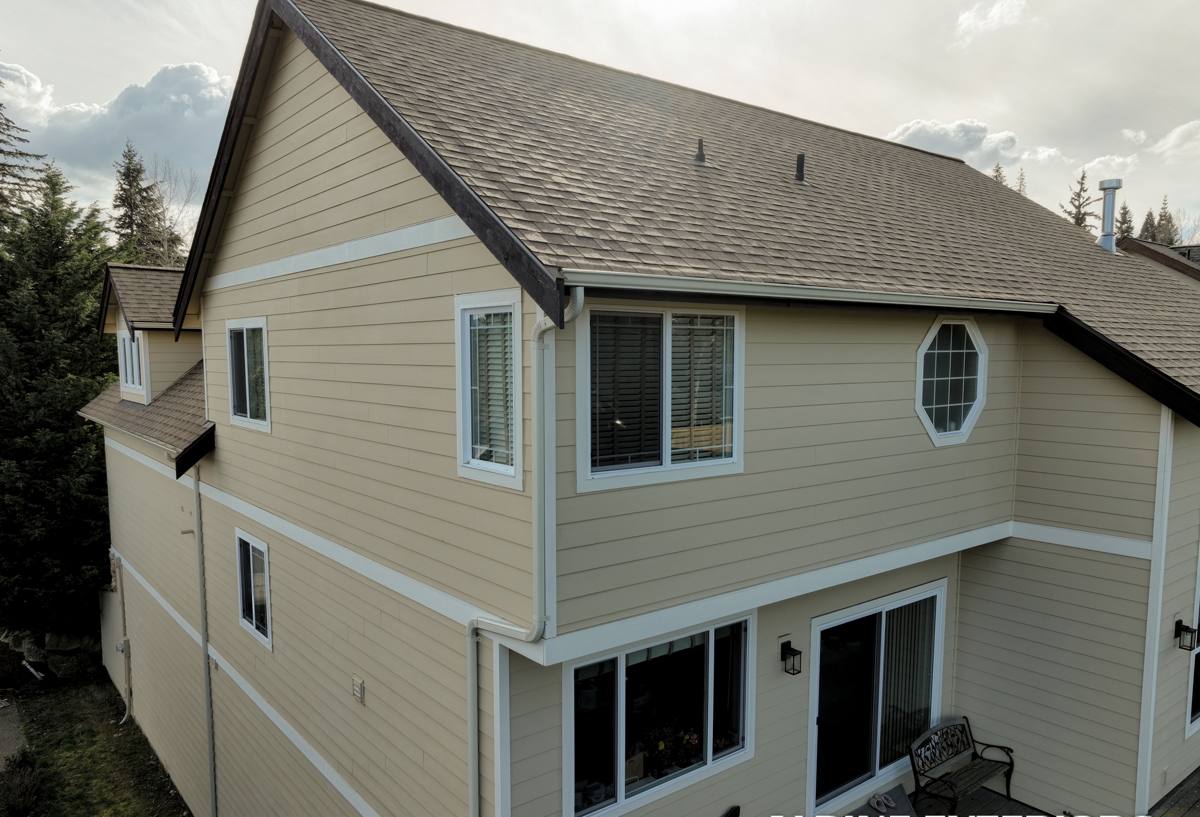
Signs a St. Petersburg Home Needs Siding Repair, Not Just Paint
Homeowners often reach for a paint quote when the real issue is underneath the surface. Before you repaint, walk the exterior and look for these signs — they point to a siding problem that paint alone won't fix:
- Soft, spongy, or bubbling spots when you press on a panel or board, especially near the bottom courses and around window and door trim
- Visible cracking, splitting, or buckling, particularly on the sides of the house that take the most direct sun and wind-driven rain
- Persistent staining or dark streaking below seams and joints, which usually means water is getting behind the siding rather than running off it
- Peeling or bubbling paint that keeps coming back in the same spots no matter how many times it's repainted
- Gaps opening up at corners, trim boards, or where siding meets the roofline, soffit, or foundation
- A musty smell or visible mold near an exterior wall on the inside of the home, which can indicate moisture is already past the siding layer
Any one of these can be isolated and minor. Several at once, especially clustered on one elevation, usually means a moisture pathway has been established and it's worth having someone look before it spreads.
What a Correct Siding Repair Actually Involves
Finding the Real Source, Not Just the Symptom
The visible damage is rarely the whole story. A stained board at eye level is often just where water finally showed itself after traveling down from a failed piece of flashing, an open joint several courses up, or a sealant line that gave out around a window. A repair that only addresses the stained board and ignores the entry point will look fine for a season and then fail again in the same place.
Matching Material and Profile
Siding repair only holds up long-term when the replacement piece matches the existing material in profile, exposure, and thickness. Mixing incompatible materials, or forcing a patch that doesn't match how the original board expands, contracts, and sheds water, creates a new weak point right where you just repaired one.
Flashing, Fasteners, and Sealant — Not Just the Board
Most siding failures near St. Petersburg trace back to one of three details: missing or damaged flashing at a butt joint or penetration, corroded or improperly seated fasteners, or sealant that's UV-degraded and cracked open. A repair that swaps the visible board but reuses failed flashing or fasteners is a cosmetic fix, not a real one.
Repair or Replace? How We Make That Call
Not every problem area needs a full re-side, and not every repair is worth doing. The honest answer depends on how much of the wall is affected, what caused the damage, and how old the existing siding already is.
| Situation | Usually Repair | Usually Replace |
|---|---|---|
| Damage location | Isolated to one or two boards or panels | Spread across multiple elevations or hidden behind several sections |
| Root cause | One-time impact damage or a single failed flashing point | Systemic moisture intrusion or a material/installation issue throughout |
| Age of existing siding | Still well within its expected service life | Near or past the end of its practical lifespan |
| Underlying sheathing | Dry, sound wood behind the damaged area | Soft or rotted sheathing found once siding is opened up |
| Material on the house | Fiber cement in generally good condition | Vinyl, wood, or an older product reaching the point where matching pieces is impractical |
We won't sell a full re-side when a targeted repair will genuinely hold. We also won't patch a wall that's clearly telling us the underlying problem is bigger than one board — that just delays a bigger bill and more damage.
Why the Material You're Repairing Matters
What the siding is made of changes both how it fails and how well it can be repaired. This matters more in a coastal Pinellas County climate than almost anywhere else in the country.
Vinyl siding can crack in impact and gets brittle faster under intense, sustained UV exposure — and once a panel is discontinued or sun-faded, matching a replacement piece to weathered neighbors is often impossible, leaving a visible patch. Wood-based and primed spruce products are the most vulnerable to the moisture side of this climate; once wind-driven rain gets past a compromised joint, rot can spread through the board faster than it shows on the surface. Fiber cement holds up differently: it doesn't rot, it isn't fuel for pests, and it tolerates repeated wet-dry cycling far better than wood-based siding. That's a meaningful advantage in a market where salt air and humidity never really let up.
It's also why, when a repair calls for replacing more than a board or two, we install James Hardie fiber cement rather than mixing in a different product. Hardie's factory-applied ColorPlus finish is formulated to resist UV fade and hold color consistency far better than field-applied paint, which means a repaired section blends in now and keeps blending in years later instead of visibly aging at a different rate than the rest of the wall. We don't install vinyl, LP SmartSide, Cemplank, Allura, or primed wood siding — not because those products can't be installed correctly, but because we've standardized on the one system we've found holds up most consistently to this specific coastal climate, and we'd rather stand behind one product we trust completely than several we have reservations about.
Our Siding Repair Process for St. Petersburg Homes
- On-site inspection. We look at the visibly damaged area and everywhere water could realistically be traveling from — corners, penetrations, trim, and flashing above and around the problem spot.
- Diagnosis, in plain language. We tell you what caused the failure, not just what it looks like, and whether it's isolated or a sign of a broader issue.
- Honest repair-vs-replace recommendation. You get a straight answer on whether a targeted repair will genuinely hold, or whether a section needs full replacement to actually solve the problem.
- Proper tear-out. We remove damaged material back to sound substrate, checking sheathing and framing underneath for hidden moisture damage before anything new goes back on.
- Correct rebuild. New flashing, fasteners, and sealant go in as part of the repair — not just a new board over the same failed details.
- Finish match. Where replacement material is needed, we match profile and color as closely as the situation allows so the repair doesn't stand out.
Why a Largo-Based Crew Matters for St. Petersburg Homeowners
Siding repair is a trade where local familiarity actually changes outcomes. Being based in Largo means we're a short drive from St. Petersburg, which matters when a storm damages siding and you need someone out quickly rather than waiting on a crew that's booked across a much wider region. It also means we're working in this same Pinellas County climate on a weekly basis — we're not guessing at how salt air and coastal humidity behave here, we're seeing it on job sites constantly.
Local familiarity also means fewer surprises with permitting and inspection expectations for exterior work in this area, and a crew that shows up when scheduled because we're not traveling in from out of the county. For a repair — where diagnosing the real problem often matters more than the size of the job — having someone local who takes the work seriously counts for more than a big-brand name with no roots here.
Keeping Repaired Siding Sound Long-Term
A good repair buys you years, not just a good-looking wall for one season. A few habits protect that investment in this climate specifically:
- Rinse accumulated salt film off siding periodically, especially on elevations facing open water or prevailing wind
- Walk the exterior after major storms and check repaired areas and their surrounding joints for new gaps or damage
- Keep an eye on caulk and sealant lines near the repair — UV exposure here degrades sealant faster than in milder climates
- Address small paint or finish issues promptly rather than waiting, since a small gap today is the entry point for next season's water damage
If you're seeing soft spots, staining, cracking, or gaps in your St. Petersburg home's siding, we're happy to take a look and give you a straight answer on what it needs. Reach out for a free, no-pressure estimate using the form below.