 Largo Siding
 What "New-Construction" Windows Actually Means
In the window trade, "new-construction" doesn't just mean a window going into a brand-new house. It refers to a specific installation method: the window has a nailing or mounting flange that gets fastened directly to the framing or sheathing of the rough opening, before the exterior cladding and weather-resistive barrier are finished around it. That's different from a "retrofit" or "insert" replacement, where a new window is fit inside the existing frame that's left in place.
New-construction installs show up most often in Clearwater and Largo on additions, full stucco or siding recladding jobs, and any project where the old frame is rotted, undersized, or out of square and needs to come out completely. Because the opening is exposed down to the studs, this method gives us a real shot at rebuilding the flashing and water management from scratch — which matters a lot in a coastal Pinellas County climate where wind-driven rain finds every gap eventually.
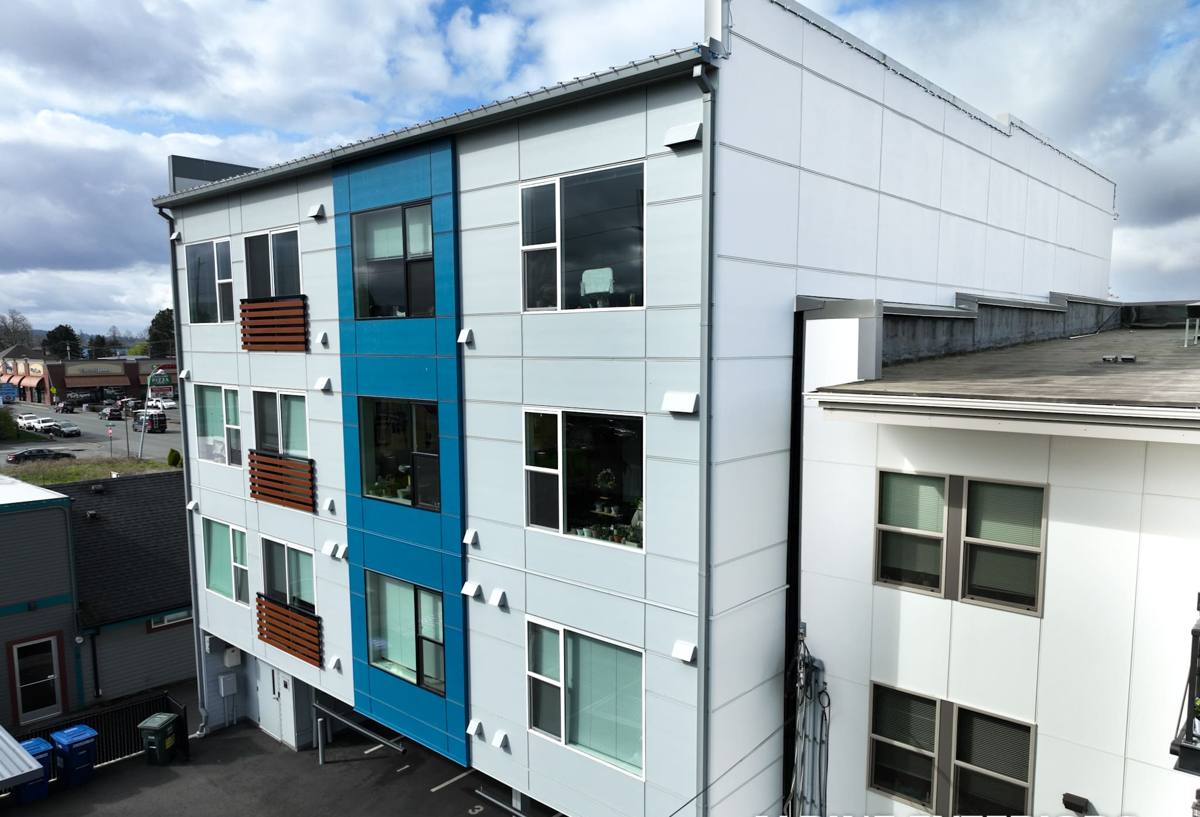
Why Clearwater's Climate Puts a Window Through More Than Most
Homes here deal with a specific combination of stresses that inland construction rarely sees at the same intensity. Hurricane-force wind loads push and pull on the frame and glazing every storm season. Wind-driven rain gets forced sideways into any seam that isn't properly lapped and sealed. Constant, intense UV breaks down vinyl, sealants, and weatherstripping faster than in milder climates. And salt-laden air off the Gulf accelerates corrosion on fasteners, hardware, and untreated metal components.
None of that is unique to Clearwater as a name — it's the reality for any home in this part of Pinellas County. But it does mean a new-construction window installation done to a generic national standard, without accounting for local wind exposure and salt air, tends to show its age within a few years: streaking sealant, chalky frames, corroded hardware, or water intrusion around the opening. A correct install anticipates all of it up front.
What a Correct New-Construction Installation Involves
Opening Prep and Rough Framing Check
Before a new window goes in, the rough opening gets checked for square, level, and plumb, and the framing is inspected for rot, moisture staining, or insect damage — common finds on older Clearwater homes where a prior window leaked for years without anyone noticing. Any compromised wood gets replaced. Skipping this step is the single most common reason a "brand-new" window ends up leaking within a season.
Flashing and Water Management
This is where new-construction installs earn their keep. A sill pan flashing goes in first to catch and direct out any water that gets past the window itself, followed by side flashing, then head flashing that laps over the house wrap or building paper above the opening — always in a shingle-style sequence so water sheds outward and down, never into the wall cavity. Every layer gets integrated with the existing weather-resistive barrier rather than just taped over it.
Setting, Shimming, and Fastening
The window gets set into the opening, shimmed for square and level, and fastened through the nailing flange per the manufacturer's approved fastening schedule — spacing and fastener type matter for wind load performance, not just holding the unit in place. In a high-wind area like ours, an under-fastened window is a liability regardless of how good the glass rating is.
Sealant, Trim, and Cladding Tie-In
Backer rod and a quality, paintable sealant close the perimeter, sized and tooled correctly rather than just smeared on thick to hide gaps. Then the exterior cladding — stucco, siding, or trim — gets rebuilt around the opening to match the surrounding wall. On stucco homes especially, this transition is where a lot of installers cut corners; done right, it should be hard to tell the wall was ever opened up.
Wind and Impact Requirements in Pinellas County
Pinellas County isn't in Florida's High-Velocity Hurricane Zone (that's Miami-Dade and Broward), but it's squarely in the wind-borne debris region under the Florida Building Code, which means new windows still need to meet impact protection requirements — either impact-rated glazing itself, or standard glazing paired with code-compliant opening protection like approved shutters or panels. Products should carry a Florida Product Approval or Miami-Dade Notice of Acceptance and test data behind them (impact and cyclic wind-pressure testing under recognized protocols), not just a manufacturer's word that it's "hurricane rated."
| Approach | How It Works | Day-to-Day Living | Best Fit For |
|---|---|---|---|
| Impact-rated laminated glass | Laminated interlayer keeps glass intact under debris impact; no separate covering needed | No prep before a storm, normal clear views year-round | Homeowners who want protection without storm-day labor |
| Standard glass + accordion or panel shutters | Removable or folding shutters provide the code-required opening protection | Shutters deployed before a storm, stored otherwise | Budget-conscious projects, or homes already set up with shutter tracks |
| Standard glass + roll-down shutters | Motorized or manual roll shutters close over the opening | Fast deployment, but shutters are visible and need periodic maintenance | Homeowners wanting shutter protection with less manual handling |
There's no universally "right" answer among these — it's a trade-off between upfront cost, storm-day convenience, and appearance, and we'll walk through it honestly based on your home and budget rather than pushing whichever option carries the better margin.
Frame and Glass Choices for Salt Air, UV, and Heat
Frame material matters more here than in a lot of the country. Quality vinyl frames with UV-stabilized compounds hold their color and rigidity well in Florida sun and don't corrode in salt air, which is why they're the common default for coastal residential work. Aluminum frames are strong and slim-profiled but conduct heat and, if not properly coated or isolated from certain fasteners, can be more prone to salt-air corrosion over time. Fiberglass sits at a higher price point with strong dimensional stability and low expansion in heat, which some homeowners prefer for larger openings.
On the glass side, a low-E coating cuts down on solar heat gain and UV-driven fading of flooring and furniture without darkening the view — worth prioritizing given how much direct sun this area gets. Look at the NFRC label on any window you're quoted: U-factor (how much heat transfers through) and SHGC (how much solar heat passes through the glass) both matter for comfort and cooling costs in a hot-humid climate, and Florida's energy code sets minimums for both. Fasteners and hardware should be corrosion-resistant grades suited to coastal exposure — a detail that's invisible on installation day and expensive to ignore five years later.
Signs Your Clearwater Home Is Ready for New-Construction Windows
Not every window problem calls for pulling the frame down to the studs — sometimes a retrofit unit is the more practical, less invasive choice. New-construction work makes sense when you see:
- Soft, spongy, or visibly rotted wood framing around the window opening
- Persistent water staining on interior walls or ceilings near windows after wind-driven rain
- Frames that are visibly out of square, or windows that no longer open and close smoothly
- An addition or room expansion where the opening doesn't exist yet
- A planned full stucco or siding recladding, where the wall is already being opened up
- Undersized openings that don't meet current egress requirements for a bedroom or habitable room
- Old aluminum jalousie or single-pane frames with no meaningful wind or impact rating
If you're only dealing with foggy glass, a failed seal, or minor hardware wear on an otherwise sound frame, that's often a retrofit-level fix — we'll tell you honestly which category your situation falls into rather than defaulting to the bigger job.
Our Process, From Estimate to Final Inspection
We start with an on-site look at the existing openings, framing condition, and any drainage or moisture issues already present, since those drive both scope and cost more than the window unit itself. From there we quote frame material, glass package, and wind protection approach as separate, clear line items so you can see what you're actually paying for. Once a design is set, we handle permitting — new-construction window work in Pinellas County typically requires a permit and inspection given the structural opening and impact-code implications — and schedule the work around weather rather than rushing it into a rain window. After installation, the job gets inspected per the permit before it's considered closed out, and we walk the finished openings with you.
Why Hiring a Crew That Already Works in Clearwater Matters
A lot of window problems we get called out to fix started as a correctly-specified product installed by a crew unfamiliar with local wind, flashing, and permitting requirements. Knowing the difference between what passes in a low-wind inland market and what actually holds up against Gulf-coast weather isn't optional knowledge here — it's the difference between a window that's still tight in five years and one that's already leaking. A local crew also knows which inspectors are checking what, how Pinellas County permitting typically runs, and how local stucco and siding profiles need to be rebuilt around a new opening so the repair doesn't stand out.
If you're weighing new-construction windows for a Clearwater-area home — whether it's an addition, a full recladding project, or openings that have outlived their frames — we're happy to take a look and give you a straightforward, no-pressure estimate. Use the form below to get started.