 Largo Siding
 Belleair Beach Sits in One of the Toughest Climates on the Gulf Coast
Belleair Beach is a barrier island — a narrow strip of land with the Gulf of Mexico on one side and the Intracoastal Waterway on the other. That position is exactly what makes it beautiful, and exactly what makes exterior siding on these homes work harder than siding almost anywhere else in Largo or greater Pinellas County. Salt air moves through the neighborhood every day, not just during storms. Hurricane-force wind events push rain sideways into wall assemblies. UV exposure is intense and constant, nearly year-round. Any siding material that isn't built for this specific combination of stressors will show damage faster here than it would a few miles inland.
When we get called out to Belleair Beach for a siding repair, we're rarely looking at one isolated problem. We're usually looking at how sun, salt, wind, and moisture have worked together on a wall over several years. Repairing it correctly means understanding that combination, not just patching the visible symptom.
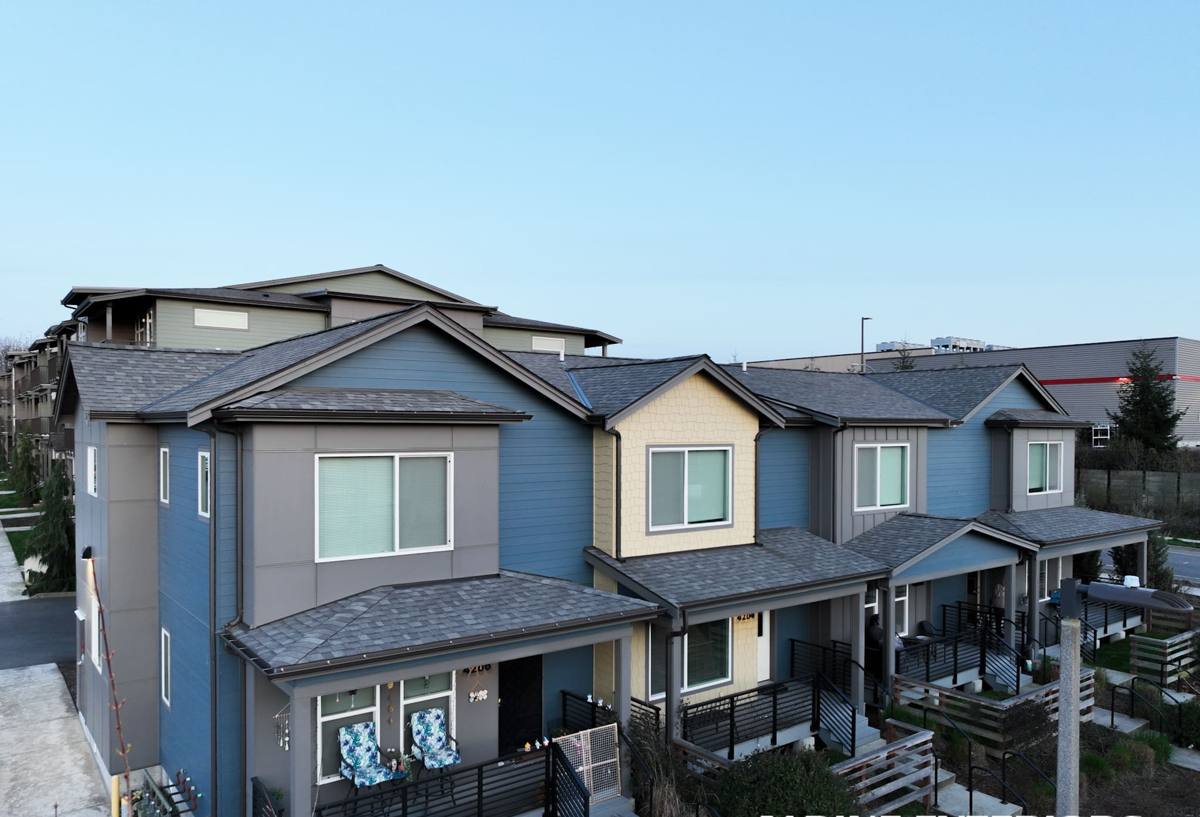
What Barrier-Island Exposure Does to Siding Over Time
Salt Air and Corrosion
Airborne salt doesn't just sit on the surface — it works its way into fasteners, trim joints, and any exposed cut edge of the siding material. Over time it accelerates corrosion of nails and fasteners and speeds up the breakdown of caulk and sealant joints, which are usually the first thing to fail on a Belleair Beach home.
Wind-Driven Rain
During tropical storms and hurricane-force wind events, rain doesn't fall straight down — it drives horizontally into the wall. Siding that isn't properly lapped, flashed, and fastened lets water behind the cladding, where it can sit against sheathing and framing long after the storm has passed.
UV and Heat
Constant, intense sun breaks down pigments and surface coatings. On lower-grade siding products this shows up as fading, chalking, and surface degradation that leaves the material more vulnerable to moisture intrusion at exactly the joints and seams where water is already trying to get in.
The Compounding Effect
None of these forces acts alone. Salt-corroded fasteners loosen panels, which lets wind-driven rain behind the siding, which then sits against UV-weakened material that's already lost some of its protective coating. That's the real story behind most of the siding repairs we see on this stretch of coastline — it's rarely just one cause.
Signs a Belleair Beach Home Needs Siding Repair
- Soft, spongy, or visibly warped panels, especially near ground level or below windows
- Cracked or missing caulk at butt joints, trim, and around windows and doors
- Streaking or dark staining below seams, which usually points to water tracking behind the siding
- Panels that have pulled away from the wall or show visible fastener heads working loose
- Bubbling, peeling, or chalking paint or factory finish
- Persistent musty odor or interior wall staining on the affected side of the house
- Visible damage after a named storm or high-wind event, even if it looks minor from the ground
Any one of these on its own may be a small fix. Several appearing together on the same wall usually means moisture has been getting in longer than the exterior symptoms suggest.
What a Correct Repair Actually Involves
A siding repair that's done right on a coastal home isn't just about matching the color and snapping in a new piece. It starts with finding out why the original section failed.
- Diagnose the cause, not just the symptom. We look at the fastening pattern, flashing details, and any signs of moisture behind the siding before we touch a panel.
- Check the water-resistive barrier and sheathing. If water has been getting behind the siding, the underlying barrier and wood sheathing need to be inspected — and repaired if compromised — before new siding goes back on.
- Match the existing product correctly. Profile, exposure, and color need to line up with what's already on the wall so the repair doesn't stand out or create a new water path at the transition.
- Re-flash and re-lap properly. Every seam, joint, and penetration gets treated as a water-management detail, not just a cosmetic gap to caulk over.
- Fasten to spec for wind exposure. Barrier-island wind loads call for fastening patterns that hold — not the minimum a product's general instructions allow.
Skipping any of these steps is how the same repair ends up getting redone in two or three years.
Why We Repair With James Hardie — Not Whatever Was There Before
We install James Hardie fiber cement siding exclusively, and that includes repair work. When a section of siding fails on a Belleair Beach home, we don't default to patching with vinyl or wood-based products just because that's what's already on the wall. In many cases, the original material is part of the reason the repair is needed in the first place.
James Hardie's HZ5 product line is engineered specifically for hot, humid climates with high moisture exposure — which describes Belleair Beach about as well as any location in Florida. Fiber cement doesn't rot, doesn't support termites, and doesn't warp the way wood-based sidings can under sustained heat and humidity. The factory-applied ColorPlus finish is baked on and formulated to resist the fading and chalking that constant Gulf Coast sun causes in field-applied paint. And because it's fiber cement, it's non-combustible — a genuine advantage on a barrier island where storm season also means power line and grill fire risk goes up.
Where an existing repair calls for matching into non-Hardie siding, we'll always be straight with the homeowner about the trade-off: patch into the existing material as a short-term fix, or use the repair as the opportunity to transition that wall section — or the whole house — to a product actually built for this environment. We won't tell a homeowner their old siding is garbage. We will tell them honestly what we've seen it do in this climate, and why we stopped installing it ourselves.
Repair vs. Replacement: How We Help Homeowners Decide
| Factor | Repair Usually Makes Sense | Replacement Usually Makes Sense |
|---|---|---|
| Extent of damage | Isolated to one or two wall sections | Recurring failures across multiple walls |
| Underlying moisture | No sign of water behind siding beyond the damaged area | Evidence of moisture intrusion at sheathing or framing |
| Age of existing siding | Newer install, otherwise sound condition | Original material near or past its service life |
| Material type | Existing Hardie siding, good color match available | Non-Hardie product showing widespread wear |
| Storm history | Single event, localized impact | Cumulative damage from multiple storm seasons |
We'll always give a straight answer on which side of this table a given home falls on — including when a repair is genuinely the right call and full replacement isn't necessary.
Why Hiring a Crew That Already Works on This Island Matters
Belleair Beach homes have their own quirks: tight lot access, homes elevated or built close to the waterline, and building department requirements that reflect the flood and wind zones on the island. A crew that regularly works this stretch of coastline already knows how to stage material and equipment on narrow barrier-island lots, understands the wind and moisture demands the local building code is written around, and isn't guessing at fastening schedules for a house this close to open water.
That familiarity matters even more on repair work than on new construction, because repairs require matching into conditions that are already there — an existing fastening pattern, an existing water-resistive barrier, an existing color that's weathered for years in this exact sun. A crew unfamiliar with barrier-island construction is more likely to treat a Belleair Beach repair like a standard inland job, and that's when repairs don't hold up through the next storm season.
Our Process for a Belleair Beach Siding Repair
We start with an on-site inspection of the damaged section and the surrounding wall area — not just the spot the homeowner called about. From there we identify whether the water-resistive barrier or sheathing needs attention, confirm material and color match where Hardie siding is already installed, and give a clear, honest recommendation: repair, partial replacement, or full replacement, along with the reasoning behind it. There's no upsell pressure — if a targeted repair is the right fix, that's what we'll recommend.
Get an Honest Look at Your Siding
If you own a home in Belleair Beach and you're seeing warped panels, failing caulk joints, or storm damage on your siding, it's worth having it looked at before the next wind or rain event finds the weak spot for you. We offer a free, no-pressure estimate — take a look, tell you honestly what we see, and lay out your options in plain language.