 Largo Siding
 Why Siding on Redington Shores Homes Faces a Tougher Test
Redington Shores sits on a narrow strip of land with the Gulf of Mexico on one side and the Intracoastal Waterway on the other. That location is what makes the community desirable, and it's also exactly what makes siding fail there faster than it does a few miles inland in Largo or elsewhere in Pinellas County. Salt-laden air moves across these homes constantly, not just during storms. Add in direct, nearly year-round sun exposure with little tree canopy to break it up, wind-driven rain that finds every gap in a wall assembly, and the real possibility of hurricane-force gusts, and you have a climate that punishes shortcuts. A siding job that would hold up fine in a shaded, inland neighborhood can start showing problems within a few years on a barrier island home if it wasn't built for this specific exposure.
This page is about one thing: installing siding correctly on Redington Shores homes, and what "correctly" actually means once you factor in where these houses sit.
The Coastal Climate Factors Working Against Your Siding
Salt Air and Corrosion
Airborne salt doesn't just affect boats and outdoor furniture. It settles on exterior walls, works into fasteners, and accelerates the breakdown of finishes that weren't designed to shed it. Metal components — nails, flashing, trim fasteners — are especially vulnerable if the wrong grade or coating is used. Over time, salt exposure can also degrade caulking and paint film faster than manufacturers' standard warranties assume, which is why generic, big-box siding specs often underperform this close to the water.
Wind-Driven Rain and Moisture
Rain in a coastal storm doesn't fall straight down — it drives sideways into walls under wind pressure, and it finds any seam, lap, or penetration that wasn't sealed and flashed with the assumption that water will try to get behind the siding. Once moisture gets past the outer layer, what matters most is whether the wall assembly behind it (house wrap, flashing, drainage plane) was built to manage that water and let it drain back out, rather than trap it against the sheathing.
Intense, Near-Constant UV
Pinellas County sun exposure is strong all year, and homes near the water often have fewer mature trees providing shade than inland lots. UV breaks down pigments and surface coatings over time, which is why fading, chalking, and cracked paint show up faster on siding with a weaker factory finish or on wood-based products that rely on field-applied paint alone.
Hurricane-Force Wind Loads
Florida Building Code sets wind-load requirements for exterior wall assemblies based on location and exposure category, and barrier island homes typically fall into a higher wind-exposure classification than inland properties. That affects fastener type, fastener spacing, and how siding panels and trim are attached — decisions that matter far more here than in a sheltered subdivision.
Why We Install Only James Hardie Fiber Cement Here
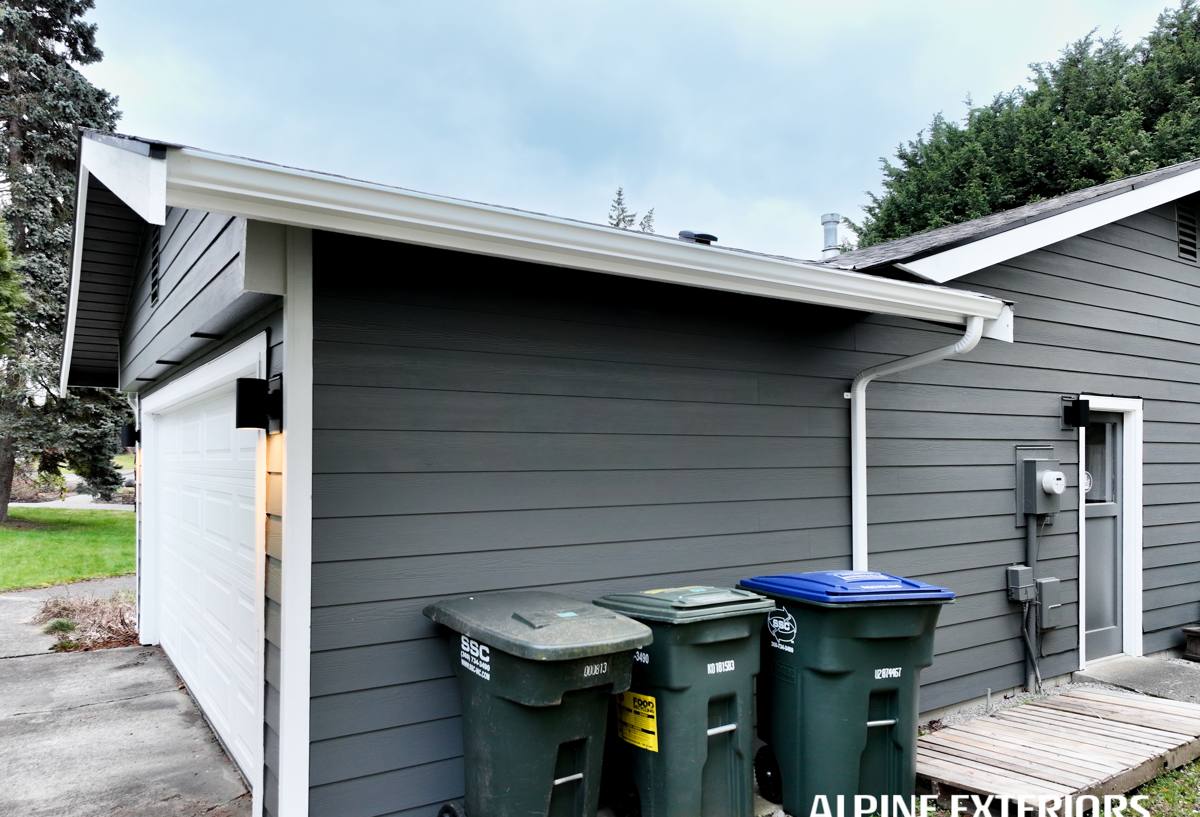
We standardized on James Hardie fiber cement siding for every home we work on, and that decision is even easier to defend on a barrier island street than it is elsewhere. Fiber cement is non-combustible, dimensionally stable, and doesn't absorb and swell with moisture the way wood-based products can. James Hardie's HZ product line is specifically engineered around regional climate exposure — the HZ5 formulation, used in Florida and other high-humidity, high-moisture coastal zones, is built to resist the freeze-thaw isn't the issue here so much as constant moisture cycling, humidity, and wind-driven rain that a general-purpose siding product wasn't designed around.
We don't install vinyl, LP SmartSide, Cemplank, Allura, or primed wood siding, and proximity to the Gulf is one more reason why. Vinyl can distort under intense, sustained heat and is more vulnerable in high-wind events. Wood-based and OSB-core products are more sensitive to sustained moisture exposure over time. Those aren't defects unique to any one manufacturer — they're trade-offs inherent to those materials, and on a barrier island home, we don't think those trade-offs are worth taking. James Hardie's factory-applied ColorPlus finish also matters directly to UV performance: it's baked on under controlled conditions and backed by its own finish warranty, rather than relying on field-applied paint to hold up against constant coastal sun.
What a Correct Installation Involves on a Barrier Island Home
Substrate and Moisture Barrier Prep
Before a single piece of siding goes up, the wall needs a continuous, correctly lapped water-resistive barrier, with special attention around every window, door, and penetration. On coastal jobs we treat this step as non-negotiable — it's the layer that determines whether wind-driven rain that gets past the siding ever reaches the sheathing.
Fastening and Flashing Details
James Hardie publishes specific fastening schedules by product line and wind exposure, and Florida installations require closer attention to fastener type, penetration depth, and spacing than milder climates do. Corrosion-resistant fasteners are used throughout, and flashing at horizontal joints, window heads, and butt seams is detailed to shed water outward rather than let it collect.
Clearances and Drainage
Siding installed too close to grade, roof lines, decks, or hardscape traps moisture against the bottom edge of the panel. Correct installation maintains manufacturer-specified clearances so water has somewhere to go instead of wicking up into the material over time.
Finish and Color Considerations
ColorPlus finishes are factory-cured and more resistant to fading than field-applied paint, which matters in an environment with this much year-round sun. Where field-painted trim or accent pieces are used, we use paint systems rated for the exposure rather than standard interior-grade products.
Our Installation Process for Redington Shores Homes
The steps themselves aren't unusual — what changes is how carefully each one is executed given the exposure.
- On-site assessment of the existing wall condition, current siding (if any), and any moisture or structural issues found during removal.
- Confirmation of wind-load and flashing requirements applicable to the property's location and exposure category.
- Removal of old siding and inspection of sheathing, with repairs made to any compromised substrate before moving forward.
- Installation of a continuous water-resistive barrier and flashing at all penetrations, joints, and transitions.
- Installation of James Hardie fiber cement panels or lap siding per the manufacturer's fastening schedule for the applicable HZ product and wind zone.
- Trim, caulking at appropriate joints only (not as a substitute for flashing), and final finish work.
- Final walk-through and cleanup.
Cost Factors for Redington Shores Siding Installation
Every home is different, and we don't publish blanket pricing because square footage, current wall condition, trim complexity, and access all move the number. What we can tell you is which factors tend to matter most on barrier island properties specifically:
| Factor | Why It Affects Cost Here |
|---|---|
| Existing wall condition | Moisture-damaged sheathing found during tear-off requires repair before new siding goes on |
| Home size and trim detail | More corners, windows, and architectural detail mean more flashing and labor time |
| Product line (HZ5 vs. standard) | Climate-engineered product for this exposure is specified rather than a generic version |
| Site access and staging | Narrow lots, limited driveway space, and barrier-island logistics affect equipment and material staging |
| Color and finish selection | ColorPlus factory finishes vs. field-painted trim carry different material costs |
The only way to get a real number is a walk of the property, which is why we start every job with an on-site look rather than a phone estimate.
Signs Your Current Siding Is Already Losing the Battle
Homeowners often wait until damage is visible from the street, but a few warning signs show up earlier and are worth checking for:
- Soft or spongy spots when you press on the siding, especially near the bottom courses or under windows
- Visible warping, buckling, or panels that no longer sit flat
- Paint that's chalking, peeling, or fading unevenly across different wall exposures
- Staining or discoloration that tracks with window heads, joints, or trim seams — a sign water is getting behind the surface
- Visible corrosion around fasteners, trim nails, or metal flashing
- A noticeable rise in interior humidity or musty smell along an exterior wall
Any one of these is worth a closer look before it turns into a sheathing or framing repair, which costs considerably more than replacing siding on its own.
Why Hiring a Crew That Already Works Redington Shores Matters
Barrier island jobs come with logistics that inland Largo jobs don't: narrower lots, limited staging space, and in some cases stricter local requirements around work hours, parking, or debris handling. A crew that's already worked this community knows what to expect before the truck shows up, instead of figuring it out on your dime. More importantly, experience installing fiber cement in this specific wind and salt exposure means fewer surprises during tear-off, better judgment on flashing details that aren't always obvious on paper, and a finished product that's actually built for the environment it's going into — not just built to a generic spec sheet.
Pinellas County's coastal communities, from Redington Shores down through the rest of the barrier islands, all share this same basic challenge: siding here has to hold up to more than siding a few miles inland. That's the standard we hold every installation to, and it's why we don't cut corners on product selection or installation detail regardless of how small the job is.
If you're weighing a siding project on a Redington Shores home, we're happy to take a look and give you an honest assessment of what your home actually needs — no pressure, no generic pricing sheet. Use the form below to request a free estimate.