 Largo Siding
 Asphalt Shingle Roofing for Safety Harbor Homes
Safety Harbor sits along Old Tampa Bay in Pinellas County, and that waterfront location shapes what a roof has to survive here. Homes in this area deal with a longer, more punishing set of conditions than a lot of inland Florida neighborhoods: near-constant humidity, intense UV exposure almost year-round, wind-driven rain off the bay, and a steady dose of salt air that doesn't stop just because a house isn't technically "on the water." Add hurricane-force wind events into the mix, and an asphalt shingle roof in Safety Harbor is doing more work than the same roof would in a drier, inland climate.
That doesn't mean asphalt shingles are the wrong choice — they remain one of the most cost-effective, widely available, and easily repaired roofing materials for this market. It means the installation details matter more here than they would somewhere with milder weather. A shingle roof that's installed to a minimum standard will show its age faster in Safety Harbor than the identical roof installed correctly. This page is about what "correctly" actually means for this specific area.
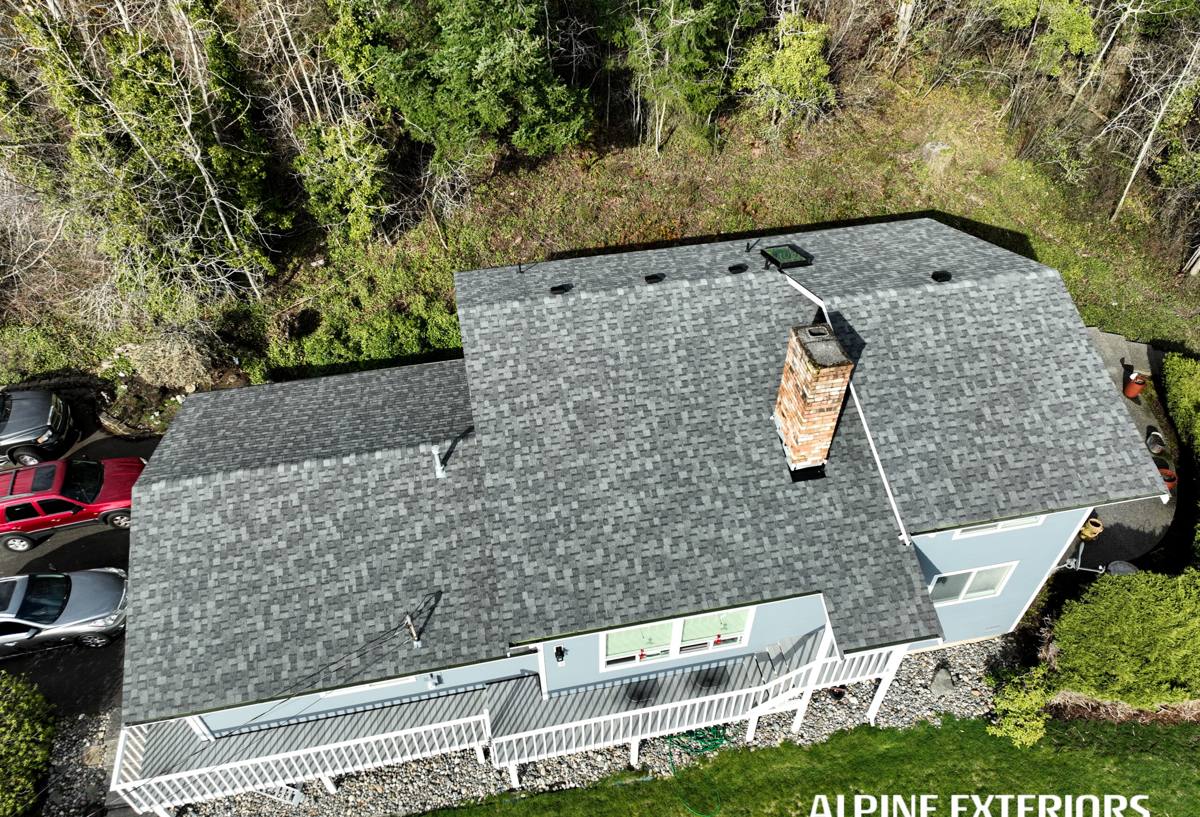
What Safety Harbor's Climate Demands From a Shingle Roof
Wind
Pinellas County's building code requirements exist because of real wind history, not theoretical risk. Asphalt shingles rated for high-wind zones, installed with the correct nailing pattern and nail count, are the difference between a roof that sheds a storm and one that loses shingles or an entire section of underlayment in a bad blow. Wind doesn't just pull shingles off in a straight line — it gets underneath edges and corners first, which is why perimeter and ridge detailing deserves as much attention as the open field of the roof.
UV and Heat
Florida sun breaks down asphalt shingles from the surface in. The granules on a shingle aren't just cosmetic — they're the UV shield protecting the asphalt layer underneath. Once granule loss starts, degradation accelerates, and a roof that should have had another decade of life starts losing integrity years early. Attic ventilation plays a bigger role in this than most homeowners realize, since trapped heat under the deck bakes shingles from underneath as well as from the sun above.
Salt Air and Humidity
Being near Old Tampa Bay means airborne salt reaches fasteners, flashing, and drip edge even on homes several blocks from the water. Salt exposure speeds up corrosion on anything that isn't rated for it, which is why fastener and flashing material selection matters as much as the shingle brand on the label.
Wind-Driven Rain
A shingle roof doesn't just need to keep rain out when it's falling straight down — it needs to keep out rain that's being pushed sideways and even upward under an eave. That's an underlayment and flashing detail question more than a shingle question, and it's one of the most common places we find shortcuts on roofs installed by out-of-area or lower-bid crews.
What a Correct Asphalt Shingle Installation Involves
A shingle roof is a system, not a single product. Each layer has a job, and skipping or under-specifying any one of them shows up later as a leak, a wind loss, or premature aging.
- Deck inspection and repair — replacing any soft, delaminated, or water-damaged decking before anything new goes down, since shingles installed over a compromised deck will fail regardless of quality
- Drip edge — corrosion-resistant metal at eaves and rakes to direct water away from the fascia and deck edge
- Underlayment — a synthetic or self-adhering underlayment appropriate for wind-driven rain exposure, with special attention to valleys and low-slope transitions
- Ice-and-water shield equivalent detailing — while ice damming isn't a Florida concern, self-adhering membrane at valleys, penetrations, and eaves still matters here for wind-driven rain resistance
- Flashing — step flashing at walls, counter-flashing at chimneys, and properly lapped flashing at all penetrations, using corrosion-resistant materials suited to salt air
- Shingle selection and nailing — high-wind-rated shingles installed with manufacturer-specified nail count and placement, not the minimum a crew can get away with
- Ridge and hip detailing — proper ridge cap installation and ventilation integration, since this is one of the first areas wind finds a weak point
- Ventilation — balanced intake and exhaust airflow to reduce attic heat buildup and moisture accumulation
Shingle Options and What They Trade Off
Not every asphalt shingle product is built the same, and the right choice depends on budget, wind rating needs, and how long the homeowner plans to stay in the home. Here's an honest breakdown of the common tiers available for a project like this.
| Shingle Type | Typical Wind Rating | Expected Lifespan (Local Climate) | Best Fit |
|---|---|---|---|
| 3-Tab (Standard) | Lower end of code range | 12–18 years | Budget-conscious projects, rentals, shorter-hold properties |
| Architectural / Laminate | Mid-to-high, model dependent | 18–25 years | Most owner-occupied homes; balance of cost, appearance, durability |
| Impact-Rated / Premium Architectural | High-wind rated, often Class 4 impact | 25–30 years | Homes prioritizing storm resilience and potential insurance credit |
We'll walk through which tier makes sense for a specific roof rather than defaulting to whatever carries the highest margin — a straightforward architectural shingle is the right call for a large share of Safety Harbor homes, and there's no reason to oversell a homeowner who doesn't need the top tier.
How Our Process Works
1. Inspection and Honest Assessment
We start by getting on the roof, not just looking at it from the ground. That means checking the deck condition, flashing points, ventilation, and the overall wear pattern before recommending repair versus replacement. If a repair genuinely solves the problem, we'll say so.
2. Written Scope and Materials
Before any work starts, the homeowner gets a clear scope of what's being replaced, what shingle and underlayment products are being used, and what the flashing and ventilation plan looks like. No vague line items.
3. Tear-Off and Deck Check
Old materials come off down to the deck, and we inspect and repair decking as needed rather than covering up problems with a new layer of shingles.
4. System Installation
Drip edge, underlayment, flashing, shingles, and ridge detailing go in as a coordinated system, with attention to the wind and rain exposure specific to this area rather than a one-size-fits-all approach.
5. Cleanup and Final Walkthrough
Job site debris and nail sweep are handled before we consider the job done, and we walk the finished roof with the homeowner rather than just sending an invoice.
Why Local Experience in Safety Harbor Matters
A roofing crew that regularly works Safety Harbor and the surrounding Pinellas County area already understands the wind and permitting requirements specific to this jurisdiction, knows what deck and framing conditions are common in the area's housing stock, and isn't learning the local salt-air corrosion patterns on someone else's roof for the first time. That familiarity shows up in small decisions — fastener material, flashing lap direction relative to prevailing wind, where to reinforce ridge caps — that a crew unfamiliar with this specific coastal environment might not think twice about.
It also matters for permitting and inspection. Local code officials know what a compliant installation looks like in this wind zone, and a crew that pulls permits and passes inspections here regularly moves through that process without the delays that come from unfamiliarity.
Signs a Safety Harbor Roof Needs Attention
- Granules collecting in gutters or at downspout outlets
- Curling, cupping, or cracked shingles, especially on south- and west-facing slopes
- Visible shingle loss or lifted tabs after a windstorm
- Dark streaking or algae growth across the roof surface
- Soft spots noticed while walking the attic, or daylight visible through the roof deck
- Rusted or corroded flashing and fasteners
- Interior ceiling stains, especially near valleys, chimneys, or wall intersections
Any one of these on its own isn't necessarily an emergency, but several together usually mean it's time for a real inspection rather than a wait-and-see approach.
Maintenance That Extends Roof Life Here
Asphalt shingle roofs in this climate benefit from more frequent attention than the same roof would need in a milder region. Keeping gutters clear reduces water backup at the eaves. Trimming back overhanging branches limits debris buildup and abrasion during wind events. Periodic inspection after major storms — even ones that didn't seem severe — catches lifted shingles or flashing damage before a small issue becomes a leak. None of this replaces a properly installed system, but it does stretch the life of one.
Getting an Honest Estimate
Every roof and every budget is different, and the right recommendation depends on the actual condition of the deck, the age of the current roof, and what the homeowner needs it to do over the next 15 to 30 years. We're glad to walk a Safety Harbor property, answer questions honestly, and put together a clear, no-pressure estimate — use the form below to get started.