 Largo Siding
 Redington Shores Sits Right at the Edge of What Siding Has to Survive
Redington Shores is a barrier-island community wedged between the Gulf of Mexico and Boca Ciega Bay, just a short drive from our crews' home base in Largo. That location is part of what makes it beautiful, and it's also exactly why siding here fails faster than it does even a few miles inland. Homes on and near the beach take the full, unfiltered version of everything Pinellas County's climate throws at an exterior: sustained salt-laden humidity, direct Gulf sun nearly every day of the year, wind-driven rain that finds every unsealed seam, and the real possibility of hurricane-force gusts during storm season.
None of that is unique to Redington Shores in the abstract — every coastal Florida community deals with some version of it. What's different here is the concentration. Being this close to open water means salt aerosol is heavier and more constant, UV exposure is higher because there's less tree canopy to break it up, and wind loads on an exposed lot are simply higher than they are a half-mile back from the water. A siding system that's "fine" in a shaded, inland Largo neighborhood can be visibly failing on a Redington Shores home in a fraction of the time.
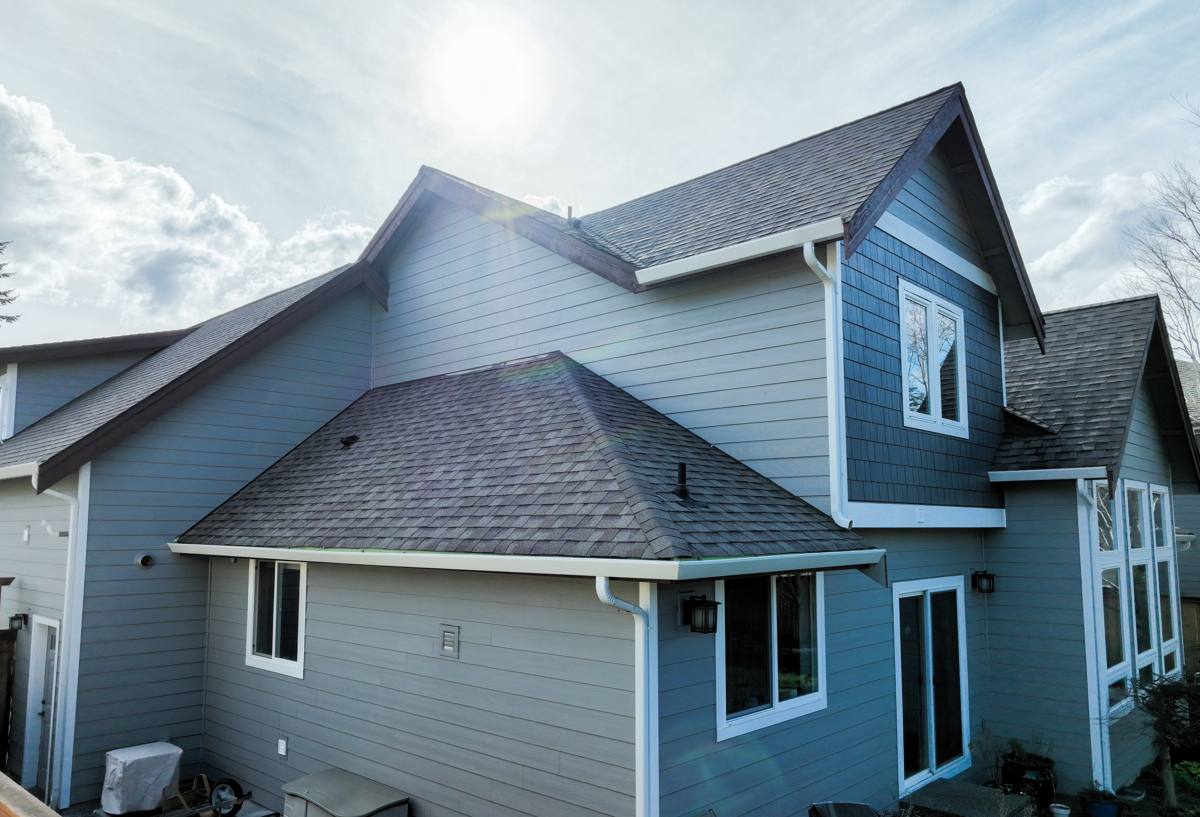
What Salt Air, UV, and Wind Actually Do to Siding
Salt Air
Airborne salt settles on every exterior surface and works its way into seams, fasteners, and any place moisture can linger. On siding materials that aren't engineered for it, that means accelerated corrosion of fasteners and trim, softening of caulked joints, and a steady breakdown of factory finishes.
Year-Round UV
Florida doesn't give siding an off-season. Constant sun exposure fades color, dries out and cracks caulk, and — on products with a field-applied paint job rather than a factory finish — shortens the repaint cycle considerably.
Wind-Driven Rain
Wind doesn't just push rain sideways; it forces water into laps, seams, and fastener penetrations that would stay dry in a calm rain event. Over time, that's how water gets behind siding and starts rotting the substrate underneath, often long before any problem is visible from the street.
Hurricane-Force Wind Loads
Beyond storm events, an exposed barrier-island lot sees higher sustained wind loads day to day. Fastening patterns, panel selection, and installation details that pass code inland can still be under-built for a property this close to the water.
What a Correct Siding Replacement Involves Here
A siding replacement isn't just pulling off old panels and nailing up new ones. Done correctly, especially on a coastal Pinellas County property, it involves several layers most homeowners never see:
- Full tear-off and inspection of the wall sheathing underneath — this is where hidden water damage from years of wind-driven rain usually shows up
- Repair or replacement of any rotted or compromised sheathing before anything new goes on
- A continuous, properly lapped weather-resistive barrier (house wrap) installed shingle-style so water sheds down and out, not in
- Correct flashing at every window, door, and penetration — the single most common source of hidden leaks on redone siding
- Fastener selection and spacing rated for the wind exposure of the specific lot, not just a generic minimum
- Proper joint and seam sealing with materials that hold up under UV and salt exposure, not standard interior-grade caulk
Skip any one of these steps and the new siding can look perfect for a year or two while a moisture or wind problem builds underneath it unnoticed.
Why We Install Only James Hardie Fiber Cement
We made a decision as a company to install James Hardie fiber cement siding exclusively — not vinyl, not LP SmartSide, not the other fiber cement brands. That's not a marketing position, it's a standard we hold because of what we've seen happen to siding on exposed Gulf Coast properties over time.
Vinyl softens, warps, and can be more vulnerable to wind uplift in high-gust conditions, and it has no factory-baked color layer to resist the fading that constant Florida UV causes. Wood-based and other fiber cement alternatives can be more sensitive to moisture intrusion at cut edges and seams if installation isn't precise — a real risk on a project where wind-driven rain is a near-daily variable rather than an occasional event. None of these products are junk; they're reasonable choices in the right climate and budget. We simply don't think they hold up to the specific combination of salt air, sun, and wind that a Redington Shores property deals with every year, and we'd rather turn down that installation than warranty a product we don't trust in this environment.
James Hardie's HZ10 product line is engineered specifically for humid, high-moisture climates like ours, and its ColorPlus factory finish is baked on under controlled conditions rather than field-applied — which matters enormously under year-round Gulf sun. Fiber cement is also non-combustible, holds paint far longer than field-primed wood substitutes, and carries a strong transferable warranty when installed to Hardie's specifications.
How Coastal Exposure Should Change Your Material Decision
| Factor | Why It Matters for a Redington Shores Home |
|---|---|
| Finish durability under UV | Factory-cured finishes resist fading and chalking far longer than field-applied paint under constant Gulf sun |
| Moisture behavior at seams | Wind-driven rain finds every gap; the product and the installation both need to shed water, not just resist it |
| Fastener and hardware corrosion | Salt air accelerates corrosion of standard fasteners and trim faster than it does a few miles inland |
| Wind rating of the installed assembly | Exposed barrier-island lots see higher wind loads; fastening schedule should match the lot, not just code minimums |
| Warranty structure | A strong, transferable warranty matters more here because materials are worked harder and age faster |
Our Replacement Process
- On-site assessment — we look at your current siding, trim, and any visible signs of moisture or wind damage, and we check what's happening at the sheathing level where we can access it
- Honest scope and estimate — you get a clear picture of what needs full replacement versus what can be addressed with targeted repair, with no pressure to over-scope the job
- Tear-off and substrate inspection — old siding comes off and we inspect and repair the wall sheathing before anything new is installed
- Weather barrier and flashing — house wrap and flashing go in correctly at every penetration, the step most responsible for long-term performance
- James Hardie installation to spec — panels installed with fastening and clearances matched to your home's specific wind exposure
- Final walkthrough — we go over the finished work with you before we consider the job done
Signs a Redington Shores Home Needs Replacement, Not Just Repair
Coastal exposure tends to produce a specific pattern of failure that's worth recognizing early:
- Visible cracking, buckling, or separation at panel seams, especially on the Gulf- or wind-facing side of the house
- Soft or spongy spots when you press on the siding near the bottom edges or around windows
- Paint or finish that's chalking, peeling, or fading noticeably faster than the rest of the house's exterior surfaces
- Rust staining running down from fasteners or trim
- Visible gaps or warping at corners and joints after storm season
- A musty smell or interior wall staining that suggests moisture is getting behind the siding
Why It Matters That Your Crew Already Works This Area
Wind load requirements, flashing details, and fastening schedules aren't identical across Pinellas County — a lot exposed directly to Gulf winds needs to be treated differently than one set back in a sheltered inland neighborhood. A crew that regularly works Redington Shores and the surrounding Largo-area beach communities already knows which details can't be shortcut here, has a working relationship with local permitting, and has seen firsthand how different products and installation choices actually hold up a few years out in this specific environment — not just in a manufacturer's climate-zone chart.
What to Ask Before You Hire
Whoever you choose for a siding replacement this close to the water, it's worth asking a few direct questions before signing anything:
- Are you licensed and insured to work in Pinellas County, and can you provide proof?
- Will you inspect and repair the sheathing underneath before installing new siding, or just cover what's there?
- What weather-resistive barrier and flashing details will you use, specifically, at windows and doors?
- Is your fastening schedule adjusted for this property's wind exposure, or is it a standard minimum?
- What warranty comes with the material, and what comes with your workmanship separately?
- Have you worked on other homes in Redington Shores or nearby beach communities?
A contractor who answers these clearly and specifically, rather than vaguely, is a good sign you're dealing with someone who takes coastal installation seriously.
Get a Straight Answer About Your Siding
If your Redington Shores home is showing any signs of wear, or you're just planning ahead before the next storm season, we're happy to take a look and give you an honest read on what your siding actually needs — no pressure, no inflated scope. Request a free estimate below and we'll walk the property with you.