 Largo Siding
 Deck Repair Built for Redington Shores' Coastal Conditions
Redington Shores sits right on the Gulf, which means decks here work harder than decks almost anywhere else in Pinellas County. Salt air corrodes fasteners and hardware faster than inland areas. Direct sun bakes wood fibers and breaks down composite surfaces year-round. Wind-driven rain off the Gulf finds every gap in flashing and every hairline crack in a board. And when a named storm rolls through, decks take the kind of lateral load that inland patios never see. A deck built or repaired without that environment in mind will show problems years before it should.
We work throughout the Largo area, including the barrier island communities like Redington Shores, and we see the same failure patterns over and over: corroded ledger connections, cupped or splitting boards, railings that have gone soft at the post base, and fastener heads that have rusted through their coating. None of that is unusual for a Gulf-front deck. It's just what happens when a structure isn't inspected and maintained with this climate in mind.
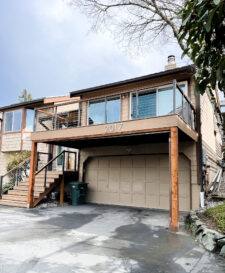
What Salt Air, UV, and Storms Actually Do to a Deck
Salt Air and Metal Fasteners
Standard galvanized fasteners can start showing surface rust within a couple of years this close to the water. Once a fastener's coating breaks down, corrosion works from the outside in — the screw or bolt looks intact until it snaps or the head strips out. This matters most at structural connections: ledger bolts, joist hangers, and post-to-beam hardware. A deck that looks solid on the surface can have compromised connections underneath.
UV Exposure
Florida sun is intense and constant, not seasonal. Wood decking dries out, checks, and splinters faster here than in most of the country. Composite and PVC decking are more UV-stable than wood, but even those products fade and can become brittle at the surface over enough years of full sun. Whatever the decking material, UV is a factor in how often boards need attention.
Wind-Driven Rain and Moisture
Rain that comes in sideways during Gulf storms gets pushed into places a vertical rain never would — under flashing, behind ledger boards, into end-grain cuts on decking. That trapped moisture is what causes rot in the framing you can't see from the top of the deck, and it's usually the reason a deck that "looks fine" fails an inspection.
Storm and Wind Loading
Hurricane-force wind puts real lateral stress on railings, stair stringers, and the connections holding a deck to the house. Loose or corroded hardware that would just be an annoyance elsewhere becomes a real safety issue when a deck is asked to take that kind of load.
Common Deck Problems We Find in This Area
- Rusted or failing fasteners and joist hangers, especially near the waterline side of a home
- Soft or spongy decking boards, usually a sign of moisture getting into the wood or substrate
- Ledger board separation or gaps where the deck meets the house — a common entry point for water
- Railings and posts that have loosened at the base from repeated wind flex
- Cupped, cracked, or splintering wood decking from sun and moisture cycling
- Stair stringers showing rot or checking at the ground-contact points
- Faded, chalky, or delaminating composite decking after years of full sun exposure
What a Correct Deck Repair Actually Involves
A proper repair isn't just swapping a bad board for a new one. It starts with figuring out why that board failed in the first place — otherwise you're just delaying the same problem. Here's what we actually check and do:
1. Structural Inspection First
Before any decking comes off, we check the framing underneath: ledger connections, joists, beams, and post bases. Surface damage is often a symptom of a structural issue below it, and repairing the surface without addressing the cause just means doing the job again in a couple of years.
2. Fastener and Hardware Upgrades
Where we find corroded fasteners or hangers, we replace them with hardware rated for coastal or treated-lumber exposure, not standard interior-grade fasteners. This is one of the most important — and most skipped — parts of a coastal deck repair.
3. Flashing and Ledger Sealing
If the ledger board connection is the source of water intrusion, we correct the flashing detail rather than just caulking over the symptom. Caulk alone doesn't hold up to this climate long-term.
4. Matching or Upgrading Decking Material
Depending on the extent of damage and what the homeowner wants going forward, we repair with matching material or discuss upgrading sections to a more weather-resistant decking product. We'll walk through the honest trade-offs of each option rather than pushing one product.
5. Railing and Stair Safety Check
Railings and stairs get tested for movement and load, not just looked at. A railing that looks fine but flexes under pressure is a liability we won't sign off on without addressing it.
Repair vs. Replacement: How We Help You Decide
Not every deck problem needs a full rebuild, but pretending a structural issue is a cosmetic one just pushes the cost down the road. Here's a general guide to how we think about it:
| Condition | Typical Approach | Why |
|---|---|---|
| A few isolated soft or cracked boards | Board-level repair | Framing is likely still sound; targeted replacement is cost-effective |
| Rusted fasteners, framing otherwise solid | Hardware upgrade + spot repair | Addresses the root cause before it spreads further |
| Rot at ledger board or multiple joists | Structural repair, possible partial rebuild | Framing issues affect the whole deck's safety, not just one area |
| Widespread wood decay or corrosion across the deck | Full or near-full replacement | Piecemeal repair on a deck this deteriorated rarely holds up or looks right |
| Deck is structurally sound but outdated or worn-looking | Resurfacing or cosmetic upgrade | No need to touch what isn't broken |
We'll always tell you plainly which category your deck falls into and why, including when a repair is genuinely the right call instead of upselling a full rebuild.
Our Process for Redington Shores Deck Repairs
- Free on-site inspection. We walk the deck, check the framing where accessible, and test railings and connections.
- Honest assessment. We explain what we found, what's causing it, and what your realistic options are — repair, partial rebuild, or full replacement.
- Written estimate. No pressure, no vague pricing — you get a clear scope of work before anything starts.
- Repair with coastal-appropriate materials. Corrosion-resistant hardware, proper flashing details, and decking suited to Gulf-front exposure.
- Final walkthrough. We check the finished work with you and make sure railings, stairs, and decking all meet a standard we'd put our name on.
Why Hiring a Crew That Already Works This Area Matters
A contractor who mostly works inland doesn't run into salt-air corrosion or wind-driven rain intrusion often enough to build real judgment around it. We work siding, decks, and exteriors throughout Largo and the surrounding Pinellas County coastal communities, including Redington Shores, so we're not guessing at what this environment does to a structure over time — we see it on a regular basis. That translates into knowing which hardware actually holds up here, which framing details tend to fail first, and which repairs are worth doing versus which are a band-aid.
It also means we're not far away if a follow-up question comes up after the work is done. Local accountability is part of what you're hiring, not just the labor.
Simple Maintenance That Extends Your Deck's Life
- Rinse salt residue off decking and railings periodically, especially after storms
- Walk the deck a few times a year and check for soft spots, loose boards, or movement in railings
- Keep an eye on the ledger board area where the deck meets the house — this is the most common spot for hidden water damage
- Reseal or refinish wood decking on a regular schedule rather than waiting until it looks bad
- Have hardware and structural connections checked every couple of years, particularly after a rough storm season
None of this requires a professional every time, but catching a problem early is almost always cheaper and simpler than catching it late.
Get a Straightforward Look at Your Deck
If your deck in Redington Shores has soft spots, rusted hardware, loose railings, or just needs an honest once-over after another storm season, we're glad to take a look. We'll give you a clear, no-pressure estimate and tell you plainly what your deck actually needs — nothing more, nothing less. Use the form below to request your free estimate.