 Largo Siding
 Redington Beach Sits Right on the Front Line
Redington Beach is a barrier island community along Pinellas County's Gulf coast, and homes out here take on a very different level of exterior punishment than houses just a few miles inland. There's no buffer between the siding on these homes and open water — salt spray rides in on the wind almost daily, the sun reflects off sand and water on top of already intense Florida UV, and when a storm comes through, it arrives with less friction to slow it down than it would hitting an inland neighborhood.
Largo Siding Company works this stretch of coast regularly, and we've built our entire business around one product line because of what we see out here: siding that isn't engineered for salt air, sustained humidity, and wind-driven rain fails faster on a barrier island than it does anywhere else in the county. That's the whole reason this page exists — to walk through what James Hardie fiber cement siding actually does for a Redington Beach home, and what a correct installation looks like in this specific environment.
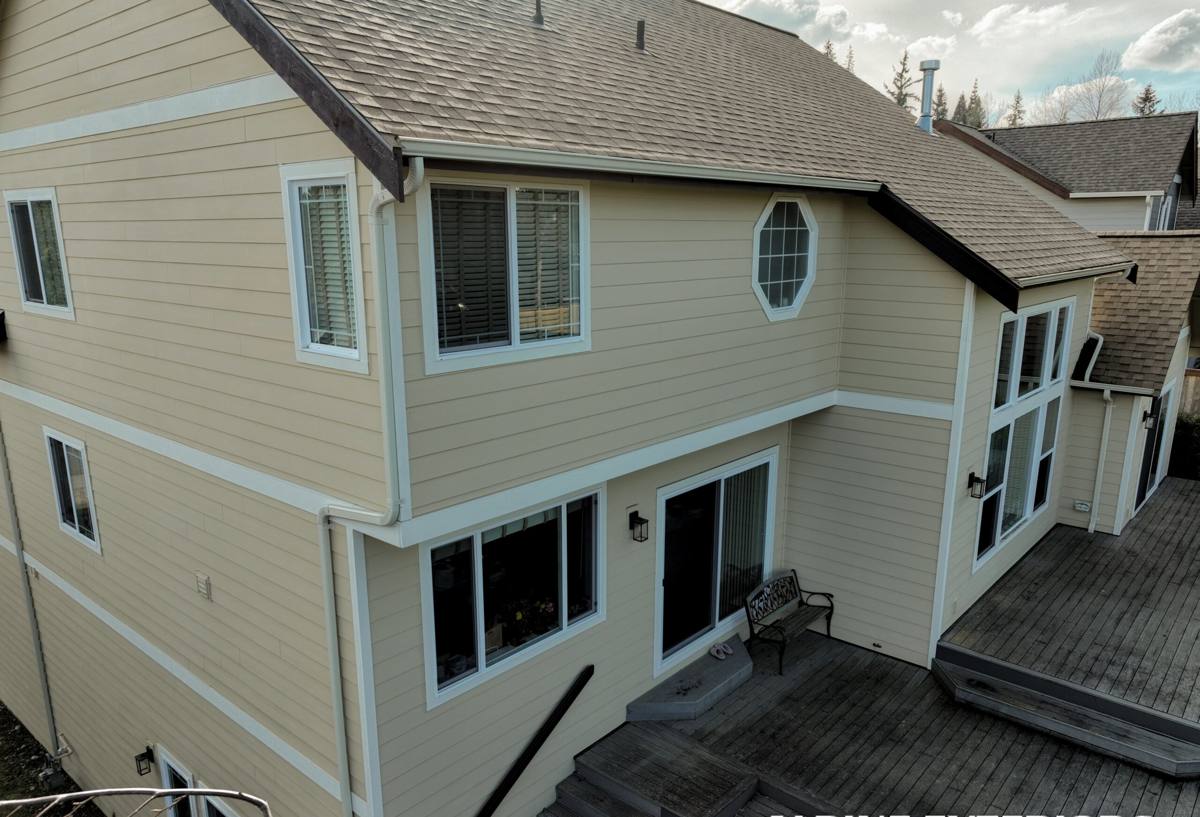
Why James Hardie Fiber Cement Holds Up Where Vinyl and Wood Struggle
James Hardie siding is made from cement, sand, and cellulose fiber, pressed and cured into a dense, stable board. That composition matters more here than in most parts of the country. It doesn't soften, warp, or expand and contract the way vinyl does under sustained heat and direct sun. It doesn't absorb moisture and swell, rot, or feed insects the way untreated or primed wood products can once humidity and salt moisture get into the material. And because it's non-combustible, it doesn't carry the fire-related trade-offs that come with some engineered wood siding products.
The factory finish is a big part of this too. Hardie's ColorPlus finish is baked on and cured at the factory under controlled conditions, not brushed or sprayed on-site the way most field-applied paint is. On a barrier island where UV exposure is constant and salt air accelerates the breakdown of lower-quality coatings, that factory-cured finish is what keeps color from chalking and fading years ahead of schedule.
Built for the Climate, Not Just the Look
James Hardie doesn't make one universal product for the whole country. The company engineers different formulations for different climate zones — a version built for freeze-thaw cycles up north is not the same product recommended for the Gulf Coast. Redington Beach sits in a zone where humidity, moisture cycling, and salt exposure are the dominant stresses, and the product lines specified for this climate are formulated with that in mind. Choosing the right formulation for this exact environment, not just "James Hardie siding" in general, is part of what a correct installation here should include.
What a Correct Installation Actually Involves Near Saltwater
James Hardie siding only performs the way it's engineered to when it's installed to the manufacturer's specifications. Inland, a sloppy installation might take years to show itself. On a barrier island, gaps in the work show up much faster — trapped moisture, exposed cut edges, and undersized clearances get tested by salt humidity and storm rain almost immediately. A correct job on a Redington Beach home includes:
- Proper clearance between the bottom edge of the siding and rooflines, decks, patios, and grade, so water doesn't wick up into the board
- Corrosion-resistant fasteners, correctly spaced and driven flush — not overdriven, which cracks the material and opens a path for moisture
- Field-cut edges sealed and painted on-site, since the factory ColorPlus finish only protects the face and factory edges, not cuts made during installation
- A properly lapped weather-resistant barrier with correct flashing at every window, door, and penetration
- Manufacturer-approved caulking at joints and trim — sealed where it should be sealed, and left open where the system is designed to drain and breathe
Every one of these details exists to manage moisture. On this coastline, moisture management is the single biggest factor separating siding that lasts decades from siding that needs early repair.
Salt Air and the Small Details Most Crews Miss
Salt air doesn't just affect the siding face — it goes after every metal component in the system. Standard fasteners and trim hardware can corrode faster this close to the Gulf, leading to streaking, staining, and weakened attachment points well before the siding itself would otherwise need attention. On barrier island installations, we account for that by using fastener and flashing materials suited to a marine-influenced environment, and by paying attention to how different metals interact so one component doesn't accelerate corrosion in another. It's a detail that's easy to skip and expensive to ignore.
James Hardie vs. Other Siding Options on a Barrier Island
Homeowners in Redington Beach sometimes ask why we don't offer vinyl or engineered wood siding as lower-cost alternatives. The honest answer is that we've seen how each of these performs under sustained coastal exposure, and we standardized on James Hardie because of how it holds up specifically in this environment.
| Factor | James Hardie Fiber Cement | Vinyl Siding | Engineered Wood Siding |
|---|---|---|---|
| Salt air / humidity resistance | Formulated for this climate zone | Can become brittle over time in sun and salt exposure | Vulnerable if moisture reaches the wood core |
| UV / color stability | Factory-cured ColorPlus finish resists fading | Color can fade and chalk under intense sun | Painted finish, maintenance depends on paint quality |
| Fire resistance | Non-combustible | Can soften or melt under high heat | Combustible wood-based core |
| Wind / impact resistance | Dense, rated for high-wind installation | Lighter material, more prone to cracking or blow-off in severe wind | Moderate, depends on product and installation |
| Long-term maintenance | Low, if installed and sealed correctly | Low upfront, but early replacement risk in harsh coastal exposure | Higher — moisture and paint upkeep matter more over time |
Every material has situations where it makes sense. On a barrier island exposed to salt spray, hurricane-force wind, and constant UV, James Hardie is the product we're willing to put our name behind.
Our Process for a Redington Beach Home
Working this close to the Gulf means factoring in wind exposure and moisture conditions from the start, not treating it as an afterthought. Our process for a James Hardie installation in this area generally includes:
- An on-site inspection of your home's current siding, sheathing condition, and specific exposure to sun, wind, and salt spray
- Product and finish selection suited to a coastal Pinellas County climate, including the appropriate Hardie formulation and profile for your home
- Permitting through the applicable local jurisdiction before any work begins
- Careful tear-off of existing siding with an inspection of the sheathing underneath for hidden moisture damage before anything new goes on
- Installation to manufacturer specification — clearances, fastening, flashing, and sealed cut edges done right the first time
- A final walk-through and warranty registration, so you have documentation on file, not just a verbal promise
Keeping Hardie Siding Looking Right on the Coast
James Hardie siding is low-maintenance, but "low-maintenance" doesn't mean "no attention needed" on a barrier island. A little routine care goes a long way toward protecting your investment:
- Rinse salt residue and airborne debris off the siding periodically with a garden hose, especially on sides facing the water
- Walk the exterior after major storms and check caulking and trim joints for cracks or gaps that opened up under wind stress
- Keep sprinkler heads and irrigation aimed away from the base of the siding so it isn't sitting in constant moisture
- Keep landscaping and mulch beds from piling up against the bottom edge of the siding
- Have a professional take a look after any named storm that brought sustained high winds through the area
Why Hiring a Crew That Already Works Redington Beach Matters
Barrier island construction comes with its own logistics — permitting requirements specific to coastal Pinellas County jurisdictions, wind-load considerations tied to this exposure category, and an understanding of how quickly a cut corner turns into a real problem out here. A crew that mainly works inland neighborhoods may install a technically sound product without accounting for what saltwater proximity and near-constant onshore wind actually demand. We're already familiar with this stretch of coast, the permitting process that applies here, and the installation details that matter most when a home sits this close to the Gulf.
If you're considering new siding for a Redington Beach home, we're happy to take a look and talk through what your home actually needs — no pressure, no obligation. Use the form below to request a free estimate.