 Largo Siding
 Oldsmar sits at a spot where the outdoor living season never really ends. That's a selling point for any home with a deck — and also the reason so many decks in this part of Pinellas County fail early. Between direct UV exposure nearly every day of the year, wind-driven rain off Tampa Bay, hurricane-season gusts, and salt-laden air working its way inland, a deck here is under more stress than the same structure would face almost anywhere else in the country. Building one that lasts isn't about picking a nice-looking board. It's about understanding how Florida weather attacks wood, fasteners, and framing over years, then designing and building to stay ahead of that.
This page covers what we've learned building and repairing decks for homes in and around Oldsmar: what the climate actually does to a deck, what a correctly built deck involves from the ground up, and how we approach the job so it holds up instead of becoming a five-year maintenance headache.
What Oldsmar's Climate Does to a Deck
A deck is one of the most exposed structures on a property — no roof overhang, no siding to shed water, just boards and framing sitting directly in the weather. In this region, that means dealing with several stresses at once, year-round.
UV and Heat
Florida sun breaks down the lignin and surface fibers in wood and degrades the UV inhibitors in composite decking over time. Untreated or poorly sealed wood grays and checks (small surface cracks) within a couple of seasons. Composite boards without adequate UV stabilization can fade unevenly, especially on south- and west-facing sections of a deck that get the most direct afternoon sun.
Wind-Driven Rain and Humidity
Afternoon storms don't just fall straight down here — wind pushes rain sideways and underneath railings, ledger boards, and stair stringers. Combined with Pinellas County's humidity, that moisture doesn't dry out quickly. Wood that stays damp longer than it should is wood that rots, and fasteners that stay wet longer are fasteners that corrode.
Salt Air
Oldsmar's proximity to Tampa Bay means salt-laden air reaches even properties that aren't waterfront. Salt accelerates corrosion in fasteners, joist hangers, and any exposed metal hardware. A deck built with standard interior-grade screws or hangers can develop rust streaks and weakened connections well before the wood itself shows its age.
Hurricane-Force Wind Loads
Decks attached to the house — especially elevated ones — need to resist uplift and lateral loads during tropical storms and hurricanes. A ledger board that isn't properly flashed and lag-bolted into the house framing, or posts that aren't adequately anchored, can separate from the structure under sustained wind, which is one of the more serious deck failures we see after storm season.
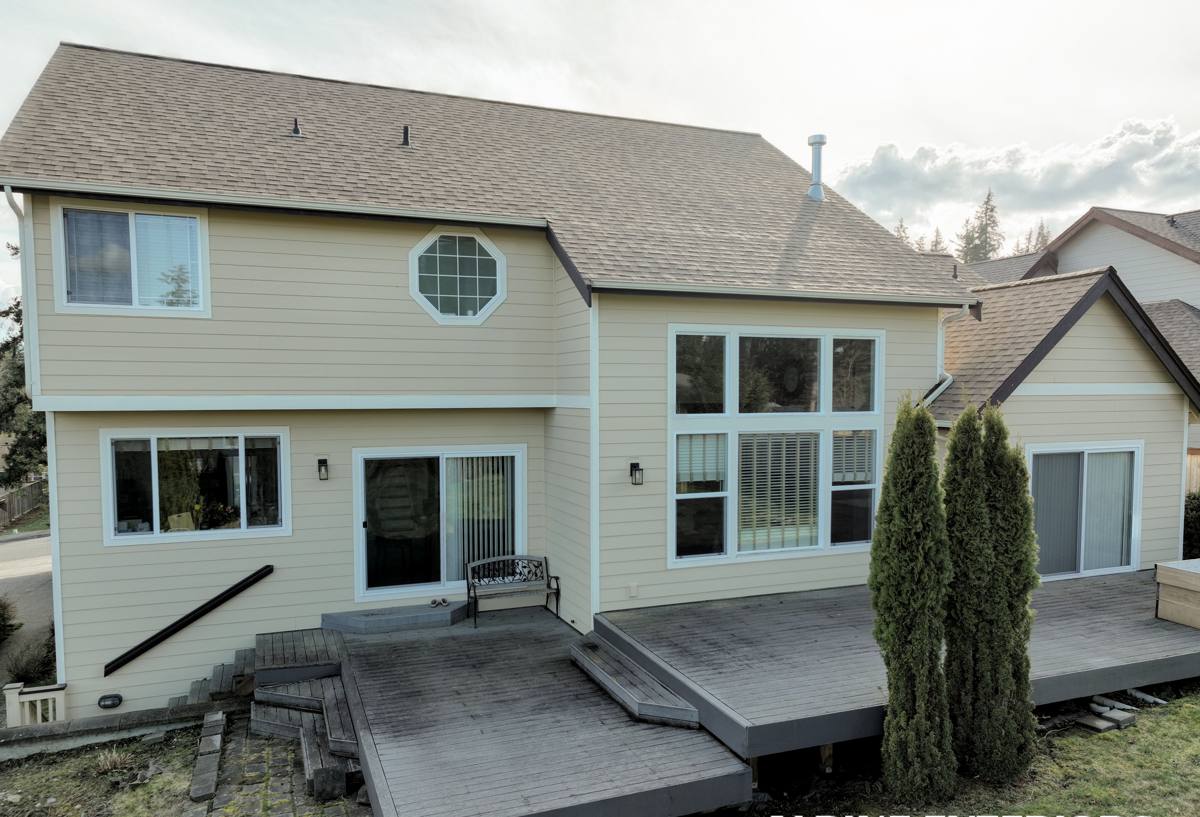
What a Correctly Built Deck Involves
A deck that's going to hold up under these conditions has to be right at every layer, not just on the surface. Here's what we look at on every project.
Footings and Framing
Post footings need to be sized and set to local frost-free, load-bearing standards, with posts properly anchored using corrosion-resistant post bases rather than just buried or surface-set. Joists and beams should be spaced to the actual load and span requirements for the decking material chosen — composite and PVC boards generally need tighter joist spacing than solid wood to avoid flexing and premature wear.
Ledger Attachment and Flashing
Where the deck attaches to the house, the ledger board needs proper flashing to keep water from working its way behind siding or into the house framing — this is one of the most common failure points we find on older decks, and it's also where a lot of hidden rot starts. Lag bolts or through-bolts (not just nails or deck screws) anchor the ledger, sized to the load the deck will carry.
Fasteners and Hardware
Given the salt air and humidity in this area, we don't cut corners on hardware. Stainless steel or high-grade coated fasteners and joist hangers cost more up front but resist corrosion far longer than standard galvanized hardware, which matters a lot more here than in a drier, inland climate.
Decking Material
Pressure-treated wood, composite, and PVC decking all perform differently under Florida sun and moisture. Each has real trade-offs — not one "best" answer for every home.
| Material | Upfront Cost | UV / Moisture Behavior | Maintenance |
|---|---|---|---|
| Pressure-treated wood | Lowest | Grays and can check under intense UV; absorbs water if not sealed | Needs re-sealing/staining every 1-2 years in this climate |
| Composite decking | Mid to higher | Good UV resistance with quality UV inhibitors; won't rot | Occasional cleaning; no sealing needed |
| PVC decking | Highest | Fully moisture-resistant; strong UV stability | Lowest ongoing maintenance |
We'll walk through these trade-offs honestly based on your budget and how you actually use the space — a rarely-used side deck has different priorities than a main outdoor living area that gets sun and traffic every day.
Railings, Stairs, and Connections
The parts of a deck that see the most hand contact and structural stress deserve just as much attention as the decking surface itself.
Railings
Railing posts need solid blocking and through-bolted connections to the frame — not just screwed to the fascia board, which is a common shortcut that leads to wobbly or failing railings within a few years. Baluster spacing and railing height should meet current local code, which exists for real safety reasons, not just inspection paperwork.
Stairs
Stair stringers carry concentrated loads and take a lot of direct weather exposure on their cut edges, which is where rot typically starts first. Proper stringer sizing, secure attachment at both top and bottom, and adequate footing support at the base all matter more than they might look like from the surface.
Deck-to-House Connections
Beyond the ledger itself, any point where the deck structure meets the house — stairs landing near a door, railings near siding, posts near the foundation — needs to be built and flashed so water is directed away from the house, not trapped against it.
Our Process for Oldsmar Deck Projects
We approach every deck project the same structured way, whether it's a full rebuild or new construction.
- On-site assessment — we look at sun exposure, drainage patterns, existing structure (for replacements), and how the space will actually be used.
- Design and material selection — sizing, layout, and material choice based on your budget, maintenance preferences, and the specific exposure that section of the property gets.
- Permitting — deck construction in Pinellas County typically requires permits and inspection; we handle that process rather than leaving it to the homeowner.
- Framing and footings — built to the load and wind requirements for this region, not a generic national minimum.
- Decking, railing, and stair installation — with corrosion-resistant fasteners and hardware throughout.
- Final walkthrough — checking fastener finish, railing stability, and drainage before we call the job done.
Signs an Existing Oldsmar Deck Needs Attention
If you already have a deck, here's what to watch for before small issues become structural ones:
- Soft or spongy spots underfoot, especially near the house or stair landings
- Rust streaking around fasteners or joist hangers
- Gaps or movement where the ledger board meets the house
- Wobbly railings or posts that flex under hand pressure
- Visible cupping, splitting, or graying that's gotten worse over a season
- Standing water or slow drainage after storms
- Cracked or splintering stair stringers
Any one of these on its own might be minor. Several together, or anything involving the ledger connection or main support posts, is worth having looked at before the next storm season rather than after.
Repair, Rebuild, or New Build
Not every deck problem means starting over. Sometimes a deck's framing and footings are sound and the issue is limited to decking boards, railings, or fastener corrosion — in that case, a targeted repair or resurfacing makes more sense than a full rebuild. Other times, especially on older decks that were never properly flashed at the ledger or built with undersized footings, a rebuild is the more honest recommendation, because patching around a structural problem just delays the real fix. We'll tell you plainly which situation you're in rather than defaulting to the bigger job.
Why Local Experience Matters for This Job
Deck building isn't unique to Florida, but building one that survives Florida — and specifically the Tampa Bay side of Pinellas County — takes more than a generic framing plan. Knowing which fastener grades actually hold up against salt air, how to flash a ledger board so wind-driven rain doesn't get behind it, and what footing depth and hardware are appropriate for local wind and soil conditions comes from having built and repaired decks in this exact environment. A crew that only occasionally works in coastal Florida conditions is more likely to default to standard-grade hardware and generic spacing that looks fine on day one and shows problems within a couple of storm seasons.
Get a Straightforward Estimate
If you're thinking about a new deck, a rebuild, or just want an honest read on whether your current deck needs repair, we're happy to take a look and walk you through the options — no pressure, no upsell. Use the form below to request a free estimate for your Oldsmar property.