 Largo Siding
 New-Construction Windows in Madeira Beach: Getting It Right the First Time
When a home is being built or substantially reframed near Madeira Beach, the windows going into those rough openings are one of the few components that get exactly one clean installation. Once siding, stucco, or exterior trim closes in around a window, correcting a bad flashing job or an undersized unit means tearing back finished work. That's a different set of stakes than a retrofit replacement, and it's why new-construction window work deserves its own process, not a scaled-down version of a remodel job.
Madeira Beach sits right on the Gulf, and homes built here or near this stretch of Pinellas County face a tougher combination of conditions than most inland Florida construction: hurricane-force wind gusts, salt-laden air that accelerates corrosion on hardware and fasteners, intense year-round UV that breaks down seals and finishes, and wind-driven rain that finds any gap in flashing or sealant. Windows installed correctly during new construction can handle all of that for decades. Windows installed by a crew unfamiliar with coastal detailing tend to show problems — leaks, hardware failure, seal fog — within the first five to ten years.
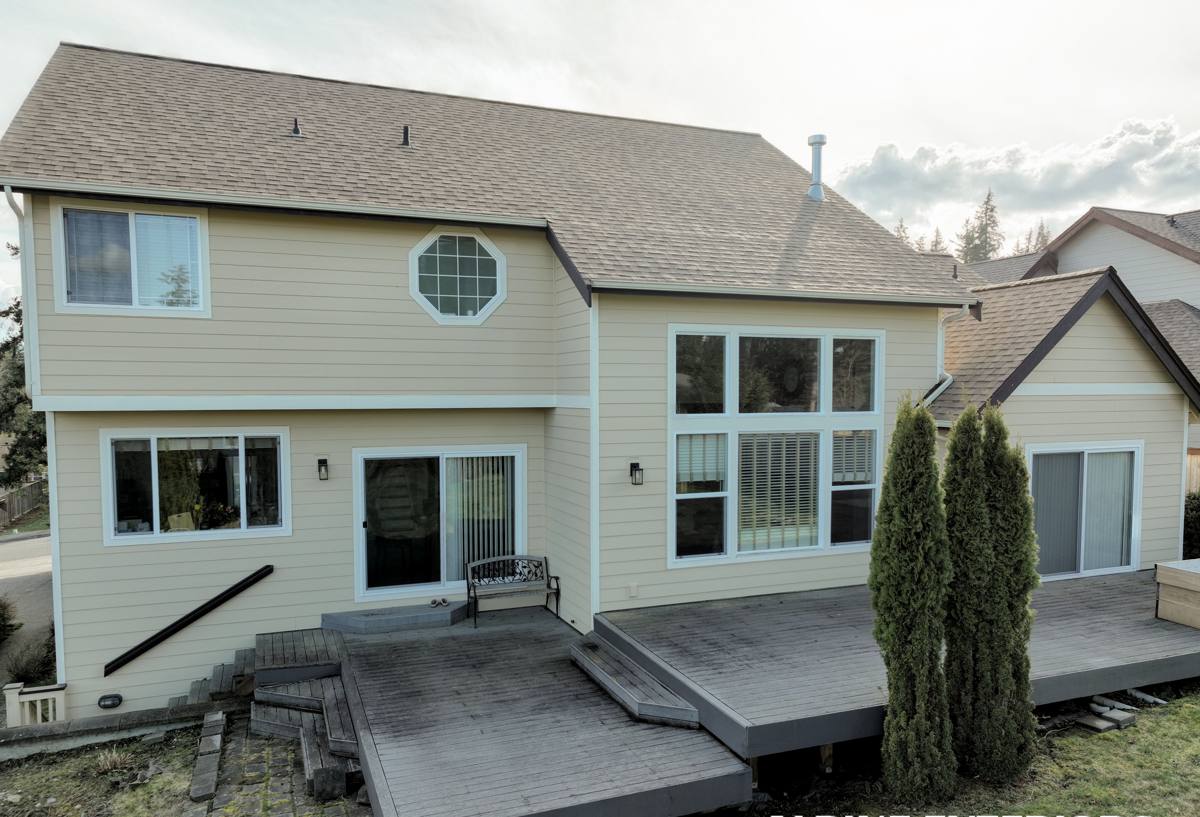
Why New Construction Windows Are a Different Job Than Replacement
In a replacement project, the existing rough opening, weather barrier, and siding are already in place, and the work is largely about matching what's there. New construction is the opposite: nothing exists yet, which means every layer — rough opening sizing, weather-resistive barrier, flashing sequence, window unit, and sealant — has to be built correctly from scratch, in the right order, before the exterior finish goes on.
That's an advantage if it's done right. There's no old caulk to fight, no hidden rot to discover mid-job, and no need to work around existing trim. But it also means there's no room for shortcuts, because the flashing and sealant details installed now become permanently inaccessible once siding or stucco covers them.
What This Means in Practice
- Rough openings are checked for correct size, square, and plumb before any window is set — not adjusted after the fact.
- Flashing is sequenced with the weather-resistive barrier so water is always directed outward and downward, never trapped behind the window.
- Every unit is set, shimmed, and fastened to the window manufacturer's installation instructions, which is what keeps the product warranty valid.
- Sealant and backer rod are used at the right joints — not as a substitute for proper flashing, but as a secondary line of defense.
What Coastal Conditions Do to Windows Over Time
It's worth understanding why this stretch of the Gulf Coast is harder on windows than most of the country, because it directly shapes what a correct installation looks like.
Salt Air and Corrosion
Airborne salt settles on and around window hardware, fasteners, and frame components. Over years, it accelerates corrosion on anything not rated for coastal exposure — cheap fasteners, unprotected steel reinforcement, and lower-grade hardware are the first to fail. This is why fastener choice and hardware finish matter as much as the window unit itself in a home this close to the water.
UV Exposure
Florida's sun is intense and constant nearly year-round. UV breaks down vinyl plasticizers, degrades sealant flexibility, and fades finishes faster than it does in most of the country. Sealants and gaskets that aren't UV-stable will crack and shrink well before a normal service life, opening a path for water.
Wind-Driven Rain
Rain here rarely falls straight down during a storm — it's pushed sideways by wind, which means it's tested against every seam, joint, and flashing lap on a window assembly. A flashing detail that would hold up fine in a calmer climate can fail here simply because the water pressure against it is higher and more sustained.
Hurricane-Force Wind Loads
Wind doesn't just push against a window — it creates pressure differentials that pull at the frame, flex the glass, and stress the anchoring into the rough opening. Windows and their installation have to be engineered for the actual wind pressures this part of Pinellas County can see, not just a generic national standard.
Code and Wind Requirements for This Area
New construction in Pinellas County falls under the Florida Building Code, which sets wind load and, in wind-borne debris regions near the coast, impact resistance requirements based on the home's location, elevation, and exposure category. Madeira Beach's proximity to open water typically puts new construction here into a wind-borne debris region, which affects whether windows need to be impact-rated or paired with code-approved protection.
The specific requirement for any given home depends on its exact location, height, and the wind speed map zone it falls into — this isn't a one-size-fits-all number, and it's determined at the permit and engineering stage, not guessed at on site. What we do on our end is make sure the windows specified and installed actually match what the approved plans and permit require, and that the installation itself meets the manufacturer's tested and labeled method — because an impact-rated window installed the wrong way doesn't perform like one on paper.
Product Approval and Labeling
Every window used in new construction should carry a valid Florida product approval or Miami-Dade Notice of Acceptance where applicable, matched to the wind pressure and impact requirements for that specific opening. We keep that documentation available for inspections and for the homeowner's records, since it's often needed again at resale or insurance renewal.
Choosing a Frame Material for This Climate
Frame material affects how a window handles salt air, UV, and thermal movement over its lifespan. There's no single "best" choice for every home — it depends on budget, architectural style, and how much upkeep the owner wants to take on.
| Frame Material | Coastal Durability | Maintenance | Typical Trade-Offs |
|---|---|---|---|
| Vinyl | Good — won't corrode, but can expand/contract with heat | Low | Budget-friendly; limited color/frame-width options on larger units |
| Fiberglass | Very good — dimensionally stable, resists UV degradation well | Low | Higher upfront cost than vinyl |
| Aluminum | Strong for large impact-rated openings but needs corrosion-resistant coatings near salt air | Moderate | Can conduct more heat/cold without thermal breaks |
| Wood-clad | Attractive but higher risk near salt air/humidity if cladding or seals are compromised | Higher | We frame this as a maintenance and moisture-management trade-off, not a defect — it simply demands more upkeep this close to the Gulf |
For most new construction near Madeira Beach, vinyl and fiberglass impact-rated units offer the best balance of coastal durability and manageable long-term maintenance. Larger openings or specific architectural goals sometimes call for aluminum framing engineered for the required wind pressures.
Our New-Construction Installation Process
- Rough opening verification — confirming size, square, level, and plumb against the window schedule before anything is installed.
- Weather barrier and flashing sequencing — building the flashing and weather-resistive barrier in the correct shingle-lap order so water always sheds outward.
- Window setting — shimming and fastening per manufacturer specification, using corrosion-resistant fasteners appropriate for coastal exposure.
- Sealant application — UV-stable sealant at the specified joints, applied as a backup to proper flashing, not a substitute for it.
- Operation and function check — verifying every sash, lock, and screen operates correctly before the opening is closed in with siding or finish.
- Documentation — retaining product approval labels and installation records for inspection and for the homeowner's file.
What Drives Cost on a New-Construction Window Package
| Factor | Why It Matters |
|---|---|
| Impact rating requirement | Impact-rated glass and frames cost more than standard units, but may reduce or eliminate the need for separate shutters |
| Window size and opening count | Larger openings and higher counts increase both material and labor cost |
| Frame material | Vinyl is typically the most budget-friendly; fiberglass and larger aluminum systems cost more |
| Glass package | Low-E coatings and tinted or laminated glass options affect both cost and energy performance |
| Site access and building stage | Coordinating with the framing and dry-in schedule affects labor efficiency |
We give straightforward, itemized pricing based on the actual window schedule and specifications for the home — not vague per-window averages that don't hold up once impact ratings and sizes are factored in.
A Practical Checklist Before You Sign Off on New-Construction Windows
- Confirm the window's product approval matches the wind pressure and impact requirements for that specific opening, not just the general area.
- Ask what fastener and hardware materials are being used, and whether they're rated for coastal/salt-air exposure.
- Confirm the flashing sequence will be inspected and, ideally, photographed before siding closes it in.
- Check that installation will follow the window manufacturer's documented method — this is what keeps the product warranty valid.
- Get in writing what documentation you'll receive for permitting, inspection, and future insurance purposes.
Why Local Installation Experience Matters in Madeira Beach
A crew that regularly works this part of Pinellas County has already worked through the local permitting expectations, the typical wind pressure requirements for homes this close to the Gulf, and the flashing details that actually hold up against wind-driven rain here. That experience shows up in the small decisions — fastener selection, sealant choice, flashing lap order — that don't appear on a spec sheet but determine whether a window performs for twenty years or starts leaking in five.
It also matters for accountability. A local, established contractor is easy to reach if an inspector has a question mid-project or if a warranty issue comes up years later — not a name on a truck that only worked in the area once.
Let's Talk About Your Project
If you're building or reframing near Madeira Beach and need windows specified and installed correctly the first time, we're happy to walk through your plans and window schedule. Use the form below to request a free, no-pressure estimate — there's no obligation, just a straight answer on what your project needs.