 Largo Siding
 Safety Harbor sits right on Tampa Bay, wedged between Clearwater and Largo in Pinellas County — a stretch of the Gulf Coast that puts a home's exterior through more punishment than most siding was ever designed to handle. Hurricane-force wind gusts arrive with every summer tropical system, the sun holds a near-direct angle for most of the year, wind-driven rain gets pushed sideways into every lap and seam during a squall, and salt air drifting off the bay works on fasteners and finishes around the clock. Homes here don't get a season off.
We're a Largo-based crew that works this stretch of Pinellas County regularly, and we install one siding system: James Hardie fiber cement. This page covers what a Safety Harbor home actually needs from its siding given the local climate, what a correct James Hardie installation involves, and how our process works from first estimate to finished wall.
Why Safety Harbor's Bay-Side Climate Is Hard on Siding
Safety Harbor's location on Tampa Bay means a home's siding deals with several stresses at once, not just one. Hurricane-force wind during tropical storms and hurricanes tests every fastener and every lap of siding on a wall — a system that isn't rated and installed correctly for wind load doesn't just look bad after a storm, it can fail outright. Between storms, the sun does its own damage: Central Florida sees intense, close-to-direct UV exposure across most of the year, which breaks down field-applied paint films and unstable materials faster than in most other parts of the country.
Add wind-driven rain, which doesn't fall straight down here the way it does elsewhere — during a squall or a tropical system it gets pushed sideways into seams, laps, and any gap in flashing that wouldn't matter in a calmer climate. Because Safety Harbor sits directly on the bay, homes here also deal with salt air drifting inland, which accelerates corrosion on exposed fasteners and degrades finishes not formulated to resist it. Layer high year-round humidity on top of all of that, and you get a climate that punishes any siding material with poor moisture stability or a finish that depends on a homeowner's repainting schedule to hold up.
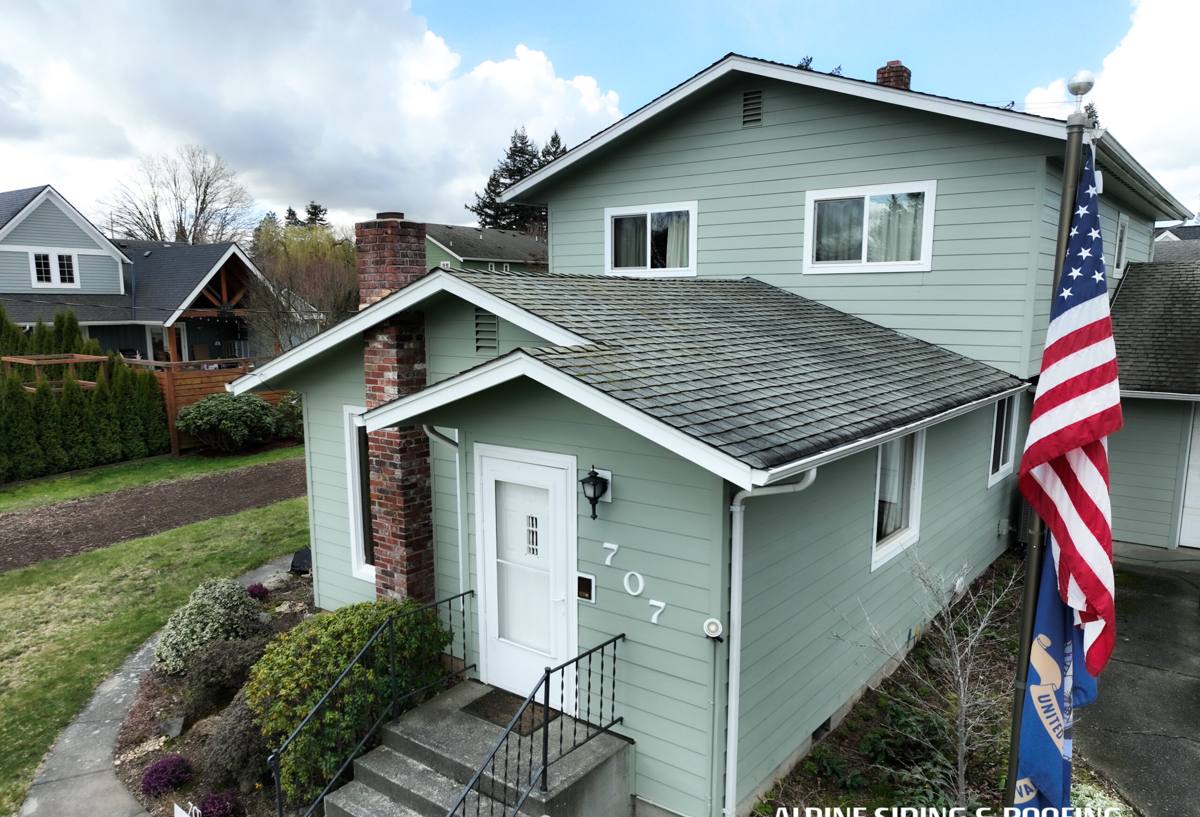
What James Hardie Siding Is (And Why We Install Only This)
James Hardie siding is fiber cement — a mix of Portland cement, sand, and cellulose fiber, cured into a dense board that doesn't behave like wood, wood composite, or vinyl. It doesn't absorb and release moisture the way wood-based products do, it doesn't soften or distort under sustained heat and UV the way vinyl can, and it's non-combustible, which matters to homeowners and insurers alike.
We don't install LP SmartSide, vinyl, Cemplank, Allura, or primed wood siding. Every one of those products has a legitimate place in the market, and plenty of homeowners are happy with them. Our decision to install only James Hardie isn't a claim that the alternatives are bad products — it's a professional standard we hold to because, project after project in this climate, fiber cement engineered specifically for high-humidity, high-wind coastal conditions has held up more consistently than anything else we've installed, with less maintenance burden and a stronger transferable warranty behind it.
HZ5 Engineering and the ColorPlus Finish: Why the Details Matter Here
James Hardie doesn't sell the same product nationwide — the company manufactures regionally specific formulations, and homes in our part of Florida receive the HZ5 product line, engineered for high-humidity, high-moisture-exposure climates. That's a different mix than what ships to a dry inland state, tuned specifically for conditions like Safety Harbor's.
HZ5 Formulation
The HZ5 line is built to hold up under sustained humidity and heavy rain exposure without the swelling, cupping, or seam movement that less-suited materials show in this kind of climate. For a bayfront community dealing with wind-driven rain and near-constant humidity, that engineering difference isn't cosmetic — it's a big part of why the siding still looks and performs the way it should years after installation.
ColorPlus Technology
Rather than being painted on site, ColorPlus finishes are baked on in a controlled factory environment through multiple coats, which gives a harder, more UV-stable finish than field-applied paint can match. In a climate with this much direct sun exposure, that finish durability is the difference between siding that holds its color for a decade or more and siding that needs repainting within a few years just to keep it looking presentable.
What a Correct Installation Involves
Fiber cement performs the way it's engineered to only when it's installed to spec. In a climate that tests every seam and fastener the way Safety Harbor's does, cutting corners on installation shows up faster than it would somewhere milder. A correct James Hardie installation includes:
- A continuous, properly lapped weather-resistant barrier behind the siding — not house wrap that's stapled up and left with gaps
- Correct fastener type, spacing, and penetration depth, sized to hold securely under hurricane-force wind without overdriving through the board
- Proper gapping at every butt joint and termination, per James Hardie's published fastening and clearance specifications
- Flashing at every horizontal transition — window and door heads, roof-to-wall intersections, and any point where trim meets a flat wall
- Correct clearance at the base of the wall, keeping siding above grade, roofing, and hardscape so it isn't sitting in standing water after a storm
- Caulking applied only where James Hardie specifies it, never used as a substitute for flashing or correct gapping elsewhere
None of these steps are unique to any one job — they're the baseline for an installation that's expected to hold up to Gulf Coast wind and rain instead of just looking good on the day it goes up.
James Hardie vs. Other Siding Materials for a Safety Harbor Home
| Material | Moisture Behavior in Bay-Side Climate | UV/Finish Durability | Wind Performance |
|---|---|---|---|
| James Hardie fiber cement (HZ5) | Dimensionally stable, engineered for high-humidity coastal exposure | Factory-baked ColorPlus finish resists fading and chalking | Engineered and tested for high-wind installation |
| Vinyl siding | Doesn't absorb water but can warp or distort under sustained heat | Color fades and chalks under intense UV over time | Wind rating depends heavily on panel gauge and fastening |
| LP SmartSide / engineered wood | More moisture-sensitive at cut edges and seams | Relies on a factory coating with a shorter service life than fiber cement | Varies by product line and installation |
| Primed spruce or cedar | Absorbs and releases moisture readily; prone to swelling and cupping at seams | Fully dependent on a repainting maintenance cycle | Not engineered specifically for hurricane wind zones |
This isn't a claim that every alternative fails outright — plenty of homes carry these materials for years without major issues. It's why, given what Safety Harbor's climate does to a home's exterior over time, we've standardized on fiber cement and stopped installing the alternatives.
Our Process for Safety Harbor Projects
When we take on a project in Safety Harbor, the process looks like this:
- Walkthrough and estimate — we look at the home's current siding, note any moisture damage, rot, or substrate issues, and put together a written, no-pressure estimate
- Substrate check — before any new siding goes up, we confirm the sheathing underneath is sound; fiber cement installed over compromised sheathing just hides a problem instead of fixing it
- Weather barrier and flashing — a full, correctly lapped weather-resistant barrier goes on first, with flashing detailed at every window, door, and roof intersection
- Installation to manufacturer spec — planks, panels, or trim go up with the fastening pattern, gapping, and clearances James Hardie specifies for our wind zone
- Final walkthrough — we go over the finished job with the homeowner before calling it done
Why a Crew That Already Works Safety Harbor Matters
Siding work on a bayfront Pinellas County home isn't identical to siding work fifty miles inland, and a crew that only occasionally works this area doesn't always know that going in. Wind-load requirements and permitting expectations in Pinellas County reflect the fact that these homes sit in a higher-wind coastal zone, and a crew that regularly pulls permits and passes inspection here already knows what that process requires instead of learning it on your project.
There's also a practical, on-the-ground difference: a crew that works Safety Harbor and the surrounding Largo and Clearwater area regularly has seen what salt air and wind-driven rain actually do to homes in this particular pocket of the Gulf Coast — where moisture tends to find its way in, which older substrate and flashing details tend to fail first, and what a house here needs from a new siding system versus a similar-looking house somewhere with a milder climate. That kind of local pattern recognition doesn't come from a manual; it comes from doing the work here, repeatedly.
Maintenance and What to Expect After Installation
One practical benefit of a correctly installed Hardie system in Safety Harbor is how little it asks of a homeowner afterward. There's no annual repainting cycle to plan around, and the material isn't feeding termites or absorbing humidity between storms the way wood can. Realistic upkeep looks like:
- An occasional rinse to clear salt residue and grime, especially on wall faces that catch onshore wind off the bay
- A visual check after any major storm for loosened trim, shifted flashing, or impact damage
- Keeping sprinklers and landscaping from spraying directly onto the base of the wall
- Touch-up only where physical damage occurs, not as a routine maintenance item
James Hardie backs its siding with a transferable limited warranty, and ColorPlus finishes carry their own finish warranty on top of it — coverage that matters if you sell the home, since it follows the house rather than just the original owner.
Planning a Safety Harbor Siding Project: What to Ask
Before hiring anyone for a siding project on a bayfront Pinellas County home, it's worth asking a few direct questions:
- Are you a certified James Hardie installer, and can you show the fastening and clearance specs you'll be following for this wind zone?
- How do you handle flashing at window heads, door heads, and roof-to-wall transitions specifically?
- What's your plan if you find rot or moisture damage in the sheathing once the old siding comes off?
- Do you pull permits and handle inspections through Pinellas County directly, or is that left to the homeowner?
- Can you provide a written estimate that spells out material, prep work, and labor separately?
If you're weighing a siding replacement for a Safety Harbor home, we're glad to walk the property, point out anything the current siding is telling us about moisture or wind exposure, and put together a free, no-pressure estimate — no obligation, just a straight look at what the house actually needs.