 Largo Siding
 Why Siding Repair Works Differently on Indian Shores Homes
Indian Shores sits on a narrow barrier island strip in Pinellas County, wedged between the Gulf of Mexico and the Intracoastal Waterway. That location is beautiful, but it's also one of the toughest environments in the Tampa Bay area for exterior building materials. Homes here take on salt-laden air from two directions, get hit with wind-driven rain that pushes moisture sideways into wall assemblies, and sit under some of the most intense year-round UV exposure in the country. A siding repair that would hold up fine a few miles inland can fail within a season or two on a home this close to the water.
That's why we don't treat "siding repair" as a one-size-fits-all service. A repair on an Indian Shores home has to account for what's actually causing the damage, not just patch over the visible symptom. Homeowners who've lived on the island for a while usually already sense this — the same crack or gap that seemed minor last year can be a soaked wall cavity this year if it's ignored.
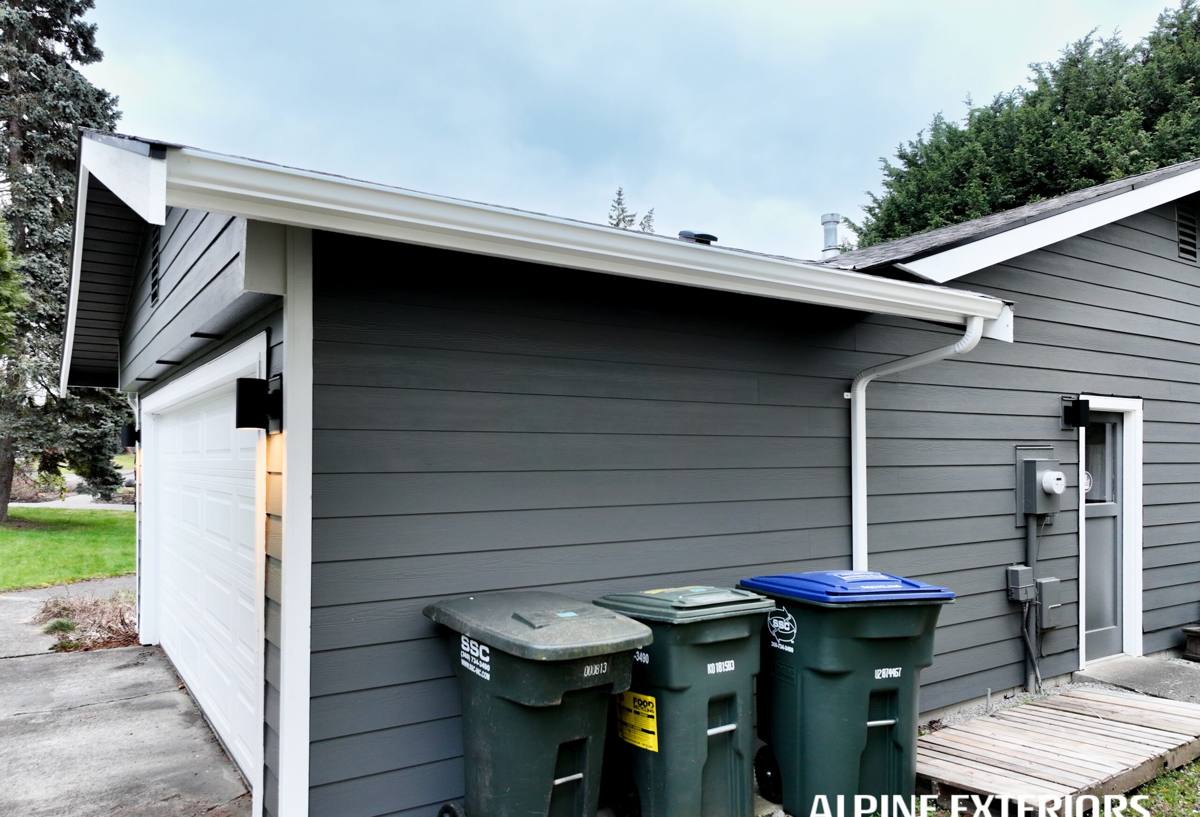
What Barrier Island Conditions Actually Do to Siding
Salt Air and Corrosion
Airborne salt doesn't just sit on the surface of your siding — it works its way into fasteners, flashing, and any exposed metal trim. Once corrosion starts on a nail or screw holding a siding panel, that fastener loses holding strength, and the panel around it becomes more likely to shift, crack, or pull away in wind. This is one of the most common root causes we find behind "surface" siding damage on the island.
UV Degradation
Florida sun is hard on any exterior material, but Gulf-front and near-Gulf exposure is even harsher because there's rarely shade cover and reflected light off the water adds to the UV load. Paint films chalk, caulk gets brittle and cracks, and unprotected wood-based siding can dry out and split faster than manufacturer estimates typically assume.
Wind-Driven Rain and Moisture Intrusion
Most Gulf storms in this area don't just rain straight down — wind pushes rain sideways, forcing water into every gap, seam, and unsealed joint in the siding envelope. If water gets behind the siding and can't dry out, it leads to rot in wood substrates, staining, and eventually structural damage to sheathing that's far more expensive to fix than the siding itself.
Storm Wind Loads
Even outside of a direct hurricane hit, Indian Shores regularly sees strong straight-line wind events off the Gulf. Repeated wind loading works siding loose gradually — a panel that flexes in a 40 mph gust today may be the panel that pulls off in a 70 mph gust next storm season if it isn't re-secured correctly.
Common Repair Issues We See on the Island
- Loose or popped panels from corroded or under-driven fasteners
- Cracked or checked caulking at seams, trim, and penetrations, letting wind-driven rain behind the siding
- Soft or discolored sections where moisture has been trapped behind the siding for a period of time
- Impact damage from wind-blown debris during storms
- Faded or chalking paint on older painted siding that's lost its protective film
- Gaps at trim and corners that widen as fasteners loosen and materials expand and contract
The tricky part is that several of these show up as small cosmetic issues on the surface while the real problem is moisture or fastener failure underneath. That's the distinction a proper repair diagnosis has to make.
What a Correct Repair Actually Involves
A siding repair isn't just cutting out a bad piece and nailing in a new one. Done right, it includes a few steps that are easy to skip if a crew is trying to move fast:
- Diagnose the cause, not just the symptom. If a panel is soft or stained, we check whether moisture is still active behind it and where it's getting in before we close anything back up.
- Inspect the substrate and flashing. If water has been getting behind the siding, the sheathing, house wrap, or flashing underneath may need attention too — replacing siding over a wet or damaged substrate just hides the problem.
- Match the material and reveal. Repairs should match the existing siding's profile, exposure, and color as closely as possible so the patch doesn't stand out or create a new water path.
- Use corrosion-resistant fasteners. Given the salt exposure here, standard fasteners are a poor choice for reattachment work — the fastener that failed the first time will fail again if it's simply replaced with the same type.
- Reseal and re-flash penetrations correctly. Any seam, corner, or penetration disturbed during the repair gets properly sealed and flashed, not just caulked over.
Repair or Replace? How We Help You Decide
Not every siding issue on Indian Shores calls for a full re-side, but not every issue is a simple patch either. We look at the scope, the age and condition of the surrounding siding, and how many separate problem areas exist before recommending one path over the other.
| Factor | Favors Repair | Favors Full Replacement |
|---|---|---|
| Extent of damage | Isolated to one or two areas | Spread across multiple elevations |
| Cause | Impact damage or a single failed seam | Widespread fastener corrosion or systemic moisture intrusion |
| Age of existing siding | Relatively young, otherwise sound siding | Siding nearing or past its expected service life |
| Substrate condition | Dry, solid sheathing underneath | Rot or sustained water damage found underneath |
| Material match | Discontinued material can still be closely matched | Existing product line no longer available or badly faded |
We'll always give you a straight answer on which side of that table your home falls on — there's no upside for us in recommending a full replacement when a targeted repair will genuinely hold up.
Our Repair Process for Indian Shores Homes
Because this is a barrier island community, we build storm timing and material behavior into how we schedule and execute repair work here:
- On-site assessment of the damaged area and a walk of the rest of the exterior, since one visible failure often points to similar wear elsewhere
- Moisture check behind affected panels before we commit to a repair-only approach
- Written scope explaining exactly what's being repaired, replaced, and why
- Material sourcing matched as closely as possible to your existing siding's profile and finish
- Corrosion-resistant fastening and proper flashing/sealing at every disturbed joint
- Final walkthrough so you can see the completed repair before we consider the job done
Why We Only Work in James Hardie Fiber Cement
Even on repair jobs, the material question matters. We install and repair exclusively in James Hardie fiber cement siding — we don't install vinyl, LP SmartSide, Cemplank, Allura, or primed wood products, and that standard applies to repair work as much as full installs. On a barrier island property, the trade-offs of those other materials — moisture sensitivity in engineered wood products, expansion and contraction behavior in vinyl under intense heat, or the maintenance burden of unprotected wood — are magnified by the salt air and UV load this location sees every year.
Hardie fiber cement is non-combustible, holds up to moisture far better than wood-based alternatives, and its ColorPlus factory finish is baked on to resist the fading that plain field-painted siding suffers under constant Gulf sun. Hardie's HZ5 product line is engineered specifically for humid, wet climates like ours. When we repair a section, we're matching into a system built to take this environment — and if your existing siding is a different material nearing the end of its life, replacement with Hardie is what we'll recommend rather than continuing to patch a product that's fighting the climate on the wrong terms.
Signs You Should Have Your Siding Looked At
- Visible cracks, gaps, or separation at seams and corners
- Soft spots or a "give" when you press on a panel
- Staining or discoloration that keeps reappearing after cleaning
- Peeling or bubbling paint, or chalky residue on your hands after touching the siding
- Panels that look slightly bowed or loose, especially after a windy stretch
- Any siding damage after a storm, even if it looks minor from the ground
If any of these sound familiar, it's worth having it checked before the next round of Gulf storms rather than after.
Why Hiring a Crew That Already Works Indian Shores Matters
Repair work on a barrier island isn't the same trade as inland siding work. A crew that regularly works this part of Pinellas County already understands the salt exposure, the wind patterns off the Gulf, and the moisture behavior specific to homes this close to the water — and they know what corners get cut on lower-quality repairs that don't hold up here. Local familiarity also means fewer surprises with permitting and inspection requirements that coastal wind exposure can trigger, and a crew that isn't guessing at how a repair needs to be built to actually survive the next few storm seasons.
If you've got siding damage, wear, or a repair that didn't hold the first time, we're happy to take a look and give you a straight, no-pressure assessment of what it actually needs. Fill out the form below for a free estimate.