 Largo Siding
 Indian Shores Sits at the Edge of What Siding Has to Survive
Indian Shores is about as exposed as residential siding gets in Pinellas County. It's a narrow stretch of barrier island with the Gulf of Mexico on one side and the Intracoastal Waterway on the other, which means homes here don't just deal with salt air drifting in from a distance — they sit inside it, on both sides of the property, every day of the year. Add in the wind-driven rain and hurricane-force gusts that come through during tropical systems, plus the kind of relentless UV load Florida's latitude delivers even on an ordinary summer afternoon, and you get an exterior envelope that's under more sustained stress than almost anywhere else we work in the greater Largo area.
Homes further inland in Largo still deal with plenty of heat, humidity, and storm exposure, but the barrier island adds a layer most inland properties don't face: direct salt aerosol on both exposures, sandier and more corrosive ground-level conditions, and wind loads that pick up as they cross open water with nothing to slow them down before they hit a wall. Siding that performs fine three or four miles inland can fail faster out here, which is exactly why this page treats Indian Shores as its own case rather than folding it into a generic Largo siding page.
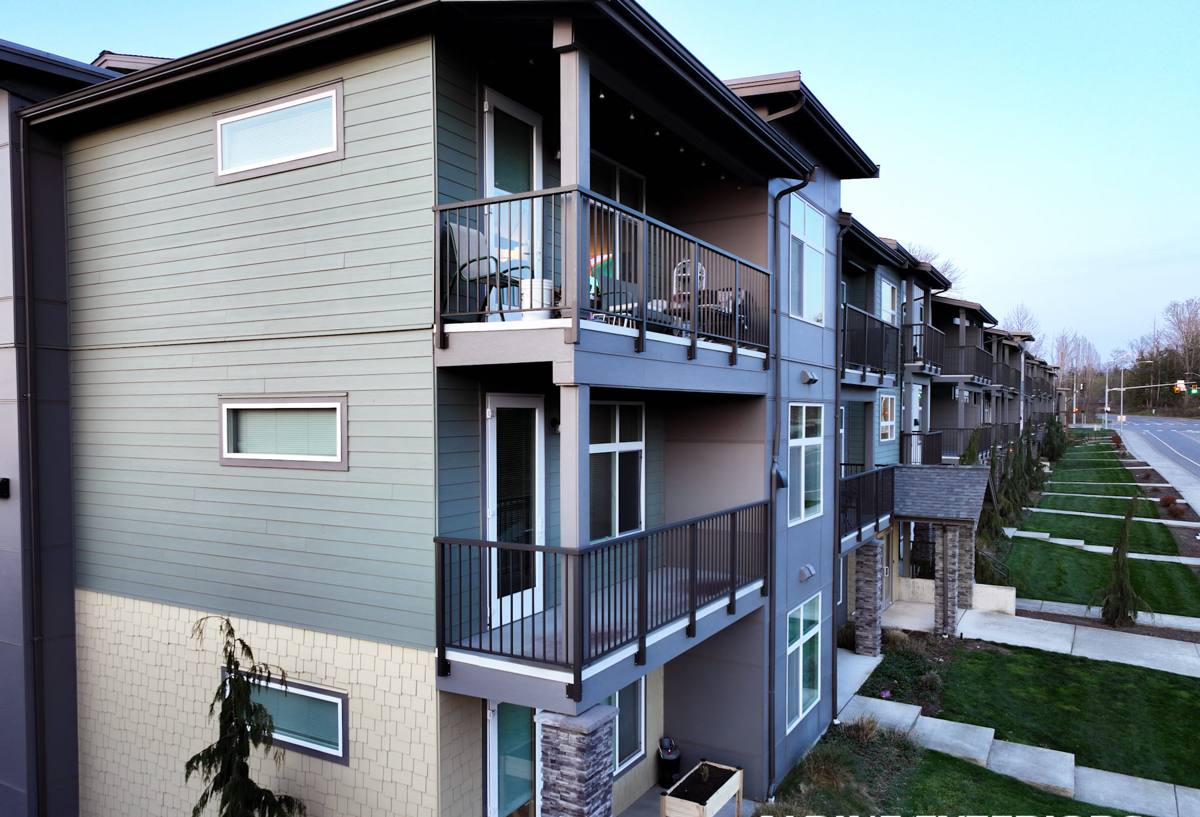
What That Exposure Actually Does to Siding Over Time
Salt Air and Corrosion
Airborne salt doesn't just sit on the surface — it works into fastener heads, seams, and any spot where a coating has thinned or worn. Over years, that accelerates corrosion on fasteners and trim hardware and degrades finishes that weren't formulated with a marine environment in mind. On a barrier island, that exposure is constant rather than occasional.
UV and Coating Breakdown
Florida sun is intense and consistent almost year-round, not just in a short summer window. Field-applied paint and lower-grade factory coatings both take a beating from that kind of sustained UV load, chalking, fading, and eventually cracking well ahead of schedule if they weren't built to handle it.
Wind-Driven Rain and Moisture Intrusion
Tropical storms and hurricanes don't just drop rain straight down — they push it sideways, hard, into every lap, seam, and joint on a wall. A siding system that isn't detailed correctly behind the cladding will let that water find its way to the sheathing, and on a coastal property that moisture problem compounds fast in our humidity.
Hurricane Wind Loads
Wind speed design requirements are higher for coastal Pinellas County than for many inland areas, and Indian Shores sits squarely in that higher-exposure category. Fastening schedules, product wind ratings, and installation details all have to account for that — this isn't an area where a standard, low-wind-zone installation is appropriate.
Why We Install Only James Hardie Fiber Cement Here
We don't install vinyl, LP SmartSide, Cemplank, Allura, primed spruce, or cedar on any home, and Indian Shores is exactly the kind of property that explains why. Vinyl softens and can distort in sustained heat and is limited in the wind resistance it can offer compared to fiber cement. Engineered wood products depend on a factory treatment and coating staying fully intact at every cut, seam, and fastener point to keep wood fiber dry — a tall order on a property that takes this much wind-driven rain and salt exposure. Cedar and primed spruce are natural wood, full stop, and natural wood in a marine, high-UV climate means an ongoing maintenance commitment that most homeowners don't want to sign up for.
James Hardie fiber cement is a Portland cement, sand, and cellulose fiber composite that doesn't absorb and release moisture the way wood-based products do, and it's non-combustible — a real consideration during hurricane season when wind-driven embers from a neighboring fire are a genuine, if less-discussed, risk. It's the product we've standardized on for every home we side, and it's the one we'd choose for our own home if we lived on this stretch of coastline.
The Hardie System Built for This Climate
HZ5 Formulation
James Hardie manufactures siding in climate-specific formulations rather than a single one-size-fits-all product. Florida installations use the HZ5 line, engineered for high-humidity, high-moisture-exposure regions — a meaningfully different formulation than what's shipped to dry, inland climates, tuned specifically for the conditions a Gulf Coast property actually experiences.
ColorPlus Factory Finish
Most of the color on a Hardie home comes from ColorPlus Technology, a finish baked on in multiple coats under controlled factory conditions rather than applied on site after the boards go up. That process resists fading and chipping better than field-applied paint, which matters most on a property taking this much direct sun and salt exposure on every wall, not just the ones facing the water.
Choosing the Right Product Line
- HardiePlank lap siding — the most common choice for traditional coastal homes; horizontal reveal handles wind-driven rain well when properly lapped
- HardiePanel vertical siding — often used for a more contemporary look or as an accent on gables; fewer horizontal laps for water to find
- HardieShingle — a textured, dimensional look that still carries the HZ5 formulation and ColorPlus finish underneath
What Correct Installation Requires in a High Wind Zone
The product is only half the equation. Fiber cement performs to spec only when it's installed to spec, and that matters more here than in a milder climate because there's less margin for a shortcut to go unnoticed before it becomes a problem. A correct installation on a barrier island home includes a fully lapped and sealed weather-resistant barrier behind the siding, correct fastener type, spacing, and embedment for the local wind rating, proper flashing at every window, door, and penetration, and expansion gaps sized to the manufacturer's specification rather than boards butted tight.
| Detail | Correct Approach | Common Shortcut That Fails Here |
|---|---|---|
| Weather barrier | Continuous, properly lapped and taped house wrap or building paper | Torn or gapped wrap left unsealed at seams |
| Fasteners | Corrosion-resistant, correct length and spacing per wind rating | Undersized or incorrect fasteners that back out under wind load |
| Flashing | Properly integrated at every window, door, and penetration | Caulk used in place of real flashing |
| Board gaps | Manufacturer-specified expansion clearance | Boards butted tight, causing buckling as they move |
Our Process for an Indian Shores Project
A siding replacement out here follows the same core sequence as any James Hardie install, adjusted for a coastal property's specific needs:
- On-site assessment of the existing siding, sheathing, and any moisture damage, with particular attention to wall sections facing the water
- Removal of old siding and inspection of the sheathing underneath before anything new goes up
- Repair of any compromised sheathing found during tear-off, rather than covering it over
- Installation of a continuous weather-resistant barrier, properly lapped and sealed
- Installation of James Hardie panels or planks to the fastening schedule required for the local wind zone
- Flashing and sealant work at every window, door, and penetration
- A final walk-through covering seams, caulking, and finish before we consider the job done
A few things worth asking any contractor before they start work on a home this exposed:
- Will they inspect and repair sheathing before installing new siding, or just cover what's there?
- Do they know the wind rating requirements for this specific location, not just a generic county minimum?
- Are they installing to James Hardie's published fastening and clearance specifications, or their own shortcuts?
- Will they pull the required permit, or suggest skipping it?
- Do they have experience with barrier island access, staging, and material delivery logistics?
Cost Factors for James Hardie Siding in This Area
Every home is different, but a few factors consistently move the price on a project like this more than they would on an inland home:
| Factor | Why It Affects Cost Here |
|---|---|
| Sheathing condition | Coastal moisture exposure means a higher chance of hidden damage found during tear-off |
| Product line and profile | Lap, panel, and shingle styles carry different material and labor costs |
| Wind-rated fastening schedule | Higher wind zones require tighter fastener spacing and more labor time per board |
| Site access and staging | Narrow barrier island lots and limited staging space can add logistics time |
| Trim and flashing detail | Windows, corners, and penetrations near the water need more careful, time-intensive flashing work |
Why Hiring a Crew That Already Works Indian Shores Matters
A siding crew that mostly works inland can still do a technically fine install and still get the details wrong for this specific location — the wind rating a wall assembly needs to meet, the way a permit review handles a barrier island property, or how to stage material and equipment on a narrow coastal lot without blocking access for neighbors or emergency vehicles. Crews already familiar with Indian Shores and the surrounding Pinellas County coastline know these details going in rather than learning them on your job.
That familiarity also shows up in smaller ways: knowing which wall orientations on a property like this take the worst of the wind-driven rain and salt, planning work around storm season rather than getting caught mid-project when a system moves through, and understanding what local permitting and inspection actually expects for a coastal wind zone rather than treating it like a standard inland job.
Living with Hardie Siding in Indian Shores
James Hardie siding installed correctly is a low-maintenance product, but "low-maintenance" doesn't mean "no maintenance," especially in this environment. A periodic rinse to clear salt residue off the surface, particularly on walls facing the water, keeps the ColorPlus finish looking the way it's supposed to. Caulking at seams and trim joints should get a visual check at least once a year, since caulk has a shorter service life than the siding itself and is the first thing worth inspecting after a rough storm season. A quick look at flashing and fastener heads after any major wind event is also worth the ten minutes it takes, since catching a small issue early is a lot cheaper than dealing with water intrusion later.
If you're weighing a siding replacement on an Indian Shores property, or just want a straight answer about what your current siding can and can't handle out here, we're happy to take a look. The estimate is free, there's no pressure attached to it, and you'll get a clear read on what correct work looks like for a home in this exact location.