 Largo Siding
 Why Indian Rocks Beach Puts Extra Stress on Home Siding
Indian Rocks Beach sits close enough to the Gulf that homes there face a different set of conditions than siding built for an inland lot. Salt-laden air moves through the area constantly, not just during storms, and it works on exposed materials year-round. Add in Florida's intense, near-constant UV exposure, wind-driven rain that gets forced sideways into every seam and joint, and the real possibility of hurricane-force winds during storm season, and you have a combination that ordinary siding products simply weren't designed to handle for the long haul.
None of this means a home near Indian Rocks Beach is doomed to constant siding problems. It means the material, the fasteners, the flashing details, and the installation sequence all have to be chosen and executed with that environment in mind. That's the difference between siding that looks good for a couple of years and siding that still looks and performs well a decade or two later.
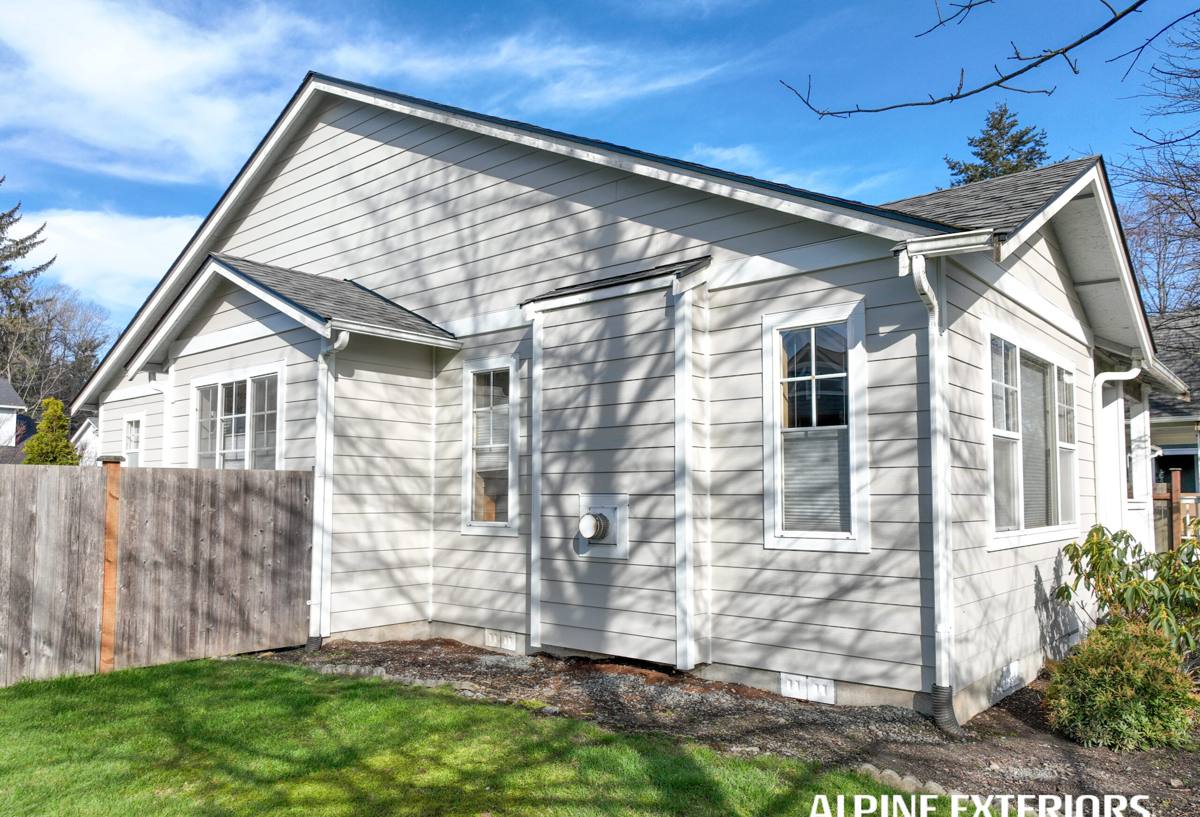
What James Hardie Fiber Cement Does Differently in This Climate
Engineered for Humidity and Moisture Exposure
James Hardie makes region-specific product lines, and the HZ5 formulation is engineered for humid, moisture-heavy climates like Florida's. That matters directly for a coastal Pinellas County home: fiber cement doesn't absorb and swell with humidity the way wood-based products can, and it doesn't provide the same food source for the mold and rot that thrive in salt-humid air.
A Factory-Applied Finish Instead of Field Paint
ColorPlus, Hardie's factory-baked finish, is cured onto the board before it ever reaches the house. That matters here because year-round UV is one of the fastest ways to break down a painted surface. A factory finish holds color and resists fading and chalking far longer than a coat of paint applied on-site, which means fewer repaint cycles over the life of the siding.
A Material That Doesn't Burn or Warp
Fiber cement is non-combustible and dimensionally stable — it doesn't expand, contract, or cup the way some wood-based and composite sidings can when they cycle through Florida's heat, humidity, and driving rain. That stability is a big part of why we standardized on James Hardie rather than installing multiple competing products: it's one system we know performs consistently in this exact climate, rather than a menu of materials each with their own moisture and maintenance trade-offs.
What a Correct Installation Actually Involves
Fastening for Wind, Not Just for Looks
James Hardie publishes specific fastener types, spacing, and embedment requirements, and those requirements get stricter as wind exposure increases. A home near Indian Rocks Beach sits in a higher wind-load category than an inland property, and the fastening pattern needs to reflect that. Skipping studs, under-nailing, or using the wrong fastener length is invisible from the ground and shows up later as siding that lifts or rattles in a storm.
Flashing and Moisture Management
Every window, door, and penetration is a place water can get behind the siding. Correct installation means a continuous water-resistive barrier underneath the siding, properly lapped flashing at every opening, and a drainage plane that lets any moisture that does get in find its way back out instead of sitting against the substrate. In a wind-driven-rain environment, this step matters more than the siding material itself.
Clearances and Joint Treatment
Hardie specifies minimum clearances from grade, roof lines, and decks, plus specific gapping and sealant requirements at butt joints and trim. These aren't cosmetic details — they control how water sheds off the wall and how much movement the joints can handle without cracking the finish.
Salt Air and the Small Details Most Crews Skip
Salt air corrodes ordinary fasteners and trim components faster than most people expect, and a siding job is only as durable as its weakest hardware. Corrosion-resistant fasteners — stainless steel or hot-dip galvanized, as specified for the exposure — protect against rust streaking and loosening over time. The same goes for sealants: a coastal-grade, flexible sealant at joints and penetrations holds up to UV and salt exposure far better than a generic caulk that hardens and cracks within a season or two. These are inexpensive components, but they're the parts of the job that decide whether the installation still looks tight in year eight instead of year two.
Our Process for Indian Rocks Beach Homes
Assessment and Tear-Off
We start by walking the exterior and identifying problem areas — old caulking that's failed, trim that's showing water staining, and anywhere the existing siding may have let moisture reach the sheathing. Old siding comes off in full so we can see what's actually underneath rather than installing over a hidden problem.
Substrate Repair
Homes closer to the water are more likely to have some degree of hidden moisture damage to sheathing or framing. Any soft or compromised substrate gets repaired before a single piece of new siding goes up. Covering damaged substrate with new siding just hides the problem — it doesn't fix it.
Installation to Manufacturer and Code Specification
We install the weather-resistive barrier, flashing, and James Hardie siding according to Hardie's published specifications for this wind and moisture exposure, along with the Florida Building Code requirements that apply to coastal Pinellas County construction. This is also what keeps the manufacturer's warranty intact — installation that deviates from spec can void coverage even on a premium product.
Final Walkthrough
Before we consider a job finished, we walk it with the homeowner, check every joint, corner, and trim line, and make sure the site is cleaned up. Straight lines and tight joints from ten feet away don't tell you much — we check the details up close.
What Drives the Cost of a James Hardie Siding Job
Every home is different, so we quote based on a walkthrough rather than a flat rate. That said, a few factors consistently move the price up or down:
| Cost Factor | Why It Matters |
|---|---|
| Home size and wall area | More square footage means more material and labor hours |
| Trim and architectural complexity | Dormers, multiple gables, and corners each require additional cutting, fitting, and trim work |
| Substrate condition | Hidden moisture damage found during tear-off requires repair before siding can go on |
| Product line and profile | HardiePlank lap siding, HardieShingle, and HardiePanel carry different material and labor costs |
| Site access | Multi-story sections, tight side yards, and waterfront lots can slow the work and add cost |
Keeping Your Hardie Siding Looking Right in a Coastal Environment
James Hardie siding is low-maintenance, not no-maintenance. A little attention goes a long way in a salt-air environment:
- Rinse the siding periodically with fresh water to clear off accumulated salt residue, especially on sides facing the water
- Inspect caulking and sealant joints annually, and have any cracked or shrinking sealant redone before it lets water behind the siding
- Check exposed fasteners and trim for early rust staining, which usually signals a fastener that isn't corrosion-rated
- Trim back vegetation and irrigation spray that keep siding constantly damp
- Walk the exterior after any major storm and look for lifted panels, loose trim, or new gaps at joints
Why Hire a Crew That Already Works This Area
A contractor who regularly works Indian Rocks Beach and the surrounding Largo area already knows the wind-exposure category the home falls into, what the local permitting process expects, and how salt air and humidity actually behave on a real installation over time — not just on paper. That experience shows up in decisions a homeowner never sees directly: fastener selection, sealant choice, how tight the flashing details are at a beach-facing wall. A crew that's only worked inland jobs is applying inland assumptions to a coastal problem.
The James Hardie Warranty, and Why Installation Quality Matters to It
James Hardie backs its siding with a strong, transferable limited product warranty, and the ColorPlus finish carries its own finish warranty covering fading and chipping. Both are genuinely valuable — but both also depend on the product being installed to Hardie's specifications. Under-fastening, skipping the water-resistive barrier, or ignoring clearance requirements can put warranty coverage at risk regardless of how good the material itself is. Correct installation isn't just about performance on day one; it's what keeps that warranty meaningful ten or twenty years from now.
If you're weighing a siding replacement for a home in or near Indian Rocks Beach, we're glad to take a look and walk you through what it would actually involve. There's no pressure and no cost to get an estimate — just a straight assessment of your home's siding and what it needs.