 Largo Siding
 Deck Replacement Built for Indian Rocks Beach's Coastal Conditions
Indian Rocks Beach sits on a narrow barrier island between the Intracoastal Waterway and the Gulf of Mexico, and that location changes what a deck has to survive. A deck built the same way you'd build one inland doesn't hold up here. Between salt-laden air, near-constant UV exposure, wind-driven rain, and the real possibility of hurricane-force gusts, an older or poorly built deck on an island property will show its age faster than almost anywhere else in Pinellas County. When it's time to replace one, the goal isn't just a new deck — it's a deck built to actually handle the environment it's standing in.
We're based in Largo and work throughout Pinellas County, including Indian Rocks Beach and the surrounding barrier island communities. That local footprint matters for a project like this: permitting, wind-load requirements, and the way homes are elevated or set up near the water all vary block by block, and a crew that's worked the island knows what to expect before the first board comes up.
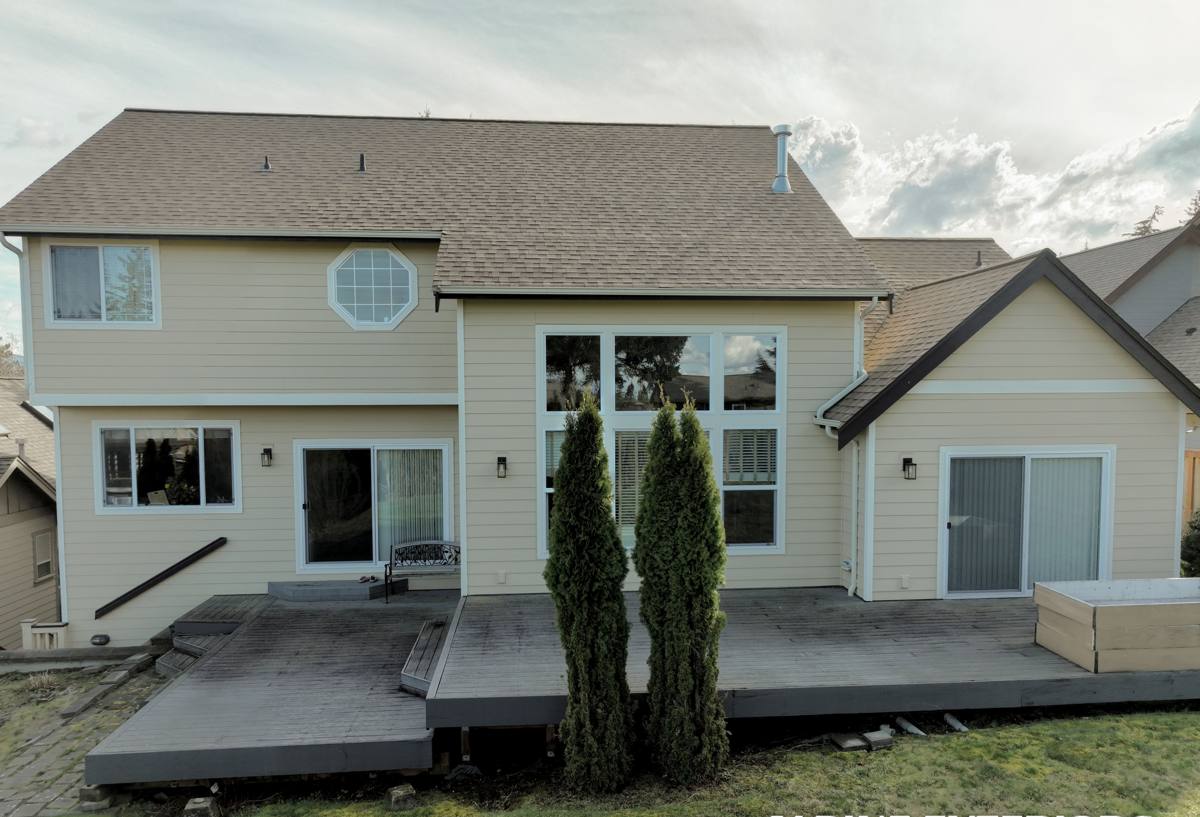
Why Coastal Decks Fail Sooner
Most deck failures on the island aren't sudden — they're the slow result of the same few things happening year after year.
Salt air and metal corrosion
Salt in the air settles on everything, including the metal that holds a deck together. Standard fasteners, joist hangers, and hardware corrode faster this close to the Gulf, and once a fastener weakens, the connection it's holding — a ledger board, a joist hanger, a railing post — weakens with it. This is often invisible from the top of the deck until the damage is well advanced underneath.
UV exposure and material breakdown
Florida sun is intense nearly year-round, and a deck with southern or western exposure takes a beating. Wood dries out, cups, and cracks. Lower-grade composite boards can fade or chalk. UV doesn't just affect looks — it breaks down the surface fibers of wood and the resin layer of some composites, which is where moisture eventually gets in.
Wind-driven rain and moisture intrusion
Storms here rarely bring rain straight down — it comes in sideways, driven by wind off the Gulf. That means water finds its way into gaps, fastener holes, and ledger connections that would stay dry in a calmer climate. Trapped moisture under boards or around framing is one of the most common reasons a deck rots from the inside before it looks bad from the outside.
Wind load
Pinellas County's building code reflects the fact that this area sees real hurricane wind speeds. A deck's railings, guard posts, and structural connections all have to meet wind-load requirements that are stricter than what you'd see in much of the country. An old deck built to a prior code — or built without a permit at all — often doesn't meet current standards, which becomes a real issue at resale or insurance renewal.
Signs Your Indian Rocks Beach Deck Needs Replacing, Not Patching
- Soft, spongy, or bouncy spots when you walk across the deck
- Visible rust staining running down from fasteners or hardware
- Railing posts that wiggle or flex under light pressure
- Gaps opening up between boards, or boards that have cupped or twisted
- Ledger board area (where the deck meets the house) showing dark staining or soft wood
- Support posts or footings that look undersized, cracked, or are sitting directly on grade without proper footing
- A deck more than 15-20 years old that has never been inspected structurally
Any one of these on its own might be repairable. Several at once, especially anything involving the ledger board or support posts, usually means the structure has been compromised long enough that a full replacement is the more honest recommendation — patching around failing framing just delays the same problem.
What a Correct Deck Replacement Involves Here
Permitting and code compliance
Deck work in Indian Rocks Beach and unincorporated Pinellas County requires a permit, and inspections happen at multiple stages — footings, framing, and final. This isn't paperwork for its own sake; it's how the county confirms the deck will actually hold up to local wind and load requirements. We pull permits and handle inspections as part of the job, not as an afterthought.
Footings and framing sized for the site
Barrier island soil is largely sandy, which affects how footings are sized and set. Framing spans, post spacing, and hardware all get selected based on the actual load path for your deck's size and height — not a one-size-fits-all layout. On elevated homes, which are common on the island due to flood zone requirements, the framing also has to account for greater deck height and different attachment points.
Fasteners and hardware rated for coastal exposure
This is one of the most important — and most skipped — details in coastal deck work. Standard galvanized hardware is not enough this close to saltwater. We use stainless steel or marine-grade coated fasteners and connectors rated for coastal exposure, because this is the piece of the deck most likely to fail first if it's under-specified.
Ledger board attachment
The ledger board — where the deck attaches to the house — is the single most critical connection on most decks and a common failure point on older Florida homes. It has to be properly flashed to keep water from getting behind it and bolted (not just nailed) to the home's structure. Getting this wrong is a leading cause of full deck collapses nationally, and it's exactly the kind of thing that looks fine for years before it doesn't.
Decking material selection
There's no single "best" decking material for every home — it depends on budget, sun exposure, and how much maintenance you want to take on. We'll walk through the honest trade-offs for your specific deck rather than pushing one product line.
| Material | How it holds up on the island | Maintenance |
|---|---|---|
| Pressure-treated wood | Lowest upfront cost; needs regular sealing to resist UV and salt air, more prone to cupping and splintering over time | Annual cleaning and sealing recommended |
| Composite decking | Resists rot and doesn't splinter; quality varies significantly by product line, so specification matters | Periodic washing, no sealing needed |
| PVC/capped polymer | Best moisture resistance of the common options; performs well in high-UV, high-salt conditions | Low — occasional washing |
| Hardware & framing (all materials) | Stainless or coated marine-grade fasteners strongly recommended regardless of decking choice | Visual inspection yearly |
How We Approach a Replacement Project
- On-site evaluation — We inspect the existing deck structure, including framing, ledger connection, and footings, to determine what's driving the failure and confirm a full replacement is actually the right call.
- Plan and permit — We size the framing and footings to your deck's specific dimensions and elevation, then pull the required Pinellas County or Indian Rocks Beach permit before work begins.
- Demo and removal — Old decking, framing, and hardware are removed, and we check the ledger area and any structural connections to the house while it's exposed.
- Framing and hardware installation — New framing goes in with coastal-rated fasteners and connectors, properly flashed at the ledger.
- Decking and railing installation — Your chosen decking material and code-compliant railing system are installed.
- Inspection and walkthrough — Final county inspection is scheduled, and we walk the finished deck with you before calling the job done.
Why It Matters to Hire a Crew That Already Works This Area
A deck built to a generic spec sheet, without accounting for salt air corrosion rates, sandy soil footings, wind-driven rain intrusion, and Pinellas County's wind-load requirements, tends to need attention again within a few years — sometimes sooner. Crews that work Indian Rocks Beach and the surrounding Gulf-front communities regularly already know which hardware grade to spec by default, how local inspectors expect ledger flashing detailed, and how deck height and access typically work on the island's elevated homes. That familiarity shows up in fewer surprises during the permitting and inspection process, and in a deck that's actually built for where it's standing rather than where it was designed on paper.
Maintaining Your New Deck in a Coastal Environment
Even a correctly built deck needs some ongoing attention this close to the Gulf. Rinse off salt residue periodically, especially after storms. Keep an eye on fastener heads and railing connections for early rust, even with coastal-rated hardware — nothing is entirely maintenance-free in this environment. If you chose wood decking, plan on resealing on a regular schedule rather than waiting until it visibly needs it. These are small habits, but they're the difference between a deck that lasts its full expected lifespan and one that starts showing problems early.
If your Indian Rocks Beach deck is showing its age — or you just want an honest opinion on whether it needs repair or full replacement — we're happy to take a look. Request a free, no-pressure estimate using the form below and we'll walk the property with you.