 Largo Siding
 Building a Deck That Actually Holds Up in Redington Shores
Redington Shores sits right up against the Gulf, and that location is exactly why a deck built here needs to be engineered differently than one built ten miles inland in Largo proper. Salt-laden air moves off the water constantly, the sun is intense and nearly year-round, and when storms roll through Pinellas County they bring both hurricane-force wind gusts and wind-driven rain that gets pushed sideways into every gap and seam. A deck that looks fine on installation day can fail early if the materials, fasteners, and framing weren't chosen with that specific combination of stressors in mind.
We've built and repaired decks throughout the Largo area, including the barrier island communities like Redington Shores, and the failure patterns we see are consistent: corroded fasteners well before the decking itself wears out, ledger boards that were never properly flashed and let water into the house framing, and railing hardware that rusts and stains long before the rest of the structure shows its age. A correct build addresses all of that up front, not as a repair five years later.
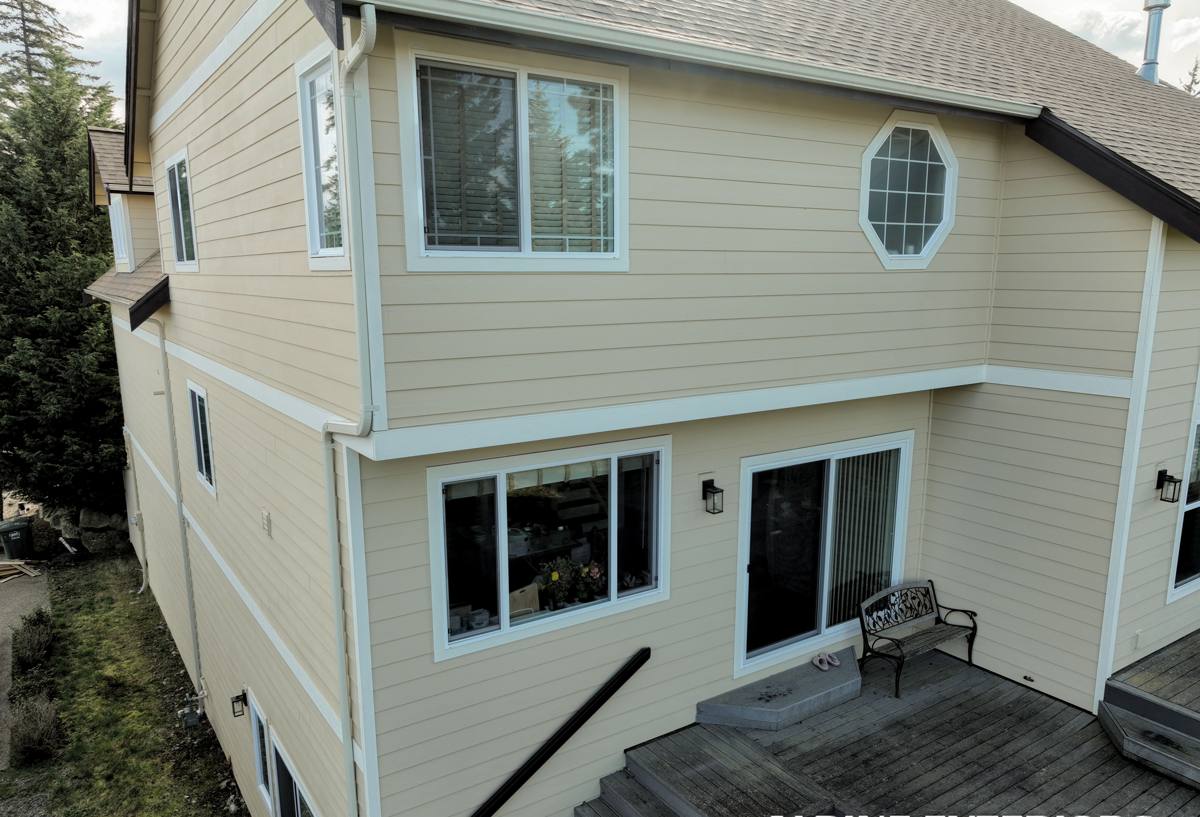
What Makes Redington Shores Different From a Typical Inland Deck Site
Salt Air Exposure
Being close to the water means airborne salt settles on every exterior surface, including a deck's frame, fasteners, and railing. Salt accelerates corrosion in standard steel hardware dramatically. Fasteners and connectors rated for coastal use aren't optional here — they're the difference between hardware that lasts the life of the deck and hardware that starts rust-staining the decking within a couple of seasons.
Wind Load
Pinellas County sits in a high-velocity hurricane zone, and Redington Shores' barrier island position puts it squarely in the path of the strongest gusts the region sees. Railings, post connections, and the ledger attachment to the house all need to be engineered and fastened to resist uplift and lateral load, not just support foot traffic. This is a structural engineering question as much as a carpentry one.
UV and Heat
Florida sun breaks down lower-grade composite decking, fades finishes, and dries out untreated wood faster than most homeowners expect. Materials and finishes need real UV stabilization, not just a marketing claim of "fade resistant."
Wind-Driven Rain
Storms here don't just drop rain straight down — wind pushes it sideways and up under boards, around ledger connections, and into any gap in flashing. Water management details that would be a non-issue in a drier climate become the actual point of failure in a coastal deck if they're skipped.
Choosing the Right Decking Material for This Location
There's no single "best" decking material for every home — the right choice depends on budget, maintenance tolerance, and how close the home sits to the water. Here's how the common options actually perform under Redington Shores conditions:
| Material | Salt Air Behavior | UV/Heat Behavior | Maintenance |
|---|---|---|---|
| Pressure-treated wood | Fasteners and hardware need coastal-rated coatings; wood itself is workable but needs sealing | Fades and grays without regular sealing | Annual cleaning and re-sealing to hold up long term |
| Capped composite | Shell resists salt staining well; hardware still must be corrosion-rated | Strong UV stability on quality capped products | Occasional washing, no sealing or staining |
| Uncapped composite | More prone to surface staining and moisture absorption near salt spray | Can fade or chalk faster than capped versions | More frequent cleaning; mold/mildew more likely in humid shade |
| PVC decking | Excellent — doesn't absorb moisture or salt | Very good UV performance | Lowest maintenance of the group |
We're honest with clients about trade-offs rather than pushing one product line. Wood costs less up front but demands ongoing upkeep to survive the salt and sun here. Capped composite and PVC cost more initially but cut down dramatically on maintenance calls and premature replacement — often the better long-term value for a home this close to the Gulf.
Framing and Fasteners: Where Coastal Decks Actually Fail First
The decking surface gets all the attention, but the framing underneath and the fasteners holding it together are what determine whether a deck lasts 10 years or 25. In a salt-air environment, we treat this as the priority, not an afterthought.
- Stainless steel or coated coastal-rated fasteners throughout — standard galvanized hardware corrodes noticeably faster this close to the water
- Properly flashed ledger board connection where the deck ties into the house, to stop wind-driven rain from reaching the home's framing
- Joist tape or equivalent moisture barrier on top of framing lumber to slow rot at the fastener penetration points
- Post-to-beam and beam-to-ledger connectors rated for the wind uplift loads specific to this zone
- Adequate ventilation underneath the deck to let moisture escape rather than sit against the framing
Skipping any one of these is usually invisible at handoff — the deck looks finished and solid. The problems show up a year or two later as rust streaks, soft spots near the house wall, or a railing post that's gone loose. Getting the framing right the first time avoids all of it.
Railings and Hardware: A Common Weak Point
Railing systems take direct salt spray and full sun exposure, and they're also a structural safety component that has to resist real wind load. We match railing material and hardware to the coastal environment rather than defaulting to whatever's cheapest to source. Aluminum and properly coated cable or glass railing systems tend to hold up well against salt air; standard uncoated steel components are the ones we see rusting and staining decking within a few seasons in this area.
Permitting and Code Requirements in Pinellas County
Deck construction in unincorporated Pinellas County and its municipalities requires a permit, and inspections check footing depth, structural connections, and railing height and spacing, among other things. Because this area falls in a high-wind zone, the structural requirements for post spacing, footing size, and connector hardware are more demanding than what you'd see inland. We handle the permitting and inspection process as part of the job, which also means the finished deck is documented and code-compliant — something that matters if you ever sell the home or file an insurance claim after a storm.
Our Process for a Redington Shores Deck Build
1. On-Site Assessment
We look at sun and wind exposure specific to your lot, existing structure if it's a replacement, drainage around the footprint, and how the new deck will tie into the house.
2. Design and Material Selection
We walk through decking, railing, and finish options honestly, laying out real cost and maintenance trade-offs rather than steering you toward the highest-margin product.
3. Permitting
We prepare and submit the permit package to the appropriate local jurisdiction and schedule the required inspections.
4. Construction
Framing first, with coastal-rated fasteners and connectors and proper flashing at the ledger, followed by decking installation and railing.
5. Final Walkthrough
We go over the finished deck with you, including what maintenance (if any) the chosen material needs going forward.
Maintenance Expectations by Material
Even a well-built deck needs some upkeep in this climate — the question is how much. Wood decking generally needs a cleaning and re-sealing cycle roughly annually to hold its protection against sun and salt. Composite and PVC products need periodic washing to clear salt residue and pollen but skip the sealing and staining cycle entirely. Railing hardware, regardless of decking material, benefits from an occasional rinse to clear accumulated salt, especially on homes closest to the water.
Repair, Restoration, and Replacement
Not every project here is new construction. We also inspect and repair existing decks that are showing early signs of coastal wear — rusted fasteners, soft framing near the ledger, loose railing posts, or decking that's cupping or graying unevenly. Sometimes a deck just needs fastener replacement and refinishing; other times the framing has deteriorated enough that a rebuild is the more honest recommendation. We'll tell you which situation you're in rather than upselling a full replacement when a repair will genuinely hold.
Why a Crew That Already Works This Area Matters
A contractor who mainly builds inland doesn't always think in terms of coastal-rated hardware, ledger flashing detail, or the wind load specifics of a barrier island lot — because most of their jobs don't require it. Working regularly in Redington Shores and the surrounding Largo area means we're already familiar with the local permitting process, the wind zone requirements, and the specific ways salt air and storm exposure wear down a deck over time. That local knowledge shows up in the parts of the build you don't see once it's finished — the fasteners, the flashing, the connectors — which are exactly the parts that determine how long the deck actually lasts.
If you're planning a new deck or need an honest look at an existing one, we're happy to come out and take a look. The estimate is free, there's no pressure, and you'll get a straight answer about what your home actually needs — just fill out the form below to get started.