 Largo Siding
 Building a Deck That Actually Holds Up in Palm Harbor
Palm Harbor sits close enough to the Gulf that salt air, humidity, and wind-driven rain are part of daily life for anything built outdoors. A deck here isn't just a backyard amenity — it's an exterior structure that has to survive the same conditions that wear down roofs and siding: intense UV exposure nearly year-round, sudden downpours, and the corrosive effect of salt-laden air on metal hardware. A deck built to a generic national spec, without those factors in mind, tends to show its age fast: loose railings, rusted fasteners, warped boards, and finishes that chalk and fade within a couple of seasons.
We build decks for Pinellas County homes with those realities built into the plan from the start, not treated as an afterthought. That means material selection, fastener choice, framing details, and drainage all get decided with Florida's climate in mind — not just what looks good on day one.
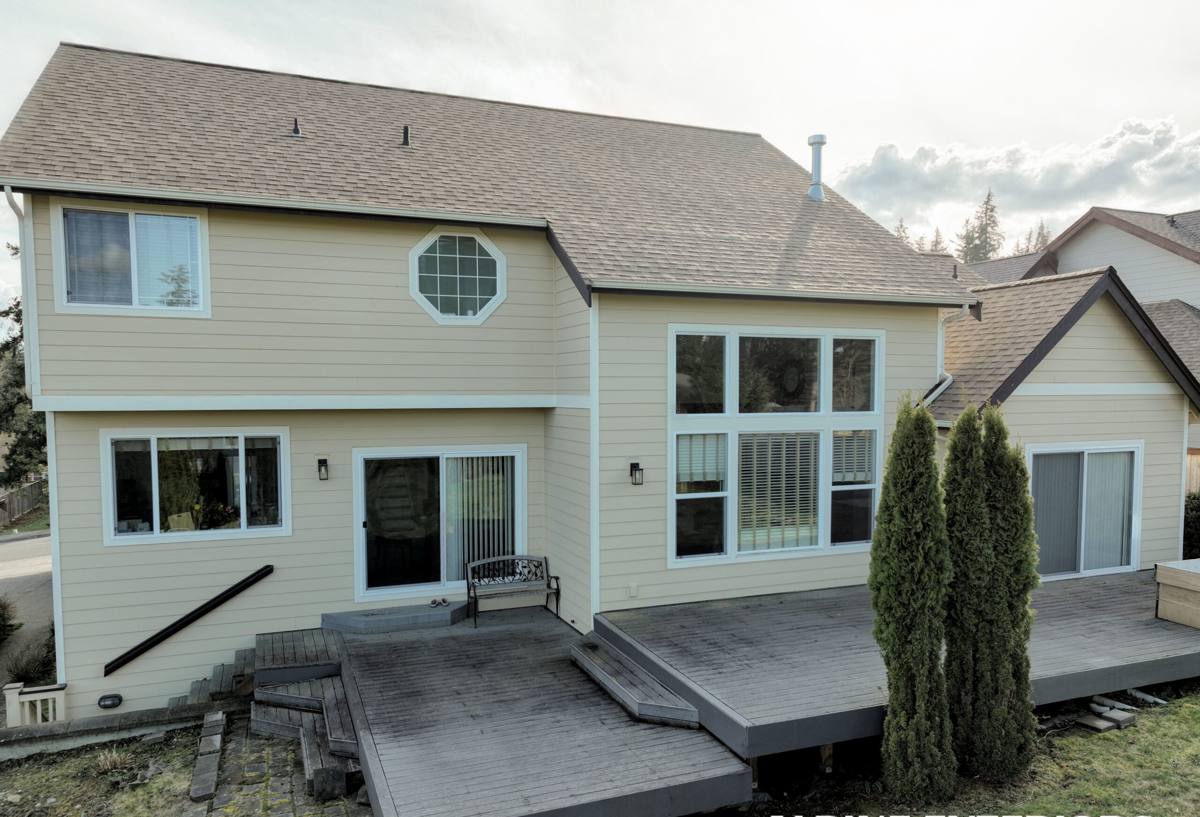
What Palm Harbor's Climate Actually Does to a Deck
UV and Heat
Florida sun is harder on exterior wood and finishes than most homeowners expect. UV breaks down the lignin in wood fibers, which is why untreated or poorly finished wood decking grays and roughens quickly. Dark composite decking can also run noticeably hotter underfoot in direct sun, which matters for a deck that gets used barefoot around a pool or patio.
Wind-Driven Rain and Humidity
Afternoon storms don't just wet the surface — wind-driven rain gets pushed sideways and underneath railings, ledger boards, and stair stringers. Combined with Pinellas County's humidity, any spot where water collects or can't drain and dry becomes a starting point for rot, mildew, or hardware corrosion.
Salt Air and Hurricane-Force Wind
Even homes that aren't waterfront get salt exposure carried in on Gulf breezes. Standard zinc-coated fasteners and connectors corrode faster here than in drier, inland climates. And because Palm Harbor falls within a hurricane-prone wind zone, framing connections and railing attachment have to be built to resist uplift and lateral loads, not just support foot traffic.
Choosing Decking Material for This Climate
There's no single "best" decking material — the right choice depends on budget, maintenance tolerance, and how the deck will be used. Here's how the common options actually perform under Florida conditions:
| Material | Climate Performance | Maintenance | Typical Lifespan Here |
|---|---|---|---|
| Pressure-treated pine | Affordable, but prone to checking and graying under intense UV; needs sealing to resist humidity and rain | Reseal/stain every 1-2 years | 10-15 years with upkeep |
| Composite decking | Resists rot and UV fading well; some boards can run hot in direct sun; won't splinter | Periodic cleaning, no sealing/staining | 20-25+ years |
| PVC/capped polymer decking | Fully moisture-resistant, best option for high-humidity, high-rain exposure | Low — occasional washing | 25+ years |
| Tropical hardwoods (e.g., ipe) | Naturally dense and rot-resistant, but requires disciplined maintenance to prevent graying and checking | Oiling 1-2 times per year | 20-25 years with upkeep |
For most Palm Harbor homeowners, composite or capped PVC decking makes sense as a long-term, low-maintenance choice given the humidity and sun exposure. Pressure-treated wood is still a reasonable option for homeowners who want a lower upfront cost and are willing to keep up with sealing on a regular schedule — we're honest about that trade-off rather than steering everyone toward the most expensive product.
Framing and Structure — Where Deck Failures Actually Start
Most deck problems don't start with the decking boards — they start underneath, in framing and connections that were undersized, under-fastened, or left exposed to moisture without protection.
Ledger Board Attachment
The ledger board — where the deck attaches to the house — is the single most important structural connection and one of the most common failure points nationwide. It needs proper flashing to keep water from getting behind it and into the house framing, plus lag bolts or through-bolts sized and spaced for the actual load, not just nailed on.
Footings and Post Bases
Pinellas County's sandy soil and high water table affect how footings need to be sized and set. Post bases should hold posts up off the concrete rather than letting wood sit directly in standing water after a storm, which shortens the life of the post dramatically.
Joist Hardware
Joist hangers, angle brackets, and structural screws all need to be rated for exterior and, ideally, coastal exposure. This is where corner-cutting shows up years later as rust streaks and loosening hardware.
Fasteners and Hardware Matter More Here Than Most Places
In a coastal-influenced climate like Palm Harbor's, the hardware holding a deck together is under constant low-grade chemical attack from salt air, on top of the usual moisture cycling. Standard electro-galvanized fasteners can start showing corrosion within a few years in this environment.
- Stainless steel or heavy hot-dip galvanized fasteners for all structural connections
- Coated or stainless structural screws rated for ground contact and coastal exposure where applicable
- Corrosion-resistant joist hangers and post bases, not just standard interior-grade hardware
- Flashing tape or membrane at the ledger board to stop water intrusion at the house connection
- Composite or PVC trim boards at fascia edges most exposed to sun and rain
None of this is visible once the deck is finished, which is exactly why it's worth asking a contractor directly what hardware grade they're using before work starts.
Permits, Code, and Wind Requirements
Deck construction in Pinellas County is governed by the Florida Building Code, and most new or substantially rebuilt decks require a permit and inspection — this isn't optional paperwork, it's what confirms the framing, footings, and railing attachment actually meet the load and wind requirements for this area. Railings need to meet minimum height and baluster spacing rules, and stair construction has its own code requirements for rise, run, and handrail attachment.
Skipping the permit process might save time upfront, but it creates real problems at resale, since unpermitted structural work is a common flag in home inspections and can complicate insurance claims after storm damage. We handle the permitting and inspection process as a standard part of the job.
How Our Process Works
- On-site assessment — we look at the house connection point, grade, drainage, and sun exposure before recommending materials
- Material and layout discussion — honest walkthrough of decking options, cost differences, and maintenance expectations for your situation
- Permitting — drawings and permit submission handled before any construction starts
- Framing and inspection — structural work built to code and passed through required inspections before decking goes down
- Decking, railing, and finish work — final surface, railing system, and any trim or fascia details
- Final walkthrough — we go over the finished deck and basic care with you before calling the job done
Railings, Stairs, and Finishing Touches
Railings take a lot of direct sun and rain exposure and are often the first thing to look worn on an otherwise solid deck. Aluminum and composite railing systems hold up better than painted wood in this climate, since they don't need repainting to stay looking clean. Stair stringers, being close to ground level, are especially exposed to splashback and standing moisture, so we pay particular attention to how they're supported and finished.
Maintaining a Deck in Pinellas County
Even low-maintenance materials benefit from a basic care routine in this climate:
- Rinse off salt residue, pollen, and debris periodically, especially after storms
- Check railing posts and stair connections annually for any looseness
- For wood decking, plan on resealing or restaining on a consistent schedule rather than waiting until it visibly grays
- Keep gutters and downspouts directing water away from the deck structure, not onto it
- Look underneath the deck occasionally for signs of moisture pooling or hardware corrosion
Why Local Experience Matters for This Job
A contractor who works Palm Harbor and the surrounding Largo area regularly already knows how the local soil, humidity, and storm patterns behave — that's not something you get from a generic install manual. It shows up in details like footing depth for sandy soil, flashing choices at the ledger board, and picking hardware that won't be rusting within a few years. It also means we're familiar with Pinellas County's permitting process and inspection expectations, so the job moves without unnecessary delays.
If you're planning a new deck or replacing one that's showing its age, we're happy to walk the property, talk through material options honestly, and put together a straightforward estimate — no pressure, no pushy upsell. Use the form below to request a free estimate for your Palm Harbor deck project.