 Largo Siding
 Composite Decking Built for Dunedin's Waterfront Climate
Dunedin sits close enough to the Gulf that salt air, humidity, and intense sun are part of daily life for any outdoor structure. A deck here does more work than the same deck would a hundred miles inland. It gets baked by UV nearly every day of the year, soaked by wind-driven rain during summer storms, and occasionally tested by hurricane-force gusts. Composite decking has become the material of choice for homeowners in this part of Pinellas County precisely because it holds up to that combination better than most wood options, but only when it's specified and installed correctly for this environment. This page covers what that actually means for a Dunedin home.
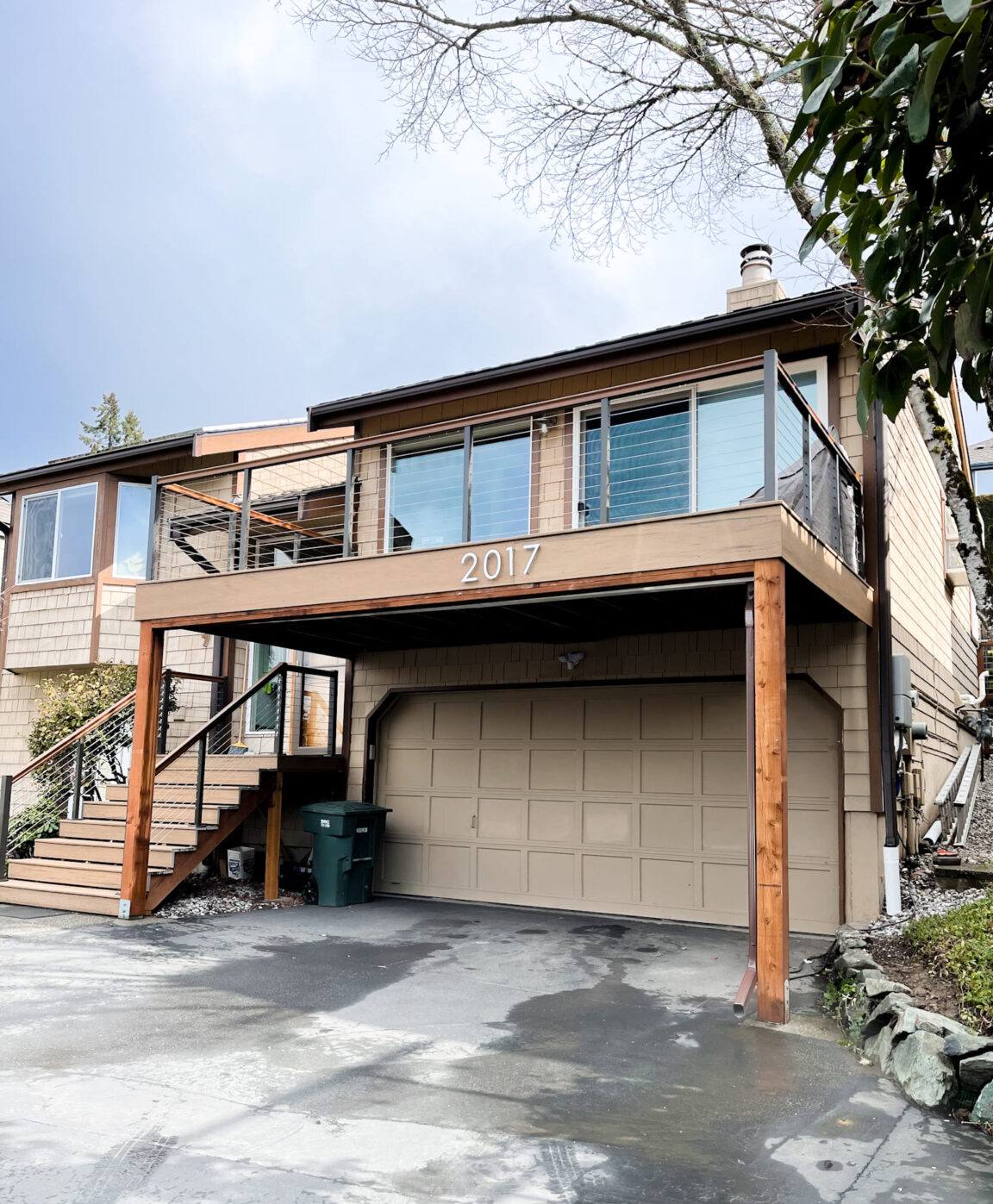
What Dunedin's Climate Does to a Deck
Before talking about materials and methods, it helps to understand the specific stresses a deck faces this close to the water.
UV and Heat
Florida sun is relentless, and a deck surface takes it directly, all day, with almost no shade for most of the year. UV breaks down the surface fibers of untreated or low-grade wood over time, causing graying, splintering, and checking. Cheaper composite boards can fade or chalk under the same exposure if the cap layer isn't built for it.
Salt Air and Humidity
Even homes that aren't directly on the water get a steady dose of salt-laden air blowing in off the Gulf. That salt accelerates corrosion on any exposed metal fasteners, brackets, and screws. It also keeps ambient humidity high, which matters for anything with a wood core or wood substructure underneath the decking.
Wind-Driven Rain and Storm Loads
Pinellas County sees seasonal tropical systems and summer thunderstorms that bring rain sideways, not straight down. That means water gets driven into gaps, under boards, and against ledger connections in ways a drier climate never tests. Hurricane-force wind events also put real uplift and racking loads on a deck structure, which is a framing and fastening issue as much as a decking-material issue.
Why Composite Makes Sense Here — With Honest Trade-offs
Composite decking is popular in this area because it doesn't rot, doesn't need annual staining, and resists the fading and splintering that plagues untreated wood under constant Florida sun. That said, it's not maintenance-free, and it's not the right call for every budget or every structure. Here's the honest comparison we walk homeowners through.
| Factor | Composite Decking | Pressure-Treated Wood |
|---|---|---|
| Upfront cost | Higher material cost | Lower material cost |
| Maintenance | Occasional wash-down, no staining/sealing | Annual sealing or staining recommended |
| UV/fade resistance | Good with a quality cap layer, varies by brand and color | Grays and weathers without regular sealing |
| Moisture behavior | Won't rot, but core type affects water absorption at cut edges | Can warp, cup, or rot if end grain isn't sealed |
| Heat underfoot | Can run hotter in direct sun, varies by color | Stays cooler in most cases |
| Expected lifespan (Gulf Coast conditions) | 25–30+ years with correct install | 10–15 years with regular upkeep |
| Fastening/hardware needs | Requires corrosion-resistant hidden fasteners | Standard deck screws, still should be coated |
We don't push composite as a fix-all. If a homeowner wants a traditional wood look and is committed to the upkeep, we'll say so honestly. But for most Dunedin properties dealing with sun and salt exposure year-round, composite's lower long-term maintenance burden is the deciding factor.
What a Correct Composite Deck Install Actually Involves
The board itself only accounts for part of how well a deck performs here. The substructure, fastening, and drainage details matter just as much, and they're where a lot of shortcuts happen on lower-bid jobs.
Framing and Ledger Attachment
The ledger board connection — where the deck ties into the house — is one of the most important structural points on the entire project. It needs proper flashing to keep water from getting behind the siding or into the rim joist, and it needs fasteners rated for the load and corrosion environment. This connection is also central to wind resistance during storm events, so it's not a place to cut corners.
Joist Spacing and Substructure Material
Composite boards generally call for tighter joist spacing than solid wood decking, especially at angles, stair treads, or picture-frame borders. Using the joist spacing the manufacturer specifies isn't optional if you want the warranty to hold and the deck to feel solid underfoot over time. We also recommend corrosion-resistant or composite substructure components in high-humidity, salt-air settings rather than standard construction-grade lumber alone.
Fasteners and Hardware
Every screw, bracket, and hidden fastener clip on a deck this close to the Gulf should be rated for coastal or marine-grade corrosion resistance. Standard zinc-coated hardware can start showing rust within a couple of seasons in this air. Hidden fastener systems, done correctly, also give a cleaner surface with no exposed screw heads that could telegraph rust stains through the board over time.
Drainage and Ventilation
A deck needs airflow underneath it and a way for water to get out from between and under the boards, not just off the top surface. Poor drainage traps moisture against the framing, which shortens the life of everything underneath the composite decking even if the boards themselves are fine. Proper board spacing, joist tape, and grading beneath the deck all play a role here.
Edge and Cut Treatment
Any cut end of a composite board is more vulnerable to moisture intrusion than the factory-capped face, especially on boards with a wood-fiber core. Cut ends should be treated or capped per manufacturer instructions, particularly at stair stringers, picture-frame corners, and board ends that meet a house or post.
Our Process for a Dunedin Deck Project
- On-site assessment: We look at the existing structure (if replacing a deck), house connection point, sun exposure, and drainage path before quoting anything.
- Material selection: We walk through composite board options, colors, and price tiers, being upfront about which grades perform best under constant Gulf Coast sun and salt exposure.
- Permitting: Deck projects in Pinellas County typically require permitting and inspection — we handle that process rather than leaving it to the homeowner.
- Framing and structural work: Ledger attachment, joist layout, and hardware selection are done to the spacing and corrosion standards the decking manufacturer requires.
- Decking installation: Boards are installed with hidden fasteners where applicable, correct gapping for drainage and thermal movement, and clean edge treatment.
- Final walkthrough: We inspect fastening, gapping, and any railing or stair components with the homeowner before calling the job complete.
Signs an Existing Deck Needs Attention
If you already have a deck in Dunedin, whether wood or composite, a few warning signs are worth acting on before they become structural problems.
- Soft, spongy, or bouncy spots when walking across the deck surface
- Rust staining bleeding through boards near fastener locations
- Visible gaps, separation, or movement at the ledger board where the deck meets the house
- Boards that have cupped, warped, or noticeably faded unevenly
- Standing water or slow drainage after rain instead of water running off cleanly
- Loose or wobbly railing posts, which often points to a fastening or framing issue, not just cosmetic wear
Any of these can usually be caught early with a straightforward repair. Left alone through a few more storm seasons, they tend to turn into full structural replacements.
Sizing, Layout, and Add-Ons Worth Planning For
Composite decking pricing is driven by more than square footage. Board pattern (straight-lay versus picture-frame or diagonal), railing style, stair count, and any built-in features like benches or planters all affect labor and material cost. It's worth deciding upfront whether you want features like a picture-frame border in a contrasting color, since that's far easier to plan into the original layout than to add later. We also talk through railing material at this stage — composite, aluminum, and cable railing all pair differently with composite decking in terms of both look and long-term maintenance in a salt-air environment.
Why Hiring a Crew That Already Works in Dunedin Matters
A crew that regularly works Pinellas County's coastal communities already knows which fastener grades hold up here, how local permitting and inspection typically goes, and how to detail a ledger connection so it survives wind-driven rain instead of quietly failing behind the siding. That local familiarity shows up in the details that don't get noticed until years later — the hardware that hasn't rusted, the boards that haven't cupped, the railing that's still tight. It also means a faster, more realistic quote, since we're not guessing at how the climate here behaves.
If you're planning a new composite deck or need an existing one assessed in Dunedin, we're glad to take a look and give you a straightforward, no-pressure estimate. There's a form below — reach out and we'll get a time on the calendar.