 Largo Siding
 Deck Repair Built for Belleair's Coastal Conditions
Belleair sits close enough to the water that every deck in the area takes a different kind of beating than one built inland. Between the salt-laden air coming off the Gulf, the humidity that never really lets up, and the intense Florida sun overhead nearly year-round, decks here age faster than most homeowners expect. A structure that would last decades in a drier, cooler climate can start showing real problems in Belleair within half that time if it wasn't built or maintained with this environment in mind.
We work on decks throughout Largo and the surrounding Pinellas County communities, including Belleair, and we see the same failure patterns over and over: fasteners corroding from the inside out, ledger boards pulling away from the house, boards cupping or splitting from repeated wet-dry cycles, and framing that looks fine on top but is soft or rotted underneath. Repairing a deck correctly here means understanding why it failed in the first place — not just patching what's visible.
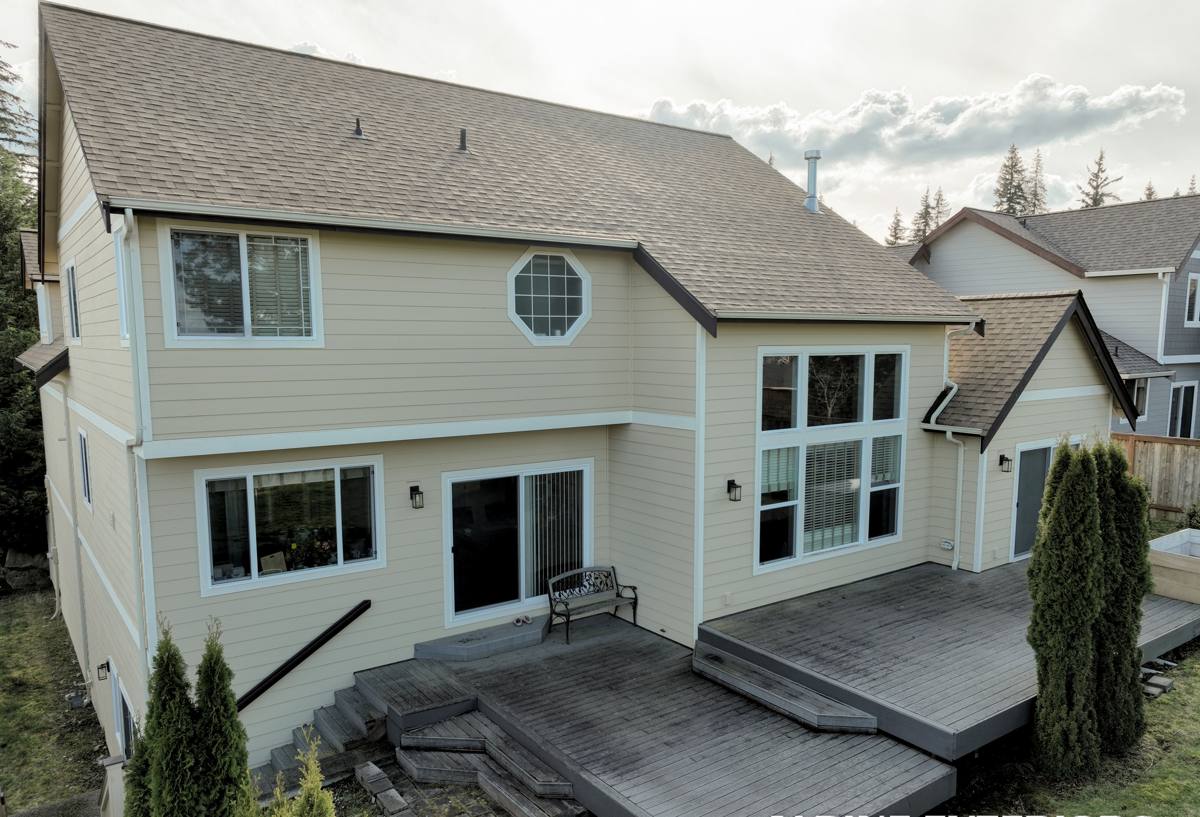
Why Belleair Decks Wear Out the Way They Do
Salt Air and Metal Fasteners
Belleair's proximity to the coast means airborne salt settles on everything outdoors, including the nails, screws, and structural connectors holding a deck together. Standard fasteners corrode faster in this environment, and once a fastener weakens, the board or bracket it's holding can shift, squeak, or come loose entirely. This is one of the most common reasons we get called out for repairs that, on the surface, looked like a simple loose board.
UV Exposure
Florida sun is intense for most of the year, and it breaks down wood fibers, dries out sealants, and fades or chalks composite decking surfaces over time. UV damage usually shows up first as graying or splintering wood, or as a composite surface that's lost its finish. Left alone, sun-damaged wood becomes more porous and absorbs moisture faster, which accelerates rot.
Wind-Driven Rain and Hurricane Exposure
Pinellas County sees its share of tropical storms and hurricane-force wind events, and decks take the brunt of wind-driven rain that gets pushed sideways into ledger connections, under railings, and into any gap in the decking surface. Storms don't just bring wind — they push water into places a deck was never designed to handle, and that's often where hidden rot starts.
Humidity and Wood Movement
Even without a storm, the daily humidity swings in this part of Florida keep wood decking in a constant cycle of absorbing and releasing moisture. That movement is what causes cupping, warping, and eventually splitting in boards that aren't properly spaced, sealed, or ventilated underneath.
Signs a Belleair Deck Needs Repair, Not Just Cleaning
- Boards that flex, bounce, or feel spongy when you walk on them
- Railings or posts that wiggle or feel less solid than they used to
- Rust streaks around screws, nails, or metal brackets
- Gaps opening up where the deck meets the house (the ledger board)
- Wood that's gone gray, splintery, or soft to the touch
- Composite decking that's visibly faded, chalky, or delaminating at the edges
- Standing water or slow drainage after rain instead of water shedding off
- A musty smell coming from underneath the deck
Any one of these on its own might be minor. Several together usually mean the deck's structure — not just its surface — needs attention.
What a Correct Deck Repair Actually Involves
A lot of "deck repair" work in this industry is really just cosmetic — replace the board that looks bad, add a screw where something's loose, call it done. That approach doesn't hold up in a climate like ours. A repair that's going to last in Belleair has to account for what's happening underneath and around the visible damage, not just at the surface.
Our process starts with an honest inspection
Before we recommend any repair, we check the structural framing underneath the decking — joists, beams, and posts — along with the ledger board connection to the house, since that's one of the most common failure points on any deck near the coast. We also check fastener condition, drainage, and how the deck was originally built, because a repair on a deck with an underlying design flaw (like inadequate flashing at the ledger) will fail again if we don't address the root cause.
Matching the repair to the actual problem
Sometimes a repair is straightforward — swap a few damaged boards, replace corroded fasteners with ones rated for coastal exposure, and reseal. Other times, what looks like a small issue on top is a sign of rotted framing that needs to be replaced before anything else is addressed, since decking attached to compromised framing isn't safe regardless of how new it looks.
Building in resistance to the next storm season
Where it makes sense, we use fasteners and hardware rated for coastal and high-wind exposure, correct any drainage or flashing issues we find at the ledger, and make sure connections meet current structural standards — not just cosmetic ones. The goal is a repair that holds up through the next round of Gulf storms, not one that needs revisiting next year.
Wood vs. Composite: Repair Considerations for Belleair Homes
| Factor | Wood Decking | Composite Decking |
|---|---|---|
| Common failure mode here | Rot, splintering, fastener corrosion | Fading, surface chalking, edge delamination |
| Maintenance to prevent damage | Regular sealing/staining, especially after intense UV exposure | Periodic cleaning; less sealing needed but not maintenance-free |
| Repair approach | Board-by-board replacement is straightforward and cost-effective | Matching discontinued colors/profiles can be harder; framing checks still required |
| Structural framing underneath | Same wood-framing risks regardless of surface material | Same wood-framing risks regardless of surface material |
| Coastal/salt air resistance | Depends heavily on wood species and fastener quality | Surface material resists moisture better; hardware still needs corrosion-resistant rating |
Whichever material a Belleair deck uses on the surface, the framing underneath is almost always wood, and that framing is where the real structural risk lives. A composite deck with rotted joists underneath is not a safe deck, regardless of how good the surface looks.
What Drives the Cost of a Deck Repair
Every deck repair is different, and we won't quote a number without seeing the deck, but a few factors consistently affect cost:
- Extent of structural damage — surface board replacement costs far less than repairing or replacing rotted framing
- Accessibility — decks with limited access underneath take more labor to inspect and repair properly
- Material match — matching existing wood species or composite colors can add cost, especially on older decks
- Ledger board condition — repairing the connection to the house is more involved than replacing a few deck boards
- Railing and post condition — safety-related components often need attention even when the deck surface looks fine
Generally, straightforward board and fastener repairs are the least expensive category of deck work, while framing or ledger repairs cost more because they involve structural work, not just surface replacement. We'll always tell you plainly which category your repair falls into before we start.
Why Hiring a Crew That Already Works in Belleair Matters
Deck repair isn't unique to Belleair, but the conditions that cause deck damage here are specific to this part of the Gulf Coast. A contractor who mostly works inland, or in a different climate, won't necessarily know to check for salt-accelerated fastener corrosion, or to prioritize the ledger connection on a home that's taken repeated wind-driven rain over the years. We work in Largo and throughout Pinellas County, including Belleair, so we're inspecting and repairing decks in this exact environment on a regular basis — we know which failure points to check first because we've seen them before, on decks just like the one at your home.
That local familiarity also means we're realistic about timelines and materials. We're not going to recommend a repair approach that ignores how a Belleair deck actually ages, and we're not going to oversell work that isn't needed. If a repair will hold, we'll say so. If the framing needs attention, we'll show you why before we touch anything.
Getting Your Deck Assessed
If your deck is showing any of the warning signs above — soft spots, loose railings, rust at the fasteners, or visible wear from sun and salt air — it's worth having it looked at before the next storm season puts more stress on it. Catching a fastener or framing issue early is almost always less work, and less cost, than waiting until it becomes a safety problem.
We offer free, no-pressure estimates for deck repair work in Belleair and the surrounding Largo area. Fill out the form below and we'll take a look and give you an honest read on what your deck actually needs.