 Largo Siding
 Belleair Beach sits on a narrow barrier island between the Intracoastal Waterway and the Gulf of Mexico, which means almost every home there is a waterfront home whether it faces the beach directly or not. That location is the whole reason siding choice and installation quality matter more here than they do a few miles inland in Largo proper. We're a Largo-based siding crew that installs James Hardie fiber cement exclusively, and this page is about what that product needs to look and perform for the long haul on a barrier island like this one, not a generic rundown of siding options.
Why Belleair Beach Is a Harder Environment Than "Coastal Pinellas County"
Every property along the Pinellas County coast deals with sun, humidity, and storm risk, but Belleair Beach's geography concentrates all three. The island is exposed to the Gulf on one side and open water on the other, so there's no inland buffer of trees, hills, or other buildings absorbing wind and salt spray before it reaches a wall. That combination shows up in three specific ways on exterior siding.
Hurricane and Tropical Storm Wind Loads
Homes on the island face direct exposure to sustained wind and gusts during tropical systems, with nothing between the structure and open water to break the wind before it hits the wall. Siding here has to be rated and fastened for that exposure category, not installed to a generic spec that assumes a sheltered inland lot.
Salt Air, Every Day, Not Just During Storms
Salt-laden air is a constant on a barrier island, not an occasional event tied to storm surge. It settles on exterior surfaces and accelerates the breakdown of factory finishes and the corrosion of fasteners and trim hardware, day in and day out, in a way that inland Largo properties simply don't experience at the same intensity.
Wind-Driven Rain
Storm rain on the island rarely falls straight down — Gulf winds push it sideways into lap joints, trim edges, and any seam where flashing or sealant isn't detailed correctly. That's a tougher, more sustained test on an exterior wall than a rainfall total by itself suggests.
Year-Round UV Load on Top of the Wind and Salt
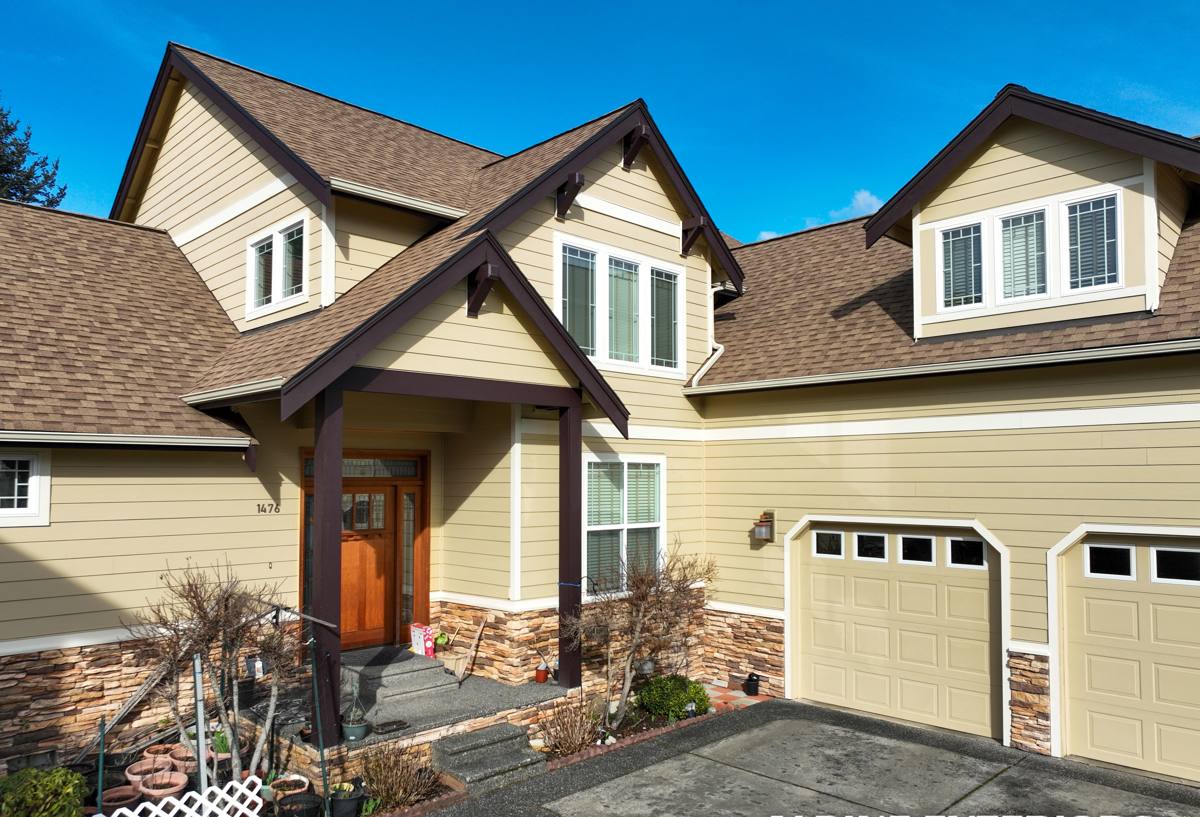
Florida's sun angle and day length put more cumulative UV exposure on an exterior wall than most siding marketing material accounts for, and an open barrier island gets that exposure with no shade cover from trees or neighboring structures to interrupt it. UV breaks down pigments and resins in a coating over time, so a finish rated for a "moderate" or generic climate zone tends to fade and chalk faster here than the manufacturer's general estimate would suggest. Combined with the salt exposure above, this is why finish quality matters as much as the substrate underneath it for a Belleair Beach home.
Why James Hardie Is What We Put on These Homes
We don't install vinyl, LP SmartSide, cedar, primed spruce, Cemplank, or Allura. That's not a marketing angle — it's a standard we hold across every job we take, including here on the island, because of what each of those alternatives asks of a homeowner in this exact exposure.
- Vinyl is a lapped, non-sealed system that isn't built to shed sustained wind-driven rain, and it softens and can distort under direct heat and UV load, both of which describe Belleair Beach conditions for most of the year.
- LP SmartSide and other engineered wood products use a treated wood-fiber core that depends on an intact factory coating and fully sealed field cuts and fastener penetrations to keep performing. On an island where salt air and UV both stress a coating continuously, that's a lot of long-term maintenance riding on a wood-based core.
- Cedar and primed spruce are organic, combustible, and dependent on a paint or stain schedule kept up without gaps. Salt air and Gulf humidity both push hard against wood finishes, and any lapse shortens the material's real service life fast.
- Cemplank and Allura are fiber cement, and fiber cement as a category is the right direction — we standardized specifically on James Hardie for its factory-applied ColorPlus finish, its climate-engineered HZ product lines, and the strength of its installer network and warranty support in this region.
James Hardie siding is fiber cement: Portland cement, sand, and cellulose fiber cured into rigid boards. It's inorganic, so it doesn't have a wood-based core that absorbs moisture, swells, or feeds insects, and it's non-combustible, which is a real consideration on a barrier island where wind-driven embers can travel during regional wildfire events even though the more immediate hazard here is storms.
HZ5 Engineering for Gulf Coast Exposure
James Hardie engineers its siding by climate zone, and the HZ5 line is built for high-moisture, high-humidity, coastal conditions — which matches Belleair Beach far better than a product line engineered for a drier or more temperate market. Using the correct HZ product for this exposure is a specific, checkable decision, not a generic upsell.
ColorPlus Factory Finish
Rather than a field-painted finish, ColorPlus is baked on in multiple coats under controlled factory conditions before the boards reach the island. That finish carries its own warranty separate from the substrate, and it's formulated specifically to resist the fading and chalking that salt air and constant UV load accelerate on lesser coatings.
What Correct Installation Looks Like on a Barrier Island Home
Fiber cement's real-world performance depends heavily on installation detail, and that's especially true in an exposure like this one. A rushed or generic install can undercut even the right product.
| Installation Detail | Why It Matters in Belleair Beach |
|---|---|
| Manufacturer-specified fastener type, spacing, and depth for high-wind exposure | Keeps siding secured under sustained Gulf wind loads and gusts, not just calm-day conditions |
| Corrosion-resistant fasteners and trim hardware | Standard fasteners degrade faster under constant salt air exposure than they would inland |
| Correct flashing at windows, doors, and all penetrations | Directs wind-driven rain away from seams instead of letting it collect there |
| Rain screen or drainage plane behind the siding | Lets any moisture that gets past the surface drain and dry rather than sitting against the sheathing |
| Factory-cut edges used wherever possible; field cuts sealed to spec | Preserves the factory finish's protection at every edge, which matters more where UV and salt are both constant |
| Manufacturer clearances at grade, roofline, and deck attachments | Keeps splash-back and standing moisture away from board edges during heavy rain events |
We send certified installers to every Belleair Beach job rather than treating fiber cement as an interchangeable swap for whatever a crew is used to hanging elsewhere. A material engineered to resist moisture and combustion can still underperform if the flashing, fastening, and clearances around it aren't right.
Why Hiring a Crew That Already Works This Island Matters
Belleair Beach isn't a market you learn on the job. Permitting, wind-load requirements, and the practical logistics of working a narrow barrier island — limited staging space, bridge access, HOA or community expectations on some streets — are all things a crew picks up by actually working here repeatedly, not by reading a spec sheet once. Because we're based in Largo and already work this stretch of Pinellas County, we're not pricing in a learning curve or guessing at what the island's exposure actually demands. That familiarity shows up in fewer surprises during the estimate and a tighter, more accurate installation once work starts.
Our Process for a Belleair Beach Siding Project
- On-site evaluation. We walk the property, check the current siding and any underlying sheathing or moisture damage, and assess the home's specific wind exposure given its position on the island.
- Product and color selection. We go through the applicable HZ5 James Hardie lines and ColorPlus color options together, factoring in HOA or community guidelines where they apply.
- Written estimate and scope. You get a clear, itemized scope — what's being removed, what's being replaced, what flashing and drainage work is included — before anything is scheduled.
- Installation to manufacturer spec. Certified installers handle fastening, flashing, clearances, and drainage detailing to James Hardie's requirements for this climate zone, not a generic install pattern.
- Final walkthrough. We review the completed work with you, confirm the details match what was scoped, and go over warranty documentation.
What to Confirm Before You Hire Anyone for This Job
- Ask whether the installer is manufacturer-certified for James Hardie specifically, not just generally experienced with siding.
- Ask which HZ product line is being proposed and whether it's the coastal-rated line, not a generic or lower-exposure option.
- Ask what fastener and hardware corrosion resistance is specified for a salt-air environment.
- Ask how flashing and drainage plane details are handled at windows, doors, and penetrations.
- Ask what the warranty covers, whether it's prorated, and whether it transfers if you sell the home.
- Ask for current Florida contractor licensing and proof of liability insurance before any work is scheduled.
Warranty and Long-Term Value on a Coastal Property
James Hardie backs its siding with a transferable, non-prorated limited warranty on the substrate, plus a separate finish warranty covering ColorPlus color retention. Transferability carries extra weight on a barrier island property, where buyers and their inspectors tend to ask pointed questions about exterior material history and storm performance before closing. Lower long-term maintenance is also a real factor here: fiber cement doesn't need the periodic repainting or recaulking that a wood-based product does, which matters on a property where salt air and UV would otherwise be shortening that maintenance cycle every year.
If you're planning a re-side in Belleair Beach or anywhere else along this stretch of the Pinellas County coast, we're glad to walk the property and give you a straight, no-pressure answer about what we'd recommend and why. Reach out using the form below to schedule a free estimate.