 Largo Siding
 Building a Deck That Actually Belongs on a Barrier Island
Belleair Beach sits on a narrow strip of land between the Gulf of Mexico and the Intracoastal Waterway, just a short drive from our home base in Largo. That location is what makes the views worth having — and it's exactly what makes an ordinary deck a poor fit. A deck built the same way you'd build one inland, twenty miles from salt water, will show its age here in a fraction of the time. Fasteners corrode faster, wood dries out and checks under constant UV, and every storm season tests connections that were never designed for sustained coastal wind loads.
A deck for this part of Pinellas County has to be treated as a coastal structure from the first design decision, not a standard backyard project with better decking boards on top. That's the difference between a deck that needs real repair work in five years and one that's still solid in twenty.
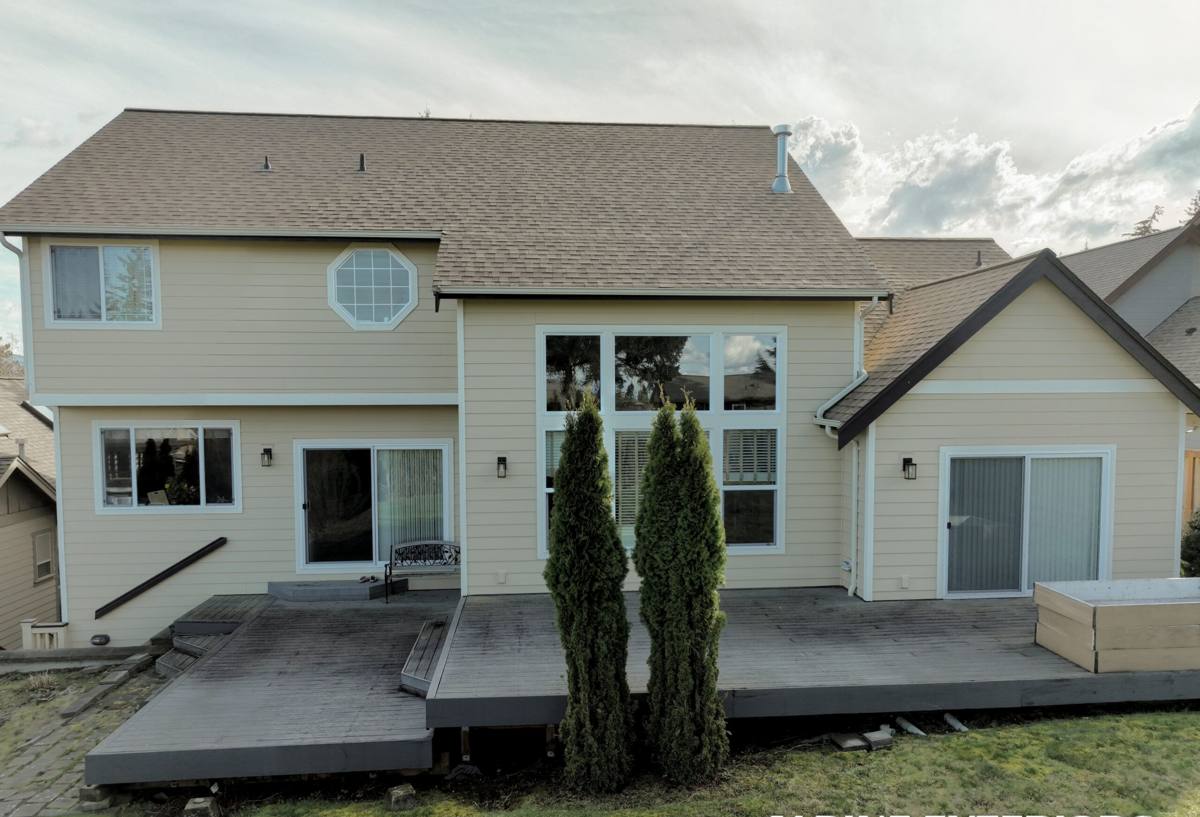
What Belleair Beach's Climate Actually Does to a Deck
It helps to be specific about what a deck out here is up against, because "coastal wear and tear" undersells it:
- Salt air corrosion — airborne salt settles on every exposed metal surface, accelerating rust on fasteners, brackets, and hardware that would last decades further inland.
- Intense, year-round UV — Florida sun breaks down the lignin in wood fibers and the resins in lower-grade composites, leading to graying, surface checking, and fading that's more aggressive here than in most of the country.
- Wind-driven rain — storms here don't just fall straight down; rain gets pushed sideways into ledger connections, fastener holes, and any gap in flashing, which is how hidden rot gets started at the house-side attachment.
- Hurricane-force wind loads — a deck isn't just holding up people and furniture, it has to resist uplift and lateral loads during named storms, which changes how it needs to be fastened and anchored.
None of these show up on day one. They show up two or three years in, as loose railings, rust streaks below hardware, soft spots near the house, or decking that's cupped and split. Building correctly the first time is cheaper than any of those repairs.
Decking Material: What Actually Holds Up Out Here
There's no single "best" decking material for every homeowner — budget, maintenance appetite, and how the deck will be used all matter. But in a salt-air, high-UV environment, some materials simply need more from you to stay looking and performing well.
| Material | How it handles this climate | Maintenance reality |
|---|---|---|
| Pressure-treated pine | Affordable and strong when installed correctly, but UV and humidity cycling will gray and check the surface over time | Needs re-sealing every 1–2 years to keep water out of the grain |
| Composite decking | Resists rot and doesn't absorb moisture like wood; quality matters — cheaper composites can fade or degrade faster under intense sun | Occasional cleaning; no staining or sealing required |
| PVC/capped decking | Fully sealed surface holds up well against salt air and UV with minimal color change | Lowest maintenance of the common options; higher upfront cost |
| Tropical hardwoods (e.g., ipe) | Naturally dense and durable, but still needs oiling to prevent surface graying in this much sun | Regular oiling if you want to preserve the original color |
We'll walk through these trade-offs honestly based on how you actually plan to use the space — a rental property gets different advice than a forever home.
Why We're Careful About Which Composite We Use
Not all composite decking is built the same. Some early-generation and budget composite boards handle intense, sustained Florida UV worse than others, showing more visible fading or surface wear over time. We stick with capped composite or PVC products that are rated for high-UV, coastal environments and back that with a manufacturer warranty — not the cheapest board on the price list. That's our standard, not a knock on composite decking as a category; it's one of the better options for this climate when the right product is chosen.
Framing and Fasteners: The Part You Don't See That Matters Most
The decking boards get the attention, but the framing underneath is what actually determines whether a deck survives a decade of salt air and storm seasons. This is where corners get cut on lower-bid jobs, and it's the part a homeowner can't easily inspect after the fact.
- Stainless steel or coated structural hardware — joist hangers, post bases, and structural screws rated for coastal or ground-contact exposure, not standard interior-grade fasteners.
- No mixed metals at connection points — combining incompatible metals accelerates corrosion through galvanic reaction, which is an easy mistake if hardware isn't matched deliberately.
- Hurricane ties and proper post-to-beam connections — mechanical connections engineered to resist uplift, not just gravity loads.
- Footings sized for local soil conditions — sandy coastal soil behaves differently than inland clay, and footing depth and diameter need to account for that.
The Ledger Connection: Where Most Deck Failures Actually Start
If a deck is attached to the house, the ledger board connection is the single most important detail on the entire project. It's also the part most likely to be rushed. Wind-driven rain gets pushed into any gap at this joint, and once water gets behind the ledger and into the house's wall assembly, you're no longer looking at a deck repair — you're looking at rot remediation on the structure itself.
Done correctly, this connection includes proper flashing that sheds water away from the house, a moisture barrier between the ledger and the band board, and mechanical fasteners sized and spaced for the actual load and wind exposure of the site — not just what's fast to install. This is one area where we won't shortcut the process, even though it's invisible once the deck is finished.
Permitting, Wind Load, and Code Requirements
Decks in this part of Pinellas County are subject to local building code requirements around wind load, railing height, guard spacing, and footing design — and depending on the property, flood zone requirements can factor into how the structure is designed. Skipping permitting on a deck project is common with unlicensed labor and it's a real liability for the homeowner, not just a technicality. An unpermitted deck can complicate a home sale, create insurance issues, and in the worst case, means the structure was never checked against actual wind and load requirements for this area.
We handle the permitting process as part of the job, not as an add-on, and we build to the load and connection standards the permit requires — not just what looks finished.
Our Process for a Belleair Beach Deck Project
- On-site assessment — we look at sun exposure, prevailing wind direction, proximity to water, existing structure condition, and how you plan to use the space.
- Design and material selection — honest recommendations on decking and hardware based on your budget and maintenance preferences, not a single default package.
- Permitting — we prepare and submit what's required for the local jurisdiction before any construction starts.
- Framing and structural work — footings, ledger attachment, and hardware installed to coastal-grade standards, inspected before decking goes down.
- Decking, railings, and finish work — installed with fastening patterns appropriate for thermal expansion and wind exposure.
- Final walkthrough — we go over care and maintenance specific to the material you chose, so there are no surprises a year in.
Keeping a Coastal Deck Looking and Performing Well
Even a well-built deck needs some upkeep in this environment. A short, honest maintenance routine goes a long way:
- Rinse salt residue off decking and railings periodically, especially after storms with onshore wind.
- Inspect fastener heads and hardware once or twice a year for early rust staining.
- Check the ledger flashing and any caulked joints annually for gaps or cracking.
- Re-seal or oil wood decking on the schedule appropriate to that species — don't wait until it's visibly gray.
- Keep vegetation and debris clear from under the deck to maintain airflow and reduce trapped moisture.
Why Local Experience on This Coastline Matters
A contractor who mostly builds decks well inland will design and fasten a deck the way it's normally done — because in most of the country, that's correct. Out on a barrier island community like Belleair Beach, "normally done" isn't enough. Knowing which hardware actually holds up here, how to detail a ledger connection against wind-driven rain, and what the local permitting process expects isn't something you learn from a manual — it's something you learn from building and maintaining decks in this exact environment, season after season.
We work throughout Largo and the surrounding Pinellas County coastline, and we bring that same coastal-grade standard to every deck we build, whether it's a quiet backyard project or a space designed to take in the water view.
If you're considering a new deck or need an honest read on whether an existing one is holding up the way it should, we're happy to take a look. Reach out for a free, no-pressure estimate using the form below.