 Largo Siding
 Redington Beach Sits Right at the Edge of What Siding Can Handle
Redington Beach is a barrier island community, which puts homes there in one of the toughest siding environments in Pinellas County. Unlike a house a few miles inland in Largo, a Redington Beach home sits directly in the path of Gulf salt spray, near-constant sun reflecting off open water, and the full force of wind whenever a storm system moves through. Siding on these homes doesn't fail because it was installed carelessly — most of the time it fails because it was never built or maintained for this specific combination of stresses.
Salt-laden air corrodes metal fasteners and trim faster than it would a few miles away. Intense, near year-round UV breaks down caulk, paint, and lesser cladding materials well ahead of their rated lifespan. Wind-driven rain during summer storms and tropical systems finds every small gap and pushes water sideways, not down — which means seams and penetrations that would stay dry in a normal rain get tested constantly. And hurricane-force wind events put real structural load on panels, fasteners, and the water-resistive barrier behind them. Any repair on a Redington Beach home has to account for all four of these at once, not just patch what's visible.
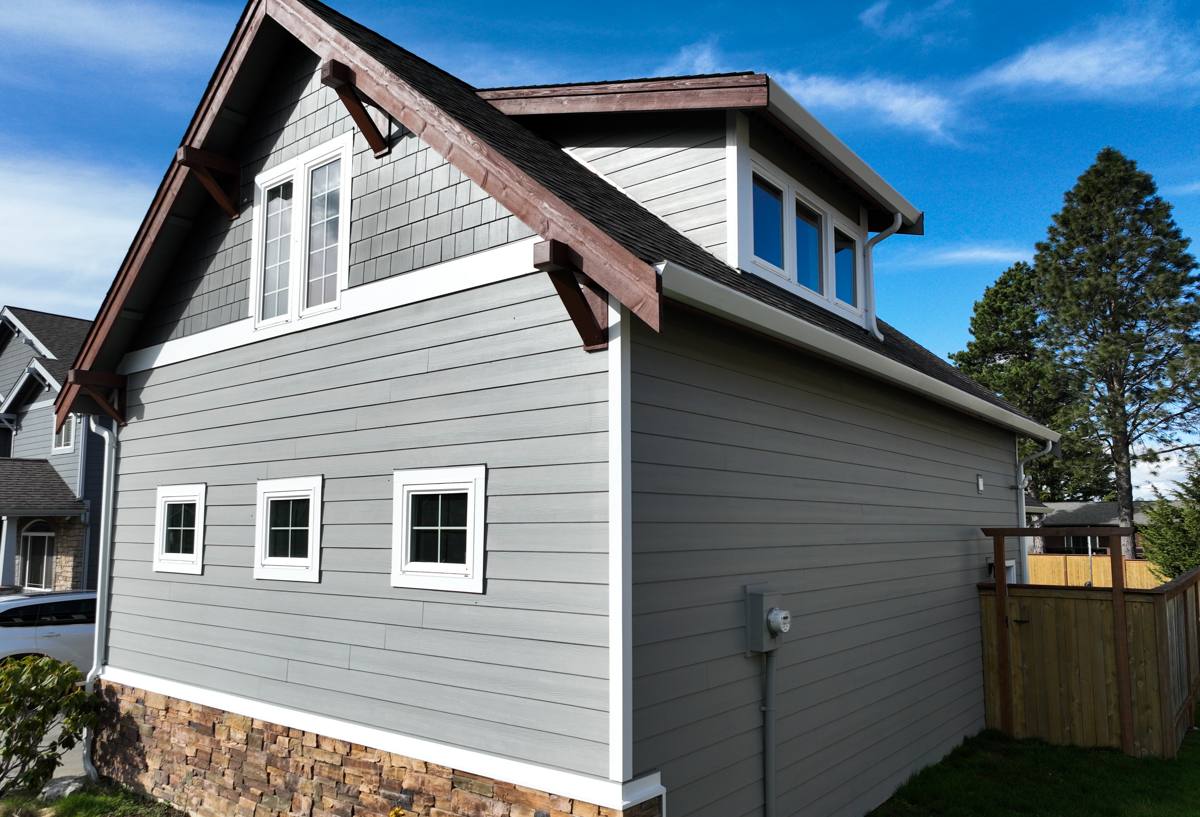
Signs Your Siding Needs Repair, Not Just a Look
Some damage is obvious. A lot of it isn't, especially in a coastal environment where the surface can still look presentable while moisture is already working underneath.
Signs You Can Spot From the Yard
- Panels that look wavy, bowed, or slightly lifted at the bottom edge
- Cracked, chalky, or peeling paint, especially on south- and west-facing walls
- Rust streaks bleeding down from nail heads or trim fasteners
- Caulk lines at seams and trim that have shrunk, cracked, or pulled away
- Visible gaps or soft-looking sections around window and door trim
- Discoloration or a chalky white residue that doesn't wash off (salt buildup, distinct from normal dirt)
Signs That Need a Closer Look
Soft spots when pressed, a musty smell near an exterior wall, interior stains below a window, or bubbling paint on an inside wall can all point to moisture that's already gotten past the siding. On a coastal home, we treat these as a sign to check the water-resistive barrier and framing behind the siding — not just recaulk and repaint the surface.
What's Actually Causing Repairs on Redington Beach Homes
We see the same handful of failure patterns repeatedly on barrier island homes. The table below breaks down what's usually behind them and what a proper fix looks like.
| What We Find | Likely Cause | What a Correct Repair Involves |
|---|---|---|
| Rust-streaked or backed-out fasteners | Salt air corroding standard fasteners over time | Remove and replace with corrosion-resistant fasteners rated for coastal use, reseal properly |
| Cracked, brittle caulk at seams/trim | UV breakdown from intense, near-constant sun exposure | Strip old caulk fully, inspect substrate beneath, re-seal with a product rated for the exposure |
| Soft or stained wall sections near penetrations | Wind-driven rain pushed past a poorly flashed vent, light, or hose bib | Open the area, correct the flashing/weather barrier, replace damaged material — not just patch the surface |
| Lifted, cracked, or missing panels | Wind load during storms, especially on under-fastened or aging sections | Replace affected panels, confirm fastening pattern meets current wind-zone requirements |
| Faded or chalking paint film | UV and salt exposure breaking down the paint layer faster than inland areas | Determine if it's a coating issue only, or if the underlying material also needs attention |
What a Correct Repair Actually Involves
A repair that just fills a hole or matches paint color on the surface can look fine for a season and still leave the underlying problem in place. On a barrier island home, that's a bigger risk than it would be inland, because a small gap gets tested by wind-driven rain far more often.
Diagnose Before Patching
Before any repair, we check whether the damage is isolated or a symptom of something behind the siding — a failed flashing detail, a gap in the water-resistive barrier, or fasteners that have already started corroding nearby. Patching over an active moisture path just delays a bigger repair.
Match the Material, Not Just the Color
Because we only work with James Hardie fiber cement, repairs on a Hardie-sided home can be matched in profile, reveal, and factory ColorPlus finish rather than pieced together with a different product or hand-painted patch that weathers differently over time. If the existing siding isn't Hardie, we'll say so plainly and talk through whether a full section replacement in Hardie makes more sense than trying to match an aging, discontinued product.
Fasten and Flash to the Exposure, Not the Minimum
Coastal exposure calls for corrosion-resistant fasteners and careful attention to flashing at every penetration — vents, hose bibs, light fixtures, and trim joints. A repair that meets the bare minimum inland isn't the same standard we hold on a barrier island property.
Why We Repair Exclusively With James Hardie Fiber Cement
We install and repair with James Hardie fiber cement only — we don't patch damaged sections with vinyl, LP SmartSide, or other wood-based products, even when it would be a faster fix. There's a practical reason for that beyond preference.
Fiber cement doesn't rot, and it isn't a food source for pests, which matters in a humid coastal climate. James Hardie's HZ5 product line is engineered specifically for higher-humidity, higher-exposure climates like ours, and the factory-applied ColorPlus finish is baked on and warranted against the fading and cracking that field-applied paint struggles with under this much UV. When we repair a Hardie-sided home, we can pull from the same product line and, where possible, match ColorPlus finishes so the repaired section doesn't stand out or age differently than the rest of the wall. That consistency is hard to get with a mixed-material patch job, which is one more reason we don't do them.
Our Repair Process
- Inspection: We walk the exterior and check anything you've flagged plus areas prone to trouble — corners, penetrations, and the lower courses closest to grade and salt spray.
- Diagnosis: We identify whether the issue is cosmetic, a fastening or flashing failure, or active moisture intrusion, and explain what we find in plain terms.
- Scope and estimate: You get a clear, no-pressure explanation of what needs to happen and why — including whether a small patch is genuinely sufficient or whether a larger section should be addressed now to avoid a repeat call.
- Repair: We remove and replace only what needs it, correct any flashing or fastening issue behind the damage, and match material and finish as closely as the product line allows.
- Cleanup and check-in: We leave the site clean and walk the finished work with you before we consider the job done.
Repair or Replace? How We Help You Decide
Not every damaged section needs a full re-side, and not every repair is worth doing in isolation. A few honest factors we weigh with you:
- How much of the wall is affected, and whether the damage is isolated or spread across multiple elevations
- The age and condition of the rest of the siding — repairing a wall that's otherwise near the end of its service life rarely makes sense on its own
- Whether the underlying cause (a flashing gap, an under-fastened section) is a one-time fix or a sign the whole installation needs review
- How closely a repair can be matched to the surrounding siding, especially on street-facing elevations
If a repair is the right call, we'll say so and do it right. If a section has enough underlying issues that a repair would just be a temporary fix, we'll tell you that too rather than sell you a patch that won't hold up through the next storm season.
Why Local, Barrier-Island Experience Matters Here
Redington Beach isn't a typical Largo neighborhood — it's a narrow barrier island with tight lots, close-set homes, and full exposure to the Gulf on one side. A crew that mostly works further inland can underestimate how fast salt air corrodes fasteners here, or how much more aggressively UV breaks down caulk and coatings this close to open water. Working this area regularly also means understanding Pinellas County's coastal wind-zone requirements and how they apply to repair work, not just new installations — a repair that doesn't meet current fastening standards for the zone isn't a repair worth doing.
We work across Largo and the surrounding Pinellas County coastal communities, including barrier island areas like Redington Beach, so we see this pattern of wear regularly and know what to check first.
Get a Straight Answer on What Your Siding Needs
If you're seeing cracked caulk, rust streaks, soft spots, or lifted panels on a Redington Beach home, it's worth getting a professional look before small issues turn into a bigger repair. We'll give you a clear, no-pressure assessment of what's actually going on and what it would take to fix it right — request a free estimate using the form below.