 Largo Siding
 Homes in the Clearwater area take a beating that inland Florida properties simply don't. Between the Gulf's salt air, near-constant UV exposure, hurricane-season wind gusts, and the wind-driven rain that comes sideways off the water during a storm, siding here ages faster and fails differently than siding fifty miles inland. If you're noticing cracked panels, soft spots, or discoloration on your exterior walls, you're not imagining things — you're looking at what this climate does to building materials over time.
This page is specifically about siding repair for homes in and around Clearwater, near our Largo base. Not a general "we fix siding everywhere" pitch — the actual damage patterns, the actual repair standards, and the actual reasons a crew that already works this stretch of Pinellas County will get it right the first time.
Why Clearwater Siding Wears Differently
Every coastal town deals with sun and rain. What makes the Clearwater area tougher on siding is the combination hitting the same walls, year after year:
- Salt air corrosion: Airborne salt settles on exterior surfaces and accelerates the breakdown of fasteners, trim, and lower-grade siding materials — especially on homes closer to the water.
- Year-round UV load: Florida doesn't give siding an off-season. Constant sun exposure fades color and dries out caulking and sealants faster than in most of the country.
- Wind-driven rain: During tropical storms and hurricanes, rain doesn't just fall — it's forced sideways and upward into seams, laps, and trim joints that were never designed to shed water from that angle.
- Hurricane-force wind loads: Even a near-miss storm can flex panels, loosen fasteners, and stress seams enough to create a slow leak that shows up months later.
Individually, any one of these is manageable. Stacked together, they're why siding repair in this area needs to be diagnosed correctly — not just patched.
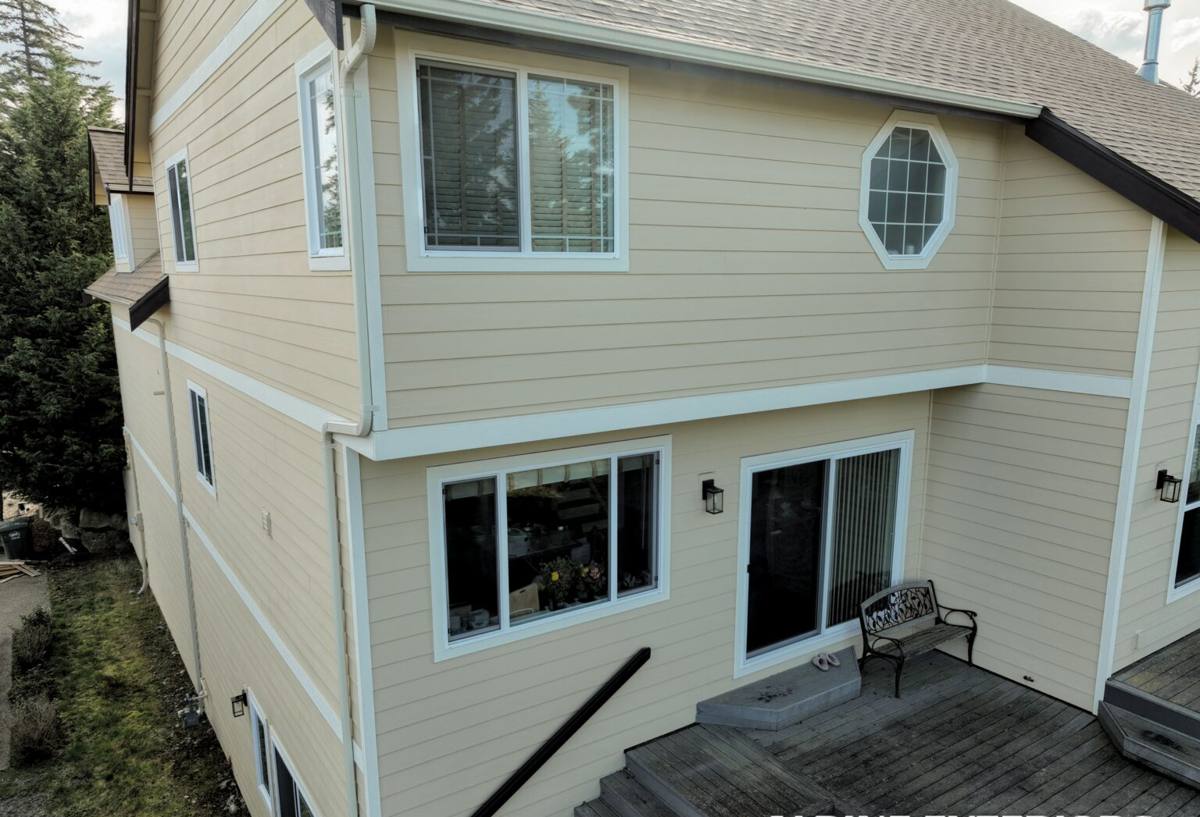
Signs Your Clearwater Home Needs Siding Repair
Some damage is obvious. A lot of it isn't, until it's expensive. Here's what we look for on service calls in this area:
- Hairline cracks running along a panel, especially near corners or fastener points
- Panels that have separated, buckled, or pulled away from the wall line
- Soft or spongy spots when you press on the siding, which usually means moisture has gotten behind it
- Dark staining or streaking that keeps returning even after cleaning
- Visible impact damage from wind-blown debris after a storm
- Caulking at joints and trim that's cracked, shrunk, or pulled away
- Bubbling or peeling paint/finish, which often points to trapped moisture underneath
If you're seeing more than one of these at once, it's worth having someone look at the whole wall system, not just the spot that's visibly damaged.
Why a Patch Isn't Always a Fix
A lot of siding "repairs" are really just cosmetic — caulk over a crack, a dab of paint over a stain, a new piece screwed over an old one. In a mild climate that might hold. In Clearwater, it usually doesn't, because the patch doesn't address what let water or wind damage in to begin with.
This matters most when the underlying material and the repair material don't behave the same way. Wood swells and contracts with humidity. Some engineered wood products and older fiber cement products handle moisture differently than the fiber cement systems we install today. When a repair mixes materials or skips the flashing and moisture-barrier detail that should sit behind the panel, you end up with a patch that looks fine for a season and fails again — often worse — the next time a storm pushes rain into that same joint.
We install James Hardie fiber cement exclusively for this reason: it's a system engineered for exactly this climate, with documented specs for fastening, clearances, and moisture management. When we repair Hardie siding, we're repairing to the same spec it was designed around. When we're asked to repair a different material, we'll still assess it honestly — but we'll tell you plainly if a patch is a short-term fix versus a long-term one.
What a Correct Repair Actually Involves
Matching Color and Texture
James Hardie's ColorPlus finish is baked on at the factory in a controlled process — it's not something you match perfectly with a paint can. A correct repair means sourcing the right product line and, where an exact ColorPlus match isn't available, being upfront about it rather than leaving a visibly mismatched patch on the front of your house.
Flashing and Moisture Barriers
Most siding failures we find in this area trace back to flashing, not the siding panel itself. Repairing the visible crack without correcting the flashing or house wrap behind it just resets the clock on the same failure. Every repair we do checks what's behind the panel, not just what's on top of it.
Fastening to Spec
Hardie panels have specific fastener spacing, placement, and clearance requirements. In a market with hurricane-force wind exposure, under-fastened or improperly placed fasteners are one of the more common reasons panels work loose in the first place — so a repair has to correct that, not just replace the panel and reuse the same mistake.
Sealant and Joint Work
Constant Florida UV breaks down lower-grade caulking faster than most homeowners expect. We use sealants rated for continuous sun and moisture exposure at every joint we touch, not just the section that failed.
Repair vs. Replace: How We Make the Call
Not every damaged section needs full replacement, but not every problem should be patched either. Here's roughly how the decision breaks down:
| Situation | Usual Approach | Why |
|---|---|---|
| Isolated impact damage, sound siding elsewhere | Panel-level repair | Surrounding material and flashing are still performing correctly |
| Repeated staining or soft spots in one area | Investigate flashing/wrap, then repair | Points to a moisture path that needs correcting, not just cosmetic patching |
| Widespread cracking or fading across multiple walls | Broader replacement discussion | Suggests the material or original install is at the end of its usable life |
| Storm damage across several sections after a named storm | Case-by-case, often mixed repair/replace | Depends on how much of the underlying wall system was compromised |
| Non-Hardie material with recurring failures | Honest conversation about replacement | Repeated patching on a failing system costs more over time than doing it right once |
Our Repair Process for Clearwater-Area Homes
- Inspection: We look at the damaged area and the surrounding wall system — not just the spot you called about.
- Diagnosis: We identify whether the cause is impact, moisture, fastening, or material failure, since that determines the right fix.
- Plan and quote: You get a clear explanation of what's being repaired, why, and what it costs — no vague line items.
- Repair: We correct the panel, the flashing/moisture barrier behind it if needed, and the fastening and sealant, matching product and finish as closely as available.
- Walkthrough: We show you what was done and what to keep an eye on going forward.
Why a Local Crew That Works Clearwater Already Matters
Siding repair isn't just a technical skill — it's local knowledge. A crew that regularly works the Clearwater area and greater Pinellas County already understands how salt air, storm patterns, and this humidity affect the materials involved, instead of treating your home like a generic repair job. That familiarity shows up in smaller ways too: knowing what damage patterns tend to show up after a particular storm track, being reachable quickly when a home needs a tarp or emergency repair before a follow-up storm, and standing behind the work because we're not driving in from out of the area.
Being based in Largo means we're a short drive from Clearwater property, which matters most in the days right after a storm, when a lot of homeowners are trying to get someone reliable on the phone at the same time.
Keeping Repaired Siding in Good Shape
Once a repair is done right, a little upkeep goes a long way in this climate:
- Rinse salt residue off exterior walls periodically, especially after windy stretches off the Gulf
- Walk the exterior after any significant storm and look for new cracks, loosened panels, or fresh staining
- Keep an eye on caulking at trim and joints — it's usually the first thing to show UV wear
- Keep irrigation and sprinklers from hitting siding directly, which accelerates staining and moisture exposure
- Address small issues promptly — a small crack caught early is a much smaller job than the same crack after another storm season
If you're seeing cracked, stained, or storm-damaged siding on a Clearwater-area home, we're glad to take a look and give you a straight answer on what it needs — repair, partial replacement, or just monitoring. There's no pressure and no cost to get our read on it; the estimate form below gets you on our schedule.