 Largo Siding
 Board & Batten Siding on a Pinellas County Barrier Island
Redington Beach sits on a narrow strip of land between the Gulf of Mexico and the Intracoastal Waterway, just west of our Largo home base. That location gives homeowners here some of the best views in Pinellas County — and some of the hardest conditions in the state for exterior building materials. Board and batten siding, with its bold vertical lines and deep shadow reveal, is a popular look on this stretch of coast. Done right, in the correct material, it holds up. Done with the wrong product or a rushed installation, it becomes a recurring maintenance problem within a few years.
This page covers what board and batten siding specifically needs to survive on a barrier island near Largo, what a correct installation actually involves, and why we only install it in James Hardie fiber cement.
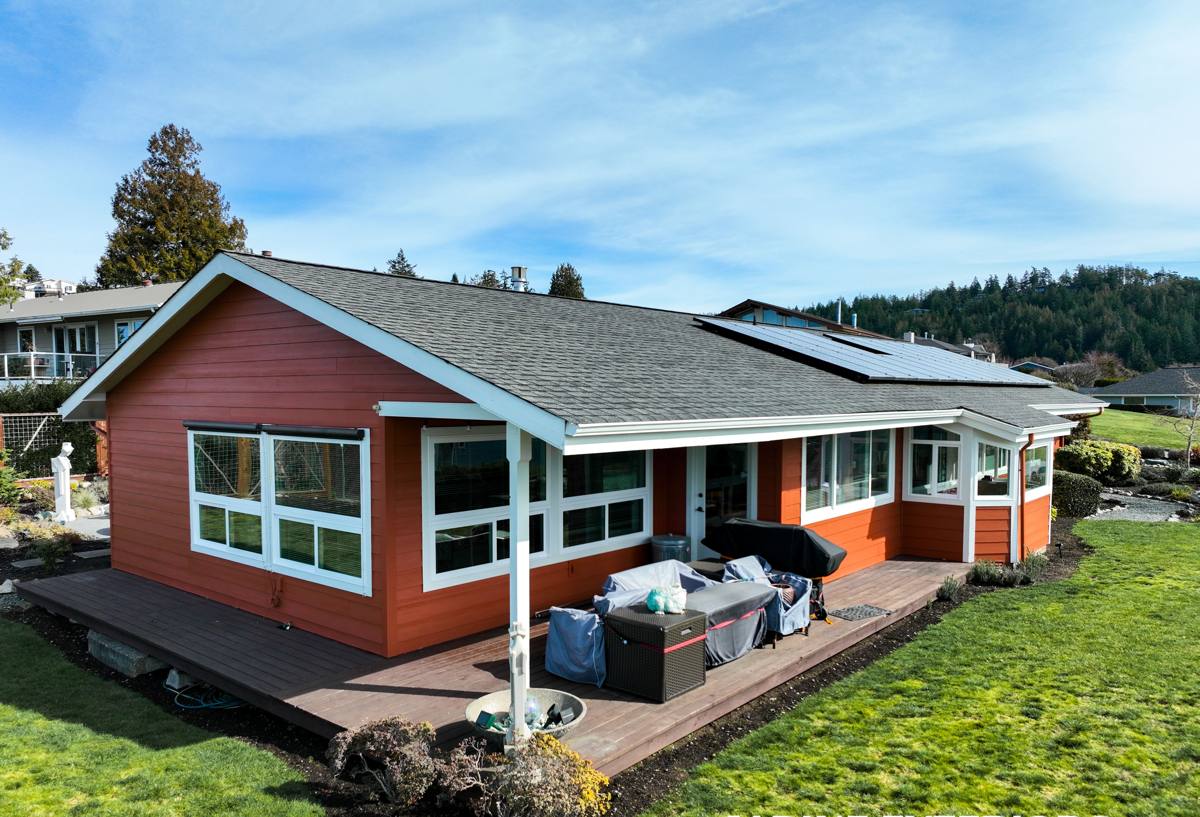
What Redington Beach Conditions Do to a Vertical Siding Profile
Board and batten siding has more seams, more fastener penetrations, and more exposed edge surface than lap siding of the same square footage. That's part of its architectural appeal, but it also means the material and the installation both have to work harder in a coastal environment.
Hurricane-Force Wind
Pinellas County's barrier islands see the leading edge of tropical systems and gulf-driven wind events more directly than inland Largo neighborhoods. Vertical board profiles present more edge and joint line to wind uplift than horizontal lap siding, so fastening pattern, batten spacing, and substrate attachment matter more here than almost anywhere else in the county.
Salt Air and Corrosion
Being this close to the Gulf means airborne salt is a constant, not an occasional event. Salt accelerates corrosion in fasteners and trim metal, and it degrades cheaper paint and coating systems faster than UV alone would. Any board and batten system installed here needs fastener hardware and a finish rated to hold up to that exposure, not just a standard inland spec.
Intense, Year-Round UV
Florida sun doesn't take a season off, and a home this close to open water gets reflected UV off the water in addition to direct exposure. Paint and coatings that aren't factory-engineered for this climate chalk, fade, and crack years ahead of schedule — and once a coating fails on a vertical board, water tends to find the seam behind it.
Wind-Driven Rain
On a barrier island, rain rarely falls straight down — it comes sideways, driven by onshore wind. That's a serious test for any siding system with vertical joints, because wind-driven rain will find and exploit a gap that a calmer climate would never expose.
Why We Install James Hardie Board & Batten — and Nothing Else
We get asked regularly about vinyl board and batten, LP SmartSide, and primed wood or cedar boards, because they're common products and sometimes cheaper up front. We don't install any of them, and we think homeowners deserve an honest reason why, not just a sales pitch for what we do offer.
Vinyl board and batten is affordable and low-maintenance in the sense that it doesn't need painting, but it's a thin plastic product that softens and can distort in sustained high heat, and it can crack or blow off in high wind if it isn't installed to a tighter-than-typical spec — a real risk on a barrier island. Engineered wood products like LP SmartSide use a wood-strand core that performs well in many climates but depends entirely on an intact factory coating and sealed edges to resist moisture; any breach in that coating, especially at cut ends near a salt-air coastline, opens the door to swelling and rot. Primed wood and cedar are beautiful materials with a long tradition in coastal architecture, but they need ongoing paint maintenance to survive intense UV and humidity, and that maintenance burden only grows in a salt-air environment.
James Hardie fiber cement board and batten is our standard because it's non-combustible, dimensionally stable in heat and humidity swings, and finished with Hardie's ColorPlus factory coating — a baked-on finish engineered to resist fading and chalking under Florida-intensity UV far longer than field-applied paint. Hardie's HZ5 product line is engineered specifically for high-humidity, coastal climate zones like ours. It's a fiber cement product, so it doesn't feed insects and doesn't rot the way wood-based products can. None of that makes it maintenance-free or storm-proof — nothing is — but it gives a vertical siding profile the best realistic chance of aging well fifty yards from saltwater.
What a Correct Board & Batten Installation Actually Involves
Board and batten looks simple from the curb — vertical boards, thin battens over the seams — but the installation details are what determine whether it lasts. This is where most of the failures we get called to inspect actually start.
Drainage Plane and Furring
Behind every board and batten installation should be a proper water-resistive barrier and, in most cases, a furring strip system that creates a small air gap between the siding and the wall sheathing. That gap lets any moisture that does get past the outer surface drain and dry out instead of sitting against the substrate — critical in a climate with this much humidity and wind-driven rain.
Fastening Pattern
Fastener type, spacing, and embedment depth all need to match Hardie's published specifications for our wind zone, not a generic pattern. Under-fastened board and batten is one of the most common causes of wind damage we see in coastal installations, because the vertical boards catch more wind load per fastener than horizontal lap siding does.
Batten Spacing and Seam Coverage
The batten strips aren't just decorative — they're the seal over each vertical joint. Spacing has to account for material expansion, and each batten needs to fully bridge the gap beneath it with consistent, correct fastening on both sides.
Flashing at Penetrations and Transitions
Every window, door, vent, and roofline transition on a board and batten wall is a place where the vertical run has to be properly flashed and sealed. On a home exposed to wind-driven rain, these transition points are where a shortcut installation shows up first — usually as a stain or soft spot years before it becomes visible from the street.
Comparing Board & Batten Material Options
| Factor | James Hardie Fiber Cement | Vinyl | Engineered Wood / Primed Cedar |
|---|---|---|---|
| Coastal wind performance | Rated system, engineered fastening spec | Can distort or fail in sustained high wind if underbuilt | Adequate if installed correctly, but material itself is softer |
| Salt air / humidity resistance | Fiber cement core, factory finish resists coastal exposure | Doesn't rot, but can discolor and become brittle over time | Vulnerable at any coating breach or exposed cut edge |
| UV / fade resistance | ColorPlus baked-on factory finish | Can fade or chalk, especially darker colors | Depends entirely on paint quality and reapplication schedule |
| Fire performance | Non-combustible | Combustible plastic material | Combustible wood-based material |
| Ongoing maintenance | Occasional wash, no repainting needed for the finish life | Low maintenance but limited repair options if damaged | Regular repainting and edge sealing required |
Our Process for Redington Beach Projects
We run this project the same disciplined way whether it's a full re-side or a board and batten accent wall, because the coastal exposure doesn't discriminate by project size.
- On-site inspection of existing wall condition, substrate, and any moisture or rot found during tear-off
- Review of wind zone and exposure category for the specific property to confirm fastening spec
- Installation of water-resistive barrier and furring system before any board goes up
- Board and batten installed to Hardie's fastening and clearance specifications, not a generic pattern
- Flashing and sealing at every window, door, vent, and roofline transition
- Final walkthrough covering finish quality, seams, and touch-up needs before we consider the job done
Because we're a Largo-based crew that already works this stretch of coast regularly, we're familiar with the wind exposure and humidity conditions specific to Redington Beach and the surrounding barrier island communities — it's not the first time we've built a fastening plan for a home this close to the Gulf.
Maintenance and Long-Term Care in a Salt Air Climate
Even a correctly installed James Hardie board and batten system benefits from basic upkeep on a barrier island. Periodic rinsing to remove salt residue and airborne buildup helps preserve the factory finish. After any named storm or significant wind event, a visual check of caulked joints, trim, and fastener lines is worth the few minutes it takes — catching a lifted batten or a compromised seal early is a small fix; ignoring it through a wet season is not.
Why Hiring a Crew That Already Works This Area Matters
Board and batten siding on a Gulf-front property isn't the same job as board and batten a few miles inland in Largo proper. The wind exposure category is different, the salt load is heavier, and the margin for a shortcut installation is thinner. A crew that hasn't worked this specific coastal condition before is learning on your house. We'd rather you hire based on the material we stand behind and the fact that we've already built our process around this exact climate, not around a generic statewide install spec.
If you're considering board and batten siding for a home in Redington Beach or the surrounding coastal Pinellas communities, we're happy to walk the property, talk through what your specific exposure requires, and give you a straightforward, no-pressure estimate using the form below.