 Largo Siding
 Siding Replacement for Pinellas Park Homes
Pinellas Park sits in the middle of Pinellas County, close enough to Tampa Bay and the Gulf that homes here take on the same weather stress as coastal Largo neighborhoods — just without a beachfront view to show for it. Between hurricane-season wind events, intense year-round UV, wind-driven rain, and salt-laden air moving in off the water, exterior siding in this area works harder than it does almost anywhere else in the country. If your siding is original to the house, or if it's a lower-grade product that was never built for this climate, Pinellas Park is exactly the kind of neighborhood where problems show up early.
This page covers what a siding replacement actually involves for homes in and around Pinellas Park — what the climate demands, what a correct installation looks like, and how our process works from first visit to final walkthrough.
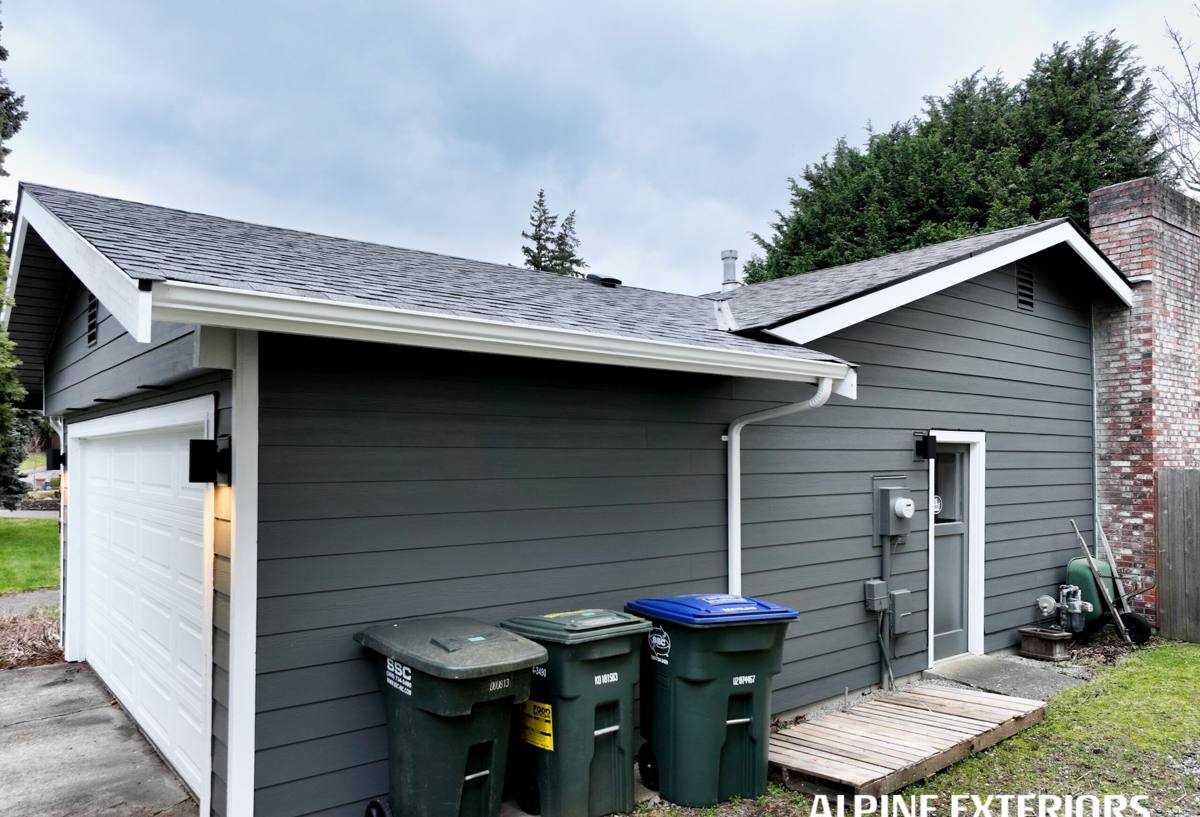
Why Pinellas Park Siding Wears Differently
Every part of Florida deals with heat and humidity, but Pinellas Park's inland-but-close-to-the-bay position creates a specific combination of stresses:
- Hurricane and tropical storm winds: Even homes that never take a direct hit see repeated high-wind events that flex siding panels, work at loose fasteners, and drive rain sideways into any gap in the water management system.
- Year-round UV exposure: Florida's sun angle and day length mean siding faces more cumulative UV than siding in most of the country. Paint films chalk, fade, and break down faster here than the same product would in a milder climate.
- Wind-driven rain: It's not steady rainfall that causes the most damage — it's rain pushed horizontally into seams, laps, and trim joints during storms. Siding and flashing details that aren't installed correctly let that water in.
- Salt air: Pinellas Park isn't beachfront, but it's close enough to Tampa Bay and the Gulf that salt-laden air still reaches it, especially on onshore wind days. Salt accelerates corrosion of fasteners and metal trim and speeds up breakdown of lower-grade siding materials.
None of this is unique to Pinellas Park — it's the reality for most of Pinellas County. But it means siding decisions that might be "good enough" in a drier, milder climate don't hold up the same way here.
What This Means for Material Choice
Siding for this area needs to resist moisture intrusion, hold its finish under constant sun, and stay structurally sound through repeated wind loading — not just survive one bad storm, but do it year after year without curling, swelling, or losing paint adhesion. That's the standard we hold every replacement to, and it's why we only install James Hardie fiber cement siding. We don't install vinyl, LP SmartSide, or other engineered wood products, because we don't think they hold up to this specific combination of stresses as well as fiber cement does over the long run. Fiber cement doesn't absorb water the way wood-based products can, it's non-combustible, and it's dimensionally stable enough to keep paint adhesion tight through Florida's heat-humidity-UV cycle.
Signs a Pinellas Park Home Needs Siding Replacement
Not every siding problem means a full replacement, but in this climate, certain warning signs tend to point toward a system that's failed rather than one that just needs a patch:
- Soft or spongy spots when you press on the siding, especially near the bottom courses or around windows and doors
- Visible warping, buckling, or panels that have pulled away from the wall line
- Paint that's peeling, bubbling, or chalking heavily even after a recent repaint
- Persistent staining or streaking that comes back shortly after cleaning
- Cracked or crumbling caulk at seams, corners, and trim joints
- Rising energy bills that track with a wall assembly that no longer seals well
- Visible gaps at laps or corners after a windstorm
If you're seeing more than one or two of these, it's worth having someone look at the whole wall system, not just the spot that's bothering you — because in most cases, what's visible on the surface is only part of what's happening underneath.
What a Correct Siding Replacement Involves
Siding replacement isn't just removing old panels and nailing up new ones. A job done to spec in a climate like this involves several layers working together:
1. Full Tear-Off and Inspection
We remove the existing siding down to the sheathing so we can actually see what's underneath — rot, insect damage, and old water intrusion don't always show from the outside. Any damaged sheathing or framing gets addressed before anything new goes up. Installing new siding over a compromised wall just hides the problem instead of fixing it.
2. Water-Resistive Barrier
A correctly lapped and sealed weather-resistive barrier is what actually keeps wind-driven rain out of the wall assembly — the siding itself is the first line of defense, but the barrier behind it is what protects the structure if water gets past the surface. Given how much wind-driven rain this region sees during storm season, this step isn't optional.
3. Flashing at Every Penetration
Windows, doors, vents, and any other wall penetration need proper flashing details so water is directed out and away from the wall, not into it. Most siding failures we see in this area trace back to a flashing detail that was skipped or done wrong, not to the siding material itself.
4. James Hardie Installation to Manufacturer Spec
Correct fastener type and spacing, proper clearance at the bottom of the wall and at grade, correct gapping at butt joints, and factory-finished ColorPlus panels installed so the finish stays intact — these details are what separate a siding job that lasts from one that needs attention again in a few years.
5. Trim, Caulking, and Final Detailing
The seams and joints are where most future leaks would start if they're not sealed correctly. We finish every joint, corner, and trim line to the same standard, not just the parts that are easy to see.
Comparing Siding Options for This Climate
| Factor | Vinyl Siding | Engineered Wood (LP-Type) | James Hardie Fiber Cement |
|---|---|---|---|
| Wind resistance | Can crack or blow off in high winds | Moderate, panel-dependent | Engineered and rated for high-wind regions |
| Moisture behavior | Doesn't absorb water, but seams can trap it | Wood-based core can swell if moisture gets in | Doesn't absorb water into a wood-fiber core |
| UV/fade resistance | Can fade and become brittle over time | Depends on paint system and maintenance | Factory-baked ColorPlus finish resists fading |
| Fire performance | Combustible | Combustible | Non-combustible |
| Typical lifespan (installed to spec) | 20-30 years | 20-30 years, maintenance-dependent | 30-50+ years |
This isn't a knock on every other product on the market — it's why, after weighing these trade-offs for Florida's climate specifically, we made James Hardie the only siding system we install.
How Our Process Works
- Free on-site estimate: We walk the property, look at the current siding and any visible damage, and talk through what we're seeing.
- Written scope and quote: You get a clear breakdown of the work, the James Hardie product line and color, and the price — no surprise add-ons later.
- Tear-off and inspection: Old siding comes off, sheathing gets inspected, and any needed repairs are flagged before moving forward.
- Barrier, flashing, and siding installation: Installed in the sequence and to the spec described above.
- Final walkthrough: We go over the finished job with you before we consider it done.
Why a Crew That Works Pinellas Park Matters
Siding installation isn't one-size-fits-all across Florida, let alone across the country. A crew that regularly works Pinellas Park and the surrounding Largo area already understands the wind exposure, the humidity load, and the salt air conditions specific to this part of Pinellas County — that's not something you get from a general contractor who installs siding occasionally in a dozen different climates. It shows up in the small decisions: fastener choice, flashing details at penetrations, how tight the caulking schedule needs to be, and which parts of the wall assembly need the most attention in a storm-prone coastal county. Those decisions are the difference between siding that holds up for decades and siding that needs rework in five years.
Get a Free, No-Pressure Estimate
If your Pinellas Park home's siding is showing wear, or you just want an honest opinion on whether repair or full replacement makes more sense, we're happy to take a look. Fill out the form below to schedule a free estimate — no pressure, no obligation, just a straight answer about what your home actually needs.