 Largo Siding
 Board & Batten That Can Actually Handle a Barrier Island
Indian Shores sits out on the Gulf, and homes there deal with a version of Florida weather that inland Largo and Clearwater neighborhoods simply don't see as often: near-constant onshore wind, salt spray that settles on every exterior surface, and direct exposure during tropical systems that move in off the water with little to slow them down. Board and batten siding — wide vertical panels with narrow battens covering the seams — is a popular choice out there because the clean, linear look suits coastal architecture and reads well against open sky and water views. But the style only holds up if the material underneath it is built for this specific exposure. A lot of what gets marketed as board and batten siding is not.
This page is about doing board and batten correctly for a barrier island home in Pinellas County: what the climate actually does to vertical siding over time, what a correct installation involves, and why we install this style exclusively in James Hardie fiber cement rather than the wood-based or vinyl alternatives that are more commonly pitched for this look.
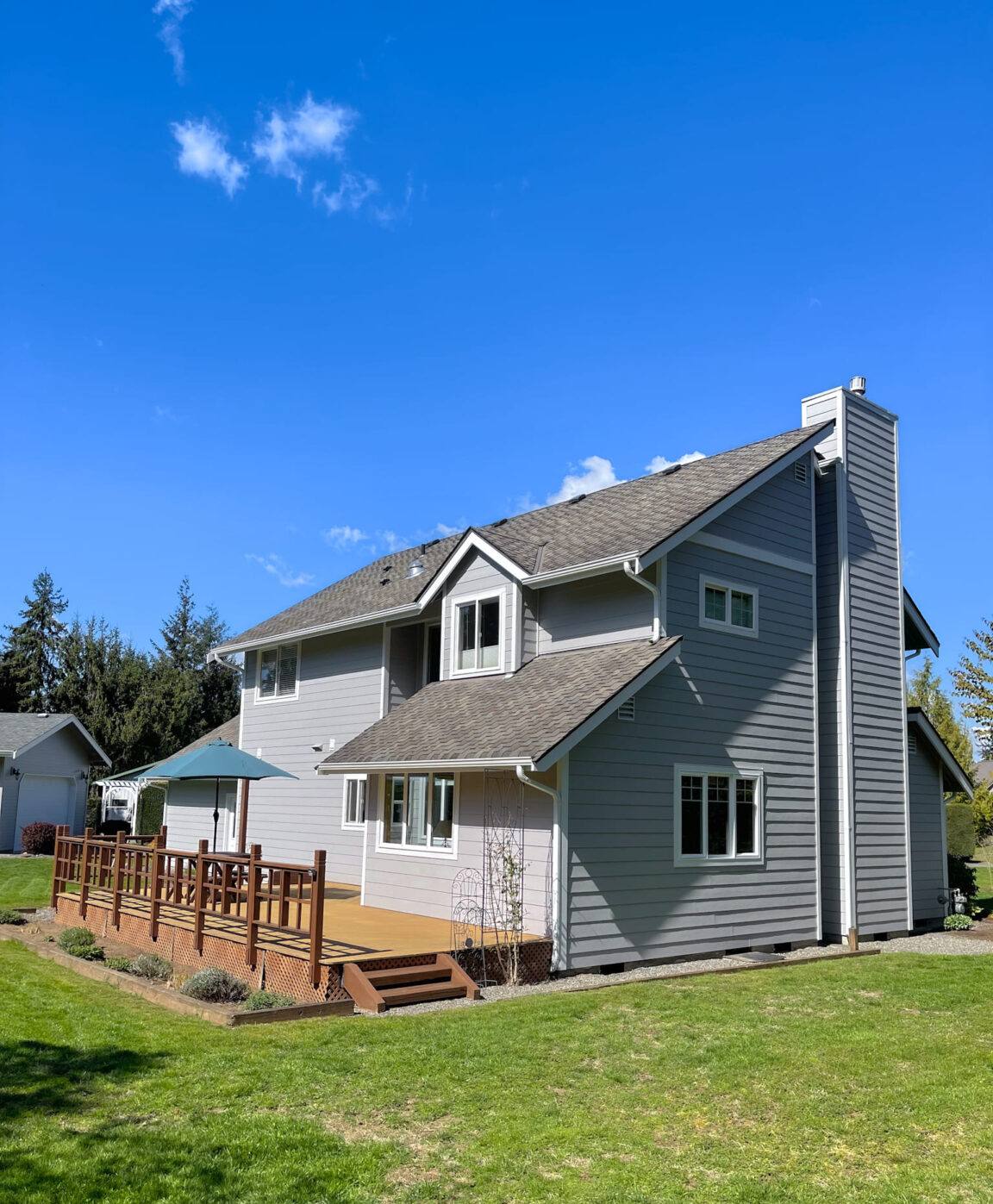
What Gulf-Front Exposure Does to Vertical Siding Over Time
Every siding material ages differently depending on what it's exposed to, and Indian Shores exposes siding to several stressors at once, not just one.
Hurricane-force wind and wind-driven rain
Board and batten's vertical seams create more linear footage of joint than a horizontal lap profile, and every one of those joints is a potential path for wind-driven rain to get pushed behind the cladding during a storm. On a barrier island with no inland buffer, that rain doesn't just fall — it's driven sideways under pressure. If the panels, battens, fasteners, and flashing details aren't engineered and installed to resist that pressure, water finds its way to the sheathing, and problems start behind the wall where you can't see them.
Intense, year-round UV
Florida's UV load doesn't ease up seasonally the way it does farther north, and a Gulf-facing elevation gets sun for most of the day with almost nothing to shade it. Paint film on wood-based or site-finished siding breaks down under that kind of exposure faster than most homeowners expect, leading to chalking, fading, and the need for repainting on a cycle that's shorter than what's advertised.
Salt air and airborne moisture
Salt is corrosive to metal fasteners and trim, and it accelerates the breakdown of finishes that weren't formulated to resist it. On a barrier island, salt exposure is constant, not occasional — it's in the air on calm days, not just during storms. Any siding system installed here needs fasteners, flashing, and a factory finish rated for that reality, not a general-purpose product pressed into coastal service.
Why We Install This Style Only in James Hardie Fiber Cement
We get asked fairly often about vinyl board and batten, or wood-look panels in engineered wood or primed spruce, because those products are usually cheaper up front and widely available. We don't install them, and we want to be straightforward about why.
Vinyl board and batten is lightweight and low-maintenance in mild climates, but it's a poor match for this exposure specifically. It expands and contracts significantly with heat, which is a real problem on a sun-baked Gulf-facing wall, and its impact resistance in high wind is limited compared to fiber cement — a real consideration on a barrier island in the wind-borne debris region. Wood-based and primed-spruce board and batten look great on day one, but they depend entirely on paint film and sealant to keep moisture out, and that film is exactly what year-round UV and salt air degrade fastest. Once moisture gets behind a wood-based panel, it doesn't dry out the way it would in a drier inland climate — the humidity here just doesn't let it.
James Hardie fiber cement is cement, sand, and cellulose fiber — it doesn't rot, it isn't attractive to pests, and it's non-combustible. Hardie manufactures its siding in climate-specific formulations, and the HZ5 product line is engineered for the humidity, moisture, and freeze-thaw profile common along the Gulf Coast and Southeast — which is what should be specified for a home this close to the water. The factory-applied ColorPlus finish is baked on and warranted against fading and peeling well beyond what a field-applied paint job can promise, which matters directly on an elevation that gets full sun most of the day. That combination — the substrate, the climate-matched engineering, and the factory finish — is why Hardie is the only fiber cement system we put on Indian Shores homes.
What a Correct Board & Batten Installation Actually Involves
Board and batten looks simple from the curb — vertical panels, battens over the seams — but the installation detailing is where a job either holds up to the next tropical storm or doesn't.
- Weather-resistive barrier and drainage plane: A code-compliant moisture barrier goes over the sheathing before any siding, with proper lapping so water sheds down and out rather than pooling behind the panel.
- Correct panel gapping and expansion joints: Fiber cement needs specific gapping at butt joints and terminations so panels aren't installed tight against each other or trim, which prevents moisture from wicking in and gives the material room to move with temperature swings.
- Fastening for wind load, not just for looks: Fastener type, spacing, and embedment have to be engineered for the wind zone this home sits in, using corrosion-resistant fasteners suited to salt air exposure — not whatever's fastest to shoot.
- Flashing at every penetration: Windows, doors, hose bibs, light fixtures, and vents all need proper flashing integrated with the drainage plane before the siding goes on around them.
- Batten placement over structural framing where required: Battens aren't purely decorative trim; where they're load-bearing to the fastening pattern, they need to land on framing, not just cosmetically over a seam.
- Factory-cut and factory-primed edges kept sealed: Any field cuts need to be sealed per manufacturer spec so the exposed edge doesn't become the one part of the panel that isn't protected.
Skip any one of these and the siding can still look right for a year or two — the failures that come from cutting corners here show up later, usually after the first serious storm season, and usually behind the wall where they're expensive to find.
Factors That Shape Scope and Cost on a Gulf-Front Home
Every board and batten project is different, but these are the factors that most commonly affect how much work — and how much of it is hidden — a given Indian Shores home actually needs.
| Factor | Why It Matters Here | Effect on Scope |
|---|---|---|
| Condition of existing siding and sheathing | Salt air and past wind-driven rain intrusion can hide sheathing damage behind an intact-looking exterior | Often adds cost once uncovered, but avoiding it just hides the problem |
| Elevation directly facing the Gulf vs. sheltered sides | Direct-facing walls take more UV, wind, and wind-driven rain than sheltered elevations | May justify more robust detailing or different color/finish choices on exposed walls |
| Number and complexity of penetrations | Every window, vent, and fixture is a place water can get behind the wall if flashed incorrectly | More penetrations mean more flashing detail work, which is labor, not material |
| Home's elevation and access on the island | Many barrier island homes are raised or have limited staging space around the structure | Can affect scaffolding, equipment, and material staging logistics |
| Batten spacing and reveal chosen | Wider or narrower batten spacing changes material quantity and the amount of trim carpentry | Purely a design choice, but it does shift material and labor totals |
Our Process for an Indian Shores Board & Batten Project
The steps themselves aren't unique to us — what matters is that each one is done with this exposure in mind rather than treated as generic siding work.
1. On-site inspection and moisture check
We look at the existing wall assembly, check for signs of past water intrusion around penetrations and at grade, and talk through what the home's specific exposure — Gulf-front, canal-side, or more sheltered — should mean for the detailing plan.
2. Tear-off and sheathing assessment
Existing siding comes off down to the sheathing so we can actually see what's there, not guess at it. Any rot or damage gets addressed before anything new goes on — covering it over just moves the problem down the road.
3. Weather barrier and flashing installation
A new drainage plane goes on with correct lapping, and every penetration is flashed and integrated into that barrier before siding starts.
4. Hardie panel and batten installation to spec
Panels and battens go up with manufacturer-specified gapping, fastening patterns matched to the wind zone, and corrosion-resistant fasteners throughout.
5. Trim, sealant, and final detailing
Field cuts are sealed, joints are finished per spec, and we walk the elevations to check the details that actually determine how the job performs in a storm, not just how it looks from the street.
Why Local, Island-Familiar Experience Matters Here
A crew that mostly works inland Pinellas County jobs isn't automatically wrong for an Indian Shores home, but there's real value in working with one that already understands this specific setting. Barrier island homes often have tighter lot access, elevated structures, and staging constraints that inland jobs don't have — knowing that going in keeps a project on schedule instead of discovering it mid-job. Pinellas County sits in a wind-borne debris region, and permitting and inspection expectations reflect that; a crew that pulls permits and passes inspections on this stretch of coast regularly moves through that process with far less friction than one encountering it for the first time. And because we already spec fastening and flashing for this level of wind and salt exposure as a matter of course, an Indian Shores home doesn't get treated as an edge case — it gets treated as exactly what it is.
Living With Board & Batten on the Island: What to Expect
Correctly installed Hardie board and batten is genuinely low-maintenance, but "low-maintenance" isn't "no-maintenance" in this environment. A little routine attention goes a long way toward getting the full life out of the system.
- Rinse salt residue off the siding periodically, especially on Gulf-facing walls — a garden hose is usually enough.
- Walk the exterior after major storms and check caulked joints, trim intersections, and penetrations for any sign of separation.
- Keep an eye on any field-cut edges or repairs to confirm the sealant is holding up over time.
- Avoid pressure-washing directly into seams or under battens, which can force water where it shouldn't go.
- Note any soft spots, discoloration, or staining near the base of the wall and have them looked at promptly rather than waiting.
What to Ask Before Hiring for a Gulf-Front Siding Job
- Do they specify a HardieZone product line matched to this climate, or a generic product regardless of location?
- Can they explain their fastening and flashing approach for this specific wind zone, in plain terms?
- Do they remove existing siding to inspect sheathing, or install over what's already there?
- Are they licensed and insured to work in Pinellas County, and familiar with barrier island permitting?
- Do they use corrosion-resistant fasteners rated for salt air exposure?
- Will they put the scope of work and materials in writing before starting?
If a contractor can't answer these clearly, that's worth noticing before any contract is signed, not after.
If you're weighing board and batten siding for a home in Indian Shores, we're happy to take a look, walk the exterior with you, and put together a straightforward, no-pressure estimate — just fill out the form below to get started.