 Largo Siding
 Why Siding Wears Out Faster on Indian Rocks Beach
Indian Rocks Beach sits on a narrow barrier island between the Gulf of Mexico and the Intracoastal Waterway, which means almost every home here is closer to salt water than the typical inland Pinellas County property. That proximity changes how siding ages. Salt-laden air corrodes fasteners and metal trim, breaks down cheap coatings, and works its way into seams that would hold up fine a few miles inland. Add in direct, near-constant Gulf breeze and the wear pattern on Indian Rocks Beach exteriors looks different from what we see even in nearby Largo neighborhoods that are set back from the water.
Layer on the rest of what a west-central Florida coastal climate throws at a house — hurricane-force winds during storm season, intense UV exposure essentially year-round, and wind-driven rain that gets pushed sideways into wall assemblies rather than falling straight down — and you have four separate stressors acting on the same siding at the same time. Most siding failures we're called out to investigate on the island aren't caused by one dramatic event. They're the slow result of these four factors working on a product, or an installation, that wasn't built to handle all of them at once.
How to Tell Replacement Is the Right Call
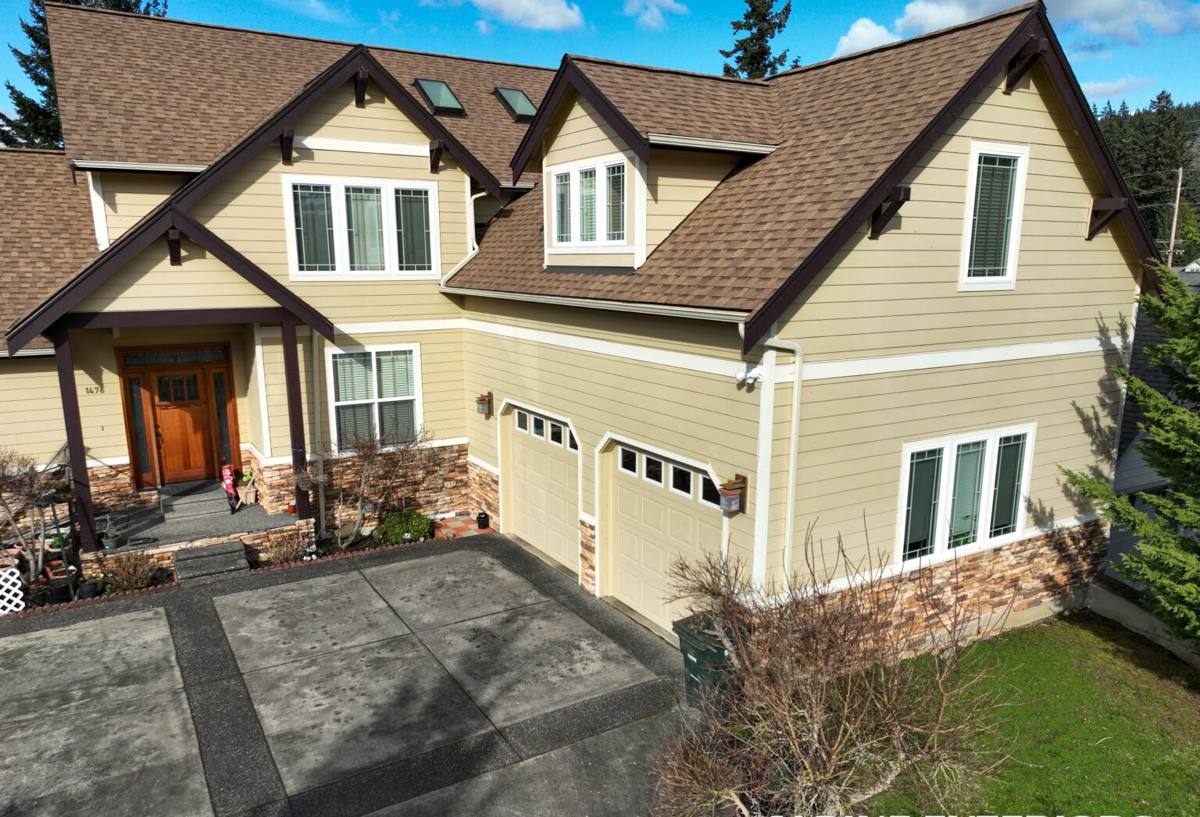
Not every siding problem means a full tear-off. Some issues are legitimately repairable. But on a barrier island property, siding damage tends to be further along than it looks from the ground, because moisture and salt work from the inside of the wall assembly outward. Here's what tells us a homeowner is past the point where patching makes sense:
- Soft, spongy, or crumbling spots when you press on the siding, especially near the bottom courses, window sills, and anywhere two roof planes meet a wall
- Paint that won't hold a fresh coat — it blisters, peels, or chalks off within a year or two of repainting
- Visible cupping, warping, or separation at seams and butt joints
- Persistent musty odor or interior wall staining that tracks back to an exterior wall
- Siding that's original to a home built or last re-sided more than 20-25 years ago, particularly if it's wood-based or an older fiber cement product without a factory finish
- Rust streaking from fasteners, or fastener heads that have backed out or corroded away entirely
- Visible daylight, gaps, or insect entry points at corners and trim
If you're seeing two or more of these, a contractor should be pulling boards to look at the sheathing and house wrap underneath before quoting anything — not just measuring the exterior and writing a number.
What a Correct Siding Replacement Actually Involves
A siding replacement is a wall assembly project, not a cosmetic swap. On a coastal Pinellas property, skipping any one of the following steps is usually what causes the next failure:
Full Tear-Off and Substrate Inspection
Old siding, trim, and house wrap come off down to the sheathing. This is the only point in the project where anyone can actually see the condition of the wall — rot, insect damage, or water intrusion that's been hidden for years. Reputable contractors budget time for this step and won't promise a fixed price on substrate repairs before they've seen what's underneath.
Repair Before Re-Cover
Any compromised sheathing gets cut out and replaced. Covering rotten wood with new siding just hides the problem for another owner to find later, usually at a much higher cost.
Weather-Resistive Barrier
A new house wrap or building paper goes on to manage bulk water and vapor. On a home that takes wind-driven rain directly off the Gulf, this layer — and how carefully the seams and penetrations are taped and sealed — matters as much as the siding itself.
Flashing at Every Penetration
Windows, doors, hose bibs, light fixtures, and anywhere a roof line meets a wall need proper flashing and integration with the water-resistive barrier. This is the detail that separates a siding job that lasts 30+ years from one that leaks behind the walls within five.
Correct Fastening for High-Wind Zones
Fastener type, spacing, and embedment have to match both the manufacturer's specifications and Pinellas County's wind-load requirements for a coastal, hurricane-exposed zone. Under-fastened siding is one of the most common causes of wind damage we see after storms — and it's invisible until the wind finds it.
Trim, Caulking, and Finish Details
Corner boards, trim, and joints get sealed with a sealant rated for exterior, coastal use, and finished consistently so the whole system — not just the field siding — resists moisture and UV.
Why We Install Only James Hardie Fiber Cement
We standardized on James Hardie fiber cement siding for every project we take on, including here on Indian Rocks Beach, and we don't install vinyl, LP SmartSide, or other fiber cement alternatives. That's not a marketing preference — it's a decision based on what actually holds up in this specific climate.
Vinyl siding is affordable and low-maintenance in mild climates, but it softens and warps at high heat and can become brittle and crack on impact, which matters directly under hurricane-force wind loads and flying debris. Wood-based siding products, even engineered ones, depend on an intact factory coating to keep moisture out; once that coating is compromised by UV and salt exposure, the wood substrate underneath is vulnerable to swelling and rot in a way fiber cement simply isn't. Other fiber cement brands can be reasonable products, but we've standardized on one system so our crews install it to spec every time, and so our warranty commitments are consistent and specific rather than a patchwork of exceptions.
James Hardie's HZ5 product line is engineered specifically for high-wind, high-moisture, cyclonic climates like ours — it's the version of their product built for exactly the conditions Indian Rocks Beach sees. It's non-combustible, doesn't attract termites, and the ColorPlus factory finish is baked on and warranted separately from the substrate, which means the finish is engineered to resist the fading and chalking that intense, near-constant Gulf-front UV causes on field-painted products. It's also heavier and more rigid than vinyl, which matters when you're fastening siding to a wall that has to resist sustained coastal wind.
None of that means Hardie siding is maintenance-free or installation-proof. It still has to be installed to the manufacturer's specifications — correct clearances, fastening, and joint treatment — or it will underperform regardless of the product quality. That's exactly why we treat installation discipline as seriously as product choice.
Our Process, Start to Finish
| Step | What Happens |
|---|---|
| In-person estimate | We walk the exterior, check problem areas, and give you an honest read on whether you need full replacement, partial replacement, or repair |
| Detailed proposal | Scope, product line and color, fastening plan, and a firm price before any work starts |
| Tear-off and inspection | Remove existing siding and trim, inspect sheathing, document and price any substrate repairs before proceeding |
| Substrate repair | Replace compromised sheathing and framing as needed |
| Weather barrier and flashing | Install house wrap and flash every window, door, and penetration |
| Hardie installation | Install siding and trim to manufacturer spec and county wind-load requirements |
| Final walkthrough | Inspect the finished job with you and address anything before we call it complete |
We give you the price up front and stick to it barring surprises we find once the old siding comes off — and if we do find something, we show it to you before doing the work, not after.
What Affects the Cost of a Replacement
Every home is different, so we won't put a number on this page that doesn't mean anything without seeing your house. What we can tell you is what actually moves the price up or down:
| Factor | Why It Matters |
|---|---|
| Home size and wall complexity | More square footage, more corners, gables, and dormers mean more material and labor |
| Substrate condition | Rotted sheathing or framing found during tear-off adds repair cost that can't be known until the old siding is off |
| Siding profile and color | Lap width, shake or board-and-batten styles, and ColorPlus color selections vary in material cost |
| Trim and detail work | Corner boards, window and door trim, and fascia detail add labor time |
| Access and site conditions | Narrow lots, limited staging space, and elevated or stilt-style construction common on the island can affect labor time |
| Existing siding removal | Multiple layers of old siding or extensive fastener corrosion take longer to remove than a single clean layer |
Why a Crew That Already Works Indian Rocks Beach Matters
Coastal, barrier-island construction isn't identical to inland residential work, and a contractor who mostly works subdivisions further from the water can miss details that matter here. A crew that regularly works Indian Rocks Beach and the surrounding Pinellas coastline already understands the wind-load requirements that apply to homes this close to open water, has a feel for how salt air accelerates fastener corrosion, and knows to check for the moisture patterns that show up in Gulf-front and Intracoastal-facing walls specifically. That familiarity shows up in fewer callbacks and a tighter, more weather-appropriate installation the first time.
It also matters for something more basic: being reachable. If a storm damages siding or trim, you want a contractor who already knows your property, has your file, and isn't learning the layout of your walls for the first time under pressure.
Caring for New Siding After Installation
James Hardie siding is low-maintenance, not zero-maintenance, and a few habits go a long way in a salt-air environment:
- Rinse the exterior with a garden hose a few times a year to clear salt residue, especially on Gulf-facing walls
- Keep sprinklers and irrigation from spraying directly on siding, which causes uneven mineral buildup
- Re-caulk joints and trim seams as part of routine upkeep — caulk wears out well before the siding does
- Trim landscaping back from walls so foliage isn't trapping moisture against the siding
- Do a visual walk-around after major storms to check for loose trim, fastener issues, or impact damage
None of this is heavy maintenance, but skipping it is how a well-installed job ages faster than it should.
If your Indian Rocks Beach home's siding is showing its age, or you just want an honest opinion on repair versus replacement, we're happy to take a look. Use the form below to request a free, no-pressure estimate — we'll walk the property, tell you what we actually see, and give you a straight answer.