 Largo Siding
 Why Palm Harbor Decks Take a Beating
A deck in Palm Harbor doesn't live an easy life. Between the intense, near year-round Florida sun, the humidity rolling off the Gulf, salt-laden air moving inland from the coast, and the wind-driven rain and hurricane-force gusts that come with a Pinellas County summer and fall, an outdoor structure here is under constant stress in ways a deck in a drier, cooler climate simply isn't. Composite decking has become the go-to answer for a lot of local homeowners, but "composite" isn't a single product with one set of behaviors — and a deck that's installed without accounting for this specific climate will show problems years before it should.
UV and Surface Heat
Direct Florida sun breaks down color and surface finish faster than most homeowners expect. Cheaper, uncapped composite boards fade unevenly, especially on the side of a deck that gets the most afternoon exposure. Surface temperature matters too — dark boards in full sun can get uncomfortably hot underfoot in summer, which is worth thinking about when you're picking a color, not just a brand.
Humidity, Rain, and Wind-Driven Moisture
Pinellas County doesn't get gentle, straight-down rain most of the year — storms here come in sideways, driven by wind, and soak areas of a structure that would stay dry in a calmer climate. Combined with our humidity, that means any gap, seam, or fastener point that isn't properly sealed becomes a slow entry point for moisture, even into a "waterproof" composite board's core or the wood framing underneath it.
Salt Air and Fastener Corrosion
Palm Harbor sits close enough to the coast that salt air is a real factor, even a few miles inland. Salt accelerates corrosion in standard fasteners, brackets, and connectors. This is one of the most common places we see older decks fail first — not the boards themselves, but the hidden hardware holding everything together.
Hurricane-Force Wind Loads
An elevated deck is essentially a large, exposed structure attached to your house. In a region that plans for hurricane-force wind every season, the framing, the ledger connection, and the railing all need to be engineered and fastened with that in mind — not just built to look right on a calm day.
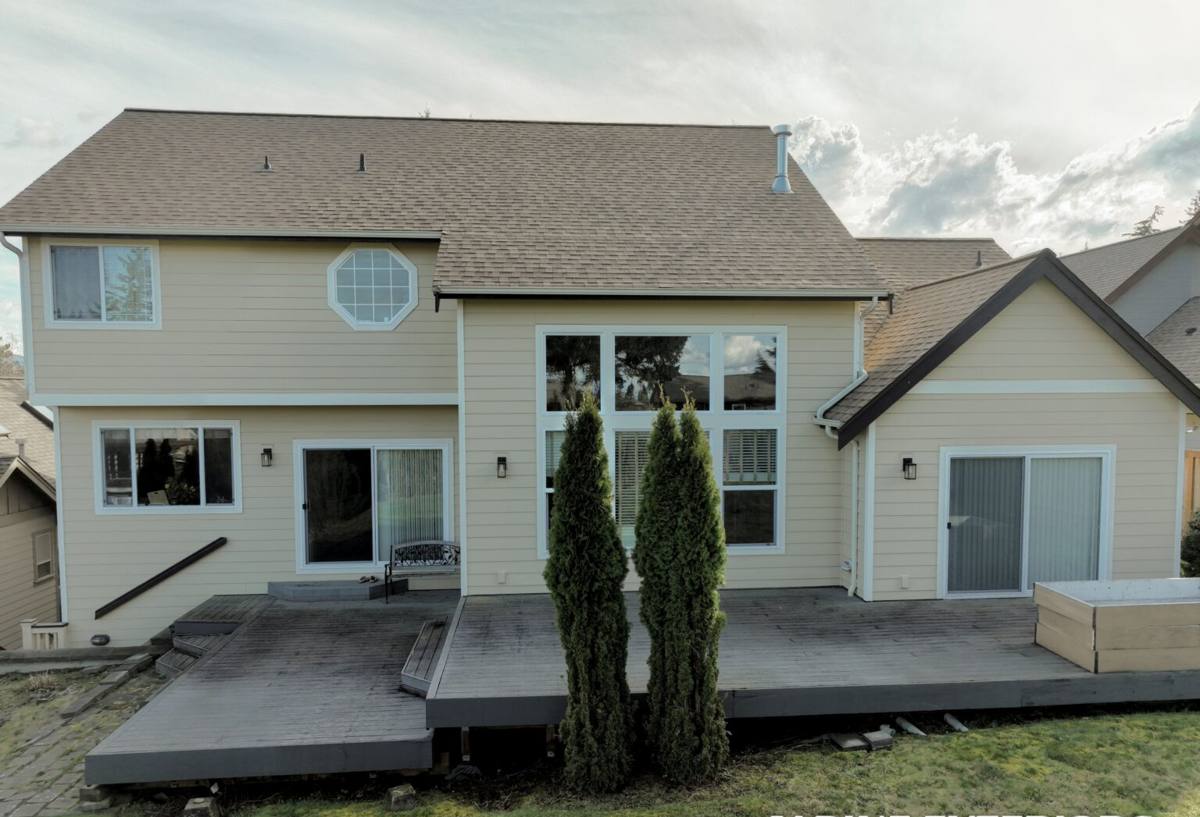
Composite vs. Wood: The Honest Trade-Offs
We install a lot of composite decking in this area, but it's worth explaining why, honestly, rather than just saying composite is "better." Pressure-treated wood is less expensive up front and can be a perfectly reasonable choice for some homeowners. Its trade-off in our climate is maintenance: regular sealing or staining, more frequent board replacement as sun and moisture cycle the wood through swelling and drying, and a higher chance of splintering, cupping, or fastener pop-through over time.
Composite decking, particularly capped composite or PVC decking, largely removes that maintenance burden. It doesn't need sealing or staining, resists moisture absorption into the board itself, and holds its color and shape more consistently under UV exposure than uncapped wood-plastic blends or raw wood. The trade-off runs the other way: higher material cost, and installation sensitivity — composite boards expand and contract with heat differently than wood, so gapping, fastening, and substructure spacing have to be done correctly the first time, or you'll see waviness, fastener stress, or board movement within a couple of years.
Neither material is "wrong." The right choice depends on your budget, how much ongoing maintenance you actually want to do, and how long you plan to be in the home. We'll walk through that trade-off honestly during an estimate rather than pushing one product.
What a Correct Composite Deck Installation Actually Involves
Composite boards get most of the attention, but the framing and installation details underneath them are what actually determine whether a deck holds up in this climate. This is where corners get cut on lower-end installs, and it's usually invisible until something fails.
Framing and Substructure
Joist spacing for composite decking is typically tighter than what's standard for wood, because composite boards flex differently under load and heat. Using wood-spec joist spacing under composite boards is a common shortcut that leads to bounce, sag, and premature board stress.
Ledger Attachment and Flashing
Where the deck attaches to the house is the single highest-risk point for water intrusion on the entire structure. Proper flashing at the ledger board — installed to shed water away from the house framing rather than trap it — is not optional in a climate with our rainfall and humidity. A poorly flashed ledger is one of the more expensive mistakes to fix later, because by the time it shows up, it's often rotted framing behind siding.
Fastening Systems
Hidden fastener systems are standard on most composite decks today for a clean, screw-free surface, but the fasteners, clips, and any structural hardware need to be corrosion-resistant hardware rated for coastal or high-moisture exposure — not standard interior-grade hardware. This matters more here than it would inland in a drier state.
Drainage and Airflow Underneath
Ground-level and low-clearance decks need to be built with drainage and airflow in mind so water doesn't sit and stagnate under the structure. In our humidity, a deck that traps moisture underneath becomes a long-term problem for the framing, the ground beneath it, and even pest activity, regardless of how good the boards on top are.
Picking the Right Board for This Climate
Not all composite decking performs the same way in sun, salt air, and humidity. Here's how the main categories generally compare for a Palm Harbor install:
| Material | Upfront Cost | Sun/Heat Performance | Moisture Behavior | Ongoing Maintenance |
|---|---|---|---|---|
| Pressure-treated wood | Lowest | Fades, can warp or cup under UV and heat cycling | Absorbs moisture; prone to swelling and splitting | Regular sealing/staining, periodic board replacement |
| Uncapped composite (wood-plastic blend) | Moderate | Fades unevenly over time, can absorb surface heat | Some moisture absorption at exposed edges | Low, but not maintenance-free |
| Capped composite | Moderate-High | Strong UV and fade resistance from the protective cap | Cap resists moisture absorption into the core | Very low — occasional cleaning |
| PVC (cellular) decking | Highest | Excellent UV stability, doesn't absorb heat into a wood-fiber core | Essentially non-absorbent | Lowest — occasional cleaning |
Brand names you'll hear in this category — Trex, TimberTech, Fiberon, and similar manufacturers — mostly compete within the capped composite and PVC tiers above. We'll talk through which specific product line fits your budget and how you use the space during the estimate, rather than steering you toward one brand across the board.
Our Process, Start to Finish
- On-site assessment: We look at your existing structure (if replacing a deck), the ledger attachment point, grade and drainage, and sun exposure throughout the day.
- Material walkthrough: We go over composite tiers, colors, and railing options against your budget and maintenance expectations, honestly, including where wood might still make sense for your situation.
- Written estimate: Clear scope, materials, and pricing before any work starts — no surprise add-ons mid-project.
- Permitting: We handle the permit process with Pinellas County or the applicable local jurisdiction so the structure is inspected and code-compliant.
- Framing and flashing: Substructure built to the tighter spacing composite requires, with proper ledger flashing and corrosion-resistant hardware throughout.
- Decking and railing installation: Boards installed with correct gapping for thermal movement, hidden fastening where specified, and railing secured to structural framing, not just surface-fastened.
- Final walkthrough: We review the finished deck with you before calling the job done.
Permits, Wind Load, and Pinellas County Code
Most deck construction and deck replacement work in this area requires a permit, and inspections exist for a reason — they catch the ledger, framing, and railing issues that cause real failures later. Pinellas County's building requirements account for our wind exposure, which affects things like railing attachment, guardrail spacing, and how the structure is tied back to the house. Skipping the permit process on a deck isn't just a paperwork risk; it means nobody with training in local wind and moisture requirements ever checked the framing before it got covered up by decking boards.
Keeping a Composite Deck Looking Right
Composite decking is low-maintenance, not no-maintenance, especially in a climate that throws sun, salt air, and heavy rain at it all year. A simple seasonal routine goes a long way:
- Rinse or sweep the deck periodically to clear pollen, salt residue, and organic debris before it builds up in board grooves
- Clean spills promptly, especially oils or sunscreen, which can leave marks on some composite surfaces if left to sit
- Check railing and stair connections once or twice a year for looseness, since wind and thermal cycling can work fasteners over time
- Keep gutters and downspouts near the deck clear so runoff isn't dumping extra water onto or under the structure
- After a major storm, do a quick visual check of the ledger area and any structural connections
- Avoid pressure-washing at close range or high pressure, which can damage the surface cap on composite boards
Why Hire a Crew That Already Works Palm Harbor
A deck built to a generic national spec sheet isn't necessarily built for this specific combination of sun, salt air, humidity, and wind that Palm Harbor and the surrounding Pinellas County area deal with every year. A crew that regularly works in this area already knows which fastener grades hold up, how tight framing needs to be for composite in our heat, what the local permitting process actually requires, and where past installs in similar coastal-adjacent conditions have run into trouble. That local experience shows up in the details you can't see once the deck is finished — the flashing behind the ledger, the hardware inside the framing, the gapping under the boards — which is exactly where a rushed or out-of-town install tends to cut corners.
If you're weighing a new composite deck or replacing an aging one, we're glad to take a look and talk through what your home actually needs. Reach out for a free, no-pressure estimate using the form below.