 Largo Siding
 Siding Installation for Belleair Homes
Belleair sits in one of the more exposed pockets of Pinellas County — close enough to open water that salt air, wind-driven rain, and storm-force gusts are simply part of owning a home here. Whether your property faces the Intracoastal side or sits a few blocks back under mature tree canopy, the siding on your walls is doing more structural and protective work than most homeowners realize. It's not decoration. It's the first line of defense between your framing and a coastal climate that doesn't let up.
Largo Siding Company installs James Hardie fiber cement siding exclusively, and we work Belleair regularly enough to know what this specific stretch of coastline does to a wall system over time. This page walks through what correct siding installation actually involves here, and why the material and the crew both matter as much as each other.
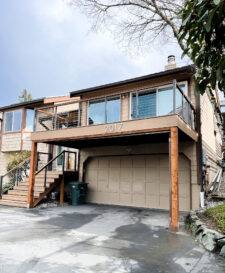
What Belleair's Climate Actually Does to Siding
Pinellas County homes face a combination of stressors that inland Florida properties don't deal with to the same degree, and Belleair's proximity to the water intensifies most of them.
Salt Air and Corrosion
Airborne salt doesn't just affect metal fasteners and flashing — it accelerates the breakdown of paint films and lower-grade cladding materials, and it works its way into any gap or seam that isn't properly sealed. Over years, siding that isn't engineered for coastal exposure can chalk, fade, or start absorbing moisture at the edges well before its expected lifespan is up.
Wind-Driven Rain
Florida rain rarely falls straight down. When storms push in off the Gulf, rain gets driven sideways into wall assemblies at pressure, which means water-resistive barriers, flashing details, and butt-joint treatment matter as much as the siding material itself. A product or installation that handles a light shower fine can still let water behind the wall during a sideways squall.
UV Exposure
Central Florida gets intense, near year-round sun. Paint and coatings that aren't formulated for that UV load fade unevenly, chalk prematurely, and need repainting far sooner than a homeowner budgeted for.
Hurricane-Force Wind Loads
Belleair is squarely within a wind-borne debris region. Siding has to be rated and fastened to hold up under sustained high wind and gusts, not just look good on a calm day. Fastening pattern, panel engineering, and installation method all affect how a wall performs when a real storm comes through.
Why We Install James Hardie and Nothing Else
We get asked why we don't offer vinyl, LP SmartSide, or other fiber cement brands. The honest answer is that we standardized on James Hardie because it's the product we're comfortable putting our name behind in this climate, and we'd rather turn down a job than install something we don't believe will hold up on a Belleair home for the next 30 years.
- Non-combustible core: Hardie fiber cement is engineered from cement, sand, and cellulose fiber — it won't ignite or contribute fuel to a fire the way wood-based products can.
- HZ5 climate engineering: Hardie's HZ product formulations are built for specific climate zones, including the moisture and humidity profile of Gulf Coast Florida — this isn't a one-size-fits-all product.
- ColorPlus factory finish: The finish is baked on at the factory under controlled conditions, which gives it better UV and fade resistance than field-applied paint, and it comes backed by its own finish warranty.
- Dimensional stability: Fiber cement doesn't expand and contract with humidity swings the way wood or wood-composite products can, which matters for keeping joints and caulk lines intact over time.
- Transferable warranty: A strong, transferable warranty is worth something if you ever sell — it's a selling point for the next owner, not just protection for you.
We're not going to tell you vinyl or LP SmartSide are junk — they have their place, and plenty of homes have them. But vinyl can deform in extreme heat and doesn't offer the impact resistance fiber cement does, and wood-based composite siding is more sensitive to moisture intrusion at cut edges and seams if installation isn't precise. In a coastal wind-and-rain environment like Belleair, those trade-offs are exactly the ones we're not willing to build a reputation on.
What Correct Installation Involves
The product is only half of a siding job. The other half — arguably the more important half in this climate — is installation detail. Fiber cement siding installed loosely or without proper flashing will underperform regardless of how good the panels themselves are.
Water Management Behind the Siding
Every wall needs a continuous water-resistive barrier, properly lapped and taped, with flashing integrated at every window, door, and penetration. This is what actually keeps wind-driven rain out of your wall cavity — the siding is the outer shell, not the only line of defense.
Fastening to Manufacturer Spec
James Hardie publishes specific fastener types, spacing, and placement requirements for high-wind zones. Skipping or approximating these specs is one of the most common ways siding jobs fail prematurely in coastal Florida — panels that aren't fastened correctly can work loose under repeated wind cycling.
Proper Clearances
Hardie siding needs correct clearance from grade, roofing, and other hard surfaces to avoid trapping moisture against the bottom edge of the panel. Getting this wrong is a slow-motion problem — it won't show up in year one, but it will eventually.
Joint and Seam Treatment
Butt joints, corners, and trim intersections need to be treated correctly — caulked where appropriate, flashed where not — to prevent water from tracking in at the seams, which is where most moisture problems in fiber cement installations actually originate.
Our Installation Process
- On-site assessment: We look at your home's exposure, existing wall condition, and any moisture or rot issues before we talk products or pricing.
- Removal and inspection: Old siding comes off and we inspect the sheathing underneath for damage that needs to be addressed before anything new goes up.
- Water barrier and flashing: We install a continuous water-resistive barrier and flash every penetration before a single piece of siding goes on.
- Hardie panel installation: Panels are fastened to manufacturer spec for our wind zone, with correct spacing, clearances, and joint treatment throughout.
- Trim and detail work: Corners, trim boards, and transitions are finished cleanly, since these details are usually where problems show up first if rushed.
- Final walkthrough: We walk the finished job with you before we consider it done.
Cost Factors for a Belleair Siding Job
| Factor | Why It Affects Cost |
|---|---|
| Home size and wall square footage | More surface area means more material and labor |
| Existing siding removal | Tear-off and disposal adds labor beyond a straightforward install |
| Sheathing or framing repair | Rot or moisture damage found underneath old siding must be fixed before new siding goes on |
| Hardie product line and profile | Lap, shingle, and panel styles vary in material and install time |
| Trim and architectural detail | Corners, window surrounds, and accent details add labor |
| Home accessibility | Multi-story homes or tight lot lines can affect scaffolding and staging |
We don't publish flat pricing because every home is different — the only way to give you a real number is to look at the house.
Why a Crew That Already Works Belleair Matters
Siding installation isn't uniform across Florida. A crew used to inland installs might not think twice about clearance details or fastening patterns that matter far more once you're within reach of salt air and open water. Working Belleair and the surrounding Pinellas County coastline regularly means we're not guessing at what this specific environment requires — we're applying what we've already seen hold up, and what we've seen fail when it wasn't done right.
It also means faster response for consultations, estimates, and any follow-up you need after the job is done. You're not waiting on a crew that has to drive in from across the county.
Signs Your Belleair Home May Need New Siding
- Visible cracking, warping, or soft spots in existing siding
- Paint that's peeling, bubbling, or chalking heavily
- Rising energy bills that suggest a compromised building envelope
- Staining or discoloration near seams and joints, which can indicate water intrusion
- Siding that's simply reached the end of its expected service life
- Visible storm damage from wind or debris impact
Get an Estimate
If you're weighing a siding replacement in Belleair, we're glad to come take a look, walk you through what we'd recommend for your home's exposure, and give you a straightforward estimate — no pressure, no upsell tactics. Use the form below to get started.