 Largo Siding
 Belleair Sits Right at the Edge of What Florida's Climate Can Do
Belleair's location, tucked between the Intracoastal Waterway and the Gulf on the Pinellas County peninsula, means homes here take on a version of Florida weather that inland neighborhoods don't see. The exposure is more direct, the humidity sits heavier, and the air itself carries salt that inland siding never has to deal with. A siding material that performs fine forty miles inland can fail faster here, and it usually fails quietly — a soft spot behind a downspout, a seam that's opened up, paint that's chalked and faded a full shade lighter than the day it went up. By the time it's obvious from the street, the damage underneath is usually further along than it looks.
That's the backdrop for every siding decision a Belleair homeowner makes. It's also why we don't treat this as a generic siding job. What goes on a home near the coast has to be matched to what the coast actually does to a building envelope over ten, twenty, thirty years — not just what looks good on installation day.
Four Forces Your Siding Has to Withstand Here
Hurricane-Force Wind
Pinellas County sits in a wind zone that regularly gets tested by tropical storms and hurricanes moving through the Gulf. Siding doesn't just need to survive a storm without cracking — it needs a fastening system and edge detailing that keeps wind from getting a purchase point under a panel or lap. Once wind gets behind siding, it doesn't matter how good the material is; it will peel.
Year-Round UV
Florida doesn't really have an off-season for sun exposure. Siding here is under near-constant UV load twelve months a year, which is a much harder test than the same product would face in a climate with a real winter. UV breaks down pigments, softens some substrates, and accelerates the drying-and-cracking cycle in anything that isn't formulated to resist it.
Wind-Driven Rain
Straight-down rain is manageable for almost any siding system. Rain pushed sideways by wind — which is the normal delivery method during a Gulf storm — finds every gap, seam, and undersized overlap. This is where flashing details and installation gaps matter as much as the siding material itself.
Salt Air
Because Belleair is close to open water, airborne salt is a constant, low-level presence even on calm days. Salt accelerates corrosion on fasteners and trim hardware and speeds up the breakdown of finishes that aren't built to resist it. Homes a mile or two further inland simply don't fight this battle to the same degree.
Why We Install Only James Hardie Fiber Cement
We don't offer vinyl, LP SmartSide, primed wood, or other fiber cement brands, and that's a deliberate call, not a lack of options. Vinyl softens and can warp under sustained heat and UV, and its seams are a weak point in wind-driven rain. Engineered wood products rely on a resin-treated wood substrate that, however well it's been improved over the years, still has wood's fundamental vulnerability to moisture intrusion at cut edges and joints — a real liability in a climate this humid and this close to salt water. Fiber cement from other manufacturers can be a reasonable product on paper, but James Hardie is the one we've found holds up consistently against the specific combination of wind, UV, water, and salt that Belleair homes face, and it's backed by a factory finish and warranty structure we're comfortable standing behind.
James Hardie fiber cement is non-combustible, doesn't support rot or termite activity the way wood-based products can, and its ColorPlus factory-applied finish is formulated specifically to resist UV fading better than field-applied paint. It also has the engineering data and installation specs for high-wind, high-moisture regions like ours — which is what a coastal Belleair home actually needs, not just a siding upgrade that looks good on day one.
What a Correct James Hardie Installation Involves
The material is only half the equation. James Hardie siding installed to spec and James Hardie siding installed loosely can have very different lifespans, especially in a climate that punishes shortcuts. A correct installation for a coastal Pinellas County home includes:
- Using the HZ5 climate-engineered product line, which is formulated for high-moisture, high-humidity zones like ours rather than a generic national spec
- Proper clearance between the bottom edge of the siding and the roofline, deck, or grade, so water has somewhere to go instead of wicking into the material
- Correct fastener type, spacing, and depth — under-driven or over-driven nails are one of the most common causes of early failure and are easy to get wrong if a crew isn't used to the product
- Corrosion-resistant flashing and house wrap installed before the first plank goes up, since the siding is one layer of a larger water-management system, not the whole system
- Correctly sized joint gaps and the right sealant at butt joints and around penetrations like vents, hose bibs, and light fixtures
- Field-cut edges primed or sealed per manufacturer spec, since an unsealed cut edge is a direct path for moisture into the board
None of this is exotic, but all of it is easy to skip when a crew is moving fast or isn't specifically trained on Hardie's requirements. In a climate that tests every seam and fastener with wind-driven rain multiple times a year, those details are the difference between siding that looks right for two years and siding that performs right for twenty.
The James Hardie Product Lines That Make Sense for Belleair Homes
Belleair has a mix of architectural styles, from traditional ranch and colonial homes to more coastal and Mediterranean-influenced builds, and James Hardie's lineup covers that range without forcing a homeowner into one look.
HardiePlank Lap Siding
The most common choice for traditional home profiles, available in a range of textures and exposures, and the workhorse product for most full siding replacements in this area.
HardiePanel Vertical Siding
Used for a more modern or coastal aesthetic, or to accent gables and porch areas, often paired with HardiePlank on the same home.
HardieTrim
Fiber cement trim boards that match the siding's resistance to moisture and UV, used around windows, doors, and corners so the whole envelope — not just the field siding — is built from the same durable material.
ColorPlus Technology
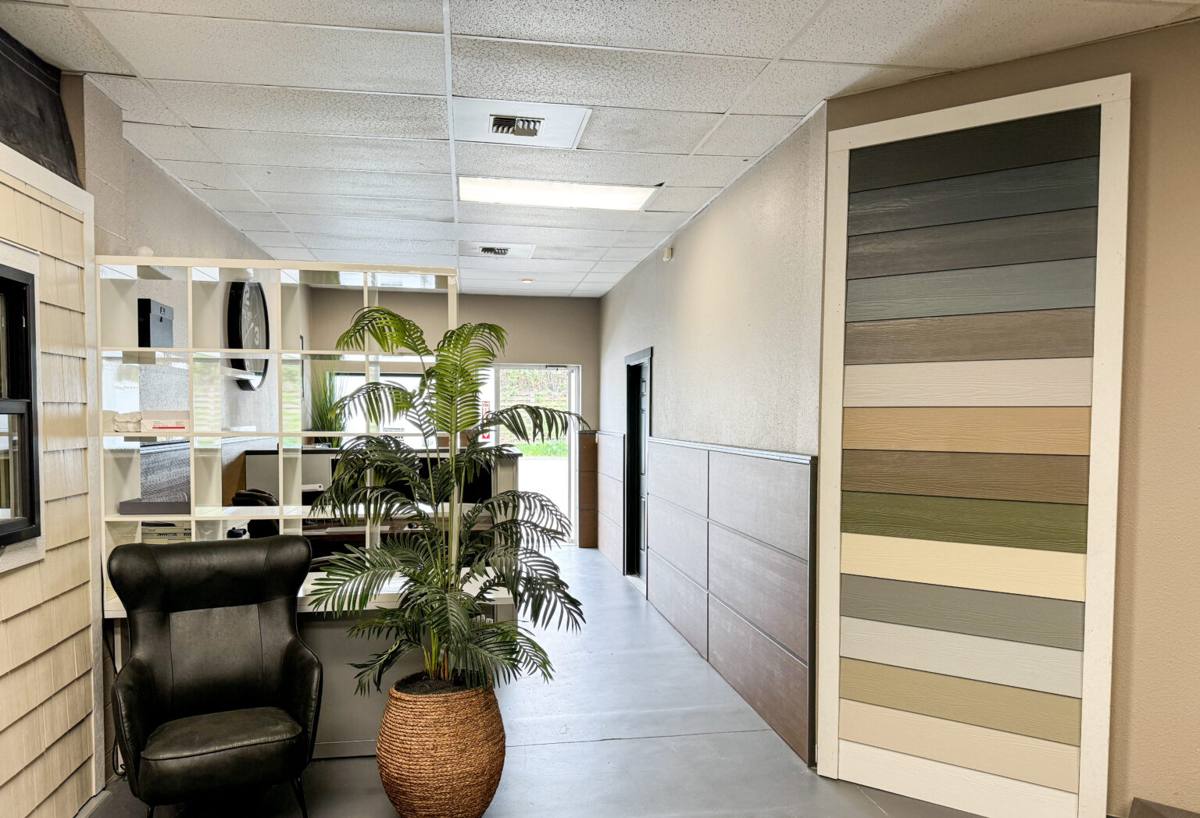
A factory-applied, baked-on finish that's more UV- and fade-resistant than field-applied paint, with a color-match touch-up system for any spots that need attention after installation. In a market with this much year-round sun, that finish durability is one of the bigger practical advantages over site-painted alternatives.
Our Process, Start to Finish
A siding job is disruptive enough without surprises, so we run it the same structured way on every Belleair home:
- Assessment. We look at the existing siding, sheathing, and any signs of past moisture intrusion before quoting anything, since what's underneath the current siding often affects the scope of the job.
- Tear-off and substrate check. Old siding comes off and we inspect the sheathing underneath for rot or damage before anything new goes up — covering a compromised substrate just hides a bigger problem.
- Weather barrier and flashing. House wrap and flashing go in around every window, door, and penetration before the first piece of siding is installed.
- Installation. HZ5-rated James Hardie product installed to manufacturer fastening and clearance specs, sized for the wind exposure of your specific property.
- Trim and detail work. Corners, trim boards, and joints are finished and sealed per spec.
- Final walkthrough. We go over the finished job with you directly, not just leave a punch list behind.
Cost Factors to Expect
Every home is different, but the line items that move a Belleair siding quote up or down are fairly consistent:
| Factor | Why It Matters |
|---|---|
| Home size and wall complexity | More corners, gables, and cutouts mean more labor and material waste |
| Substrate condition | Rotted or water-damaged sheathing found during tear-off adds repair scope before siding can go on |
| Product line and profile | HardiePlank, HardiePanel, and specialty trim carry different material costs |
| ColorPlus vs. primed-for-paint | Factory finish costs more up front but removes a full paint job from the near-term budget |
| Height and access | Multi-story sections and tight lot lines increase labor time and equipment needs |
| Existing siding removal | Full tear-off versus siding over an already-compliant substrate changes the timeline and cost |
James Hardie vs. Other Siding Materials in a Coastal Climate
This is the comparison we get asked about most, so we lay it out plainly:
| Consideration | James Hardie Fiber Cement | Vinyl | Engineered Wood (e.g., LP SmartSide) |
|---|---|---|---|
| Wind performance | Rated and tested for high-wind zones when installed to spec | Can crack or blow off in sustained high wind | Generally adequate but seams are a moisture risk point |
| UV/fade resistance | ColorPlus factory finish resists fading | Can fade and become brittle over time | Depends on field-applied paint quality and reapplication schedule |
| Moisture/salt air behavior | Non-organic material, doesn't rot | Doesn't rot but seams can leak | Wood-based substrate vulnerable at exposed or cut edges |
| Fire resistance | Non-combustible | Can melt or deform near heat sources | Combustible, wood-based |
| Maintenance | Occasional wash, minimal upkeep with ColorPlus finish | Low maintenance but limited repair options if damaged | Periodic repainting and edge sealing needed |
Choosing a Siding Contractor Who Actually Works Belleair
Not every licensed siding contractor in the Tampa Bay area has real experience with this specific stretch of coastline, and that gap shows up in the details — flashing choices, fastener spec, and how a crew handles the extra prep a salt-air environment calls for. Before hiring anyone for a James Hardie job in Belleair, it's worth confirming:
- They're a James Hardie-focused installer, not a general contractor who occasionally installs it alongside several other siding brands
- They can explain which HardieZone product (HZ5 vs. HZ10) is correct for your property and why
- They inspect and address substrate condition before covering it with new siding
- They carry proper licensing and insurance for exterior work in Pinellas County
- They provide a written scope that specifies fastener type, flashing approach, and clearance details — not just "install siding"
- They can speak specifically to wind-rated installation practices, not just standard national installation guidelines
A crew that regularly works this part of the coast has already seen what happens to siding installed without those details in place, and that experience shows up in how carefully they handle the parts of the job that aren't visible once it's finished.
Maintaining Your Siding After Installation
James Hardie siding is low-maintenance, not zero-maintenance. A periodic rinse to remove salt residue and airborne debris, prompt attention to any caulking that starts to separate, and a quick visual check after major storms go a long way toward getting the material's full lifespan out of it. None of this is a heavy lift, but skipping it in a salt-air environment is how minor issues turn into bigger ones.
If you're weighing a siding replacement or repair for a Belleair-area home, we're happy to take a look and walk you through what your property specifically needs — no pressure, no upsell, just a straight assessment. Use the form below to request a free estimate.