 Largo Siding
 Why Decks in Belleair Bluffs Wear Out Faster Than People Expect
Belleair Bluffs sits close to the water, which is part of what makes it such a desirable place to live — but that same proximity to the Intracoastal and the Gulf is hard on outdoor structures. A deck here isn't just dealing with rain and sun like it might inland. It's dealing with salt-laden air that accelerates corrosion on fasteners and hardware, intense year-round UV that breaks down wood fibers and fades or chalks synthetic decking, and the kind of wind-driven rain that comes with Gulf Coast storms and hurricane season. Add in Pinellas County's humidity, and you have an environment that punishes any deck built with the wrong materials or shortcuts in the framing.
We see the same failure pattern over and over on older decks in this area: the surface boards might still look okay from a distance, but the substructure underneath — the joists, ledger board, and hardware — has been quietly deteriorating for years. By the time a homeowner notices soft spots, rust streaks, or movement underfoot, the problem is usually well past a simple repair.
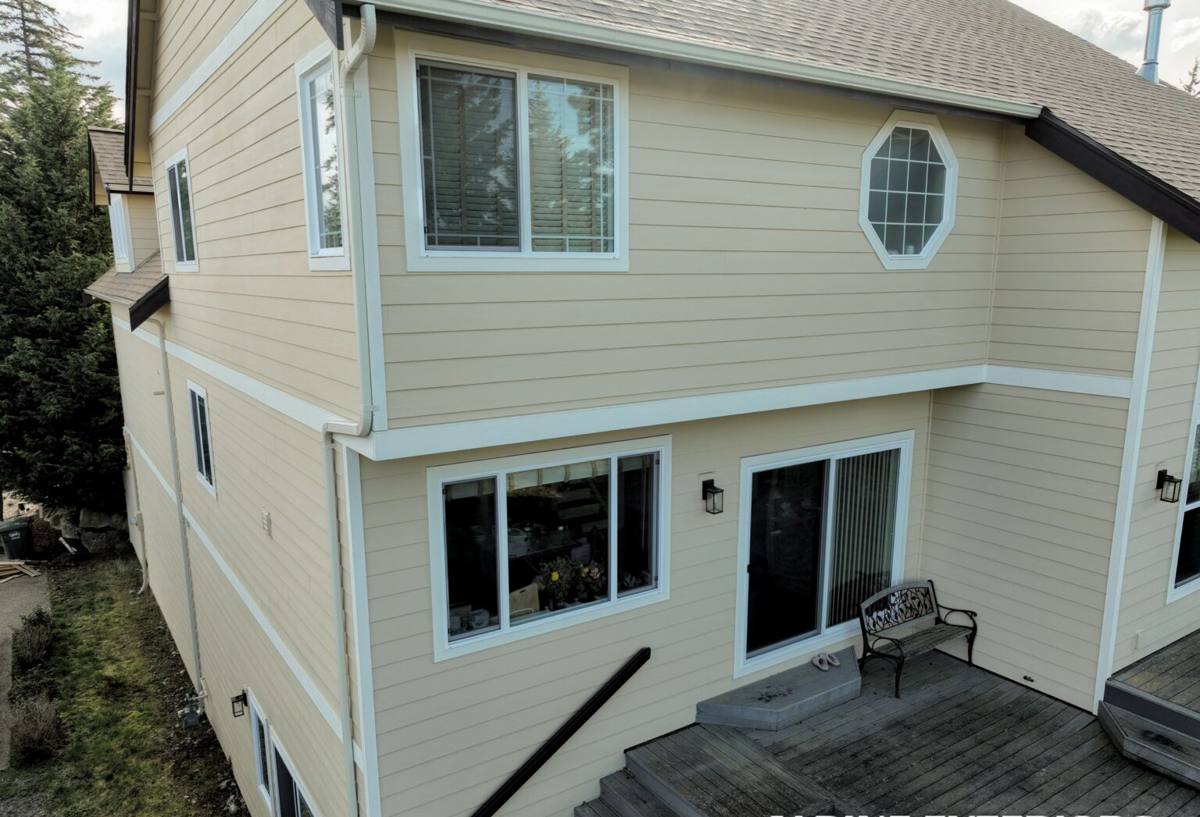
Repair or Full Replacement? How to Tell
Not every aging deck needs to be torn out. But there's a point where patching individual boards stops making sense and a full replacement becomes the safer, more cost-effective option. Some signs to watch for:
- Soft, spongy, or spring-loaded decking boards, especially near the house or in shaded areas that stay damp longer
- Visible rust or corrosion on joist hangers, bolts, or screws — a common issue in coastal air even when the wood itself looks fine
- Gaps opening up around the ledger board where the deck attaches to the house, which can signal moisture intrusion into the structure
- Railings or stair stringers that feel loose or wobble under normal use
- Cupping, splitting, or graying wood that's beyond what a stain or sealant refresh can fix
- A deck that's more than 15-20 years old and has never had the substructure inspected or updated
If you're only seeing cosmetic wear on the surface boards and the frame underneath tests solid, a repair or resurfacing may buy you more years. If the framing is compromised, replacing boards on top of a failing structure just delays the real problem — and risks safety.
Choosing Decking Material for a Coastal Pinellas County Home
Material choice matters more here than in drier, inland climates. What holds up in a shaded backyard in another part of the state may not hold up a few blocks from the water in Belleair Bluffs. We walk homeowners through the real trade-offs rather than pushing one product as a cure-all.
| Material | How It Handles This Climate | Maintenance | Typical Lifespan |
|---|---|---|---|
| Pressure-treated wood | Affordable, but UV and humidity accelerate graying, splitting, and fastener corrosion without regular sealing | High — annual cleaning and resealing recommended | 10-15 years with upkeep |
| Composite decking | Resists rot and salt-air corrosion far better than wood; quality varies by brand and core construction | Low — periodic washing, no staining/sealing | 20-30 years |
| PVC/capped polymer decking | Fully synthetic cap resists moisture intrusion and fading well in intense UV; performs consistently near the water | Very low | 25-30+ years |
| Hardwoods (e.g., ipe) | Naturally dense and rot-resistant, but installation sensitivity is high and fastener corrosion is still a concern in salt air | Moderate to high — oiling to maintain color | 20-25 years |
We're honest about the maintenance burden of wood decking in this environment — it can look great when new, but it demands a level of upkeep many homeowners underestimate. For most Belleair Bluffs projects, we lean toward composite or capped polymer boards paired with corrosion-resistant fasteners and hardware, simply because they hold up with far less ongoing effort in salt air.
What a Correct Deck Replacement Actually Involves
The Substructure Comes First
The decking boards are the part everyone sees, but the framing underneath is what determines how long the deck actually lasts. A proper replacement means new or reinforced joists sized for the load and span, correctly flashed ledger board attachment to keep water from tracking into the house structure, and footings set to handle both the weight of the deck and regional wind loads.
Fasteners and Hardware
In a coastal-adjacent area like Belleair Bluffs, using the wrong grade of screws or joist hangers is one of the most common causes of premature deck failure. We use stainless or coated corrosion-resistant hardware rated for the exposure this area sees, rather than standard-grade fasteners that will rust and weaken within a few years.
Flashing and Water Management
Wind-driven rain finds its way into gaps that would stay dry in calmer climates. Proper flashing at the ledger board, correct board spacing for drainage, and attention to how water sheds off the structure all matter more here than they would somewhere without our rain and wind patterns.
Railings and Stairs Built to Code
Railing height, baluster spacing, and stair geometry all need to meet Florida Building Code requirements — not just look right. This is also where wind-resistant attachment details matter, since railings take direct wind load during storms.
Our Deck Replacement Process
- On-site assessment — we inspect the existing deck's framing, ledger attachment, and hardware condition, not just the surface boards, to determine the real scope of work.
- Material walkthrough — we go over decking and hardware options suited to your home's exposure, budget, and how you actually use the space.
- Permitting — deck replacement in Largo and surrounding Pinellas County typically requires a permit, and we handle that process as part of the job.
- Demolition and disposal — the old deck is removed carefully to protect landscaping and the home's exterior, with debris hauled off.
- Framing and structural work — new joists, footings, and ledger flashing are installed to current code, sized correctly for the deck's dimensions and use.
- Decking, railings, and finish work — boards, railings, and stairs are installed per manufacturer specifications, which matters for both appearance and warranty coverage.
- Final walkthrough — we go over the finished deck with you before considering the job done.
Permitting and Building Code in Largo and Pinellas County
Deck replacement isn't a project you can treat as purely cosmetic — most jurisdictions in Pinellas County require a permit for structural deck work, and inspections along the way confirm that framing, footings, and railings meet current Florida Building Code. This code reflects the region's wind exposure, which is a real factor for any elevated structure attached to your home. Skipping permitting might save time up front, but it can create real problems later — at resale, with insurance, or if the work doesn't hold up. We pull the required permits and build to code as a standard part of every deck replacement, not an upsell.
Cost Factors to Understand Before You Budget
| Factor | Why It Affects Cost |
|---|---|
| Deck size and shape | Larger footprints and multi-level or angled designs require more material and labor |
| Decking material chosen | Pressure-treated wood costs less upfront than composite or PVC, but those materials cost less over the deck's lifespan |
| Substructure condition | Rotted joists, failing footings, or a compromised ledger board add to the framing work required |
| Railing and stair complexity | Cable rail, glass panels, or multiple stair sections add labor beyond a standard railing |
| Site access | Elevated decks, tight side-yard access, or waterfront lots can affect equipment and labor time |
| Permitting requirements | Structural changes or larger decks may involve more detailed plan review |
We'd rather walk your property and give you real numbers than quote a range that doesn't reflect your actual deck. What we can say honestly: the cheapest bid rarely accounts for proper footings, flashing, and corrosion-resistant hardware — and those are the things that determine whether your new deck lasts five years or twenty-five in this climate.
Why Local Experience in Belleair Bluffs Matters
A deck built to a generic national spec doesn't necessarily hold up on the Gulf Coast. Crews who work regularly in Belleair Bluffs and the surrounding Largo area already know which hardware grades hold up to the salt air here, how local permitting offices want plans submitted, and what wind-load details actually get inspected and signed off. That's the difference between a deck that's built to pass inspection once and one that's built to still be solid a decade from now, through multiple hurricane seasons.
Before you hire anyone for a deck replacement, it's worth asking a few direct questions:
- Will you pull the required permit, and is that included in your quote?
- What hardware and fastener grade do you use, and why for this climate?
- How do you handle the ledger board flashing where the deck meets the house?
- Can you explain the framing plan — joist spacing, footing depth — not just the decking brand?
- Do you carry liability insurance and workers' comp coverage?
- What does your workmanship warranty actually cover, separate from the manufacturer's product warranty?
Ready for a Deck Built to Last on the Gulf Coast
If your deck in Belleair Bluffs is showing its age, or you just want an honest opinion on whether it needs repair or full replacement, we're happy to take a look. Reach out for a free, no-pressure estimate using the form below — we'll walk the property, answer your questions directly, and give you a straightforward assessment before any work begins.