 Largo Siding
 Why Belleair Beach Decks Wear Out Faster Than Most
A deck on Belleair Beach lives a harder life than a deck twenty miles inland. This stretch of barrier island in Pinellas County sits directly in the path of Gulf breezes, and that means salt-laden air is constantly settling on every exposed surface — fasteners, railings, ledger boards, the works. Add in year-round Florida UV that breaks down wood fibers and fades or chalks composite boards, plus wind-driven rain that finds its way into every seam and joint, and you've got a structure that's fighting the elements every single day, not just during storm season.
Then there's wind. Belleair Beach and the surrounding coastal communities we serve out of Largo see hurricane-force gusts often enough that any deck built or repaired without that in mind is a deck waiting to fail at the worst possible time. We don't say that to scare anyone — it's just the honest baseline for what "correct" repair work has to account for here.
What This Means for Homeowners
None of this means a deck can't last. It means the materials, fasteners, and construction details that work fine in a dry inland climate often aren't the right call a few blocks from open water. A repair that looks solid on the surface but ignores salt exposure or wind uplift is a repair you'll be paying for again in a year or two.
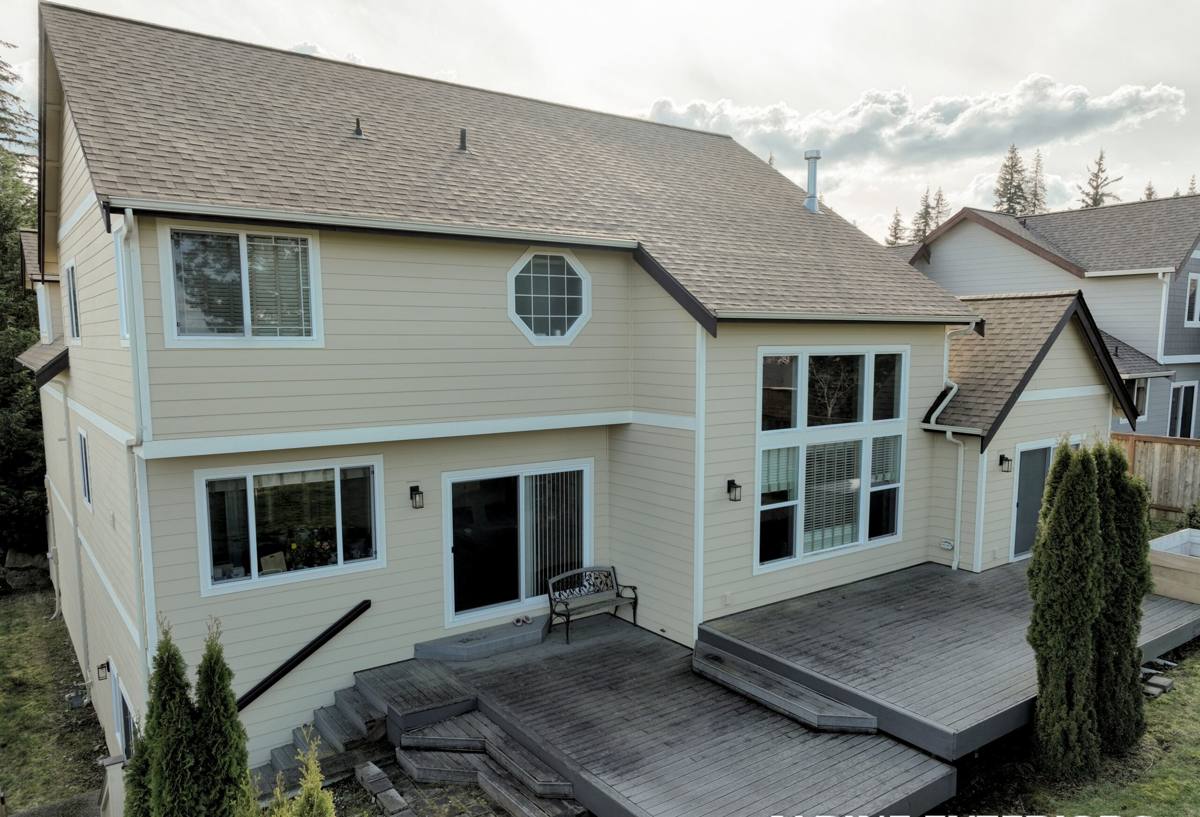
The Deck Problems We See Most Often Near the Water
Every deck is different, but on Belleair Beach and similar coastal properties, the damage tends to follow a pattern.
Wood Decks
Pressure-treated pine and cedar decks in this environment commonly show fastener corrosion (rusty streaks bleeding out around nail and screw heads), soft or spongy boards where moisture has been trapped, and rot at the ledger board where the deck attaches to the house — often the single most important structural connection on the whole deck. Railings and stair stringers take a beating too, since they're the most exposed vertical elements.
Composite and PVC Decks
Composite decking resists rot better than wood, but it isn't immune to problems. We see fading and chalking from UV exposure, boards that have expanded and buckled because they weren't installed with the right gapping for Florida's heat and humidity swings, and hidden fastener or clip failures underneath a surface that still looks fine from a few feet away.
Framing and Substructure
This is the part homeowners can't see and often don't think about until something gives — joists, beams, posts, and footings. Salt air accelerates corrosion on any metal connectors, and wood-to-wood contact points that trap moisture are where rot spreads fastest. A deck can look perfectly fine on top while the frame underneath has been quietly failing for years.
What an Honest Deck Repair Actually Involves
A lot of "deck repair" in this industry amounts to swapping a few obviously bad boards and calling it done. That's not a repair — it's a patch. A proper repair starts below the surface.
Inspecting Below the Decking Boards
We pull boards or get underneath the deck to check joists, beams, posts, and especially the ledger board connection, since that's the point where a full section of deck can separate from the house if it's been quietly rotting. We also check post bases and footings for movement or deterioration, which matters even more given how much wind load a deck out here has to handle.
Matching Hardware to the Environment
Standard galvanized fasteners corrode faster in salt air than most homeowners expect. Coastal-grade repairs call for stainless steel or heavy hot-dip galvanized fasteners and connectors rated for saltwater exposure — not because it's the fancier option, but because using the wrong hardware here is one of the most common reasons a "fixed" deck fails again within a couple of years.
Addressing the Root Cause, Not Just the Symptom
If a board rotted because water was pooling due to poor drainage or missing flashing, replacing that board without fixing the drainage just resets the clock on the same failure. Part of doing this right is figuring out why the damage happened in the first place.
Repair or Replace? How We Help You Decide
Not every damaged deck needs a full rebuild, and not every deck can be responsibly patched. Here's how we generally think through it:
| Factor | Favors Repair | Favors Replacement |
|---|---|---|
| Framing condition | Joists, beams, and posts are structurally sound | Rot or corrosion found in multiple structural members |
| Extent of damage | Isolated boards, railings, or stairs | Damage spread across most of the deck surface |
| Ledger board | Solid connection to the house | Rot or separation at the ledger |
| Age of deck | Built or rebuilt within the last decade | Original construction is decades old with outdated fasteners |
| Code compliance | Meets current wind and railing code | Undersized framing or missing hardware for current wind zone requirements |
We'll walk you through which of these apply to your deck before we recommend anything. If a repair is the honest answer, that's what we'll tell you — we don't upsell a full rebuild when a targeted fix will genuinely hold up.
Our Deck Repair Process for Belleair Beach Properties
1. On-Site Inspection
We walk the entire deck, check the surface, railings, stairs, and get underneath to assess the frame. We're specifically looking for the coastal-specific issues outlined above — corrosion, moisture trapping, and connection points that take the brunt of wind and salt exposure.
2. Clear Explanation and Written Estimate
You get a plain-English rundown of what we found, what needs to happen, and what it will cost — no vague line items. If there are options (repair now vs. plan for a future rebuild, for example), we lay those out honestly.
3. The Repair Itself
Damaged boards, framing members, and hardware are removed and replaced with materials suited to this environment. Any drainage, flashing, or ventilation issues that contributed to the damage get corrected at the same time, not left for next time.
4. Final Walkthrough
We check the repaired area for solid attachment, proper fastening, and finish quality before we consider the job done, and we'll point out anything else worth keeping an eye on going forward.
Materials We Use — and Why
Our default on coastal jobs is to use fasteners and structural connectors rated for saltwater exposure, even when the original construction used standard-grade hardware. It costs a little more up front, but it's the difference between a repair that lasts and one that starts corroding again within a couple of storm seasons.
For decking material itself, both quality pressure-treated wood and composite/PVC decking can perform well here — each comes with trade-offs. Wood costs less initially but needs regular sealing and inspection to hold up against UV and moisture. Composite and PVC decking cost more up front and need less maintenance, but board expansion and contraction has to be installed correctly for Florida's heat, and not every composite product handles direct, unshaded sun exposure equally well over time. We'll talk through what fits your deck's exposure, your budget, and how much upkeep you actually want to do.
Keeping Your Deck in Good Shape After the Repair
A repair is only worth as much as the maintenance that follows it. A little attention a couple of times a year goes a long way in this climate.
- Rinse salt residue off the deck surface and railings periodically, especially after windy stretches
- Check fasteners and connectors for early rust streaking or looseness
- Reseal or re-stain wood decking on the schedule appropriate for the product you have
- Keep an eye on the area where the deck meets the house for signs of moisture or separation
- Clear leaves and debris from between boards so water doesn't sit and pool
- After any major storm, do a quick visual check of posts, railings, and stair connections
Why Local Experience in Belleair Beach Actually Matters
A contractor who mostly works well inland doesn't necessarily think in terms of salt exposure, wind zone requirements, or the way coastal humidity behaves differently than it does even a few miles away in Largo proper. Working regularly in barrier island communities in Pinellas County means we're used to building and repairing for those conditions as a matter of course, not as an afterthought.
Local permitting and inspection requirements can also vary by jurisdiction, and coastal properties sometimes carry additional considerations tied to flood zone designation or wind-borne debris requirements. We handle that as part of the job rather than leaving it for the homeowner to sort out.
If your deck in Belleair Beach is showing soft spots, rust stains, loose railings, or you just haven't had it looked at in a while, we're happy to come take an honest look. There's no pressure and no cost for the estimate — just a straight answer on what your deck actually needs.