 Largo Siding
 Belleair sits right on the water in Pinellas County, tucked along the Intracoastal Waterway just west of Largo. It's one of the more exposed pockets of the Tampa Bay area — open to Gulf wind, constant sun, and salt-laden air coming off the water almost year-round. Asphalt shingles are still the most practical, cost-effective roofing material for the vast majority of Belleair homes, but only when the system underneath the shingles is built for this specific climate. This page covers what that actually takes: the materials, the installation details that matter most here, and the process we use on shingle roofs in Belleair.
What Belleair's Climate Actually Does to a Roof
Every roofing material ages. What's different in a coastal Pinellas County location like Belleair is how fast, and from how many directions at once, that aging happens.
- Hurricane-force wind: Belleair's waterfront exposure means gusts get less resistance before they hit a roofline than they would further inland. Shingle edges, ridge caps, and hip lines take the brunt of this, and it's almost always the edges that fail first, not the field of the roof.
- Intense, near-constant UV: Florida sun breaks down the asphalt and the granules that protect it faster than in most of the country. Over years, that shows up as granule loss, brittleness, and shingles that curl or crack instead of flexing.
- Wind-driven rain: Storms here rarely drop rain straight down. Wind pushes it sideways and up under shingle tabs, around vents, and into any flashing gap that isn't sealed correctly — which is why so many "roof leaks" actually start as flashing or underlayment problems, not shingle failures.
- Salt air: Airborne salt accelerates corrosion on exposed metal — nails, flashing, vent stacks, and drip edge — and it degrades cheap sealants faster than inland installs ever see.
None of these forces are unique to Belleair on their own. What's unique is having all four working on the same roof, at the same time, for most of the year. A shingle system that would hold up fine in a drier, calmer inland climate can underperform here if it isn't specified and installed correctly.
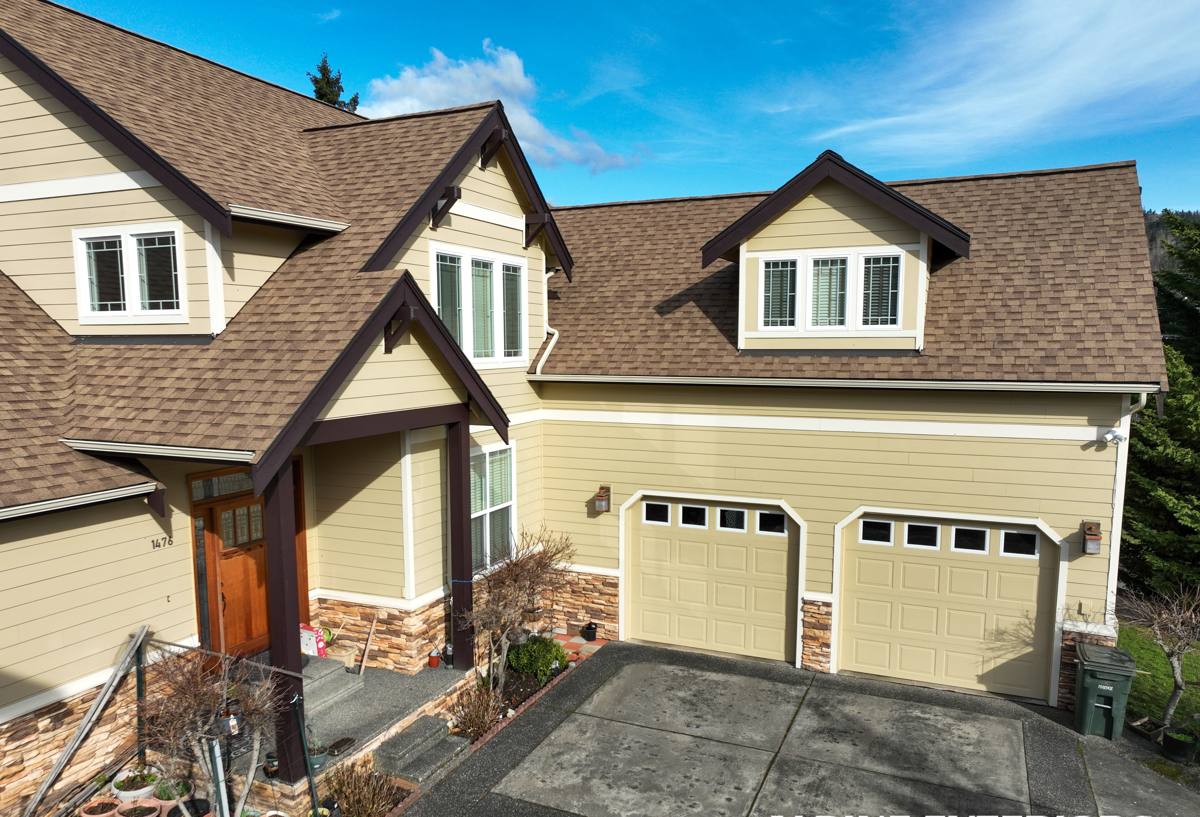
What a Correctly Installed Shingle Roof Needs in Belleair
An asphalt shingle roof is a system, not just a layer of shingles. Every layer underneath the shingles matters as much as the shingles themselves, especially this close to the water.
Wind-Rated Shingles and Correct Fastening
Shingle wind rating is a real spec, not marketing language, and it's driven partly by how many nails go into each shingle and where. Florida Building Code requirements for this part of Pinellas County call for six-nail fastening patterns on most roofs rather than the four-nail pattern still common in calmer climates. We fasten to the pattern the shingle manufacturer specifies for the wind zone, not the minimum that happens to be fastest.
A Real Water Barrier Underneath
Shingles shed most of the water, but the underlayment underneath is the actual waterproofing layer, and it's what keeps a roof dry when wind drives rain up under a tab or a shingle eventually reaches the end of its life. In wind-driven rain zones like Belleair, we use self-adhering, high-wind-rated underlayment in the areas that see the most exposure — eaves, valleys, rakes, and around every penetration — not just a single layer of felt stapled down and left to do all the work.
Flashing and Penetrations, Sealed Correctly
Chimneys, vent stacks, skylights, and wall-to-roof transitions are where the large majority of leaks actually originate, not the open field of shingles. Salt air corrodes cheap or thin flashing faster than it corrodes anything else on the roof, so we use flashing material and sealants rated for coastal exposure, and we tie every penetration into the underlayment correctly rather than relying on sealant alone to do the job over time.
Attic Ventilation That Works With the Roof
A hot, poorly ventilated attic bakes the underside of the shingles and the roof deck from below at the same time UV is breaking them down from above. Balanced intake and exhaust ventilation extends shingle life, helps control attic temperature and moisture, and reduces the chance of deck damage that would otherwise go unnoticed until a full tear-off.
Choosing a Shingle System for Salt Air and Sun
Not every shingle product is a good fit for a waterfront-adjacent home. The table below is a general guide to how the common tiers compare for a Belleair property, not a specific product recommendation — the right choice depends on the home, the roof's exposure, and the budget.
| Shingle Type | Typical Wind Rating | Coastal / Salt-Air Fit | Best For |
|---|---|---|---|
| 3-tab shingles | Lower end of rated range | Adequate on sheltered roofs; less margin in open, waterfront exposure | Budget-focused projects on less exposed roof planes |
| Architectural (dimensional) shingles | Mid-to-high range | Good standard choice for most Belleair homes when installed to spec | Most full roof replacements |
| Impact-rated / high-wind architectural shingles | Highest available range | Best fit for fully exposed waterfront roofs and homes seeking insurance credit | Homes with direct water exposure or owners prioritizing storm resilience |
Color and granule quality matter here too, more than in most markets. Lighter, reflective granule colors run cooler under constant Florida sun, which can ease the load on attic ventilation and, over the long run, help the shingle itself age more slowly.
Our Asphalt Shingle Roofing Process for Belleair Homes
The steps themselves aren't unusual. What matters is not skipping the ones that don't show up in a photo once the roof is finished.
- Roof and attic inspection. We look at the existing shingles, the deck condition from inside the attic where possible, flashing points, and ventilation before recommending anything.
- Written scope and material selection. You get a clear, itemized plan covering shingle product, underlayment, flashing approach, and ventilation, matched to the roof's exposure.
- Permitting. Roof replacements in this part of Pinellas County require a permit and inspection; we handle that process rather than skipping it.
- Tear-off and deck inspection. Old shingles and underlayment come off down to the deck, and any soft or damaged decking is identified and addressed before anything new goes down — this is the point where hidden damage from old leaks gets found.
- Underlayment and flashing installation. The water barrier and all flashing go in first, with extra attention at eaves, valleys, and every penetration.
- Shingle installation to the correct nailing pattern. Shingles go down to the fastening pattern the wind rating requires, not a shortcut version of it.
- Ventilation check and correction. Intake and exhaust ventilation is verified and adjusted as part of the job, not treated as a separate add-on.
- Final walkthrough and inspection. We walk the finished roof with you and coordinate the required local inspection before closing out the permit.
What Affects the Cost of a Belleair Asphalt Roofing Project
Every roof is different, so we won't post a flat number that doesn't apply to your home. What we can tell you is what actually moves the price up or down.
| Cost Factor | Why It Matters |
|---|---|
| Roof size and number of planes | More square footage and more hips, valleys, and dormers mean more material and more labor hours |
| Existing deck condition | Rotted or soft decking found during tear-off has to be replaced before shingles go on, which isn't always visible until the old roof is off |
| Shingle tier chosen | 3-tab, standard architectural, and impact-rated architectural products carry different material costs |
| Number of layers being removed | Tearing off two layers of old roofing costs more in labor and disposal than tearing off one |
| Flashing and penetration complexity | Chimneys, skylights, multiple vent stacks, and wall transitions each add flashing work |
| Permit and inspection requirements | Local permitting fees and required inspections are part of every legitimate roof replacement |
As a general rule, a straightforward architectural shingle replacement on a typical single-family Belleair roof runs into the mid-five figures for many homes, with simpler or more complex roofs falling below or above that. An accurate number only comes from seeing the actual roof.
Signs a Belleair Roof Needs Attention
- Granules collecting in gutters or at downspout outlets
- Shingles that look curled, cupped, or cracked, especially on south- and west-facing slopes
- Bald or shiny patches where granule coverage has worn thin
- Soft spots underfoot when walking the roof, or sagging visible from the ground
- Rust streaks or corrosion around vent stacks and flashing
- Missing, lifted, or visibly nail-popped shingles after a windy stretch of weather
- Water stains on interior ceilings, especially near chimneys, skylights, or exterior walls
- A musty smell or visible moisture in the attic
Any one of these on its own isn't necessarily an emergency, but ignoring several at once is how a repair-sized problem turns into a replacement-sized one.
Keeping a Belleair Roof Working Between Services
Salt air and sun exposure don't take a break, so a roof near the water benefits from more frequent attention than one further inland. Keeping gutters clear so water actually leaves the roof instead of backing up at the eaves, trimming back overhanging branches that hold moisture and drop debris, and having the roof looked at after any named storm or unusually high-wind event all go a long way toward catching small problems while they're still small. A roof that's inspected proactively almost always costs less over its lifetime than one that's only looked at after a leak shows up inside the house.
Why Hire a Crew That Already Works in Belleair
A roofing crew that works this part of Pinellas County regularly already knows how the local permitting and inspection process runs, which fastening patterns and wind ratings apply here, and what tends to fail first on a waterfront-adjacent roof versus one a few miles inland in Largo. That's the difference between a roof that's installed to a generic national spec and one that's actually built for the conditions it has to survive. It also means someone who's easy to reach if a question comes up after the job is done, not a crew that worked one job in the area and moved on.
If you're weighing repair versus replacement, or you just want a straight answer on what your roof actually needs, we're glad to take a look. Use the form below to request a free, no-pressure estimate on your Belleair asphalt shingle roof.